Banking reform in Iraq: A transformation or a temporary settlement?
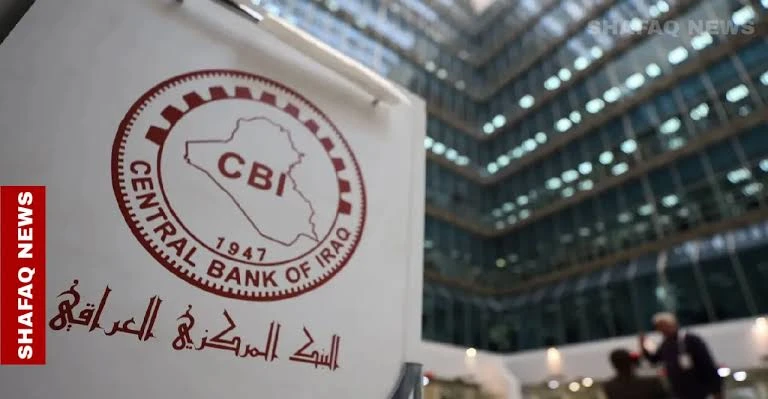 Economic experts emphasize that reforming the Iraqi banking sector has become a necessity that goes beyond addressing the restrictions imposed on a number of banks or improving their relations with foreign financial institutions, to include rebuilding confidence in banks, cleaning up their balance sheets, and strengthening governance and oversight.
Experts also stress the importance of expanding credit directed to the real economy, at a time when Baghdad is seeking to gradually integrate its banking system into the global financial system and reduce reliance on cash outside the banking system. EconomicForecasting Services
reform path
This comes in light of a reform program launched by the Central Bank of Iraq in recent years, which took a clearer course in 2025, in cooperation with the global consulting firm Oliver Wyman, based on reassessing banks according to their ability to comply with international standards, while providing pathways for continuation, merger or exit from the market.
This process coincided with measures to audit previous transfers and address the reasons why a number of banks were barred from dealing in dollars.
On March 22, 2026, the Central Bank announced that it would continue working with specialized international companies to audit transfers and address past problems that had deprived some banks of dollars.
On June 22, 2026, the Central Bank announced that the process of reintegrating a number of banks restricted from dealing in dollars within foreign currency transfers had reached its final stages, after they had met the reform requirements, regulatory and technical standards, and strengthened the frameworks for combating money laundering and terrorist financing.
This culminated on July 18, 2026, with the announcement of an understanding between the Central Bank of Iraq and the US Treasury Department to reinstate seven eligible banks to non-dollar-linked external correspondent banking channels, with the understanding that they would regain eligibility to deal in dollars later after completing additional stages of compliance, governance, and relicensing.
Restoring trust
In this context, the economic advisor to the Iraqi Prime Minister, Mazhar Muhammad Saleh, says that the banking sector is at a “crucial crossroads” after years of weak management and oversight and declining public confidence, which has limited its ability to mobilize savings and finance investment and development.
Saleh adds to Shafaq News Agency that building an efficient banking sector is no longer a postponed option, especially in an economy that relies heavily on oil as a source of foreign currency, stressing that restoring confidence begins with “strengthening governance, oversight and compliance,” and applying strict standards to combat money laundering and terrorist financing.
“In parallel with restructuring troubled banks, addressing weaknesses in their financial positions, and increasing their capital in line with the risks and nature of modern banking activity,” according to Saleh.
The government advisor also believes that upgrading the technological infrastructure is an essential part of the reform, through developing digitization systems, information security and risk management, in addition to expanding electronic payment services in a safe and reliable manner, which reduces reliance on cash, expands financial inclusion and brings wider segments of citizens back into the formal banking system.
He emphasizes that technology and oversight alone are not enough to build trust, as it requires greater transparency, guaranteeing depositors’ rights, clear deposit protection mechanisms, rapid handling of complaints, and demonstrating the banks’ ability to protect and handle customer funds professionally and stably.
He emphasizes that the bank’s function must change from managing liquidity and traditional services to financing the real economy, by directing credit towards productive projects, particularly small and medium-sized enterprises and the agricultural, industrial and service sectors with growth potential.
According to Saleh, “a bank that does not finance productive economic activity remains a financial intermediary with limited impact,” while a bank that mobilizes savings, manages risks, and finances production and investment becomes an actual partner in development.
Financial economics
For his part, Professor of International Economics, Nawar Al-Saadi, argues that reforming banks is no longer an option, but has become a condition for moving from a cash economy to a financial economy, noting that the Central Bank’s program is based on clear paths that include continuation, merger, or exit from the market, in conjunction with tightening governance, compliance, and risk management.
Al-Saadi tells Shafaq News Agency that restoring confidence is not achieved through campaigns to increase deposits, but rather through “rebuilding the bank on the foundations of governance, solvency and transparency,” while resolving the issue of banks unable to continue, strengthening the capital of viable banks, raising the level of disclosure and independent auditing, and holding boards of directors and executive management accountable when violations occur.
He adds that citizens should feel that their money in the bank is “safer and easier to use” than keeping it in cash, which at the same time requires developing credit directed to small and medium enterprises and productive sectors, and establishing real systems for assessing creditworthiness instead of relying excessively on traditional guarantees.
Al-Saadi points out that reducing reliance on cash requires accelerating electronic payments, provided that they are safe, cheap and reliable, while expanding the acceptance of cards and electronic wallets in trade, services, taxes and salaries.
The economist summarizes the equation by saying that “higher confidence in banks means larger deposits, larger deposits mean greater lending capacity, and more lending to the private sector means an economy less dependent on oil and the state.” EconomicForecasting Services
Deposit protection
Economic expert Ahmed Al-Janabi believes that reform will not be achieved in one step, but rather requires an integrated package that begins with restoring the citizen’s confidence in banks and protecting his money, noting that a large segment of Iraqis are still apprehensive about depositing their money within the banking system.
In his interview with Shafaq News Agency, Al-Janabi called for stronger oversight and greater transparency, keeping bank administrations free from political interference and personal interests, as well as addressing non-performing loans and cleaning up budgets, considering that part of the sector’s problems in recent years have been linked to the weak administrative and financial structure of some banks.
He notes that Oliver Wyman’s entry into the reform program coincided with a number of banks being subjected to restrictions and sanctions, before seven banks began the first phase of returning to trading and transfers in foreign currencies other than the dollar, with other phases of reform continuing.
Al-Janabi emphasizes the importance of strengthening the deposit guarantee system and developing electronic services and payments by cards and electronic wallets inside and outside Iraq, because continued reliance on cash keeps a large part of the money outside the banking cycle.
It is estimated that the currency issued by the Central Bank is close to 103 trillion dinars, while the money lost from the banking cycle amounts to about 20 trillion dinars, saying that a large part of it is “hoarded inside homes”.
Expanding the circle of qualification
For his part, economist Ahmed Abdel Rabbo believes that the reforms implemented in cooperation with Oliver Wyman represent an important path to rebuilding the banking sector, raising its efficiency and enhancing its ability to connect with the global financial system, calling for speeding up their implementation and not prolonging the procedures for banks that have shown actual commitment to the required standards.
Abdel Rabbo describes allowing the seven banks to conduct foreign transfers in currencies other than the dollar as a “positive step,” but he believes, in his interview with Shafaq News Agency, that the most important thing is to move quickly to enabling them to conduct their business more broadly, while continuing to complete the requirements of reform, governance and compliance, until restrictions are lifted on them and they are allowed to deal in dollars again according to the regulations.
He emphasizes that reform should not stop at the seven banks, but rather the evaluation of the rest of the banks should continue and the field should be opened to every bank that meets the required standards to work in foreign transfers, because real reform requires “expanding the circle of qualified banks and not limiting the activity to a limited number of them.”
In conclusion, Abdel Rabbo stresses the need to combine stricter compliance standards, anti-money laundering and counter-terrorism financing measures, and enhanced governance, with giving serious banks the opportunity to prove their ability to comply with international standards.
Shafaq.com

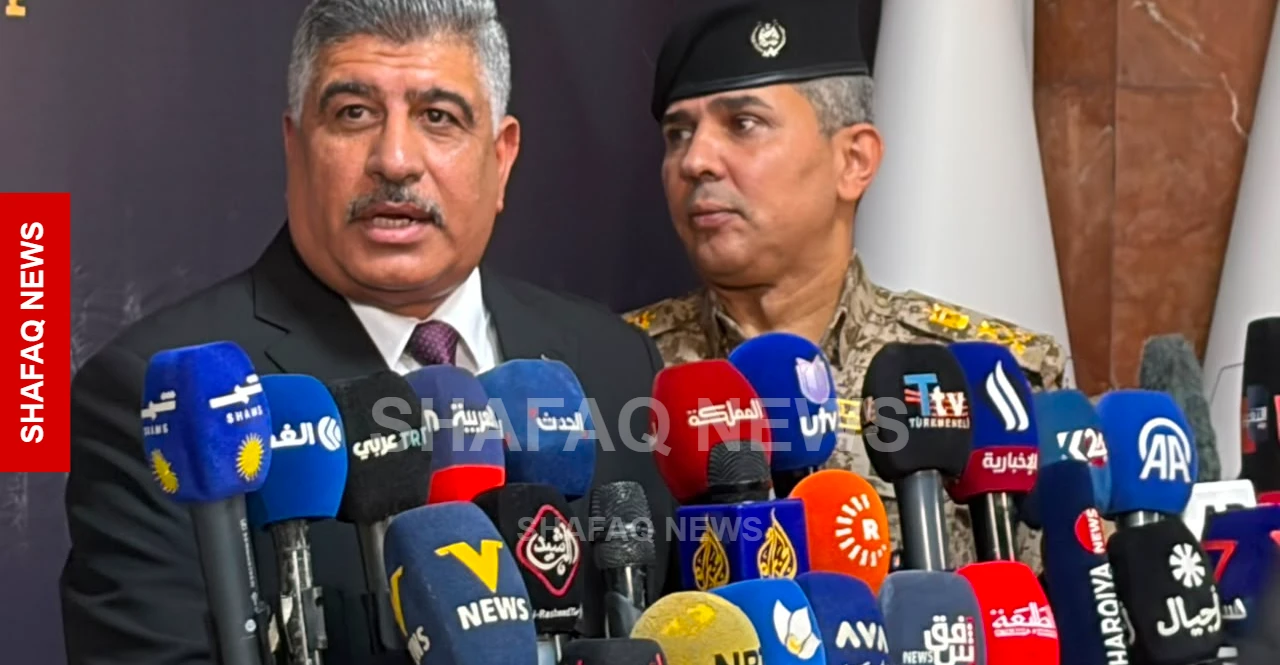 The spokesman for the Commander-in-Chief of the Iraqi Armed Forces confirmed on Thursday that there was no “rejection” by the factions to implement the decision to restrict weapons to the state, noting that the dialogues on this issue had “come a long way”.
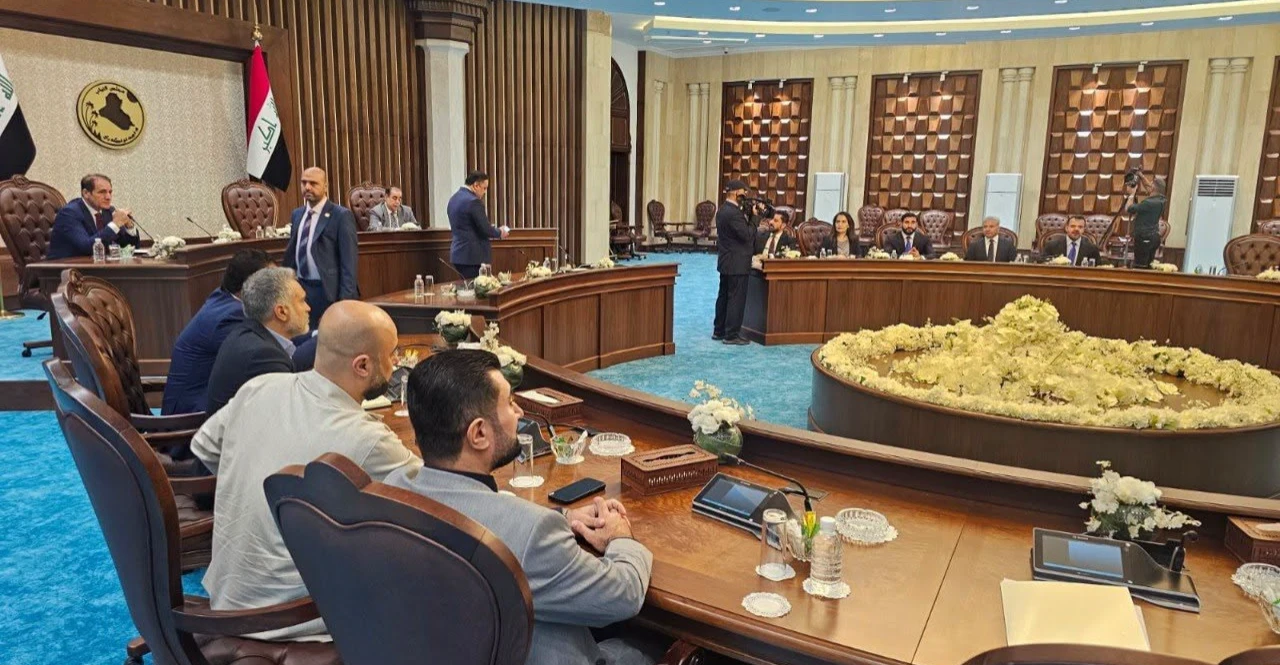 On Thursday, the Oil, Gas and Natural Resources Committee of the Iraqi Parliament held a meeting during which it hosted the Minister of Natural Resources in the Kurdistan Region to discuss a number of issues related to the oil sector in the region.
 Data from the Central Bank of Iraq’s economic indicators revealed on Tuesday that the total currency issued by the bank in the markets rose to 111.189 trillion dinars by the end of June 2026, compared to 99.799 trillion dinars at the end of 2025, an increase of about 11.4 trillion dinars.
 The head of the Diyala Provincial Council, Omar al-Karawi, revealed on Tuesday that the government has approved a study for the revival of the Alwand refinery, one of the oldest oil refineries in Iraq, located in the northeastern part of the province.
 MP Hamid Mohammed, from the National Approach bloc, affirmed on Tuesday that Iran’s permission for Iraq to export oil through the Strait of Hormuz would alleviate the severity of the financial and economic crisis the country is experiencing, given its heavy reliance on oil revenues.
 MP Shaima al-Fatlawi, from the State of Law Coalition, revealed on Tuesday the coalition’s top candidates for the position of Minister of the Interior, confirming that a list containing several names had been sent to Prime Minister Ali Falih al-Zaidi.
 The Reconstruction and Development parliamentary bloc called on Prime Minister Ali Faleh al-Zaidi on Tuesday to utilize the political cover provided by the anti-corruption coordination framework and to continue investigating corruption cases in previous ministries without limiting himself to specific names or files.
 An informed source revealed on Tuesday that the payment of state employees’ salaries may be delayed until the end of this month or the beginning of next month, attributing this to the fact that funding for ministries and state institutions has not yet been released, despite the month having passed. DailyNews Subscription
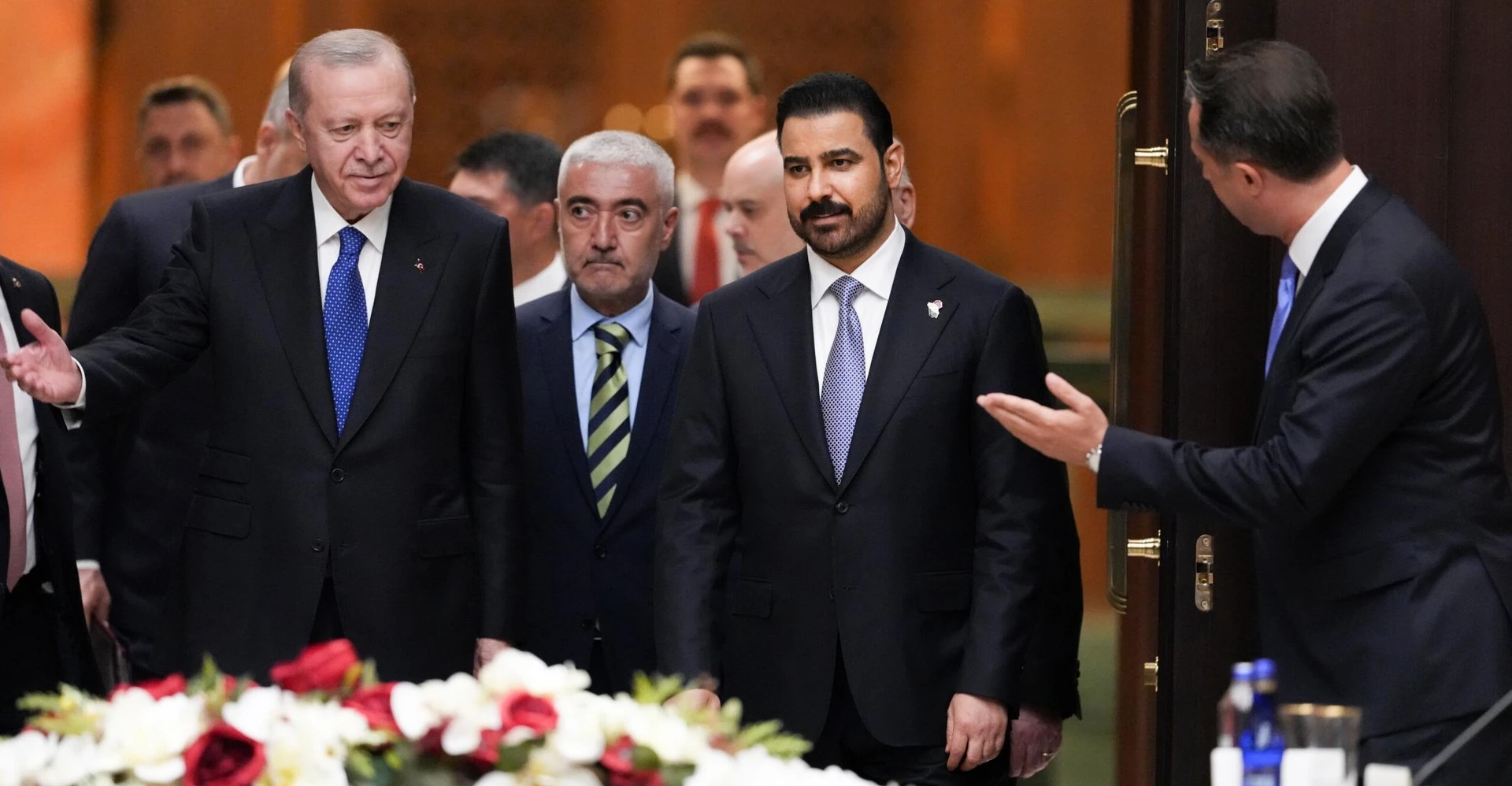 A Turkish report outlines the Zaidi equation – Washington for investment – Tehran for balance and Ankara for developmentShafaq News – Translation