
Half the salaries of officials to save Iraq: A lost initiative under the dome of parliament
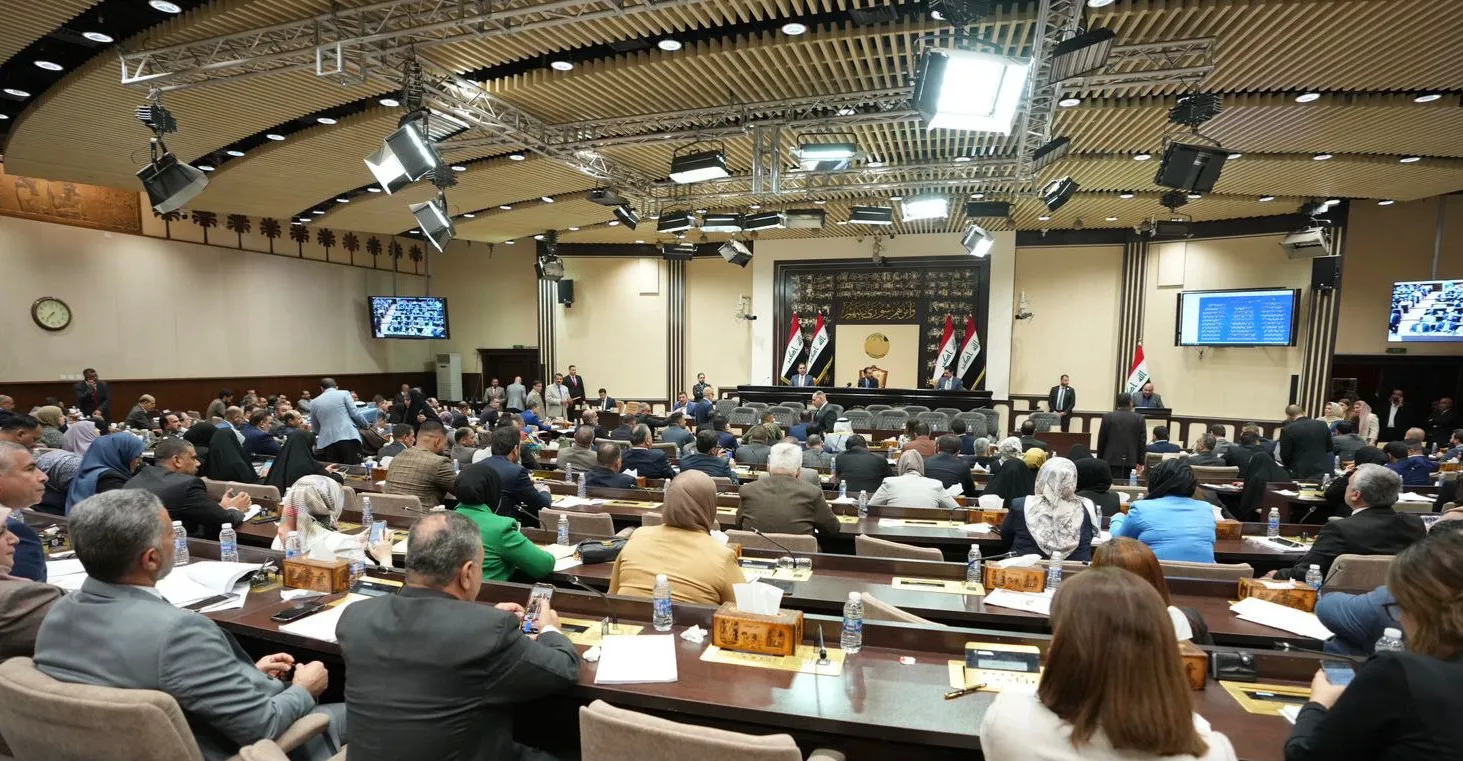 A parliamentary call for members of parliament, ministers, and those holding special ranks to donate half or more of their monthly salaries to the state treasury, in an attempt to address the economic crisis plaguing Iraq, has sparked widespread reaction among the Iraqi public.
This initiative, which was announced earlier by MP Karim Aliwi Al-Muhammadawi, aims to create an additional financial resource to reduce taxes and customs duties on citizens, and will continue for a period ranging from six months to a full year, or until the current crisis is overcome.
However, the proposal did not find widespread support within parliamentary circles, at a time when the government continues to take austerity measures that include cutting some salaries and increasing customs duties, in addition to dismissing advisors from some ministries, under ongoing financial pressures.
In this context, MP Abbas Hayal stressed that donating salaries should be viewed within the context of radical solutions that serve the country, saying, “We are supposed to be up to the level of events and what Iraq and the region are going through, and we need a radical solution that serves the country and brings it to safety. Any symbolic measure such as donating salaries needs a law or an official government decision, in addition to real reforms and sound financial management.”
Hayal, speaking to Shafaq News Agency, said, “It is necessary to calculate the percentages of salaries and their impact, as the state needs about 85 trillion dinars annually to pay the salaries of its employees, and the share of MPs and special grades must be known.”
He adds that “Iraq is a country rich in oil and resources, and the current financial crises cannot be solved with patchwork measures, but rather require practical solutions that take into account the poor classes and employ the available resources efficiently.”
For his part, MP Thaer Jassim points out that donating a salary could be beneficial if it has a tangible economic impact, saying: “In general, if the issue of half the salary helps the state treasury and revives the economy, it is even possible to donate the entire salary, but this matter should be determined by specialists, and not just a media proposal.”
During his interview with Shafaq News Agency, Jassim points out that “there are other realistic solutions, such as reviewing oil and telecommunications contracts, which generate less revenue than their actual potential, and these issues can provide more real resources than symbolic donations.”
More symbolic than financial
For his part, economist Nawar Al-Saadi explains that the impact of reducing or donating MPs’ salaries on the financial situation is limited, indicating that “the size of public spending depends mainly on oil revenues, while MPs’ salaries constitute a very small percentage of expenditures, so even if they were donated in full, it would not affect the financial deficit substantially.”
Al-Saadi added to Shafaq News Agency, “The step has a moral and political dimension, as it enhances trust between the citizen and the state, but it cannot solve the financial crisis. Therefore, what is actually required is to address the imbalance in the spending structure, diversify revenues, reduce dependence on oil, and control waste and corruption. As for reducing salaries, it is a positive step in terms of the message, but it is not a real economic solution.”
In November 2025, economist Manar Al-Obaidi revealed that the total expenditure on the Iraqi parliament during the period from 2015 to 2025 exceeded 5.5 trillion Iraqi dinars, in exchange for the approval of only 321 laws, which means that the cost of approving one law exceeded 17 billion dinars.
Al-Obaidi explained in a post on social media that the previous session (the fifth) was the highest in spending, as its expenditures amounted to about 2.4 trillion dinars, during which 69 laws were approved, bringing the cost of one law to about 35 billion dinars.
As for the fourth session, its expenditure amounted to 1.8 trillion dinars, during which 91 laws were passed, at an estimated cost of approximately 20 billion dinars per law, according to the expert.
Shafaq.com