Iraq’s economy: between protecting revenues and losing financial decision-making power

Iraq’s economy: between protecting revenues and losing financial decision-making power

Iraqs economy - between protecting revenues and losing financial decision-making powerIraqi Oil Revenues in New York: Economic Stability or Managed Sovereignty?
For over two decades, Iraqi oil revenues have been deposited in accounts at the US Federal Reserve Bank in New York. What began as a temporary legal mechanism after 2003 has gradually transformed into one of the most significant economic arrangements affecting Iraq’s financial system, its political balances, and its long-term development trajectory. This issue is often discussed from a political perspective, but at its core, it is an economic trade-off between financial stability and economic sovereignty.

Why are Iraq’s oil revenues held in New York?
Following the 2003 US invasion, the UN Security Council passed Resolution 1483, which called for the protection of Iraq’s oil revenues and state assets from judicial seizure by creditors. At the time, Iraq faced massive financial claims stemming from war reparations, unpaid loans, and legal claims related to the Saddam Hussein regime.
To implement this protection, US President George W. Bush issued Executive Order 13303, which granted legal immunity to Iraqi oil revenues and government assets from any legal action. This order was later renewed and amended, notably in 2014, after Iraq settled a significant portion of its historical debts, including those owed to Kuwait.
Economically, this arrangement resulted in oil revenues being managed through protected accounts in New York, preventing creditors from seizing them before they entered the Iraqi budget.

The economic advantages of this arrangement
include protecting revenues from creditors and financial shocks.
When this mechanism was established, Iraq’s debt exceeded $120 billion. Without legal protection, any court in the world could have seized Iraq’s oil revenues.
This system:
• Prevented sovereign default.
• Gave Iraq time to restructure its debt.
• Preserved the state’s ability to pay salaries and fund essential services.

Exchange rate stability and dollar inflows
are crucial. Oil accounts for approximately 90 percent of state revenues, while the Iraqi economy is almost entirely dependent on imports. Having oil revenues deposited in New York ensures a steady flow of dollars into Iraq, which:
• Limits fluctuations in the dinar’s exchange rate.
• Prevents balance of payments crises.
• Provides stable financing for food and medical imports.
From this perspective, the system acts as an external monetary anchor for the Iraqi economy.

Boosting international confidence and attracting investment
under the supervision of the Federal Reserve, oil revenues are less susceptible to corruption or legal disruption, which:
• Encourages global oil companies to invest.
• Reduces insurance costs and legal risks.
• Makes Iraqi oil one of the most attractive oil assets in high-risk environments.

The undisclosed economic cost is
diminished financial sovereignty.
Although Iraq is the legal owner of the funds, access to them is contingent upon ongoing financial oversight and investigations. In practice:
• Iraq cannot freely dispose of its revenues.
• Transfers are subject to external approvals and audits.
• Any political tension could translate into direct financial pressure.

A powerful tool of economic pressure:
Since salaries, imports, and the budget depend on dollars coming from New York, any restriction on access to funds means:
• Rapid economic paralysis.
• Immediate social and political pressure.
This makes financial leverage more powerful than traditional sanctions or a military presence.
Weakening the development of an independent financial system:
Long-term reliance on this mechanism has led to:
• A fragile domestic banking system.
• A delayed development of foreign exchange reserve management.
• Weak domestic monetary policy tools.
In other words, Iraq manages its money but does not have complete freedom to use it.

The connection to the dollar issue and the sanctions on Iraqi banks
reveals a more sensitive economic picture.
In recent years, the United States has tightened its control over dollar transactions in Iraq and imposed sanctions on several Iraqi banks under the pretext of:
money laundering,
dollar smuggling,
and financing sanctioned entities, particularly those linked to Iran.
The fact that oil revenues are held in New York means that:
every dollar entering Iraq is subject to scrutiny;
any local bank is at risk of being cut off from the global financial system;
and Iraqi monetary policy is effectively tied to US compliance.
Economically, this means that:
the dollar crisis in the Iraqi market is not a liquidity crisis, but an access crisis;
the sanctions on banks target not only the banking system but also the behavior of the state as a whole;
and any attempt to circumvent the restrictions leads to further tightening rather than easing them.

Why has this mechanism persisted to this day?
The Iraqi government says this arrangement:
• Protects financial stability.
• Enhances international confidence.
• Supports the exchange rate.
• Limits the influence of informal networks on the dollar.
But the clearer economic reality is that Iraq has chosen:
guaranteed stability over risking complete financial independence.

In summary,
the mechanism for depositing Iraqi oil revenues in New York was a lifeline after 2003, but over time it transformed into a structural constraint. It provides monetary stability and a secure flow of dollars, but in return:
• It restricts financial sovereignty.
• It deepens dependence on oil.
• It makes the Iraqi economy vulnerable to any external decision.
From a purely economic perspective, Iraq is not a bankrupt state, but it is also not a state with full financial sovereignty. As long as oil and dollars remain under external control, stability will persist, but independence will be postponed.

Economic Studies Unit / North America Office,

Rawabetcenter.com

Posted in Uncategorized | Comments Off on Iraq’s economy: between protecting revenues and losing financial decision-making power

Central Bank: Directive regarding the exchange rate for old and new editions of the dollar

Central Bank: Directive regarding the exchange rate for old and new editions of the dollar

Central Bank - Directive regarding the exchange rate for old and new editions of the dollarThe Central Bank of Iraq directed all banks and financial institutions on Monday to cease the practice of discriminating between older and newer dollar exchange rates. In a statement, the bank emphasized the importance of eliminating this practice. It also stressed the need for all banks and financial institutions to adhere to the regulations governing the handling and exchange of banknotes, in accordance with the established standards for foreign currency.

He also pointed out that “the applicable laws, regulations, and controls do not discriminate between different editions of the US dollar.” He emphasized that “the bank continues to receive and process these editions through all licensed banks, provided they meet internationally and locally approved standards and controls.”

Burathanews.com

Posted in Uncategorized | Comments Off on Central Bank: Directive regarding the exchange rate for old and new editions of the dollar

Maliki’s coalition: Warning of a US embargo on Iraq is “naive”.

Maliki’s coalition: Warning of a US embargo on Iraq is “naive”.

Malikis coalition - Warning of a US embargo on Iraq is naiveThe State of Law coalition, led by Nouri al-Maliki, said on Wednesday that warnings of an American embargo on Iraq if its leader assumes the premiership in the next government represent “naive analysis”.

The official spokesman for the coalition, MP Aqeel Al-Fatlawi, said in a statement received by Shafaq News Agency, “Some are trying to scare the public by promoting the idea that the American administration will impose a ban on Iraq if Mr. Maliki takes over, and unfortunately this proposal reflects a great deal of naivety in thinking and analysis.”

He added that “Iraq produces approximately 4.5 million barrels of oil per day, and exports the majority of it to the global market, making it an influential element in global energy and price balances,” explaining that “given the sensitivity of the oil market, it is illogical to assume that these large quantities will be withheld from international markets in response to emotional analyses or unrealistic estimates.”

Al-Fatlawi continued, “American policies are often managed according to the logic of interests and balances, not the logic of slogans or reactions,” noting that “portraying sanctions as an easy or automatic option ignores the complexities of the global economy and the entanglements of the energy market.”

Nouri al-Maliki, the head of the State of Law Coalition, had previously confirmed his insistence on running for prime minister despite American rejection, stressing that the selection of the head of government is a purely Iraqi matter decided by constitutional institutions.

Al-Maliki denied that his candidacy would lead to sanctions being imposed on the country, considering this proposal to be a means of putting pressure on him, and expressing his readiness to step down if the majority of the coordinating framework requested it, while the framework renewed its commitment to his candidacy and discussed options to overcome American objections.

It is worth noting that US President Donald Trump said, on January 27, 2026, via a post on the “Truth Social” platform, that the return of former Iraqi Prime Minister Nouri al-Maliki to the premiership is “something that should not be allowed,” considering that Iraq “slid into poverty and chaos” during his previous term.

Shafaq.com

Posted in Uncategorized | Comments Off on Maliki’s coalition: Warning of a US embargo on Iraq is “naive”.

The dollar surpasses 163,000 tomans and inflation reaches 60% in Iran.

The dollar surpasses 163,000 tomans and inflation reaches 60% in Iran.

The dollar surpasses 163000 tomans and inflation reaches 60 percent in IranForeign currency prices continued to rise against the Iranian toman on Wednesday, with the dollar exchange rate exceeding 163,000 tomans, amid escalating tensions with Washington.

The dollar reached 163,700 tomans, while the euro recorded 195,000 tomans and the British pound 224,000 tomans, in parallel with the escalation of speculation about the possibility of the United States launching an attack against Tehran.

Meanwhile, the Iranian Statistics Center announced that it had recorded the highest inflation rate during the month of January.

The report stated that the point inflation rate, i.e., compared to the same month of the previous year, reached an unprecedented level of 60%.

The center explained that the consumer price index for Iranian households reached 469.4 points, recording an increase of 7.9% compared to the previous month, 60% compared to January of last year, and 44.6% during the past twelve months.

Shafaq.com

Posted in Uncategorized | Comments Off on The dollar surpasses 163,000 tomans and inflation reaches 60% in Iran.

The State of Law coalition is threatening to dissolve parliament due to its failure to decide on the position of president.

The State of Law coalition is threatening to dissolve parliament due to its failure to decide on the position of president.

The State of Law coalition is threatening to dissolve parliament due to its failure to decide on the position of presidentOn Wednesday, MP Youssef al-Kalabi, from the State of Law bloc, threatened to go to the Supreme Federal Court to request the dissolution of the House of Representatives if the item on choosing the President of the Republic is not included in the next session of the Council.

Al-Kalabi told Shafaq News Agency, “The failure to include the item of electing the President of the Republic on the agenda of the next session will push us to go to the Federal Court and request the dissolution of the House of Representatives due to its inability and exceeding the constitutional term.”

The MP explained that the move to dissolve the House of Representatives came in view of the failure to include the item of electing the President of the Republic on the agenda of the House, as he pointed out that this item should be the third item after electing the Speaker of the House of Representatives, and opening the door for nomination for the position of President of the Republic.

The MP believes that “the failure to add the clause on electing the President of the Republic has put Iraq in a state of anxiety, which requires resolving the issue and adding the clause to the agenda of the next session.”

The House of Representatives did not include a special clause regarding the selection of the President of the Republic in its session today, despite the fact that the constitutionally mandated period for him has been exceeded.

The constitution stipulates that the president must be elected within a period not exceeding 30 days from the date of the first session of the House of Representatives. Calculating this period from the first session held on December 29, 2025, the time limit is close to the night of January 28, 2026.

The Kurdistan Democratic Party candidate, Fuad Hussein, and the Patriotic Union of Kurdistan candidate, Nizar Amidi, are leading the presidential race, according to the list of candidates that the Iraqi judiciary and the House of Representatives announced they had reviewed and decided on their eligibility, after the number of applicants was reduced from more than 40 applications to a final list of 14 names.

It has become customary in the Iraqi political system after 2005 for the presidency to go to the Kurds, in exchange for the prime ministership going to the Shiite blocs and the speakership of parliament going to the Sunni forces.

During most of the previous sessions, the Patriotic Union of Kurdistan (PUK) had the most prominent share in this position through presidents such as Jalal Talabani, then Fuad Masoum, then Barham Salih, and finally Abdul Latif Rashid, which established an internal political tradition that the presidency was closer to the PUK, before the Kurdistan Democratic Party (KDP) decided to enter into this competition.

Shafaq.com

Posted in Uncategorized | Comments Off on The State of Law coalition is threatening to dissolve parliament due to its failure to decide on the position of president.

Al-Maliki: Talk of disbanding the Popular Mobilization Forces is just rumors; the priority is the authority of the state.

Al-Maliki: Talk of disbanding the Popular Mobilization Forces is just rumors; the priority is the authority of the state.

Al-Maliki - Talk of disbanding the Popular Mobilization Forces is just rumors - the priority is the authority of the stateThe head of the State of Law Coalition, Nouri al-Maliki, affirmed on Wednesday that the priority of the current stage is to consolidate the authority of the state and unify the security decision, stressing that the Popular Mobilization Forces are part of the Iraqi security system.

Al-Maliki said in a statement, “The priority today is not to dissolve this or merge that, but to consolidate the authority of the state and unify the security decision,” stressing that “the Popular Mobilization Forces are part of the Iraqi security system, were established by law, and their role was decisive in confronting terrorism.”

He added that “any organization or development of the work of security institutions is done within the vision of the state and in a way that preserves sovereignty and stability, away from media posturing.”

Al-Maliki pointed out that “the Popular Mobilization Forces are an official institution that was established by law and voted on by Parliament, and any talk about dissolving or merging is done exclusively within the framework of the constitution and the law and by a decision of the state, not through rumors,” stressing that “any development of the Popular Mobilization Forces must protect it from weakness and support its combat readiness.”

Shafaq.com

Posted in Uncategorized | Comments Off on Al-Maliki: Talk of disbanding the Popular Mobilization Forces is just rumors; the priority is the authority of the state.

Parliamentary move to amend the official holidays law and reduce the number of days

Parliamentary move to amend the official holidays law and reduce the number of days

Parliamentary move to amend the official holidays law and reduce the number of daysParliamentary move to amend the official holidays law and reduce the number of daysMembers of Parliament revealed on Wednesday a parliamentary move to amend the official holidays law and reduce some religious holidays due to their impact on the state’s productivity and their economic repercussions on the performance of institutions. MP Nihal Al-Shammari stated that “Parliament is in the process of reconsidering the official holidays law with a view to reducing them,” indicating that this move will be presented after the formation of parliamentary committees is completed, especially the Endowments and Religious Affairs Committee, which is responsible for amending the official holidays law related to religious occasions.

As Al-Shammari explained, “The review of the law comes within the framework of regulating official working days in a way that aligns with the requirements of work and production, and reduces the frequent disruptions that affect citizens’ interests and the functioning of state institutions,” according to the state-run Al-Sabah newspaper. Meanwhile, economist Abdul Rahman Al-Mashhadani stated that Friday and Saturday holidays alone consume 30% of the days in the year, in addition to 10 official and religious holidays, while the cost of a single holiday amounts to $136 million in salaries and expenses for which no work is performed on that day.

Burathanews.com

Posted in Uncategorized | Comments Off on Parliamentary move to amend the official holidays law and reduce the number of days

Al-Maliki praises Al-Sudani: His supportive stance towards my nomination is unforgettable.

Al-Maliki praises Al-Sudani: His supportive stance towards my nomination is unforgettable.

Al-Maliki praises Al-Sudani - His supportive stance towards my nomination is unforgettableThe head of the State of Law Coalition, Nouri al-Maliki, praised on Tuesday the position of Prime Minister Mohammed Shia al-Sudani in support of his nomination for the position of Prime Minister, while stressing that his supportive position will not be forgotten.

Al-Maliki said in a televised statement followed by “Mail” that “Al-Sudani’s position supporting my nomination for the position of Prime Minister is unforgettable,” stressing that “Al-Sudani did not demand any guarantees in return for his support for my nomination for the position of Prime Minister.”

He added that “we searched extensively for a way out of the dilemma of choosing between the candidates for prime minister,” indicating that “I did not speak with Al-Sudani about his withdrawal from the nomination for prime minister.”

Al-Maliki continued, “We respect the differences of opinion within the coordination framework and we will return to it in the event of any changes,” noting that “the issue of whether or not I will concede to Al-Sudani is up to the coordination framework.”

He explained that “if the coordinating framework decides by a two-thirds majority to change its candidate for prime minister, I will comply with its decision.”

Miliq.news

Posted in Uncategorized | Comments Off on Al-Maliki praises Al-Sudani: His supportive stance towards my nomination is unforgettable.

Bloomberg: Washington threatens Baghdad with reduced oil revenues if Maliki returns to the premiership

Bloomberg: Washington threatens Baghdad with reduced oil revenues if Maliki returns to the premiership

Bloomberg - Washington threatens Baghdad with reduced oil revenues if Maliki returns to the premiershipBloomberg reported on Tuesday that Washington had informed Iraqi officials in recent days that it might reduce Iraq’s access to oil export revenues if Nouri al-Maliki were appointed prime minister, given the United States’ view of him as being close to Iran.

The agency, in a report citing sources who requested anonymity due to the sensitivity of the talks, indicated that the United States issued a new warning during a meeting held last week in Turkey between the governor of the Central Bank of Iraq, Ali Al-Alaq, and senior American officials.

Türkiye’s meeting came almost simultaneously with a social media post by US President Donald Trump, in which he stressed that Iraqi politicians could not choose Maliki.

The sources pointed out that American frustration increased due to al-Maliki’s insistence, who served as prime minister between 2006 and 2014, on not backing down.

In contrast, sources familiar with Tehran’s strategy reported that Iran informed Iraqi political leaders close to it of the need to resist Trump and his threats.

Sources told the agency that Iranian Supreme Leader Ali Khamenei sent Ismail Qaani, commander of the Revolutionary Guard, to Baghdad last month carrying a congratulatory message to Iraqi leaders on the nomination of Maliki, a move that angered American officials.

Iraqi oil export revenues are currently deposited in an account in the name of the Iraqi Ministry of Finance at the Federal Reserve Bank of New York, and are managed by the Central Bank of Iraq.

The Iraqi government uses these funds to cover its expenses, including public sector salaries and pensions, amounting to approximately $7 billion per month. It also receives roughly $500 million in cash monthly, flown from New York to Baghdad.

Iraq is one of the world’s most oil-dependent countries, with oil revenues accounting for about 90% of its budget.

Shafaq.com

Posted in Uncategorized | Comments Off on Bloomberg: Washington threatens Baghdad with reduced oil revenues if Maliki returns to the premiership

From Dollar to Dinar: Exchange Rate Policy Threatens the Stability of Iraq’s Oil Sector

From Dollar to Dinar: Exchange Rate Policy Threatens the Stability of Iraq’s Oil Sector

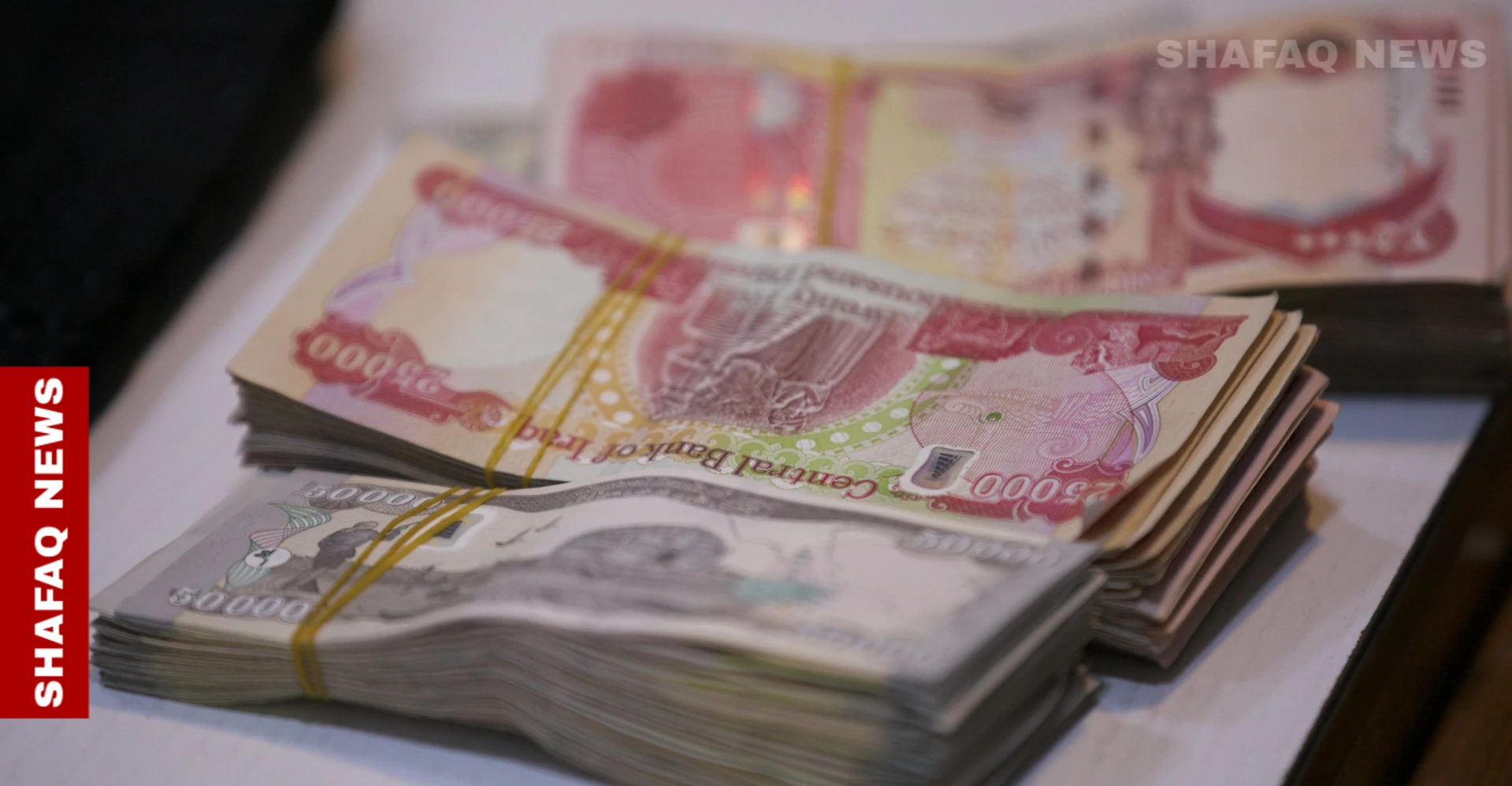
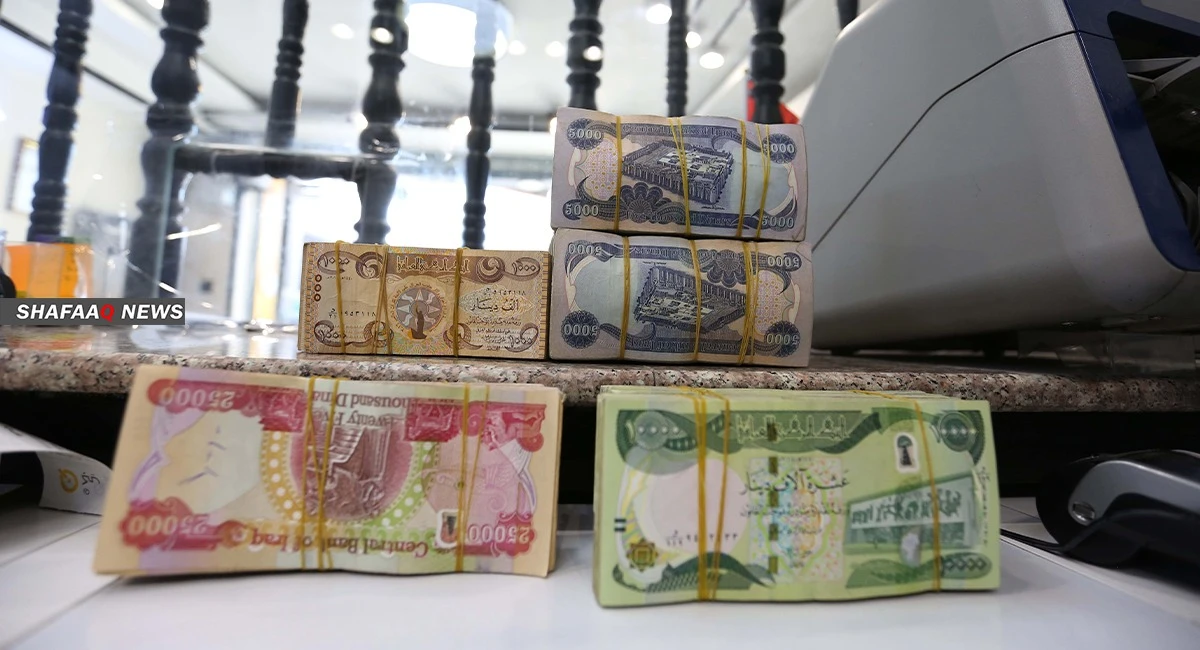
From Dollar to Dinar - Exchange Rate Policy Threatens the Stability of Iraqs Oil SectorThe Central Bank of Iraq’s decision to disburse dollar remittances and convert them into Iraqi dinars for contractors with oil companies operating in Iraq has raised widespread questions in economic circles regarding the implications of this measure on those companies, particularly with regard to external obligations and operating costs.

Experts believe that continuing to implement this measure may impose additional financial burdens on companies that rely on the dollar in their transactions, given the fluctuations in the exchange rate and the requirements of the oil market.

Economic expert Nabil Al-Marsoumi says in a tweet on social media that “more than 200 Iraqi companies contracted with oil licensing companies, employing more than 50,000 Iraqi workers, are threatened with large financial losses and layoffs, due to the Central Bank of Iraq’s directive not to disburse their dollar transfers in dollars and to convert them to dinars at the official rate, even though their contracts and expenses are also in dollars,” explaining that “the loss occurs due to the large difference between the official and parallel exchange rates of the dollar against the dinar,” and pointing to “the collapse of companies due to the exchange rate.”

For his part, Mahmoud Hassan, a representative of one of the oil companies, said at a demonstration organized by a number of subcontracted oil companies working with an international oil company, that “Iraqi companies working in the oil sector have been facing a continuous crisis for more than a year without reaching solutions,” warning of “serious repercussions that may lead to the collapse of a large number of those companies.”

Hassan tells Shafaq News Agency that “the contracting oil companies, which employ more than 40,000 Iraqi workers, have begun to face significant financial pressures after the state began paying their dues in dollars at the official rate of 131,000 dinars per 100 dollars, while the dollar is trading at around 155,000 dinars on the parallel market,” stressing that “this is causing direct losses for the companies.”

He adds that “the state, instead of supporting these companies, is pushing them to reduce their operations,” noting that “the continuation of this situation will force companies to lay off their workers and may lead to their complete shutdown,” pointing out that “most of the companies contracted with international oil companies are Iraqi companies, and they have already begun to be unable to pay the salaries of their employees.”

Hassan called on the Central Bank of Iraq to “intervene urgently and find a solution that takes into account the nature of these companies’ work and their obligations,” warning that “the continuation of the crisis will negatively affect the oil sector and the labor market in the country.”

A number of subcontracting companies operate in Iraq, which vary from project to project, and carry out services, supplies, maintenance, construction, transportation, and other work, within contracts with oil companies or with international companies linked to the contracts.

The contract is the law between the contracting parties.

In this context, economist Hamza Al-Jawahiri told Shafaq News Agency that “as long as the contracts stipulate that payment should be in dollars, then payment should be in dollars,” explaining that “payment in any other currency is contrary to what the contracts stipulate.”

He affirms that “these companies can file complaints with the competent courts, as the rule states that the contract is the law of the contracting parties.”

Migration of foreign oil companies

For his part, energy expert Ahmed Sabah says that “the Central Bank of Iraq’s decision to disburse payments to companies contracted with oil companies in Iraqi dinars instead of dollars may lead to the gradual exclusion of some foreign companies, in favor of focusing on local companies or those that accept dealing in dinars,” explaining that “a number of Western and foreign companies rely on external supply chains that require payment in dollars to secure equipment and services.”

He adds, to Shafaq News Agency, that “this measure is not always sustainable in the long term, especially given that the current government is a caretaker government, which reduces the possibility of establishing decisions with a long-term strategic impact on the oil sector,” suggesting that “some major foreign companies will refrain from expanding or entering into new contracts if this mechanism continues to be used.”

Sabah points out that “the decision may be temporary and subject to change in the coming period, especially if negative repercussions appear on the investment environment or the pace of work in the oil fields,” noting that “the measure is not a political reaction as much as it is a phased organizational step.”

Creating confidence in the Iraqi dinar

For his part, economist Dirgham Muhammad Ali believes that “the attempt to avoid creating a parallel market for the dollar prompted the Central Bank to take a number of measures to enhance confidence in the dinar and strengthen it, but these measures were not fair in light of the continued gap between the official and parallel exchange rates.”

He adds, to Shafaq News Agency, that “the Central Bank is required to reconsider the policy of mandatory currency conversion, due to the losses it causes to traders, as well as the loss of an important channel for the market to inject dollars legitimately, away from illegal trading and dealing in foreign currency,” stressing the need to “either convert at a real and fair price or find a different mechanism for dealing with foreign companies.”

Economic circles warn that the loss or collapse of secondary oil companies contracted with international and local oil companies will lead to the disruption of operational work in the oil fields, especially maintenance, logistics and equipment work, which will negatively affect the stability of production, as well as the loss of tens of thousands of job opportunities, given that these companies rely mainly on Iraqi labor.

The collapse of these companies would also weaken supply chains and raise operating costs for foreign companies, which might lead some of them to reduce their activity or refrain from entering into new projects, which would affect the oil investment environment and limit the role of the local private sector.

Shafaq.com

Posted in Uncategorized | Comments Off on From Dollar to Dinar: Exchange Rate Policy Threatens the Stability of Iraq’s Oil Sector