
Analysis: Iraq races to maximize its oil revenues before global demand declines
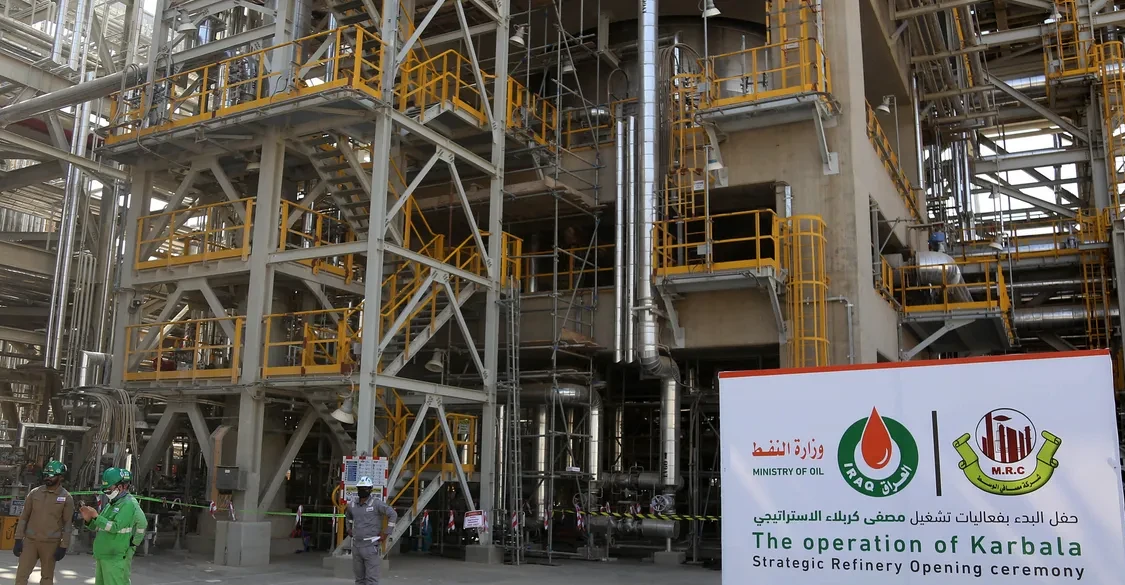 Reuters highlighted Iraq’s move to increase its oil production and maximize the benefit from its reserves, noting that Baghdad, along with the UAE, is racing against time to convert its reserves into revenues before the global shift in the energy sector leads to a decline in oil demand.
The agency stated, in an analysis published in its “Gulf Currents” bulletin, that Iraq and the UAE, despite their different economic circumstances, are adopting an approach based on the premise that postponing the exploitation of oil reserves may be more costly than accelerating their production at the present stage.
She pointed out that Iraq relies on oil for about 88% of government revenues, explaining that the recent war and the accompanying unrest prompted Baghdad to reduce its daily production from about 4.2 million barrels to less than 1.5 million barrels during May, which increased the need to raise production to compensate for lost revenues.
She added that new investments worth billions of dollars from BP, Total Energies and ExxonMobil have boosted expectations that Iraq can turn its large oil reserves into sustainable financial returns, but this trend coincides with concerns about a structural decline in global oil demand in the coming years.
She pointed out that the biggest challenge lies in the possibility that a number of producing countries will rush to increase supplies at the same time, which could lead to a glut in the market and a drop in prices, given expectations that global supply will rise by about eight million barrels per day during 2027, compared to slower growth in demand.
Reuters concluded that Iraq and the UAE’s gamble hinges on timing, amid questions about when global oil demand will permanently decline, and whether producers will be able to maximize returns from their reserves before that happens.
Iraqi Prime Minister Ali al-Zaidi had announced Iraq’s desire to raise crude oil production rates to about 7 million barrels per day, and indicated that American companies had been informed of this vision.
Shafaq.com