
Security cooperation between Baghdad and Erbil: Will it bring American oil companies back to Kurdistan?
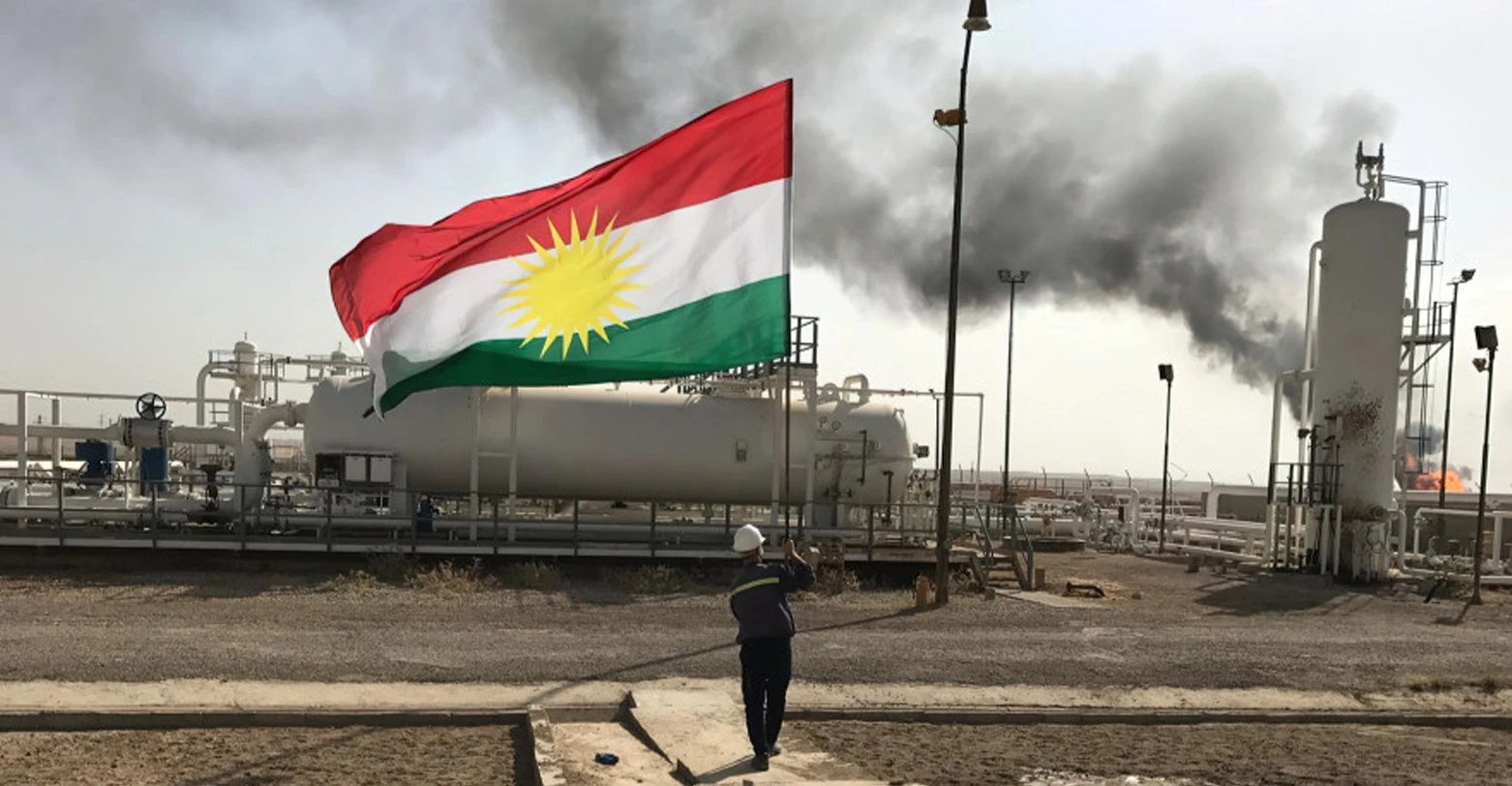 Security coordination between Baghdad and Erbil is flourishing despite years of regional conflict, which is enticing American and Western oil companies to return to the Kurdistan Region, while Baghdad is moving to deploy air defense systems in the region to secure an air protection umbrella for it, according to a summary presented by the British website “Amwaj”. News
The air defense systems are intended to protect oil and gas fields from a repeat of the drone attacks that have plagued such sites in recent years.
According to the British website’s report , translated by Shafaq News Agency, this security agreement between Baghdad and Erbil comes at a time when Prime Minister Ali al-Zaidi pledged to foreign energy companies that Iraq would be able to protect their investments .
The British report continued that the potential deployment of air defense systems could represent a significant shift in the historically strained relationship between the federal government and the region, noting that the ongoing dialogue about air defense systems also coincides with the efforts made by US Presidential Special Envoy Tom Barrack to unite the two neighbors within a single economic and security framework .
Although he pointed to “headwinds” represented by the Kurdish leaders’ commitment to ensuring that the regional government retains control over its security and autonomy, he believed that the direct threat of regional escalation and the shared vulnerability of Iraq’s vital energy infrastructure necessitate a practical compromise . In this context, he noted the recent visit of a high-level Iraqi security delegation to Erbil to assess the mechanisms for deploying air defense systems at energy sites in the region, even though federal officials had previously expressed concern about Kurdish forces gaining more autonomy in security matters.
Therefore, the report considered that visit to indicate a shift in priorities, and that this increased security coordination is driven by the shockwaves caused by the Israeli-American strikes on Iran on February 28, as the region found itself on the front lines of retaliatory attacks, including targeting energy infrastructure sites, some of which are linked to international companies such as the US-based Carr Group and HKN.
According to the report, these attacks disrupted domestic production and exposed deep vulnerabilities of Western commercial interests to Iranian-backed militias.
The report added that the al-Zaidi government, recognizing that international oil companies would not resume operations without strict security guarantees, appeared to have moved quickly to bridge the historical gap between Baghdad and Erbil .
The report quoted Caroline Rose, a researcher at the Soufan Center in the United States, as saying that the potential deployment of air defense systems in the Kurdistan Region would represent a “new level of relations” between the federal and regional authorities, after attacks on energy sites revealed the vulnerability of these facilities. She added that this mutual threat has prompted both sides to postpone their long-standing disputes, at least partially, in order to establish “sustainable air defense systems” around vital infrastructure .
While Rose said that the possibility of concluding an air defense agreement could be a starting point for further coordination, and that current efforts would primarily represent a “confidence-building measure,” the report quoted Erbil-based analyst Vladimir van Wilgenburg as saying that the move to deploy air systems “could translate into broader security cooperation, such as joint exercises involving Iraqi security forces and the Peshmerga.”
The report quoted Mohammed Saleh, a researcher at the American Foreign Policy Research Institute, as saying that the move by Baghdad towards the region was long overdue, considering that Washington must pressure Baghdad to facilitate the deployment of the air systems, but he warned that the systems should not become a means for Baghdad or the factions allied with Iran to expand their influence and control over the Kurdistan Region.
After discussing al-Zaidi’s campaign to “monopolize weapons,” which primarily concerns groups operating under the banner of the Popular Mobilization Forces, the report noted that Kurdish leaders say that Baghdad’s efforts will not extend to the Peshmerga.
The report quoted Saleh as saying that there are no plans to “subject the Peshmerga” to the same disarmament procedure, noting that the special status of the Peshmerga is recognized under Article 121 of the Iraqi Constitution, and that, in contrast, the Popular Mobilization Forces were only formalized as an element of the Iraqi armed forces under the parliamentary mandate in 2016 . Arabs& Middle Easterners
The report stated that the flourishing coordination between Baghdad and Erbil on security is playing a role in enticing Western oil companies to return to Iraq, pointing, for example, to the position of Chevron and Halliburton in meeting with Iraqi officials to hold talks on restarting their investments, coinciding with hopes that Iranian-American talks could prevent a renewal of the regional conflict.
The report noted that the apparent interest shown by Western companies in this return is consistent with broader US strategic objectives aimed at countering increasing Chinese and Russian involvement in Iraq’s energy sector.
Wilgenburg was quoted as saying that “the Trump administration was one of the few administrations that managed to bring American oil companies back into the Iraqi energy sector.”
The report concluded that the future benefit of Iraq’s oil and gas sector depends on addressing the root cause of instability, rather than merely protecting against it. While tactical defensive measures in Iraqi oil fields may provide immediate reassurance to foreign investors, they do not eliminate the broader, fundamental political and military threats to Iraq’s stability. Therefore, the report quoted Wilgenburg as saying that any move by Baghdad to “dismantle the Popular Mobilization Forces” would be more effective than deploying air defense systems in the Kurdistan Region.
Shafaq.com