
Amid threats of US tariffs, Iraq remains the largest importer of Iranian goods, with purchases totaling $10 billion.
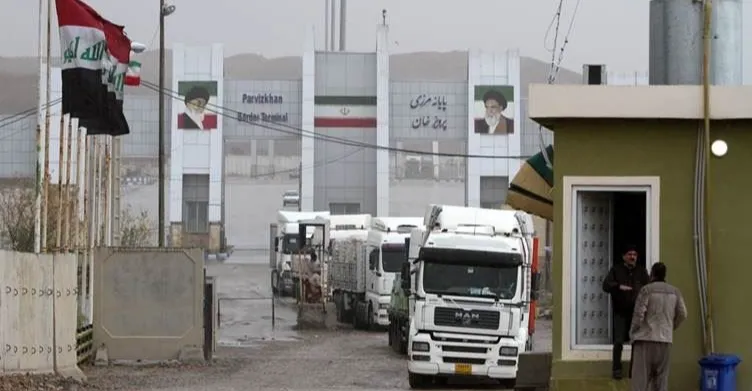 In recent days, the United States announced that any country that conducts trade with Iran will face a 25% tariff on its trade with the United States, a move that could include Iraq, which is among the Arab countries most closely linked to trade with Tehran.
The US decision comes at a time when Iran is witnessing its largest anti-government protests in years, within the context of a series of sanctions imposed by Washington on Tehran for years.
In this context, Middle East News reported on Wednesday that Iraq tops the list of countries importing Iranian goods, with purchases amounting to about $10 billion during the period between April 2024 and January 2025, followed by the UAE with about $6 billion, and then Turkey with $5.5 billion.
According to official data from the Iranian Customs Administration, the volume of non-oil trade between Iran and its fifteen neighboring countries reached $13.42 billion during the period from March 20 to June 21 of last year, with the exchange of about 23 million tons of goods.
In terms of exports, Iraq remained the primary destination for Iranian goods, with a value of $1.9 billion, followed by the UAE at $1.6 billion, then Turkey at $940 million, Afghanistan at $510 million, and Oman at $437 million. Imports from neighboring countries reached $6.8 billion, with the UAE topping the list of countries supplying Iran with over $3.9 billion, followed by Turkey at $1.98 billion, then Russia at $353 million, and Oman at $223 million.
According to the same data, the volume of non-oil trade between Iran and neighboring countries continued to rise, recording an increase of 21% year-on-year until March 19, 2025, reaching $74.32 billion, with exports rising to $36.01 billion compared to imports of $38.31 billion.
Despite concerns expressed by Iraq, the UAE, and Oman regarding the impact of the US tariffs, the decision has not yet included clear details on the implementation mechanism or any potential exemptions. In this context, the UAE Minister of Foreign Trade, Thani Al Zeyoudi, stated that his country is monitoring the situation to determine the extent of the decision’s impact on food imports.
Turkey is also facing a state of confusion as its trade with the United States expands from $30 billion to $100 billion, but it knows how to deal with such situations without a direct clash with Washington, according to analyst Taha Aydinoglu.
In contrast, China, the largest buyer of Iranian oil, continues to protect its interests and oppose any unilateral sanctions, while European economies such as Germany and Switzerland, along with India and Uzbekistan, also appear to be exposed to the impact of this tariff, reflecting the widening commercial reach of Iran across different continents.
Shafaq.com