The coordinating body will meet early next week to decide on al-Maliki’s nomination for prime minister.
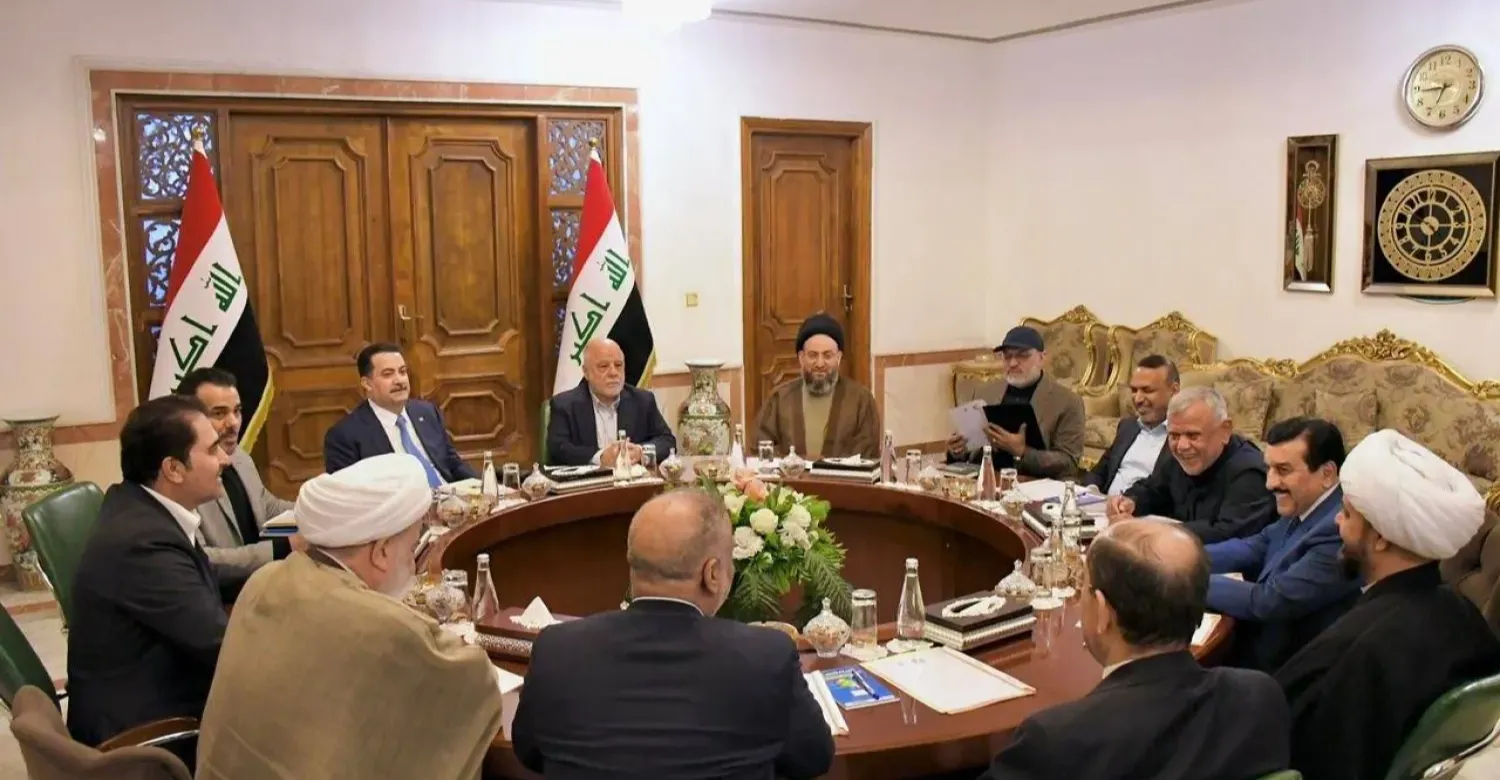 An informed source revealed on Tuesday that the Shiite Coordination Framework forces will hold their periodic meeting early next week to decide on the nomination of State of Law Coalition leader Nouri al-Maliki for the position of Prime Minister in the new government.
The source told Shafaq News Agency that “the Shiite House forces will hold their meeting next Saturday to discuss a number of issues, including understandings between some of the active forces within the coordination framework and the political scene.”
He explained that the meeting would include “discussing the issue of nominating Maliki for the next government, and assessing the final positions of the framework leaders regarding Maliki’s nomination for the premiership for the third time.”
The source also indicated that “the withdrawal and resignation of the leader of the Reconstruction and Development Coalition, the outgoing Prime Minister Mohammed Shia al-Sudani, from the race to win the premiership for the second time seems to have been a political tactic in order to put al-Maliki in front of the coordination framework, especially since there are some parties that do not want al-Maliki to return to power amidst the upcoming challenges and changes internally and regionally.”
He pointed out that the coordinating framework wants to form “a strong government acceptable to all political parties, capable of achieving balance in managing the next phase, in addition to assessing the general situation and ending the state of political stagnation and deadlock, along with other issues.”
The source added that “the issue of side understandings between some of the framework forces will also be discussed, in reference to (the understandings between the Reconstruction and Development bloc and the State of Law coalition and the formation of a unified parliamentary front), and the effects of this on the Shiite house, as it may cause the disintegration of the coordination framework.”
The spokesman for the Reconstruction and Development Coalition, Firas al-Muslawi, confirmed yesterday, Monday, that the head of the coalition, Muhammad Shia al-Sudani, had withdrawn his candidacy for the position of Prime Minister in favor of the head of the State of Law Coalition, Nouri al-Maliki, while revealing the formation of the “largest parliamentary bloc” between the two coalitions.
Al-Muslawi told Shafaq News Agency, “The coordination framework made a decision to authorize Al-Sudani and Al-Maliki to agree on the nomination of a candidate for the next prime minister. More than one meeting took place between them to discuss the government program and the upcoming challenges. Therefore, we and the leadership of the Reconstruction and Development Coalition unanimously decided (leaders and members) that Al-Sudani would withdraw his nomination in favor of Al-Maliki.”
He added that “the decision came to break the deadlock in the matter of choosing a framework candidate for the premiership and to adhere to constitutional timelines, and for several other reasons, including our concern for the interest of Iraq,” indicating that “the names included in the list of candidates are obscure names and cannot be named for this important position, which is the highest executive authority in the country.”
It is noted that a source within the Shiite coordination framework revealed to Shafaq News Agency that the forces that met last Saturday at the home of the leader of the Iraqi Foundation Coalition, Mohsen al-Mandalawi, sought clarification on the reasons that prompted the outgoing Prime Minister, Mohammed Shia al-Sudani, to withdraw from the nomination and give space to the leader of the State of Law Coalition, Nouri al-Maliki, to run.
According to the source, Maliki’s nomination was supported by most of the Coordination leaders, with the exception of the leader of the Wisdom Movement, Ammar al-Hakim, who sought the opinion of the religious authority and sent a message to the religious authority in Najaf. However, the latter renewed its refusal to interfere in the nomination of the prime minister, and thus the competition became limited to Maliki only.
Since the ratification of the election results held in November 2025, the Coordination Framework has begun holding meetings and conducting discussions among its forces and with other parties to decide on the position of Prime Minister, which is allocated to the Shiite component according to the custom in place after 2003.
Shafaq.com
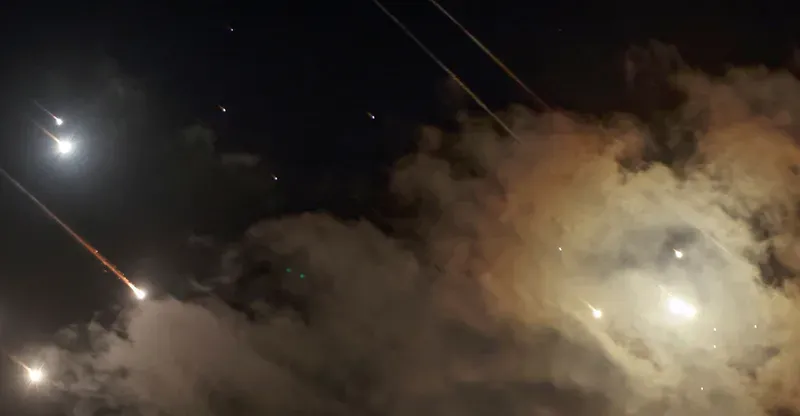 The president of the Institute for Global Policy in Washington, Paulo Van Schirach, ruled out the possibility that US President Donald Trump would stand idly by in the face of the crackdown on protests in Iran, suggesting that a US military strike against “sensitive” targets inside Iran was likely, despite his warning of the risks of a retaliatory response that could affect US bases in Iraq and the Gulf.
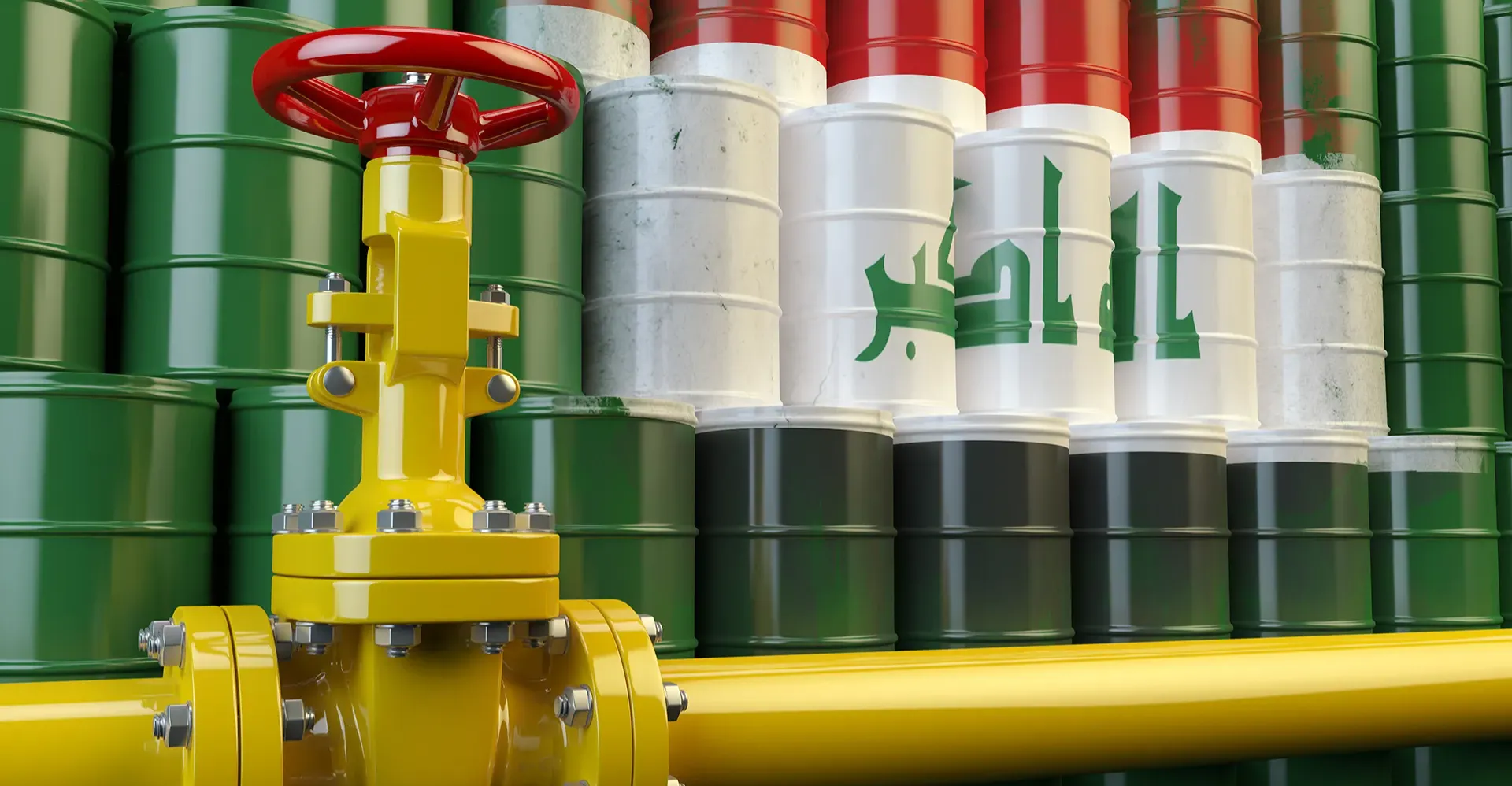 The U.S. Energy Information Administration announced on Tuesday that Iraq’s oil exports to the United States totaled more than 7.5 million barrels during December.
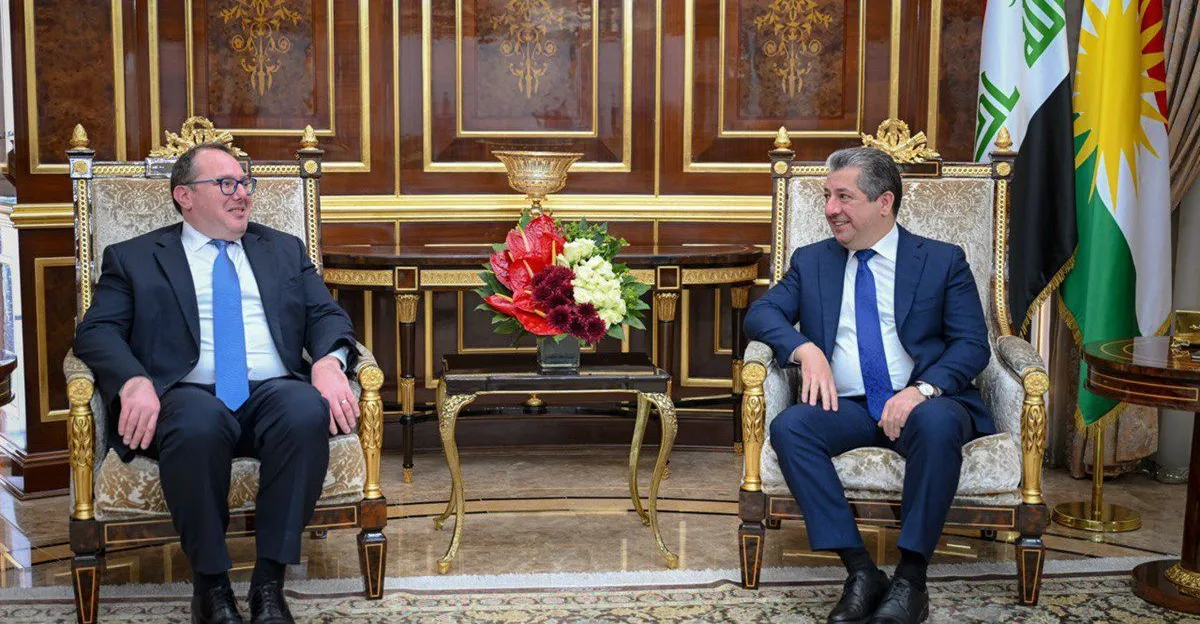 The acting US ambassador to Iraq, Joshua Harris, affirmed on Tuesday that the Kurdistan Region is a strong and pivotal partner and ally of the United States in the region.
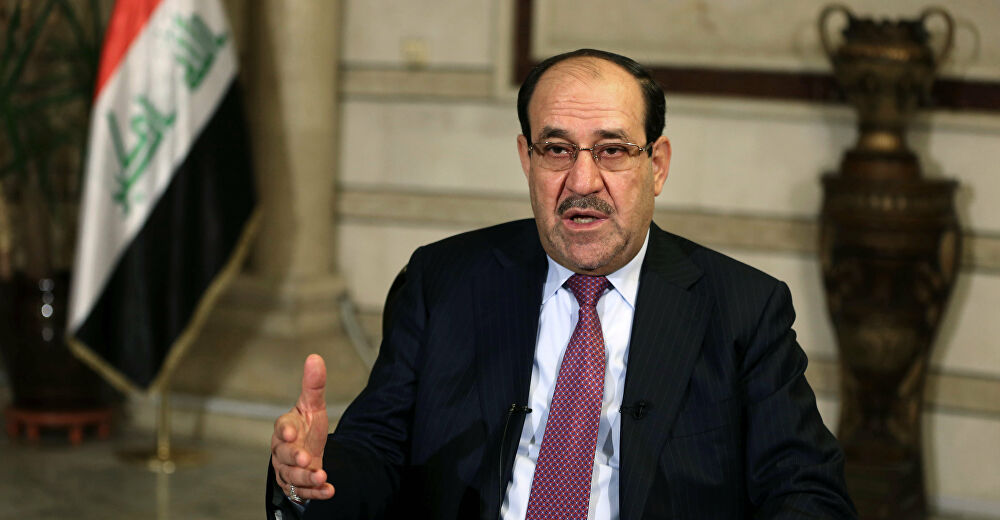 On Tuesday, MP Ibtisam al-Hilali, from the State of Law parliamentary bloc, confirmed that the leader of the State of Law coalition, in his capacity as the next prime minister, will cancel all decisions issued by the caretaker government headed by Mohammed Shia al-Sudani recently.
 The Ministry of Finance announced on Tuesday that Iraq has achieved the second highest improvement globally in international governance indicators. The ministry stated in a statement that “Iraq has achieved a new international achievement within the World Governance Indicators (WGI) report issued in December 2024, according to Fitch and Standard & Poor’s agencies, as Iraq recorded the second highest improvement globally on an annual basis, reflecting the success of the reform steps adopted by the government in state institutions.”
 The Ministry of Transport announced on Tuesday that the Grand Faw Port has entered an advanced stage of preparations for commercial operation following the completion of its main berths for receiving cargo ships. Ministry spokesperson Maitham al-Safi told the official news agency that “the Grand Faw Port has entered an advanced stage of preparations for commercial operation after the completion of the main berths for receiving commercial vessels.” He added that “work is currently underway to finalize the necessary infrastructure for the port’s commercial operation and complete maritime connections with regional and international ports to ensure international competitiveness.” He pointed out that “the government is giving great attention to selecting port operators with outstanding international experience and qualifications,” explaining that “the Ministry of Transport has worked with international consulting firms and possesses the specialized expertise that qualifies it to select competent operators with world-class standards.” He continued, stating that “the first phase of the port’s operation will have a capacity of 3.5 million containers annually.”
 The Atlantic Council called on the United States to focus its Iraq policy not on individuals and leaders, but on strengthening institutional processes, arguing that although outgoing Prime Minister Mohammed Shia al-Sudani appears to be “the safest option,” this perspective conflates personal leadership qualities with the deeper structural problems that have historically plagued Iraq.
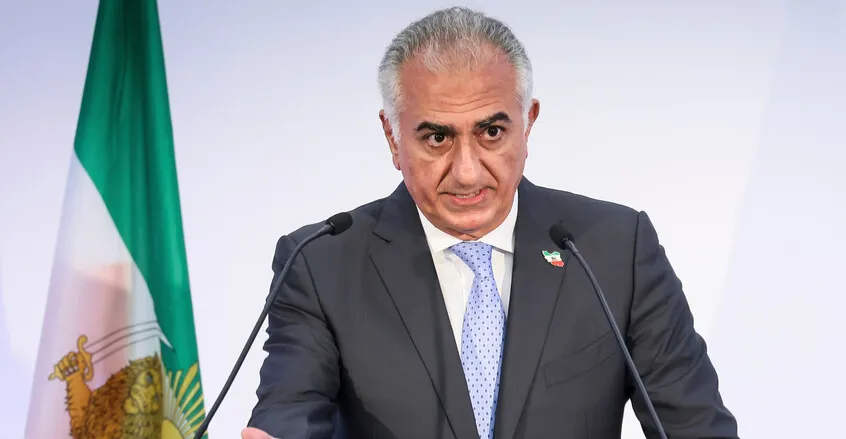 On Friday, Reza Pahlavi, the crown prince of the former Iranian regime, sent a message to US President Donald Trump, commenting on the internet and communications blackout in Iran.
 USD-Iraqi dinarEconomic expert, Nabil Al-Marsoumi, described the decision of the Central Bank of Iraq to fix the exchange rate of the dollar in the 2026 budget as an expected step aimed at strengthening monetary stability and supporting the investment climate in the country.