Kurdistan Finance Ministry: Baghdad cut 80 billion dinars, and the funding is insufficient to cover salaries.
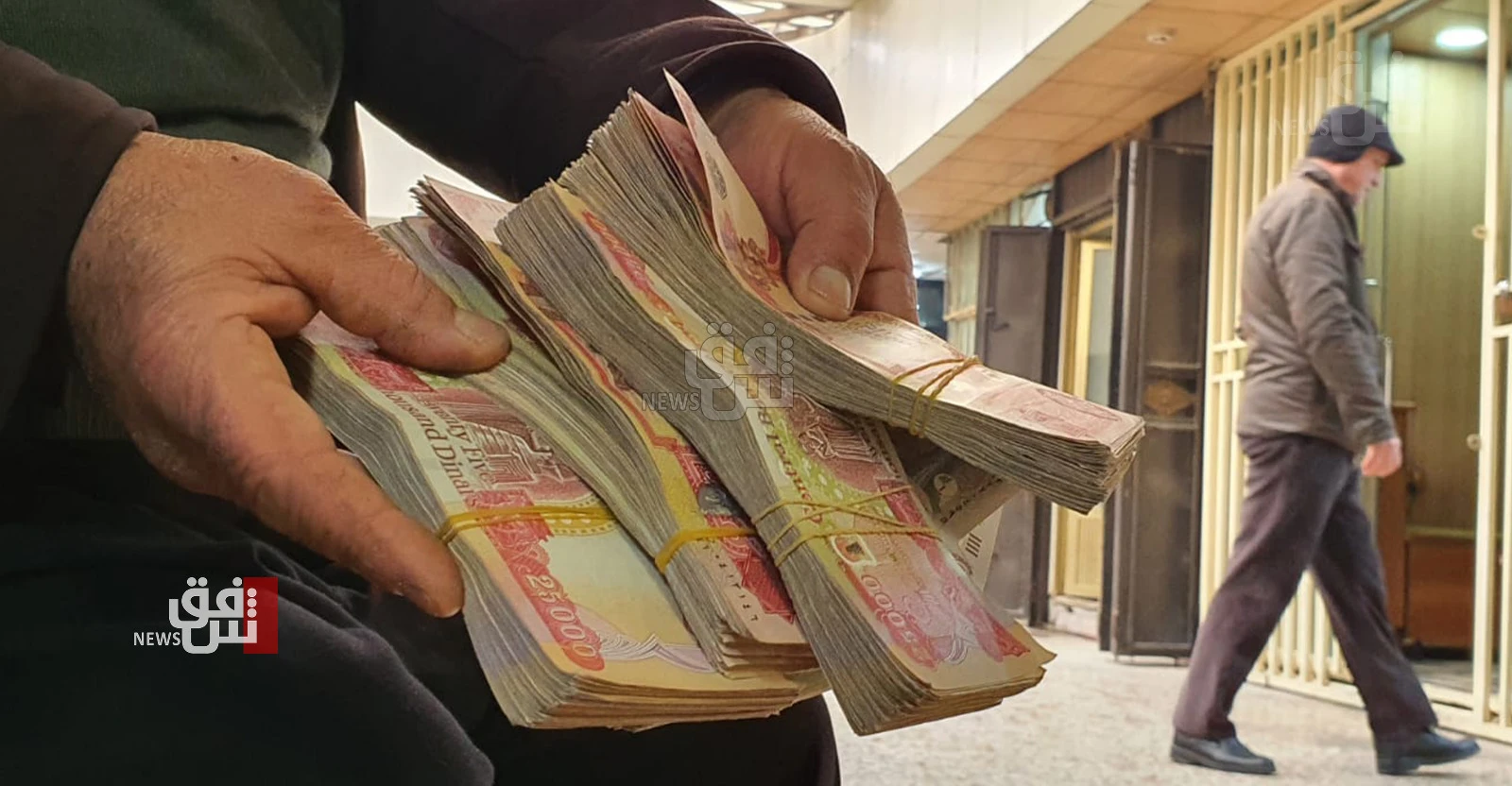 The Ministry of Finance and Economy of the Kurdistan Regional Government announced on Tuesday that it had deposited 50 billion dinars into the account of the Federal Ministry of Finance as a payment of half of the non-oil revenues for the month of May, stressing that Baghdad had sent funding less than the amount required to cover the salaries of the region’s employees by more than 80 billion dinars.
The ministry stated in a statement received by Shafaq News Agency that the regional government sent, at the end of last week, the list of salaries for the month of May and the audit balance report for the month of April to the federal Ministry of Finance, noting that on Monday morning, in accordance with an official letter, it deposited an amount of 50 billion dinars into the bank account of the federal Ministry of Finance at the Erbil branch of the Central Bank of Iraq, even though the month has not yet ended.
She added that “this measure is unprecedented in any accounting system,” explaining that “Baghdad requested half of the non-oil revenues for the month of May six days before the end of the month, but the regional government responded in order to cut off any pretexts,” according to the statement.
The ministry indicated that “the Federal Ministry of Finance sent only 890 billion and 502 million dinars, out of more than 970 billion dinars representing the total funding for the salaries of employees and salary recipients in the region, which means there is a shortage of more than 80 billion dinars.”
The ministry confirmed: “Despite the official holiday, we have directed all banks, treasuries and directorates to start disbursing salaries immediately upon receiving the funds from the Central Bank of Iraq and transferring them to private banks within the My Account project and to the governorates and independent administrations.”
She explained that “the distribution of salaries will begin after the announcement of the schedule, and will continue during the days of Eid al-Adha as well, starting from ten o’clock in the morning, whether in cash or through the My Account project,” calling on the ministry to call on employees who receive their salaries in cash to “visit the banks starting from five o’clock in the evening, while those covered by the My Account project can withdraw their salaries through ATMs starting from three o’clock in the afternoon.”
The ministry concluded its statement by emphasizing that it “decided to cover the deficit in salaries through borrowing, to ensure that all employees receive their dues before the holiday and that they are not delayed.”
The Ministry of Finance and Economy of the Kurdistan Regional Government announced yesterday, Monday, that it had deposited 50 billion dinars in “non-oil revenues” for the month of May into the account of the Federal Ministry of Finance.
Shafaq.com

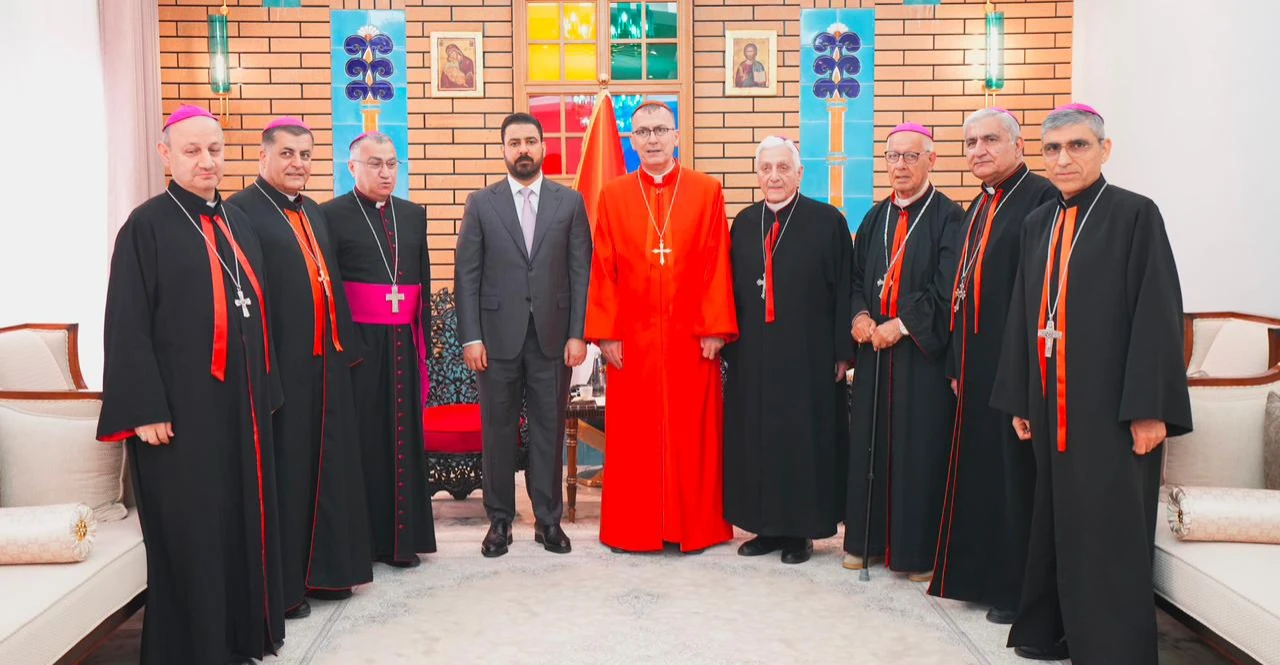 Prime Minister Ali al-Zaidi called on Christian businessmen abroad on Tuesday to return to Iraq and contribute to development.
 MP Adel Al-Mahalawi warned on Wednesday of the seriousness of the current economic situation in the country, describing the crisis as “major” due to the tensions and rapidly evolving circumstances in the region.
 The head of the Conscious Elites Gathering, Hussein Ali Jassim, described the current government on Wednesday as a direct product of American directives and Trump’s approval. He asserted that the pressures exerted by Washington on the political scene prevent this cabinet from achieving any tangible progress in restoring national sovereignty or freeing Iraqi funds seized from foreign control.
 Member of the Parliamentary Integrity Committee, Ahmed al-Shammari, revealed on Wednesday that there is close parliamentary and oversight activity underway to reopen the infamous “Steal of the Century” case in the coming days. He emphasized the determination to pursue and expose all names and figures involved in this major economic crime without any red lines.
 The State of Law Coalition parliamentary bloc revealed on Wednesday its imminent legal action to file a formal appeal with the Federal Supreme Court regarding the constitutional and procedural violations that occurred during the vote on the government program and the formation of the cabinet. MP Ibtisam al -Hilali, a member of the bloc, told Al-Maalomah News Agency that “the session to grant confidence to the government and the ministerial program was conducted in a manner that violated proper constitutional procedures.” She revealed that “the State of Law Coalition intends to appeal to the Constitutional Court due to the existence of highly significant objective and procedural grounds.”
 MP Ali Shaalan pointed out on Wednesday a decline in the performance of the Speaker of Parliament during some recent periods, considering this stumbling block to have contributed to delaying the resolution of a number of scheduled issues within the parliament.
 Prime Minister Ali Faleh al-Zaidi directed officials on Wednesday to follow up on the issue of increasing oil exports and diversifying export routes.
 The adoption of electronic voting technology in the Iraqi Parliament represents a strategic step towards enhancing the freedom of expression of representatives and ending the skepticism and controversy that have long accompanied the manual counting and sorting of crucial legislation.
 Member of Parliament Miqdad al-Khafaji confirmed on Wednesday that the United States of America holds the reins of the Iraqi economy and directly controls the dollar exchange rates, indicating that the mechanism for supplying oil funds gives Washington the power to impose its will on Baghdad.