“Iraq is in a predicament”… More than 40 million barrels of its oil are stuck west of Hormuz

“Iraq is in a predicament”… More than 40 million barrels of its oil are stuck west of Hormuz

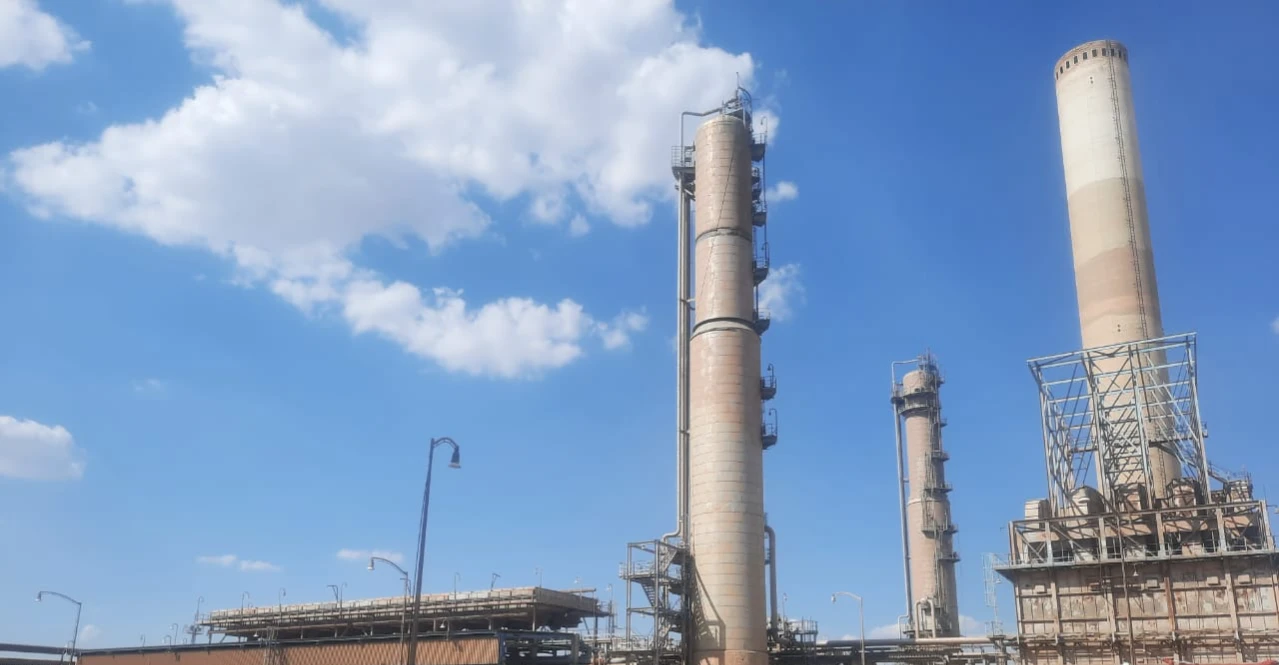
Iraq is in a predicament... More than 40 million barrels of its oil are stuck west of HormuzRecent shipping and market data has revealed large quantities of Iraqi crude oil piling up on tankers anchored west of the Strait of Hormuz, amid escalating attacks on ships and continued restrictions on navigation in the vital waterway.

According to shipping tracking data, there are about 163 million barrels of Gulf crude oil stuck in the area west of the Strait, including 43 million Iraqi barrels, as a result of slowing transit operations and increased security risks that have prompted a number of shipping companies to reduce or postpone their trips.

These developments come after four commercial vessels and oil tankers were attacked since May 3, in addition to the targeting of the Fujairah oil hub in the UAE, which has increased market caution and raised transportation and insurance costs for shipments.

The accumulation of unexported shipments increases the pressure on Iraq, which faces a challenge in maintaining the flow of its oil exports, especially given its limited storage capacity and the lack of wide alternative export outlets outside the Gulf.

Shafaq.com

Posted in Uncategorized | Comments Off on “Iraq is in a predicament”… More than 40 million barrels of its oil are stuck west of Hormuz

The US Secretary of Defense calls al-Zaidi to discuss activating security cooperation.

The US Secretary of Defense calls al-Zaidi to discuss activating security cooperation.

The US Secretary of Defense calls al-Zaidi to discuss activating security cooperationOn Wednesday, Prime Minister-designate Ali Faleh al-Zaidi received a phone call from US Secretary of Defense Pete Hegseth, who congratulated him on being tasked with forming the new government.

This was stated in an Iraqi government statement received by Shafaq News Agency, which added that the call included discussions on bilateral relations between Iraq and the United States in various fields, particularly security cooperation, in accordance with the Strategic Framework Agreement between Baghdad and Washington.

Both sides emphasized the special nature of the relationship between the two countries and the importance of working to reactivate it in the area of ​​training, with the aim of strengthening the capabilities of the Iraqi armed forces and raising their level of efficiency.

Yesterday, a senior US State Department official stated that US facilities in Iraq had been subjected to more than 600 attacks during the period of military escalation with Iran, and at the same time called on Prime Minister-designate Ali al-Zubaidi to rein in the armed factions loyal to Tehran and hostile to Washington.

Shafaq.com

Posted in Uncategorized | Comments Off on The US Secretary of Defense calls al-Zaidi to discuss activating security cooperation.

Axios: Washington and Tehran are nearing an agreement to end the war.

Axios: Washington and Tehran are nearing an agreement to end the war.

Axios - Washington and Tehran are nearing an agreement to end the warUS officials said on Wednesday that Washington and Tehran are close to reaching an agreement on a one-page memorandum to end the war.

According to Axios, citing US officials, “The United States expects a response from Tehran on several key points within 48 hours.”

Officials indicated that “the agreement includes Tehran suspending uranium enrichment, Washington lifting sanctions and releasing Iranian funds, and both parties will lift restrictions on passage through the Strait of Hormuz.”

Earlier on Wednesday, US President Donald Trump suspended Operation Freedom, a military operation aimed at protecting ships in the Strait of Hormuz, citing progress in negotiations with Iran and a request from Pakistan and other countries.

Shafaq.com

Posted in Uncategorized | Comments Off on Axios: Washington and Tehran are nearing an agreement to end the war.

A parliamentary proposal would require al-Zidi and his ministers to make a written pledge before gaining confidence.

A parliamentary proposal would require al-Zidi and his ministers to make a written pledge before gaining confidence.

A parliamentary proposal would require al-Zidi and his ministers to make a written pledge before gaining confidenceOn Wednesday, Ali Al-Sarai, a member of the “Reconstruction and Development” bloc, revealed that he had submitted a request to the Speaker of Parliament to add a clause to the government program that Prime Minister-designate Ali Al-Zidi would present, which would require nominated ministers to make a written pledge before being granted confidence.

Al-Sarai told Shafaq News Agency that the proposal stipulates that ministers should not run for the upcoming parliamentary or provincial council elections, and that their first and second degree relatives should not run, with the aim of preventing ministries from being used for election propaganda and exploiting government power and influence in election campaigns.

He added that the proposal also includes those with the rank of minister and undersecretary, provided that the aforementioned paragraph is added later through an amendment to the election law.

It is noted that on Monday, April 27, 2026, the President of the Republic of Iraq, Nizar Amidi, tasked businessman Ali al-Zaidi with forming the new Iraqi government, after he was nominated by the Coordination Framework, succeeding Mohammed Shia al-Sudani.

The Iraqi parliament announced that the vote on the new government will take place next week, and that the names and the government program will be received by the end of this week.

Shafaq.com

Posted in Uncategorized | Comments Off on A parliamentary proposal would require al-Zidi and his ministers to make a written pledge before gaining confidence.

Al-Kaabi responds to calls for the “disarmament” of Iraqi factions: This is a red line and will not be surrendered, even at the cost of lives.

Al-Kaabi responds to calls for the “disarmament” of Iraqi factions: This is a red line and will not be surrendered, even at the cost of lives.

Al-Kaabi responds to calls for the disarmament of Iraqi factions - This is a red line and will not be surrendered even at the cost of livesAkram al-Kaabi, the leader of the Iraqi al-Nujaba Movement, responded on Wednesday to calls by the United States to “disarm” Iraqi factions, stressing that it is a “red line and will not be surrendered even if lives are sacrificed.”

In a post on the X platform, Al-Kaabi accused Israel of “direct Israeli incitement and provocation” of the US chargé d’affaires in Iraq to speak about the “resistance” weapons, expressing his regret that “a few (Iraqis) have become mouthpieces for these people,” and calling on Iraqi armed factions to “reject the very idea of ​​discussing this issue.”

He added, “The resistance’s weapons are a red line, (…) and we protected Iraq with them from the defilement of ISIS and their American masters,” stressing that these weapons “will not be surrendered as long as we have breath, and will not be taken even if lives are sacrificed.”

On April 27, 2026, the Commander-in-Chief of the Armed Forces, Mohammed Shia al-Sudani, issued decisions regarding restricting weapons to the state and taking firm measures against outlaws, as well as military penalties against security officials who fail to fulfill their duties.

The US Treasury Department announced on Tuesday that it is offering a reward of up to $10 million for information leading to Akram Abbas al-Kaabi, the leader of the Iraqi “al-Nujaba” movement.

The move comes as part of an escalating US campaign targeting leaders of Iraqi armed factions, as Washington previously announced a similar reward of $10 million for information on Hashim Finyan Rahim al-Saraji, known as Abu Ala al-Walai, leader of the Sayyid al-Shuhada Brigades in Iraq, and Haider Mazhar, known as Haider al-Gharawi, leader of the Ansar Allah al-Awfiya Movement.

According to the U.S. Diplomatic Security Service’s “Rewards for Justice” program, Washington accuses the faction leaders of leading a group loyal to Iran, and says its members were involved in killing Iraqi civilians and attacking U.S. diplomatic facilities, bases, and military personnel.

Shafaq.com


Posted in Uncategorized | Comments Off on Al-Kaabi responds to calls for the “disarmament” of Iraqi factions: This is a red line and will not be surrendered, even at the cost of lives.

The Interior Minister announces the completion of the “concrete wall” on the Iraqi-Syrian border.

The Interior Minister announces the completion of the “concrete wall” on the Iraqi-Syrian border.

The Interior Minister announces the completion of the concrete wall on the Iraqi-Syrian borderInterior Minister Abdul Amir al-Shammari announced on Wednesday the completion of the “concrete wall” along the Iraqi border with Syria.

Al-Shammari said during a ceremony held on this occasion, according to a statement received by Shafaq News Agency, that this project, which has been underway since 2022, represents the true “safety valve” for Iraq, as it puts an end to security challenges, foremost among them terrorist infiltration and smuggling operations.

Iraq had built a concrete barrier wall on the western border strip with Syria, in the “Al-Qaim” area north of the Euphrates River, with a length of 160 kilometers and a height of 3 meters, with the aim of strengthening border security and preventing smuggling operations and the flow of infiltrators from various armed organizations across it.

Last year, the Security and Defense Committee of the Iraqi Parliament confirmed that the security situation on the border with Syria was well secured, due to the fact that Iraq, from the first moments of the fall of Bashar al-Assad’s regime on December 8, 2014, sent full security reinforcements from the Ministries of Defense and Interior, in addition to the Popular Mobilization Forces, as well as installing thermal cameras and observation towers and closing all gaps.

Shafaq.com

Posted in Uncategorized | Comments Off on The Interior Minister announces the completion of the “concrete wall” on the Iraqi-Syrian border.

A former US Army colonel predicts a “victory” declaration between his country and Iran as part of a settlement to end the war.

A former US Army colonel predicts a “victory” declaration between his country and Iran as part of a settlement to end the war.

A former US Army colonel predicts a victory declaration between his country and Iran as part of a settlement to end the warRetired U.S. Army Colonel Miles B. Caggins III predicted on Wednesday that Washington and Tehran would continue to de-escalate tensions within the framework of the diplomatic track in preparation for announcing a comprehensive peace agreement in the Middle East region.

“After weeks of war and the resulting major disruptions to the global oil, natural gas, helium and fertilizer industries, all parties are looking to end the war,” said Kagenz III, a nonresident senior fellow at the New Lines Institute, to Shafaq News. He added that “de-escalation is likely to continue through peace negotiations that allow all parties to declare victory.”

This statement comes as US officials have said that Washington and Tehran are close to reaching an agreement on a one-page memorandum to end the war, stressing that the United States expects a response from Tehran on several key points within 48 hours.

According to Axios, citing those officials, the agreement includes Iran suspending uranium enrichment, Washington lifting sanctions and releasing Iranian funds, and both sides lifting restrictions on passage through the Strait of Hormuz.

The website revealed that the current memorandum between Tehran and Washington declares the end of the war and the start of 30 days of negotiations regarding the Strait of Hormuz, the nuclear file, and sanctions, stressing that US forces will reimpose the naval blockade or resume military action if negotiations with Iran collapse.

Shafaq.com

Posted in Uncategorized | Comments Off on A former US Army colonel predicts a “victory” declaration between his country and Iran as part of a settlement to end the war.

The Peshmerga demand to be included under the laws and privileges of the Iraqi forces.

The Peshmerga demand to be included under the laws and privileges of the Iraqi forces.

The Peshmerga demand to be included under the laws and privileges of the Iraqi forcesOn Wednesday, the Chief of Staff of the Ministry of Peshmerga, Lieutenant General Issa Ozeer, discussed with the members of the Security and Defense Committee in the Iraqi Parliament, Sherwan Dubardani and Chiman Barzani, the inclusion of the Peshmerga forces in the laws and privileges specific to the Iraqi security forces.

The Ministry of Peshmerga stated in a statement received by Shafaq News Agency that the meeting, which was held at the Ministry’s headquarters in Erbil, addressed strengthening relations between the Ministry of Peshmerga and the Security and Defense Committee in the Iraqi Parliament.

She added that both sides stressed the importance of legal coordination to ensure that decisions and laws related to security forces are reflected in the Peshmerga forces, as they are an essential part of the Iraqi defense system.

The statement indicated that another aspect of the discussions addressed draft laws related to services and privileges granted to the armed forces, with emphasis on the need for the Peshmerga forces, along with other Iraqi forces, to be an essential part of the beneficiaries of those privileges and new draft laws.

Shafaq.com

Posted in Uncategorized | Comments Off on The Peshmerga demand to be included under the laws and privileges of the Iraqi forces.

Trump: The operation will end if Iran agrees to the deal, otherwise there will be a larger bombing campaign.

Trump: The operation will end if Iran agrees to the deal, otherwise there will be a larger bombing campaign.

Trump - The operation will end if Iran agrees to the deal otherwise there will be a larger bombing campaignUS President Donald Trump suggested on Wednesday that Tehran would agree to the deal to open the Strait of Hormuz, warning of a “bigger bombing” if it did not.

Trump said, “If Iran agrees to what has been agreed upon, then Operation Epic Wrath will be over.”

He added that “the Strait of Hormuz will be opened to everyone, including Iran” if the agreement is approved.

He warned that “if Iran does not agree, the bombing will begin at a much higher level,” while suggesting that “Iran will most likely agree to this agreement.”

US officials said earlier on Wednesday that Washington and Tehran were close to reaching an agreement on a one-page memorandum to end the war.

According to Axios, citing US officials, “The United States expects a response from Tehran on several key points within 48 hours.”

Shafaq.com

Posted in Uncategorized | Comments Off on Trump: The operation will end if Iran agrees to the deal, otherwise there will be a larger bombing campaign.

Iraq’s oil discounts: A forced maneuver or a strategic loss?

Iraq’s oil discounts: A forced maneuver or a strategic loss?

Iraqs oil discounts - A forced maneuver or a strategic lossIn a market supposedly governed by cold, hard numbers, Iraq has delivered a bombshell that has turned the pricing rules upside down. Discounts exceeding $30 per barrel on Basra crude are not mere temporary reductions, but a clear indication that the oil market is no longer driven solely by supply and demand, but by risk, conflict, and influence. What is happening today is not traditional competition between producers, but a race for survival in an environment where safety margins are eroding and the definition of “fair price” is being redefined under geopolitical pressure. While prices are rising globally, Iraq has chosen to swim against the tide, a bold move that raises a crucial question: Are we witnessing a clever maneuver to seize markets, or the beginning of an economic hemorrhage that will be difficult to stem?

Under intense geopolitical pressure, Iraq, which relies on oil to finance more than 90% of its budget revenues, finds itself facing a stark dilemma: either maintain the flow of exports, even at low prices, or risk losing markets due to the soaring shipping and insurance costs associated with sensitive waterways like the Arabian Gulf. In this context, the discount of approximately $33 per barrel, equivalent to roughly 30% to 35% of an oil price hovering around $100, can be interpreted as a tool to compensate for risks that buyers are no longer willing to bear without compensation.

However, this policy, despite its tactical rationale, carries a direct economic cost. If we assume that Iraq exports approximately 3.3 million barrels per day, a discount averaging $30 translates to a loss of nearly $99 million daily, or more than $36 billion annually if this equation persists for an extended period. These figures are not theoretical; they practically represent a reduction in the state’s financial capacity to fund salaries, support services, and implement investment projects.

International experiences provide clear examples of this type of “forced pricing.” During the Western sanctions imposed on Russia after 2022, Moscow was forced to sell its oil at discounts that at times reached $25–$35 per barrel compared to Brent crude, leading to a decline in its oil revenues of nearly 20%, despite continued export volumes. Although Russia was later able to gradually rebalance its economy, this required time and a restructuring of its export networks and trade alliances.

Iraq’s situation differs in terms of infrastructure and logistical flexibility. While some countries have multiple export outlets or alternative pipelines that reduce their reliance on geographical bottlenecks, Iraq remains more vulnerable to fluctuations, limiting its room for maneuver. This makes price cuts less a strategic choice and more a reflection of pragmatic constraints. The most profound impact is seen in the general
budget.

If the budget is based on an estimated price of around $70 or $80 per barrel, actual sales at much lower levels will create a financing gap that could exceed 15% to 25% of total expected revenues, forcing the government to choose between increasing the deficit or reducing spending. In an economy where domestic activity is heavily dependent on government spending, any fiscal contraction will directly impact growth rates and employment opportunities.

Who profits from discounts? A look at market behavior reveals that
large discounts don’t go unnoticed. Refineries, particularly in Asia, and especially independent refineries in China and India, are among the biggest winners, as they obtain crude oil at prices lower than their competitors, thus boosting their profit margins. However, this doesn’t necessarily translate into a significant increase in demand. In many cases, the effect is limited to redirecting purchases towards cheaper crude rather than creating new demand.

This means that Iraq may succeed in retaining its customers, but it doesn’t necessarily guarantee expanding its market share, a crucial distinction in assessing the viability of this policy. Are discounts beneficial or detrimental?Despite all the above, this policy cannot be described as an outright loss. Losing markets or disrupting exports would have cost Iraq far more, not only in terms of revenue but also in terms of long-term loss of commercial confidence. Maintaining the flow of oil, even at a lower price, means preserving contractual relationships and supply chains, a critical element in a competitive market.

In conclusion , Iraq’s oil discounts reflect a clear economic paradox: they are simultaneously a short-term rescue tool and a long-term drain. Their success is measured not only by the volume of exports they maintain, but also by Iraq’s ability to exit them in a timely manner. The market may understand the discount as an exception, but it quickly comes to treat it as the norm if it persists, at which point restoring the true value of the oil becomes more difficult and costly.

Rawabetcenter.com

Posted in Uncategorized | Comments Off on Iraq’s oil discounts: A forced maneuver or a strategic loss?