
Washington threatens Baghdad with the “nuclear option”: Replace Fayhan and disarm the factions immediately.
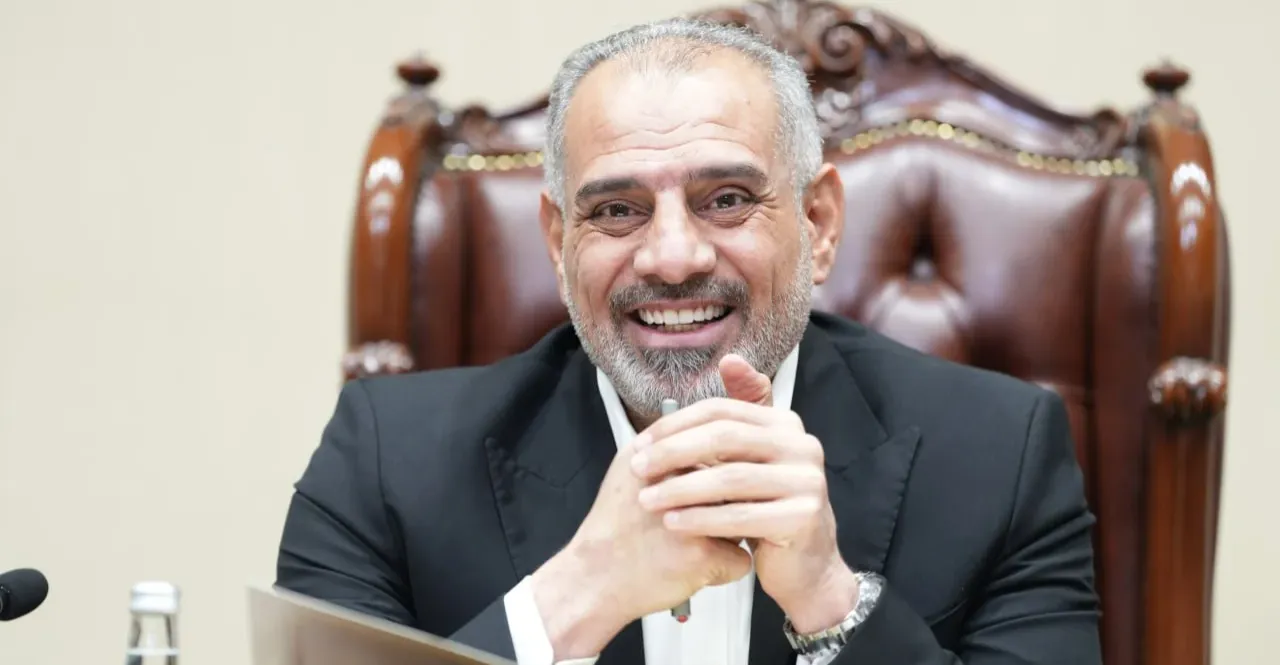 The British newspaper “Financial Times” revealed that the United States has been pressuring senior Iraqi politicians in recent weeks to form a government that does not include representatives of armed groups supported by Iran, through threats that include economic measures, such as reducing the supply of dollars sent in cash in exchange for Iraq’s oil sales .
The newspaper quoted informed sources in a report translated by Shafaq News Agency, stating that American officials, during their meeting with prominent Iraqi political leaders tasked with forming the next government in recent weeks, pushed for the presentation of a credible plan to disarm Iranian-backed armed groups quickly .
The report quoted five sources familiar with the talks as saying that US officials threatened punitive measures if this did not happen .
According to three sources, the threats included imposing economic measures, such as reducing the supply of dollars sent in cash in exchange for Iraqi oil sales .
According to the report, tensions with Washington escalated after the election last month of Adnan Faihan, a former member of Asaib Ahl al-Haq, who now leads its political wing, as first deputy speaker of parliament, in a country the report described as being seen as the last stronghold of Iranian influence in the Middle East .
The report quoted one of the sources as saying, “The American embassy completely lost its temper, told us that this was hostile and defiant behavior, and demanded that we replace him .”
The report noted that the coordinating framework that received the largest share of votes is leading the government formation process, and it includes members of several “militias” that the United States classifies as “terrorist” groups. It pointed out that although the fighters of these groups have become less visible now, they enjoy a strong presence in Iraq, while these groups have become part of the state’s security apparatus .
The report also considered Asaib Ahl al-Haq to be among the most influential of these groups, noting that Asaib is trying to reintroduce itself politically, and had a minister in the previous government .
The report indicates that after Asaib Ahl al-Haq came in third in the election results, its political wing, like the wings of other factions, is trying to expand its presence within the government and state institutions, and to deepen the dialogue with Western capitals that are wary of dealing with a group classified by the United States as a terrorist organization .
The report noted that the administration of US President Donald Trump has not yet appointed an ambassador to Baghdad, as is the case in many world capitals that were considered pivotal to US foreign policy. Also, Mark Savaya, Trump’s nominee to serve as special envoy to Iraq, has not yet received congressional approval, while analysts say his influence is limited .
The report also stated that US forces withdrew completely from Iraqi territory under the control of the federal government a few days ago, but will remain in the Kurdistan region .
The report quoted Renad Mansour, a researcher at the British think tank Chatham House, as saying that “Iraq has fallen off the radar of the United States more than at any time in recent decades, yet the Trump administration remains very influential, directly and indirectly, in how the government is formed .”
The report also quoted former US State Department official Victoria Taylor as saying that “the Trump administration’s policy toward Iraq is driven more by Iran than by the relationship with Iraq .”
The report also revealed that since Fayhan’s election to his new position, US officials have frozen all meetings with their allies who voted for him, and have issued a list of names of MPs they do not want to have in the government .
In addition to demanding that Faihan be replaced from his position as First Deputy Speaker of Parliament, US officials are also calling for plans to be accelerated to disarm Shiite armed groups .
The report noted that Savaya had said in recent social media posts that the US Treasury Department would be reviewing transactions of Iraqi entities suspected of having financial links to “terrorist activities “.
According to three informed sources, Washington threatened to cut off dollar supplies to Iraq if Baghdad rejected American demands, a move one of these sources described as the “nuclear option “.
The report explained that Iraq’s economy has long relied on a special arrangement reached after the US invasion of Iraq, whereby since 2003, Washington has been sending billions of dollars in cash shipments annually to Baghdad via monthly flights, funds originating from Iraqi oil sales, the proceeds of which are deposited into Iraq’s account at the US Federal Reserve .
The report stated that if Washington were to cut off these dollar supplies again, Iraqis fear instability and an economic crisis .
The report quoted one of these sources as saying, “They told us that if we do not meet their demands, America will not be willing to help Iraq .”
According to the report, these threats, in addition to fears of possible military action by the United States and Israel, contributed to pushing Iraqi politicians to comply with some American demands .
The report also quoted five people familiar with the talks as saying that the Coordination Framework and Asaib Ahl al-Haq had expressed their willingness to replace Fayhan, with one of these sources saying that “it is better to compromise on this point than to compromise on another .”
According to the British report, the issue of disarmament remains the most sensitive issue, as the “militias” have long resisted pressure to disarm, considering that their weapons are still necessary to defend Iraq .
The report quoted a source as saying that the coordinating framework, including the main militias backed by Tehran, offered to announce a phased disarmament plan over two years after the formation of the government, hoping that the issue would “lose momentum” before its implementation. However, the report said that Washington demanded immediate action .
The report quoted Taylor as saying, “These demands are all in line with this administration’s goals,” adding, “Given Iran’s weakness and the militias’ fear of Trump and what he might do, why shouldn’t the United States try to exert maximum pressure? ”
Shafaq.com