Iraqi factions set a “red line” for resuming operations against US interests.

Iraqi factions set a “red line” for resuming operations against US interests.

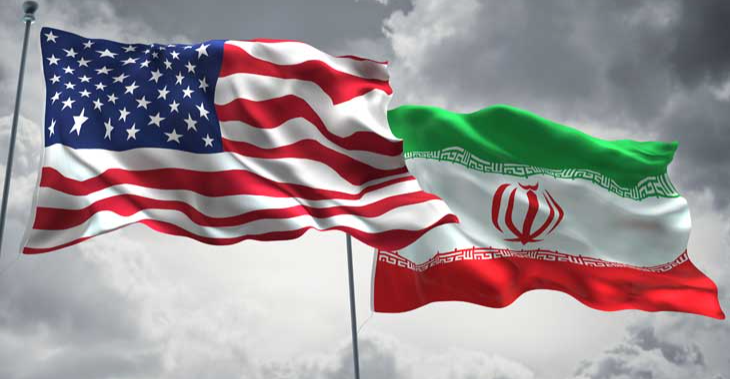
Iraqi factions set a red line for resuming operations against US interestsA leader in one of the armed factions confirmed on Monday that the decision to stop attacks against American interests inside Iraq and throughout the region is directly linked to the declared truce between Washington and Tehran, and any new targeting of Iran will witness an immediate and “large” return of targeting operations.

The leader told Shafaq News Agency, “This cessation is temporary and conditional, and any breach of the truce, especially in the event of a resumption of American-Israeli targeting of Iran, will be met with an immediate return to operations by the factions affiliated with the group, with the possibility of escalating them further than before.”

The leader, who asked not to be named, added that “the decision to halt operations at the present time is not related to any internal mediation or political pressure, and there is no interference from Iraqi political or governmental parties in this decision. What is happening is a tactical commitment related exclusively to the declared period of calm.”

He added that “the factions are closely monitoring the course of events, and their options remain open in case the field data changes. The next stage depends on the behavior of international and regional parties, and the continuation of calm is exclusively linked to the continued commitment to the truce and the avoidance of escalation.”

He pointed out that “the Resistance Coordination includes four main factions, namely Kataib Hezbollah, Harakat al-Nujaba, Kataib Sayyid al-Shuhada, and Ansar Allah al-Awfiya Movement.”

The head of the Design Alliance, Amer Al-Fayez, announced yesterday, Sunday, the success of the committee tasked by the Coordination Framework with negotiating with the armed factions to stop their operations against American interests .

Al-Fayez, one of the leaders of the Coordination Framework, told Shafaq News Agency that “the committee headed by the Secretary-General of the Badr Organization, Hadi al-Amiri, which was authorized by the Framework to negotiate with the armed factions, succeeded in its mission and obtained a conditional truce ,” explaining that “the truce stipulates that the factions stop their operations against American interests and diplomatic missions, in exchange for America and Israel committing not to escalate militarily and target the headquarters of the Popular Mobilization Forces and the factions .”

Last Tuesday, US President Donald Trump announced a two-week truce that included a halt to the war with Iran, before a round of negotiations began two days ago in Islamabad between the two sides.

The latest round of negotiations, which lasted more than 20 hours, came amid international hopes that a long-term truce could be established between Washington and Tehran, but the two delegations left early Sunday morning without any agreement, despite what was described as “the highest level of negotiating representation since 1979 “.

According to political leaks reported by multiple sources, the main points of contention revolved around three central issues (the Iranian nuclear program, especially the issue of uranium enrichment, the issue of Iranian regional influence, and the Strait of Hormuz), including fees and maritime passage.

A short while ago, the US blockade of the Strait of Hormuz began, seeking to intercept any ship arriving at or leaving Iranian ports, or any ship paying transit fees to Tehran.

Shafaq.com

Posted in Uncategorized | Comments Off on Iraqi factions set a “red line” for resuming operations against US interests.

Global Tech supports Iraqi digital infrastructure with innovative solutions and global standards.

Global Tech supports Iraqi digital infrastructure with innovative solutions and global standards.

Global Tech supports Iraqi digital infrastructure with innovative solutions and global standardsGlobalTek , a professional solutions company, pledged to support the digital infrastructure in Iraq by providing innovative solutions that keep pace with global developments according to best global practices.

The company said in a statement that it “continues to consolidate its position in the data center sector in Iraq, by providing integrated solutions based on the highest international standards to ensure business continuity and performance efficiency.”

The company noted that it “relies on more than 20 years of experience, during which it has implemented more than 60 projects in various vital sectors, including banks, government institutions and major companies.”

As part of its commitment to international standards, the company explained that it “operates in accordance with the requirements of the Uptime Global Foundation, and relies on technical and engineering staff who have obtained international certificates and accreditations, reflecting its reliability as a technical partner capable of implementing infrastructure and data center projects according to best global practices.”

She explained that “it has strategic partnerships with a select group of major global companies such as Huawei , Vertiv , Schneider Electric and Eaton , which enhances its ability to provide advanced and integrated solutions that meet the requirements of projects at various levels.”

According to the statement, ” GlobalTek’s services are not limited to the implementation phase only, but extend to include the entire project cycle, starting from study, design and preparation through implementation to management, operation and maintenance, ensuring the highest levels of reliability and sustainability.”

GlobalTek affirms its continued commitment to supporting the digital infrastructure in Iraq by providing innovative solutions that keep pace with global developments and meet the needs of institutions in operational environments.

Miliq.news

Posted in Uncategorized | Comments Off on Global Tech supports Iraqi digital infrastructure with innovative solutions and global standards.

Awad: The process of selecting the prime minister is demanding and requires broad consensus.

Awad: The process of selecting the prime minister is demanding and requires broad consensus.

Awad - The process of selecting the prime minister is demanding and requires broad consensusThe head of the Sadiqun parliamentary bloc, Uday Awad, described on Monday the stage of resolving the issue of the prime ministership as “pressuring,” stressing the need to form a government that enjoys broad political support to enable it to manage sensitive issues.

Awad told Al-Maalomah, “The current stage regarding the selection of the prime minister is characterized by significant pressure, given the magnitude of the challenges and pressures that political forces may face in resolving this matter.”
He added, “The next stage requires choosing a figure capable of gaining the trust and support of the influential political forces,” explaining that “this support represents a fundamental guarantee for enabling the government to address important issues.”
He pointed out that “political consensus will give the next government additional strength in confronting crises and managing state institutions efficiently, avoiding confusion.”

Almaalomah.me

Posted in Uncategorized | Comments Off on Awad: The process of selecting the prime minister is demanding and requires broad consensus.

Until further notice, disagreements postpone the coordination framework meeting.

Until further notice, disagreements postpone the coordination framework meeting.

Until further notice disagreements postpone the coordination framework meetingA political source reported on Monday that the meeting of the Coordination Framework scheduled for this evening has been postponed until further notice, noting that the postponement was due to “disagreements” among the members of the framework.

The source told Shafaq News Agency that “the meeting was scheduled to be held at the home of the leader of the Wisdom Movement, Ammar al-Hakim.”

He added that “the postponement came as a result of some leaders of the framework boycotting the meeting, which prompted its postponement until the attendance of all leaders is confirmed in order to resolve the issue of the premiership in accordance with the constitutional period after the election of the President of the Republic, which is 15 days from the date of the election of the President of the Republic.”

The Iraqi parliament elected Nizar Amidi, the candidate of the Patriotic Union of Kurdistan party, as the new president of the republic on Saturday.

The head of the Design Alliance, Amer Al-Fayez, revealed yesterday, Sunday, that the coordinating framework intends to discuss the names of 9 candidates for the premiership in its meeting tomorrow.

A political source revealed on Saturday that Basim al-Badri is considered a compromise candidate within the coordination framework for the position of the next Iraqi Prime Minister, at a time when the leaders of the framework are preparing to hold a meeting soon to officially decide on the candidate’s name.

Shafaq.com

Posted in Uncategorized | Comments Off on Until further notice, disagreements postpone the coordination framework meeting.

Exclusive: The religious authority reiterates its position: We will not interfere in the selection of the prime ministerial candidate.

Exclusive: The religious authority reiterates its position: We will not interfere in the selection of the prime ministerial candidate.

Exclusive - The religious authority reiterates its position - We will not interfere in the selection of the prime ministerial candidateThe religious authority in Najaf reiterated on Monday its commitment not to interfere in the selection of the prime minister candidate, confirming its previous stance on this matter.

A source close to the religious authority told Shafaq News Agency that “the religious authority does not interfere in the matter of choosing a prime ministerial candidate,” indicating that it “has previously conveyed several messages to the forces of the Coordination Framework regarding its clear position on this issue.”

The source added that “the religious authority has closed its doors to politicians at the present stage,” indicating its refusal to engage in dialogues or consultations related to nominating candidates for senior positions.

The framework is preparing to hold a meeting this evening, Monday, to discuss nine candidates, amid the introduction of alternative names, including a consensus candidate, after the largest bloc called for naming its candidate in accordance with Article 76 of the Constitution, in light of political and security complications that may delay the resolution of the issue, according to a political source.

This meeting comes after the Speaker of Parliament called on the largest parliamentary bloc to nominate its candidate for Prime Minister within a maximum period of 15 days, following the election of the President of the Republic.

Last Saturday, the Iraqi parliament elected Nizar Amidi, the candidate of the Patriotic Union of Kurdistan party, as the new president of the republic.

The Coordination Framework had officially nominated Maliki on January 24, a move that opened the door to negotiations to form the new government, but the process faltered as disagreements continued over the election of the President of the Republic, the constitutional entitlement that precedes assigning the candidate of the largest bloc to form the government.

The process of forming a government faces additional complications, most notably the declared American position regarding al-Maliki’s return to power, and the escalating security tensions in the region, which puts political forces before the challenge of maintaining the “quota system” that has been in place since 2003 or sliding towards a comprehensive political deadlock.

Shafaq.com

Posted in Uncategorized | Comments Off on Exclusive: The religious authority reiterates its position: We will not interfere in the selection of the prime ministerial candidate.

Discussion on Iraq in Washington: Issues of sovereignty, politics, and economics

Discussion on Iraq in Washington: Issues of sovereignty, politics, and economics

Discussion on Iraq in Washington - Issues of sovereignty - politics and economicsIraq has once again found itself caught in the middle of a conflict between the United States, Israel, and Iran, which has exposed the political and economic weaknesses in Iraq that have existed since the 2003 invasion, especially after Tehran was subjected to an American-Israeli attack, and the Iraqi factions allied with it responded with attacks on American assets in Iraq, including the embassy, ​​according to what was published by the American website “Washington Report”.

The American website published a report , translated by Shafaq News Agency, summarizing a virtual panel discussion in which experts on Iraqi affairs participated, including former US Ambassador to Baghdad Douglas Silliman, who currently heads the US Gulf States Institute in Washington. The discussion aimed to explore how the Iran-Iraq War would affect Iraq, which remains weak and struggling due to the 2003 invasion.

The report quoted Silliman as saying that the current reality reveals Iraq’s lack of true sovereignty, explaining that the country does not control its airspace, has non-governmental armed militias allied with a foreign state operating within its borders, and does not enjoy energy independence as it relies heavily on Iran for electricity and gas.

In addition, Silliman pointed out that Iraq is heavily dependent on the United States, as it is required to deposit all oil revenues in the Federal Reserve Bank of New York, recalling that US President Donald Trump recently threatened to withhold these funds if Iraq allowed former Prime Minister Nouri al-Maliki to return to power.

According to Silliman, as quoted by the Washington Report, this war should be a wake-up call for leaders in Baghdad to start taking sovereignty issues seriously, explaining that the problem is that corruption is still widespread, and many political parties and leaders are thinking about their own selfish interests rather than national interests.

The former US ambassador to Baghdad continued, saying that, for example, corrupt leaders hampered efforts to diversify Iraq’s oil exports through Jordan and Turkey and obstructed attempts to attract much-needed private sector development to diversify the country’s oil-dependent economy.

The report quoted him as saying that “this culture of corruption and the lack of a system that actually provides economic opportunities for Iraqis has turned into a real problem.”

The report noted the lack of land routes for the country’s oil exports, given that Iraqi oil is supposed to be transported almost entirely through the Strait of Hormuz, which Iran has effectively closed, noting that oil revenues account for about 90% of the country’s budget.

In the same virtual discussion, Luay Al-Khatib, an advisor at the American University in Iraq, warned, according to the report, that the Iraqi government would be forced to resort to severe austerity measures if the war continued, considering that it should reduce public sector salaries by no less than 50% or delay them.

He pointed out that if the government does not do this, Baghdad will have to print a huge amount of money, which will lead to increased inflation. He also noted that Baghdad must reduce the large subsidies on basic commodities such as fuel and electricity to protect the state budget and ease demand in case energy supplies become scarce.

He added that “without controlling the level of demand, it will be impossible to provide sustainable services.”

For his part, the report quoted Boston College political science assistant professor Mersin Alshammari as saying that most Iraqis, regardless of their religion or politics, “have no appetite” for war, adding that “Iraq is no stranger to being caught between Iran and Washington; this is essentially the story of Iraq after 2003, so it has some experience in maneuvering.”

According to Al-Shammari, “There is a large part of the Shiite population in Iraq who do not want to go to Iran’s aid, and who do not want to be part of this conflict at all,” adding that the reality indicates that some Shiites believe that the Islamic Republic regime has had a negative impact on Iraq’s development after 2003.

The report noted that the highest Shiite authority, Sayyid Ali al-Sistani, has always been skeptical of Iranian and American interference in Iraqi affairs, recalling that after Israel and the United States attacked Iran, he issued a statement that many described as moderate, expressing sympathy for the victims of the attack and condemning the war, but he did not attempt to mobilize the masses.

According to Al-Shammari, as reported in the report, this approach is typical of the Najaf school of Shiites, led by Sistani, explaining that Sistani is not silent as some believe, but rather “gives priority to the stability of society and the stability of the country,” and that Sistani and his followers are “political realists.”

The report quoted Al-Shammari as saying that if the Sistani religious authority had issued a fatwa after the assassination of Iranian Supreme Leader Ali Khamenei, stating that the Shiite community should rise up against the forces that assassinated him, then that would have “ended in a very violent and tragic war that would encompass the entire region and destroy the lives of millions of people.”

He continued, saying that “the important point is to try to find a solution that maintains stability and protects the peace that Iraqis have achieved with difficulty, at the present time.”

Shafaq.co

Posted in Uncategorized | Comments Off on Discussion on Iraq in Washington: Issues of sovereignty, politics, and economics

“Reconstruction” anticipates the framework meeting: Al-Sudani to be Prime Minister for a second term within 48 hours

“Reconstruction” anticipates the framework meeting: Al-Sudani to be Prime Minister for a second term within 48 hours

Reconstruction anticipates the framework meeting - Al-Sudani to be Prime Minister for a second term within 48 hoursThe Reconstruction and Development Coalition confirmed on Monday that its leader, Mohammed Shia al-Sudani, could be tasked with forming the new Iraqi government within the next 48 hours.

Coalition leader Khalid Walid told Shafaq News Agency that “the Reconstruction and Development Coalition is strongly putting forward the coalition’s leader, Mohammed Shia al-Sudani, as a candidate to form the next Iraqi government,” stressing that “al-Sudani currently has a very large majority within the coordination framework, as there are more than 9 leaders within the framework who support al-Sudani and renewing his second term.”

At the national level, outside the coordination framework of other Iraqi political parties, Walid indicated that there is support from a majority of those parties for Al-Sudani to be tasked with forming the new government.

He continued: “We believe that the next (48) hours could be decisive regarding assigning Al-Sudani the task of forming the new Iraqi government, especially in light of the challenges facing Iraq, which certainly require forming a government that enjoys broad political support and is capable of overcoming all the crises the country is going through.”

The coordinating framework intends to hold a crucial meeting on Monday evening to discuss the names of nine candidates for the next prime ministership, according to the head of the Design Alliance, Amer Al-Fayez.

A political source revealed last Saturday that Basim al-Badri is considered a compromise candidate within the coordination framework for the position of the next Iraqi Prime Minister, at a time when the leaders of the framework are preparing to hold a meeting soon to officially decide on the candidate’s name.

This comes after the Speaker of Parliament called on the largest parliamentary bloc to nominate its candidate for Prime Minister within a maximum period of 15 days, based on Article 76 of the Constitution, following the election of the President of the Republic.

The process of forming a government faces additional complications, most notably the declared American position regarding al-Maliki’s return to power, and the escalating security tensions in the region, which puts political forces before the challenge of maintaining the “quota system” that has been in place since 2003 or sliding towards a comprehensive political deadlock.

Shafaq.com


Posted in Uncategorized | Comments Off on “Reconstruction” anticipates the framework meeting: Al-Sudani to be Prime Minister for a second term within 48 hours

US military: Any ship entering or leaving the blockaded area will be intercepted.

US military: Any ship entering or leaving the blockaded area will be intercepted.

US military - Any ship entering or leaving the blockaded area will be interceptedThe US military confirmed on Monday that it would intercept any vessel entering or leaving the blockaded area.

The US military said in a memo to mariners: Neutral vessels may be subject to inspection for smuggled goods.

He added: We will not impede passage through the Strait of Hormuz to and from non-Iranian destinations, and any ship entering or leaving the blockaded area will be intercepted.

He continued: We will impose maritime control in the Gulf of Oman and the Arabian Sea.

The US military announced that it will begin imposing a blockade on all ships heading to or departing from Iranian ports, while allowing passage to ships that do not stop in Iran, in a move aimed at strangling Tehran’s oil exports .

In contrast, Iran strongly rejected this move, with Mohsen Rezaei, the Supreme Leader’s military advisor, asserting that his country “will not allow” the imposition of the blockade, noting that it possesses “great untapped capabilities” to counter it .

The Revolutionary Guard also warned that “any military approach to the strait will be considered a violation of the ceasefire, raising the chances of direct friction in one of the most sensitive waterways in the world.”

Shafaq.com

Posted in Uncategorized | Comments Off on US military: Any ship entering or leaving the blockaded area will be intercepted.

The return of the vice presidents: A compromise proposal to appease Maliki and Halbousi

The return of the vice presidents: A compromise proposal to appease Maliki and Halbousi

The return of the vice presidents - A compromise proposal to appease Maliki and HalbousiVarious political sources revealed on Monday a governmental and political movement to reactivate the position of the two vice presidents of the republic, with a proposal to assign the two positions to Nouri al-Maliki and Mohammed al-Halbousi as part of settlements aimed at achieving political balance.

A source told Shafaq News Agency that “the political forces within the State Administration Coalition are studying a mechanism to reactivate the two positions, assigning one of the seats to Maliki and the other to Halbousi,” noting that “the position may be acceptable to both figures.”

In contrast, MP Firas Al-Muslawi, spokesman for the Reconstruction and Development bloc, told Shafaq News Agency that “activating the two vice-presidential positions is open for discussion within the political understandings and is subject to consensus,” indicating that “Al-Maliki had previously rejected the position, and it is unlikely that he will accept it even if it is activated, with the possibility of a decision being issued soon on this matter being ruled out.”

Regarding the meeting of the Coordination Framework, Al-Muslawi indicated that “the leaders of the Shiite House will hold their periodic meeting today to decide on the mechanism for choosing the Prime Minister,” considering that Muhammad Shia Al-Sudani is “the most likely to be elected for a second term, with the support of the majority of the Framework’s components, especially since the Reconstruction and Development bloc has 51 seats.”

But another political source explained that “Al-Sudani received messages from conservative Shiite leaders, advising against relying on the results of the presidential election session, because the numbers are not fixed and the previous scenario may not be repeated.”

Parliament Speaker Hebat al-Halbousi had called on President Nizar Amidi, after he took the constitutional oath on Saturday (April 11), to consult with the political blocs to name the vice presidents of the republic in accordance with Article 75 of the constitution.

In 2016, Haider al-Abadi’s government abolished the positions of vice presidents as part of a package of reforms, before the Supreme Federal Court later ruled the abolition unconstitutional, stressing that the position was a constitutional duty.

Shafaq.com

Posted in Uncategorized | Comments Off on The return of the vice presidents: A compromise proposal to appease Maliki and Halbousi

Al-Badri is a compromise candidate within the coordination framework of the Prime Minister’s office.

Al-Badri is a compromise candidate within the coordination framework of the Prime Minister’s office.

Al-Badri is a compromise candidate within the coordination framework of the Prime Ministers officeShafaq News – A political source revealed on Saturday that Basim al-Badri is considered a compromise candidate within the coordination framework for the position of the next Iraqi Prime Minister, at a time when the leaders of the framework are preparing to hold a meeting soon to officially decide on the candidate’s name.

Amer Al-Fayez, a leader in the Coordination Framework and head of the “Design” parliamentary bloc, told Shafaq News Agency that “the Coordination Framework will hold a meeting in the next few days to officially select a candidate for the position of Prime Minister,” indicating that “there are many names nominated for this position, but there is no agreement on selecting one of the candidates.”

For its part, a source told Shafaq News Agency that there is an “agreement between the leaders of the Coordination Framework to nominate a figure for the position of Prime Minister by consensus between the Reconstruction and Development Coalition and the State of Law Coalition.”

The source added that “Basem Al-Badri is one of the candidates currently and his name will be put forward at the next meeting of the Coordination Framework,” noting that “he has a higher chance as a compromise candidate within the framework.”

He explained that Al-Badri holds the position of head of the Accountability and Justice Commission and belongs to the Dawa Party – Iraq Organization, and has connections inside and outside Iraq, noting that Mohsen Al-Mandalawi, the former Deputy Speaker of Parliament, is also among the names being considered for the position.

This comes after the Speaker of Parliament called on the largest parliamentary bloc to nominate its candidate for Prime Minister within a maximum period of 15 days, based on Article 76 of the Constitution, following the election of the President of the Republic.

Shafaq.com

Posted in Uncategorized | Comments Off on Al-Badri is a compromise candidate within the coordination framework of the Prime Minister’s office.