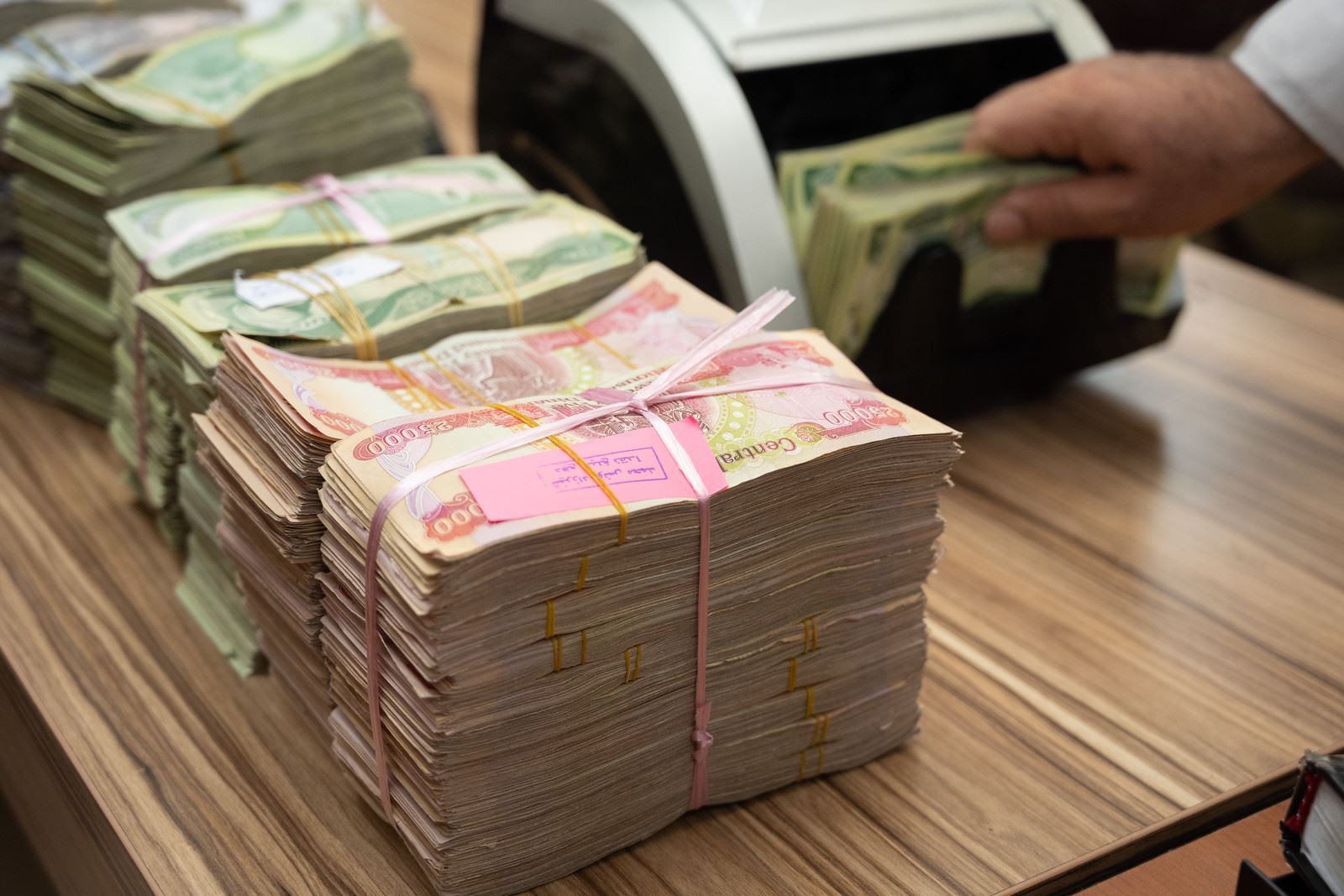
Is the foreign currency window an economic lever for Iran?

Is the foreign currency window an economic lever for Iran?

Dr.. Haidar Hussein Al-Tohma / Al-Furat Center for Development and Strategic Studies

The media arena is witnessing an exciting revival of economic experts, as they usually call specialists or non-specialists in economic sciences. Although the spread of economic culture is a benign advantage for developed peoples, economic policy and economic analysis with populist rhetoric full of illusions and simplification exaggerates the landscape and weakens the rigidity of economic knowledge, especially when these populist trends and trends infiltrate academic institutions and are academically debated as absolute economic facts.

In this context, a recent article on “The sale of the currency in Iraq, the destruction of the Iraqi economy and the revival of Iran’s economy” was recently published on social media. The fact of the matter is that the intellectual content of this article has been raised repeatedly in the media and on various economic occasions, leaving firm convictions with the negative role played by the exchange rate on the Iraqi economy and its positive role in reviving and developing the Iranian economy exclusively. Which increases the uncertainty and confusion about the actual independence of the central bank, not only the Iraqi government, but the economic interests of the neighboring countries.

The fact that the reactions and discussions on the management of the exchange rate of the Iraqi dinar and its dynamic association with the Iranian economy was an incentive to write this article, in a simple attempt to remove the ambiguity and confusion in a neutral scientific (and modest) and in the form of the following axes.

1- The name of the foreign currency auction has been changed to the foreign currency window. The window is not one of the instruments of monetary policy, but rather an administrative measure intended to stabilize the price levels.

2 – The currency window is not an ideal tool to manage the exchange rate in Iraq, but due to the economy and the depth of structural imbalances and weak national production in meeting the growing domestic demand for goods and services was to stabilize the exchange rate by feeding the demand for imports with oil dollars, Central Bank’s main bidder in the foreign exchange market.

3 – The overvaluation of the dinar exchange rate actually works to drain the dollar reserve in the Central Bank (assuming the relative stability of oil revenues) due to the positive relationship between the supply of the dollar and the dinar exchange rate, but this is the task of foreign reserves, at least in the exceptional situation that he lives Country.

4- Why was the exchange rate of the Iraqi dinar appreciated in this amount ??? The argument of the Central Bank (supported by the International Monetary Fund) is to raise the standard of living of citizens because the components of the consumer basket of citizens are fully imported. In addition to the goal of pushing banks to exercise their economic role desired as bridges to finance investment and economic growth in the country rather than engage feverishly in the auction (window) foreign currency in order to benefit from the differences between the price of the official exchange rate and the market price.

5 – Many believe that raising the standard of living of the citizen was at the expense of the advancement of the domestic product, which can not compete with foreign producer (Iranian, Turkish and Chinese) because the production costs are high in Iraq. Does this mean that reducing the value of the Iraqi dinar (1500 dinars for example, one dollar instead of 1,200 dinars) will support industry and increase the rates of production ???

The answer is no … because there are many requirements that need to be secured until the national product rises. Therefore, the policy of reducing the exchange rate of the dinar may be sustainable but after the availability of other requirements including (providing infrastructure and facilitating government legislation supporting investment and activating customs taxes and supporting the national product … ).

6. Finally, the question is: Is the excessive exchange rate suitable for the revival of Iran’s economy exclusively ???

The answer is both … because the excessive exchange rate revives all imports and from different countries (China, Turkey, Egypt, Jordan, the Gulf and many Asian countries), which gives these countries a comparative advantage in marketing their products to Iraq due to high unsatisfied domestic demand supported by high purchasing power. On the level of tourism, the strength of the Iraqi dinar increases the delegation of Iraqi tourists to different countries of the world, not just Iran, given the relative (unreal) power of the Iraqi dinar.

In conclusion, we would like to point out that neighboring countries, including Iran, do not rely heavily on the exchange rate of the Iraqi dinar in raising the rates of exports and achieve economic growth for several reasons, including:

1. The experience of recent years indicates that political and economic decision-making in Iraq fluctuates unpredictably and out of order.

2- The exchange rate of the Iraqi dinar is linked to the dollar reserve in the Central Bank, which is mainly related to the revenues of the Iraqi government from the oil exports, which is a function of the frequent fluctuation of oil prices in the world energy markets.

For years, the trading partners of Iraq (China, Turkey, Iran, Jordan and other countries) have been engaged in fierce competition to acquire the Iraqi market by reducing costs and prices or raising the quality of the product or reducing the prices of national currencies to achieve Comparative advantage of their national products.

Iraaqi.com

Posted in Uncategorized | Comments Off on Is the foreign currency window an economic lever for Iran?

Al-Sadr announces a “new” transformation to uncover the “pests of corruption”: I will remind them without using weapons if I have a life!

Al-Sadr announces a “new” transformation to uncover the “pests of corruption”: I will remind them without using weapons if I have a life!

Baghdad: Sadr’s leader Moqtada al-Sadr on Monday launched a new campaign for reform, saying he planned to repair the pests spread among the people without using weapons.

ikhnews.com

Posted in Uncategorized | Comments Off on Al-Sadr announces a “new” transformation to uncover the “pests of corruption”: I will remind them without using weapons if I have a life!

Iyad Allawi: The role of the popular crowd is over, let them dissolve

Iyad Allawi: The role of the popular crowd is over, let them dissolve

The former Iraqi Prime Minister Iyad Allawi said on Saturday that the task of popular mobilization in Iraq ended after the victory that was achieved against the organization is calling, adding that the time has come to solve.

Allawi said in an interview with Radio Sawa that the solution to the popular crowd is an entry to reach Iraq to the civilian state.

He called on the former prime minister to strengthen the capabilities of the Iraqi army “to be able to strengthen the security of the country without the need for any assistance.”

The Iraqi parliament in its previous session, which considered the popular crowd a “state institution” moving “within the framework of the Iraqi”, voted for the integration of the crowd in the regular forces.

The United States classifies some of the factions under the umbrella of the popular popular movement in Iraq, including the Popular Movement.

Shafaaq.com

Posted in Uncategorized | Comments Off on Iyad Allawi: The role of the popular crowd is over, let them dissolve

Modernising Iraq’s economy requires getting rid of corruption

Modernising Iraq’s economy requires getting rid of corruption

Fintech (financial technologies) and Iraq’s transition to a cashless society featured prominently in discussions, on stage and off.

Participants attend a conference on modernising Iraq’s economy, organised by Iraq Britain Business Council, in London, April 10. (Nazli Tarzi)

The second week of April marked two anniversaries, each commemorated for a different reason. April 9 marked 16 years since Baghdad fell and Saddam Hussein’s statue was toppled. April 10 marked 10 years since Britain’s former trade envoy to Iraq, Baroness Emma Nicholson, founded the Iraq Britain Business Council, advancing investment and trade.

The air of optimism filling London’s Mansion House, where businessmen and politicians assembled, felt in stark contrast with the public mood in Iraq. Misery hangs heavily over a society in which unemployment rates are sky high and where the value of life is no longer respected. The weight of the fallout caused by the US-led invasion of 2003 is something Iraqis continue to endure.

In London, the slogan of the Iraq Britain Business Council (IBBC) — “Together We Build Iraq” — greeted guests at the venue.

British businesses were in strong attendance alongside Iraqi delegates led by Deputy Prime Minister and Finance Minister Fuad Hussein. There were representatives from the Iraqi Private Banks League, the Central Bank and more. The event drew major foreign players and sponsors from BP-Iraq and JP Morgan to oil giant Shell.

The conference set its sights on modernising Iraq’s economy. The aim, in the words of Iraqi Council of Ministers Secretary-General Mahdi al-Alak, was “to target the lifeblood of the economy” through sectors such as oil, energy, infrastructure and education. Alak emphasised the necessity of “coming down hard on corruption” before Iraq can turn its back on paper-operating procedures.

Fintech (financial technologies) and Iraq’s transition to a cashless society featured prominently in discussions, on stage and off. The success of fintech, however, depends heavily on the behaviour of the ruling political class.

Corruption has consistently stood in the way of effective governance and trade but those are barriers that speakers promised would be resolved to the benefit of both Britain and Iraq. The drive towards economic diversification was another promise that rests on the state’s commitment to fighting corruption so state revenues can be more evenly distributed beyond the oil and gas sector.

Although politics was strictly off the agenda, speakers commended Iraq’s security forces for defeating the Islamic State last October.

Endemic corruption, lawless militias, soaring birth deformities, abnormal cancer rates and dilapidated services, all major problems in the country, were nowhere to be seen on the agenda.

The economic consequences of conflict, which existing and preceding governments in Iraq have inherited, have proven profoundly challenging. The problem is exacerbated by corruption, which stunts domestic growth.

Iraq’s economic freedoms and the collapse of many of its productive state-owned enterprises, due to American-style reforms, have eroded many of the rights formerly enjoyed by local Iraqi businesses. Trade barriers in place that had protected them no longer exist.

Hussein praised the equal presence of Iraqis and Brits, barely mentioning the uneven relationship between his country and the United Kingdom. It is of critical importance to note that no regulatory framework determining trade rules, co-investments or healthy competition exists.

As wealthy British Iraqis are presented with invaluable opportunities to invest in their ancestral lands, at such events, one cannot erase from recent history the memory of the suffering of native businessmen and women in farming, psycho-social care or copper production — many of whom are unsupported by the state.

The head of one Iraq’s private banks said a rapid expansion of private banks, which he said stands at 74, has done little to strengthen the dinar or enhance domestic banking performances, compared with global standards.

“It just means that more people want a share of the pie,” said the owner of the Iraqi private bank, who did not wish to be identified.

“The sale and auction of the US dollar is another major problem,” the banker added, referring to a practice that Iraq uses to exchange the dollars Iraq receives in oil income to dinars through private banks. The practice is particularly harmful because it lacks transparency and invites unvetted actors. It has facilitated money laundering and weakened exchange rates. Still, the auctioning of the dollar is something the central bank has dogmatically defended.

The Iraqi street, whose concerns have been loudly voiced and whose anger has been seething for some time, was strategically kept out of the debate.

The course of the day fell in line with similar conferences, from Kuwait to Iraq, during which host countries proudly brag about the investment funds they wholeheartedly believe will help Iraq to fulfil its role in the global economy.

However promising the idea brought to IBBC’s roundtable this year, the question on the minds of concerned citizens is whether Iraq’s allies, international partners and friends will continue to turn a blind eye to the single greatest obstacle to economic prosperity and trade — corruption.

Thearabweekly.com

Posted in Uncategorized | Comments Off on Modernising Iraq’s economy requires getting rid of corruption

IBBC holds 9th Annual Spring Conference

IBBC holds 9th Annual Spring Conference

The Iraq Britain Business Council (IBBC) held its annual Spring Conference at the Mansion House in London on 10 April, hosting officials from the UK and Iraqi Governments and delegates from the major companies operating in Iraq covering all sectors of the economy.

The conference was entitled ‘Iraq – Financing a Modern Economy’ and was organised in conjunction with the Central Bank of Iraq and the Iraq Private Banks League. H.E. Dr Fuad Hussein, Deputy Prime Minister and Minister of Finance lead a high level delegation of Government officials alongside Dr Mehdi Al Alak, Secretary General of the Council of Ministers, Mr Abbas Imran Mousa, DG Technical Department, Ministry of Transport, Dr Falah Al-Amiri, Councillor for Oil & Gas supplies to the Iraqi Minister of Oil, officials from the Central Bank of Iraq, a delegation from the Union of Private Banks and the Governors of Erbil and Sulamania.

Baroness Nicholson of Winterbourne, President of IBBC and the Prime Minister’s Trade Envoy to Iraq, Azerbaijan, Turkmenistan & Kazakhstan opened the conference alongside Alderman Sir William Russell, H.E. Dr Fuad Hussein, The Rt. Hon. Alistair Burt MP, Graham Stuart MP, Minister for Investment, Department for International Trade and Jon Wilks CMG, Her Majesty’s Ambassador to Iraq.

Dr Mehdi Al Alak presented a paper on ‘Private Sector Development and Investment in Iraq‘. Delegates received an exclusive insight into the Government’s planned measures and strategies to realise this ambition.

The event marked the 10th anniversary of the Iraq Britain Business Council and special awards were presented to Baroness Nicholson of Winterbourne and Eng. Rasmi Al Jabri, Deputy Chairman of IBBC as a token of gratitude for their contribution to the organisation over the last decade.

Dr Renad Mansour of Chatham House, produced a paper on ‘The present situation in Iraq’ which was commissioned especially for the IBBC conference.

Iraq-businessnews.com

Posted in Uncategorized | Comments Off on IBBC holds 9th Annual Spring Conference

Iraq and the World Bank are discussing supporting the government’s plans for reconstruction and economic development

Iraq and the World Bank are discussing supporting the government’s plans for reconstruction and economic development

Iraq and the World Bank discuss government support for reconstruction and economic development(Baghdad: Al-Furat News) Finance Minister Fuad Hussein intends to discuss future cooperation between Iraq and the World Bank in light of the priorities and needs of the Iraqi government.

The finance minister arrived in Washington today and discussed with World Bank Group President David Malabas the role of the bank in supporting the Iraqi government’s plans for human development, sustained economic growth, reconstruction of a post-Saddam Iraq, as well as an exchange of ideas, a statement from the Ministry of Finance said. And views on the development and revitalization of the public and private economic sector and poverty reduction.

According to the statement, the Deputy Prime Minister and the ministerial delegation, which includes the Minister of Health and a number of Directors General, will hold a series of meetings with the directors of the Bank and the Member States, according to the Ministry of Finance.

The World Bank has 189 member states, including Iraq, which it joined in 1945.

Alforatnews.com

Posted in Uncategorized | Comments Off on Iraq and the World Bank are discussing supporting the government’s plans for reconstruction and economic development

Modernising Iraq’s economy requires getting rid of corruption

Participants attend a conference on modernising Iraq’s economy, organised by Iraq Britain Business Council, in London, April 10. (Nazli Tarzi)

Modernising Iraq’s economy requires getting rid of corruption

The second week of April marked two anniversaries, each commemorated for a different reason. April 9 marked 16 years since Baghdad fell and Saddam Hussein’s statue was toppled. April 10 marked 10 years since Britain’s former trade envoy to Iraq, Baroness Emma Nicholson, founded the Iraq Britain Business Council, advancing investment and trade.

The air of optimism filling London’s Mansion House, where businessmen and politicians assembled, felt in stark contrast with the public mood in Iraq. Misery hangs heavily over a society in which unemployment rates are sky high and where the value of life is no longer respected. The weight of the fallout caused by the US-led invasion of 2003 is something Iraqis continue to endure.

In London, the slogan of the Iraq Britain Business Council (IBBC) — “Together We Build Iraq” — greeted guests at the venue.

British businesses were in strong attendance alongside Iraqi delegates led by Deputy Prime Minister and Finance Minister Fuad Hussein. There were representatives from the Iraqi Private Banks League, the Central Bank and more. The event drew major foreign players and sponsors from BP-Iraq and JP Morgan to oil giant Shell.

The conference set its sights on modernising Iraq’s economy. The aim, in the words of Iraqi Council of Ministers Secretary-General Mahdi al-Alak, was “to target the lifeblood of the economy” through sectors such as oil, energy, infrastructure and education. Alak emphasised the necessity of “coming down hard on corruption” before Iraq can turn its back on paper-operating procedures.

Fintech (financial technologies) and Iraq’s transition to a cashless society featured prominently in discussions, on stage and off. The success of fintech, however, depends heavily on the behaviour of the ruling political class.

Corruption has consistently stood in the way of effective governance and trade but those are barriers that speakers promised would be resolved to the benefit of both Britain and Iraq. The drive towards economic diversification was another promise that rests on the state’s commitment to fighting corruption so state revenues can be more evenly distributed beyond the oil and gas sector.

Although politics was strictly off the agenda, speakers commended Iraq’s security forces for defeating the Islamic State last October.

Endemic corruption, lawless militias, soaring birth deformities, abnormal cancer rates and dilapidated services, all major problems in the country, were nowhere to be seen on the agenda.

The economic consequences of conflict, which existing and preceding governments in Iraq have inherited, have proven profoundly challenging. The problem is exacerbated by corruption, which stunts domestic growth.

Iraq’s economic freedoms and the collapse of many of its productive state-owned enterprises, due to American-style reforms, have eroded many of the rights formerly enjoyed by local Iraqi businesses. Trade barriers in place that had protected them no longer exist.

Hussein praised the equal presence of Iraqis and Brits, barely mentioning the uneven relationship between his country and the United Kingdom. It is of critical importance to note that no regulatory framework determining trade rules, co-investments or healthy competition exists.

As wealthy British Iraqis are presented with invaluable opportunities to invest in their ancestral lands, at such events, one cannot erase from recent history the memory of the suffering of native businessmen and women in farming, psycho-social care or copper production — many of whom are unsupported by the state.

The head of one Iraq’s private banks said a rapid expansion of private banks, which he said stands at 74, has done little to strengthen the dinar or enhance domestic banking performances, compared with global standards.

“It just means that more people want a share of the pie,” said the owner of the Iraqi private bank, who did not wish to be identified.

“The sale and auction of the US dollar is another major problem,” the banker added, referring to a practice that Iraq uses to exchange the dollars Iraq receives in oil income to dinars through private banks. The practice is particularly harmful because it lacks transparency and invites unvetted actors. It has facilitated money laundering and weakened exchange rates. Still, the auctioning of the dollar is something the central bank has dogmatically defended.

The Iraqi street, whose concerns have been loudly voiced and whose anger has been seething for some time, was strategically kept out of the debate.

The course of the day fell in line with similar conferences, from Kuwait to Iraq, during which host countries proudly brag about the investment funds they wholeheartedly believe will help Iraq to fulfil its role in the global economy.

However promising the idea brought to IBBC’s roundtable this year, the question on the minds of concerned citizens is whether Iraq’s allies, international partners and friends will continue to turn a blind eye to the single greatest obstacle to economic prosperity and trade — corruption.

Thearabweekly.com

Posted in Uncategorized | Comments Off on Modernising Iraq’s economy requires getting rid of corruption

Britain appoints Iraqi professor Sinan al-Shabibi as chairman of monetary policy committee

Britain appoints Iraqi professor Sinan al-Shabibi as chairman of monetary policy committee

Baghdad – The British central bank issued a decision on Monday to appoint Iraqi professor Sinan al-Shabibi as chairman of the monetary policy committee.

“The Bank of England decided to appoint Professor Shabibi as chairman of the Monetary Policy Committee, which was previously governor of the Central Bank of Iraq,” the English media reported.

“This decision came to benefit from the experiences of al-Shabibi to maintain the exchange rate of the British pound and to prevent the British economy from getting into trouble, especially after the exit from the European Union.”

Iraqi sources told al-Madar that Professor Sinan al-Shabibi had been deposed from the post of governor of the Central Bank of Iraq by the previous government headed by Nuri al-Maliki, because he did not agree to sell the dollar to Iran.

Almadarnews.org

Posted in Uncategorized | Comments Off on Britain appoints Iraqi professor Sinan al-Shabibi as chairman of monetary policy committee

Internal Inspector: The next 90 days will be harsh on the corrupt

Internal Inspector: The next 90 days will be harsh on the corrupt

Baghdad today – The Interior Ministry’s inspector-general and member of the Supreme Council for Combating Corruption, Jamal al-Asadi, said Friday (April 12, 2019) that the next 90 days will be harsh on the corrupt.

“The next 90 days will be tough on the corrupt,” said Asadi in a tweet on his Twitter account.

“It is up to the honorable to stay away from the corrupt so that the white does not mix with us in black.”

On Wednesday, April 10, 2019, Prime Minister Adel Abdul Mahdi confirmed that decisive steps had been taken to combat corruption.

“We have just come from the Supreme Anti-Corruption Council meeting and we have taken decisive steps to combat it,” Abdul Mahdi said in a speech at a meeting of the construction coalition.

Baghdadtoday.news

Posted in Uncategorized | Comments Off on Internal Inspector: The next 90 days will be harsh on the corrupt

Counterfeit currency: How the career of Mafias and parties in Iraq?

Counterfeit currency: How the career of Mafias and parties in Iraq?

Counterfeit currency: How the career of Mafias and parties in Iraq?

Proliferated in recent years , the phenomenon of counterfeiting Iraqi and spread in the local markets, which leads to heavy losses for traders who deceive them this currency, as soon as the Ministry of the Interior to announce the arrest of gangs and mafias of counterfeit currency in the country.

Investigation agency “sure” reveals ways of counterfeiting in Iraq and the mafias visiting the currency and how to detect them and supported.

Billions of dinars fake

Data indicate the Central Bank of Iraq to the Iraqi monetary mass circulating in Iraq , the size of between 40 and 45 trillion Iraqi dinars, which is fluctuating number of banks as a result of withdrawals in various provinces damaged currency and compensated later a new currency.

However , the large monetary mass is added to this at least 4 billion Iraqi dinars counterfeit currency forged by mafias and gangs , according to the director of the release and cabinets in the central bank , “Ghulam Jafar.”

He reveals in his speech to the “certainty” that banks Iraqi discovered every month amounts are not worth less than 200 million dinars, during the receiving amounts deposits from citizens, pointing out that the discovery of these amounts individually have Iraqis have fallen victim to their receipt of counterfeit currency, as well as to announce by the Ministry of Interior to set fake currencies.

Ghulam adds that monetary categories of counterfeit are often class fifty thousand dinars and the category of 25 thousand dinars and less to the category of 10 thousand dinars, pointing out that workers in cash can counterfeit easily currencies revealed, as the Iraqi currency in which at least 20 seals and character mark impossible tradition, which is a means of protecting currency from counterfeiting.

At the end of his speech to our Agency, Ghulam pointed out that the new editions of the Iraqi currency now includes new security additions such as paper transparent cardboard and glossy and stamped, which is difficult for the most skilled counterfeiters counterfeited, noting that the coming months will see the replacement of the majority of the cash categories of large class 10 thousand and 25 thousand and 50 thousand new editions.

Yaqein.net

Posted in Uncategorized | Comments Off on Counterfeit currency: How the career of Mafias and parties in Iraq?