The President of the Republic receives the Governor of the Central Bank and they discuss the economic situation in the country

The President of the Republic receives the Governor of the Central Bank and they discuss the economic situation in the country

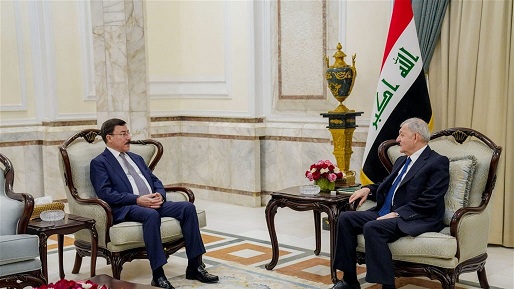
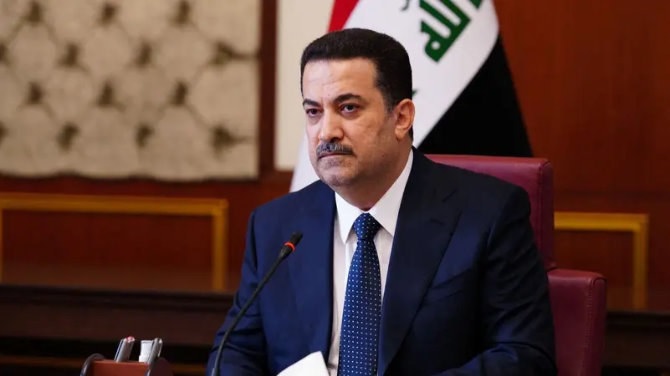
The President of the Republic receives the Governor of the Central Bank and they discuss the economic situation in the countryToday, Thursday, the President of the Republic, Abdul Latif Jamal Rashid, stressed the need to consolidate economic stability in the country.

The media office of the President of the Republic said in a statement, that the latter “received, today, Thursday, April 6, 2023, at the Baghdad Palace, the Governor of the Central Bank of Iraq, Ali Mohsen Al-Alaq.”

The statement added, “During the meeting, they discussed the economic and financial situation in the country, the monetary policy pursued by the Central Bank and its efforts to improve the exchange rate of the Iraqi dinar.”

According to the statement, the President of the Republic referred to the necessity of consolidating economic stability in the country according to a comprehensive vision, stressing the importance of developing the banking sector by benefiting from the latest technical data, working to support development and investment projects, following up the work of private banks and exchange companies, and combating money laundering operations in a way that protects the economy. and the property of citizens.

For his part, Al-Alaq affirmed the Central Bank’s seriousness in developing its work, expressing his thanks and appreciation for the interest shown by the President of the Republic to the Central Bank as the guarantor of economic and financial stability in the country, according to the statement.

Burathanews.com

Posted in Uncategorized | Comments Off on The President of the Republic receives the Governor of the Central Bank and they discuss the economic situation in the country

An economic center warns against raising fuel prices within the 2023 budget

An economic center warns against raising fuel prices within the 2023 budget

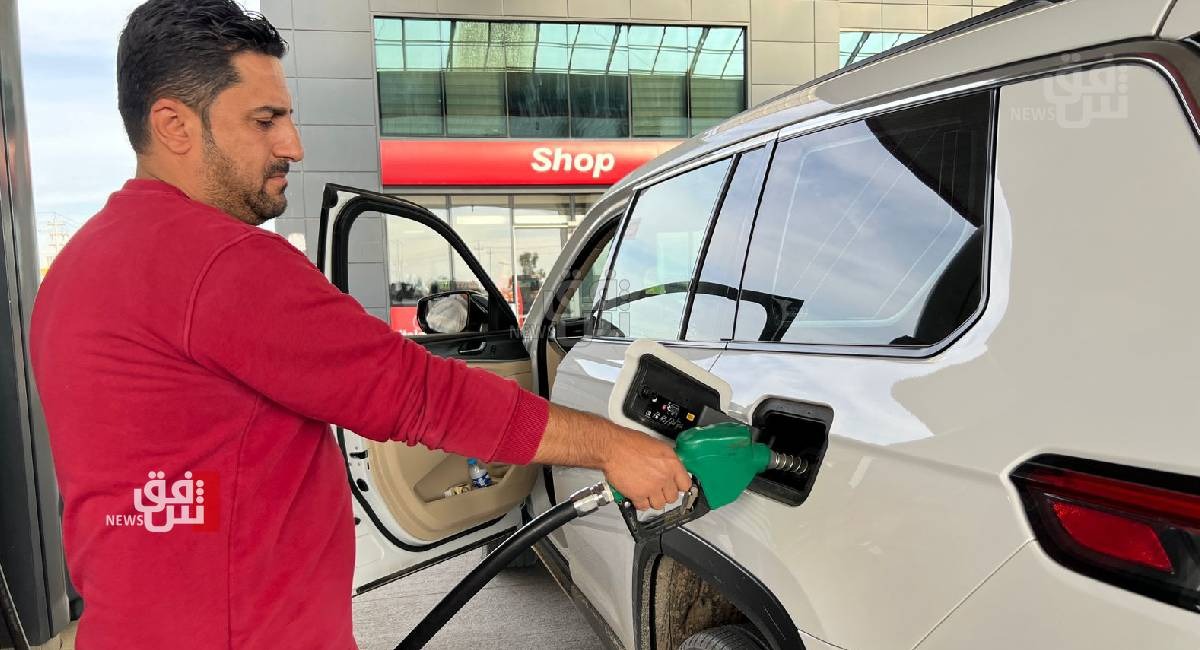
An economic center warns against raising fuel prices within the 2023 budgetShafaq News / The Iraqi Political Economic Center warned, on Thursday, of the repercussions of imposing taxes and fees on the prices of gasoline, gas, and oil refinery products within the 2023 budget, noting that people with limited incomes will be the biggest losers if they take such a step.

The director of the center, Wissam Hammal Al-Helou, said in a statement today, “There are indications that the draft budget for 2023 includes a fee of 5% on the quantities of gasoline and kerosene sold to citizens, with the imposition of a 5% tax on the products of Iraqi refineries and 15% on the value of what is sold of imported derivatives.”

He added, “These taxes, through which it is intended to add 450 billion dinars to the state treasury, will add additional costs that burden the citizens, and will cause an economic downturn in the country that is paid for by the private sector due to the dependence of the majority of laboratories and factories on oil derivatives, not to mention the increase in transportation costs for citizens, especially those with income.” The limited number of people who depend on means of transportation in the private sector, such as minibuses (Kia) 11 and 14 passengers, or taxis inside and outside Baghdad and the provinces and those who travel between the provinces.

He continued, “As for private car owners, high prices will increase spending on fuel, and of course, the rise will affect all aspects of life due to the high transportation costs, as well as the high price of fuel sold to private generators.”

Al-Helou also pointed out that “Iraq consumes between 28-30 million liters per day of fuel, and a high amount of it is imported. Imposing a 15% rate on each liter consumed will mean a general rise in prices ranging between 15-20% of the current prices, to add a new burden on citizens who suffer.” Among the burdens of high prices due to the greed of some merchants with the advent of the month of Ramadan, as well as the high cost of foodstuffs caused by the Russian-Ukrainian war, which affected Iraq.

And he warned that “adding such price ratios to fuel will further complicate the economic situation, with fluctuations in the exchange rate and the government’s inability to control it, and the impact of this on the costs of production and imported materials, which clearly raised prices in the market, which reduced the value of the Iraqi dinar, which needs deliberate decisions to return to its recovery.” The former against the dollar.

Al-Hilu noted that “the government is invited to study its plans again and not be drawn into solutions that do not match the rentier Iraqi economy, in which spending on salaries provides liquidity in the market in light of the continuous inability to find a private sector capable of providing resources that provide additional income for citizens that increase their purchasing power as well as It enables the state to seek the help of a major partner that supports its economy.

And he stressed that “the government should consider, before issuing any decision, its repercussions on those with limited incomes, and not implement plans that target groups it considers to have high purchasing power, while previous experiences confirm that the poor citizen is the biggest loser.”

Shafaq.com

Posted in Uncategorized | Comments Off on An economic center warns against raising fuel prices within the 2023 budget

Finance is discussing with the International Monetary Fund joint cooperation and developing the performance of the banking sector

Finance is discussing with the International Monetary Fund joint cooperation and developing the performance of the banking sector

Finance is discussing with the International Monetary Fund joint cooperation and developing the performance of the banking sectorThe Ministry of Finance discussed with the International Monetary Fund joint cooperation, support for financial reforms, and development of the banking sector’s performance.

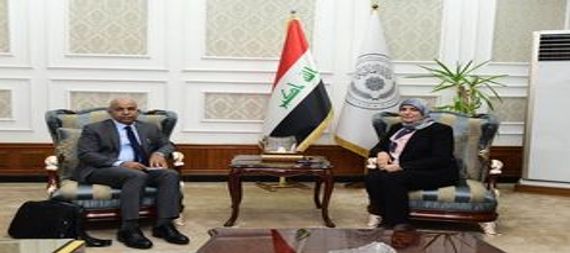
And the Ministry of Finance stated in a statement: “Minister Taif Sami Muhammad met with the Regional Director of the International Monetary Fund in Iraq, Ghazi Shbeikat, and discussed with him a number of files related to the framework of joint cooperation between the two sides, most notably the provision of the necessary technical advice by the Fund to enhance financial reform plans, to In addition to involving international experts in the process of developing the performance of the banking sector and improving accounting systems and budget work.

“Iraq is looking forward to more cooperation with the IMF, in support of the government’s reform programs that it is implementing in the sectors of finance, economy, investment and sustainable development projects,” the minister stressed.

For his part, Shbeikat “expressed his optimism that the Iraqi economy will witness an improvement in annual growth rates, and that this improvement will be reflected in supporting the rest of the development sectors.”

Burathanews.com

Posted in Uncategorized | Comments Off on Finance is discussing with the International Monetary Fund joint cooperation and developing the performance of the banking sector

Al-Sudani’s advisor reveals the reasons for the continued rise of the dollar and confirms a “soon breakthrough” in the crisis

Al-Sudani’s advisor reveals the reasons for the continued rise of the dollar and confirms a “soon breakthrough” in the crisis

Al-Sudanis advisor reveals the reasons for the continued rise of the dollar and confirms a soon breakthrough in the crisisShafaq News / The financial advisor to the Prime Minister, Mazhar Muhammad Salih revealed, on Wednesday, that the continued rise in the price of the dollar is due to Iraq’s commitment to international compliance with regard to foreign transfers, stressing an imminent breakthrough in the dollar crisis.

In an interview with Shafaq News agency, Salih said, “Reorganizing foreign remittance sales by the Central Bank of Iraq according to the international compliance platform, which the latter has started since October 2022, is not an easy matter.”

And that “the value of these foreign transfers amounts to 80% of the bank’s total daily sales.”

He added, “The process of financing foreign trade in dollars is in the recovery phase after international compliance operations,” explaining that “the bank’s sales through the auction window, after the three packages launched by the Central Bank previously, have returned to their normal level, at an amount of $200 million per day.”

Saleh pointed out that “these sales have become stable and meet the demands of merchants and the local market for dollars, and the bank provides them based on what it possesses of large reserves of hard currency, which enables it to intervene at any time to control exchange rates for long periods, and it also has the ability to support the economy.” by financing foreign trade.

And Saleh stressed that “the price differences between the official exchange rate of the dinar against the dollar and the price equivalent to it (the black market), have begun to gradually shrink, albeit slowly,” adding at the same time that “the period between last October to the end of February 2023 During which requests from rejected transactions have accumulated because they violate the controls of the compliance platform.

And he pointed out that “the foreign currency window in the central bank needs some time to absorb that surplus of demand for foreign currency and according to the terms of the compliance platform,” stressing that “signs of the market show that it is moving positively and gradually towards a breakthrough in the coming days.”

Iraq witnessed a shortage of dollars after it was exposed to pressure from the United States aimed at limiting the flow of money to neighboring countries, which were imposed financial sanctions by the United States of America, and the Federal Reserve Bank of New York last November imposed stricter controls on transactions. Dollars for Iraqi commercial banks, as a result, slowed down the approval of transfers and eventually prompted traders to buy dollars from exchange offices, which raised the prices of the dollar against the Iraqi dinar to high levels, which led to a rise in the prices of basic and food items in the local markets.

Shafaq.com

Posted in Uncategorized | Comments Off on Al-Sudani’s advisor reveals the reasons for the continued rise of the dollar and confirms a “soon breakthrough” in the crisis

Economists: Any budget that depends on the rentier economy is doomed to failure

Economists: Any budget that depends on the rentier economy is doomed to failure

Economists - Any budget that depends on the rentier economy is doomed to failureShafaq News / Iraqi economists predicted, on Monday, that the fate of any budget that relies on the rentier economy will be failure and an increase in the deficit.

“It is difficult to define a single scenario for a budget for more than a year, in light of a rentier economy that depends on oil as the country’s only resource,” economist Dergham Muhammad Ali said, in an interview with Shafaq News agency.

And he indicated that “the safest scenario is to set a multi-scenario budget, a pessimistic scenario that depends on a low oil price, a moderate scenario that depends on an average barrel price that is close to the current one, and an optimistic scenario. Expenditure accounts are placed on these three scenarios and are determined in light of allocations, the value of the deficit, and the mechanisms to bridge this deficit.”

He added, “The budget in its current form is threatened with failure in the event of a deterioration in oil prices, which is an expected scenario, which will make it difficult to implement the budget paragraphs.”

For his part, the financial and economic expert Hilal Al-Taan considered, in his interview with Shafaq News agency, that “it is not possible to predict future oil prices because oil is a political and economic commodity that is subject to the laws of external and not internal supply and demand, and therefore the problem of the Iraqi economy is that it is a rentier that depends on oil by 93% by achieving budget revenues.

Al-Taan indicated that “this matter is considered a mistake in fiscal policy, despite our assurances in previous years, since 2003 until now, that it is necessary to reduce dependence on oil as a main resource for the budget and rely on other non-oil resources that include taxes, customs, state real estate revenues, and encouraging the productive and agricultural sector.” industry and reduce imports.

He stressed that “until now, there has been no development and oil is still the main source in the budget, and therefore the assumption of a price of 70 dollars per barrel in the budget is a large and dangerous number in light of the unstable conditions in the world, and this will cause embarrassment to the state.”

He pointed out that “the budget is currently talking about the existence of 63 trillion dinars as a deficit in light of setting the price of 70 dollars per barrel of oil in the budget, and in the event that oil prices drop from what has been determined in the budget, which is what is happening now, this will lead to a disaster as the deficit will exceed 100 trillion.” dinars, and therefore it is difficult to cover the budget, and the coverage will take place again, either by borrowing from abroad, which is difficult, or relying on internal debt from the central bank or commercial banks, and then we will suffer a real problem after that.

Al-Taan called on the government, “the need to reconsider the budget in terms of setting a new price for oil that protects it from global oil fluctuations, and to reduce and pressure unnecessary public expenditures in state departments. There are also incorrect concessions that must be reduced by a courageous and decisive decision.”

It is noteworthy that oil prices fell again today, Monday, after rising this morning, with Brent recording losses amounting to more than 2%, and approaching the price of 70 dollars.

Shafaq.com

Posted in Uncategorized | Comments Off on Economists: Any budget that depends on the rentier economy is doomed to failure

Baghdad, Erbil reach comprehensive agreement

Baghdad, Erbil reach comprehensive agreement

 Baghdad, Erbil reach comprehensive agreementBaghdad (IraqiNews.com) – The Iraqi Prime Minister, Mohammed Shia Al-Sudani, announced on Monday that a comprehensive agreement had been reached on the standing issues between Baghdad and the Kurdistan region.

Al-Sudani, during a press conference, said that the understandings between Baghdad and Erbil were on clear points, noting that if any disagreements between Baghdad and Erbil took place, there is a committee that submits its recommendations to the Prime Minister.

“For the first time, the total revenues of the oil produced in Kurdistan are deposited in a bank account controlled by the federal administration,” Al-Sudani explained.

Al-Sudani added that the understandings between Baghdad and Erbil confirm that the two parties are moving forward to approve the oil and gas law.

The oil and gas law in Iraq, which has been stagnant in the Iraqi Parliament since 2005 due to disagreements with the Kurdish political forces, stipulates that the management of Iraq’s oil fields must be entrusted to a national oil company supervised by a specialized federal council.

This means that Baghdad is responsible for oil in Kurdistan, which Erbil rejects, and considers it a measure that violates the constitution.

The issues between Baghdad and Erbil are among the major problems the successive Iraqi governments face.

Some of the major issues between Baghdad and Erbil include the salaries of employees in Kurdistan Regional Government (KRG), security coordination in disputed areas, and a mechanism for exporting oil from fields in the Kurdistan region.

Iraqinews.com

Posted in Uncategorized | Comments Off on Baghdad, Erbil reach comprehensive agreement

Parliamentary Finance: We have not received the 2023 budget yet

Parliamentary Finance: We have not received the 2023 budget yet

Information / Baghdad… A member of the Parliamentary Finance Committee, Representative Mudar Al-Karawi, confirmed, on Monday, that the budget has not reached his committee yet.

Al-Karawi said, in an interview with Al-Maalouma, that “the 2023 budget is still with the Presidency in the House of Representatives, and it has not officially reached the Finance Committee.”

He added, “The budget may begin its dialogues in the Parliamentary Finance Committee, starting next week.”

He pointed out that “the budget has many complexities, which we hope will find solutions leading to its resolution before voting on it, but it takes weeks.”

And the Presidency of the House of Representatives had announced a few days ago that the 2023 budget had arrived, pending discussion by the Parliamentary Finance Committee.

Almaalomah.me

Posted in Uncategorized | Comments Off on Parliamentary Finance: We have not received the 2023 budget yet

A parliamentarian determines the fate of the oil and gas law and the next legislative direction

A parliamentarian determines the fate of the oil and gas law and the next legislative direction

Information/Baghdad… Today, the representative of the State of Law coalition, Muhammad Radhi, determined the fate of the draft oil and gas law and its next destination.

Radi said in an interview with the information agency, “The draft oil and gas law will go to Parliament, and there is a technical delegation that meets from time to time and has reached advanced stages between the Federal Ministry of Oil and the Ministry of Natural Resources in the region.”

He added, “Prime Minister Muhammad Shia’a al-Sudani pays great attention to important laws, including the oil and gas law, which guarantees a better use of financial and oil resources.”

Radi pointed out, “Passing the draft oil and gas law requires the approval of the Kurdistan Regional Government on the conditions set by the central government in the capital, Baghdad.”

The Oil and Gas Law stipulates that the management of oil fields in Iraq must be entrusted to a national oil company under direct supervision by the central government in the capital, Baghdad.

Almaalomah.me

Posted in Uncategorized | Comments Off on A parliamentarian determines the fate of the oil and gas law and the next legislative direction

Al-Sudani, prior to his visit to Turkey: We seek to transform Iraq into a center for world trade

Al-Sudani, prior to his visit to Turkey: We seek to transform Iraq into a center for world trade

Information / Baghdad… Prime Minister Muhammad Shia al-Sudani clarified, on Monday, the objectives of his upcoming visit to Turkey, while pledging to provide the needs of citizens and strive to transform Iraq into a center for world trade.

Al-Sudani said in an article prior to his visit to Turkey, followed by Al-Maalouma Agency, that “the visit to Turkey acquires special importance at this particular time, with the positive developments taking place in the Middle East region in terms of strengthening cooperation between countries, mobilizing efforts to achieve economic integration and push it forward, and solve The differences are based on the methodology of prudent dialogue that prevails over interest and elevates cooperation between neighbors in order to achieve the interests of peoples.

He added, “We will focus in our discussions with the Turkish side on strengthening Iraqi-Turkish relations in all fields, especially the economic field, especially as we look forward to implementing ambitious economic projects in the energy and transport sectors, and transforming Iraq into a center for global trade between Asia and Europe through the great port of Faw project and everything related to it.” economic zones, residential communities and tourist attractions.

He continued, “We look forward from this giant project, which will extend over an area of ​​more than 20 square miles, to open the way for an economic boom for Iraq,” noting that “it will contribute to strengthening economic and trade relations between Iraq and its neighbors, led by Turkey on the one hand, and the countries of Europe and Asia on the one hand.” other”.

He stated that “the project of the great port of Faw will include the dry canal corridor, which will be formed by a highway and a railway line, and will pass through Diwaniyah, Najaf, Karbala, Baghdad, and Mosul, and extend to the Turkish border, allowing access to the port of Mersin and Europe via Istanbul,” explaining, “We will discuss the details of these projects with officials.” The Turks, as part of our efforts to strengthen the economic and trade partnership with Turkey, with which Iraq’s trade balance has reached about $20 billion, represented in Turkish imports of chemical products, seeds, grains, legumes, furniture, medicines and medical supplies, and Iraqi exports to Turkey concentrated in oil.

On the security level, Al-Sudani said, “Border control will occupy an aspect of the talks, as well as joint cooperation between Iraq and Turkey, especially in the intelligence aspect and information exchange.”

On water quotas, the Prime Minister affirmed that “the water problem will occupy a space of discussion in Ankara,” appreciating “the efforts of the Turkish side to increase the water quotas that came from behind the dams to Iraq.”

He stated, “We will discuss with them how to cooperate and coordinate to ensure that Iraq obtains its water needs, which is a lifeline for development and agricultural expansion,” pointing out, “We will affirm our full solidarity with our Turkish neighbors in their painful affliction after the great earthquake, and we will continue to provide all the assistance they need in this regard.” Tough time.”

The Prime Minister pointed out that “the current visit comes at a very important time for the region, which seeks to enhance cooperation and economic integration and mobilize efforts in the interest of economic development, and these efforts are in harmony with our internal priorities in Iraq, which we put at the head of fighting corruption and advancing economic development so that it feels Iraqi citizen with the desired effect and as soon as possible.

He stated that “the economic cooperation projects that we seek with Ankara will greatly contribute to creating job opportunities in many Iraqi governorates and will accelerate the pace of Iraq’s transformation into a commercial center linking the European and Asian continents, and will put Iraq firmly on the world trade map,” explaining, “We are making plans in parallel To cooperate with Turkey to enhance our joint economic capabilities and according to timetables for priority projects, with our keenness to diversify energy sources and invest in renewable energy projects to serve development ambitions.

And he indicated that “the near future will witness greater economic engagement with Turkey and with all our neighbors and our region, because this engagement and joint cooperation is the only way to overcome the consequences of global crises and the challenges they impose on us at this sensitive time,” noting that “we emphasized this both during the second Baghdad summit that It was held in the sisterly Hashemite Kingdom of Jordan, or through my recent visits to the United Arab Emirates and Cairo.

He stressed that “Iraq’s approach in the current and future period is clear and unmistakable, and it depends on strengthening cooperation with brothers and neighbors on the political, commercial and economic levels, with the aim of strengthening cooperation and pushing our efforts inside Iraq to achieve our declared priorities, which we will not deviate from in an honest attempt to change the reality of the Iraqi citizen and provide his needs.” Giving priority to Iraq’s interest and interest over every interest, amidst an atmosphere of cooperation and constructive dialogue with neighboring countries and brothers in our Arab surroundings.

Almaalomah.me

Posted in Uncategorized | Comments Off on Al-Sudani, prior to his visit to Turkey: We seek to transform Iraq into a center for world trade

Loss of confidence in Western banks

Loss of confidence in Western banks and banks is absent.. How can the Iraqi government implement economic reforms?
Loss of confidence in Western banks and banks is absent.. How can the Iraqi government implement economic reformsSince last January, Iraqi Prime Minister Muhammad Shia al-Sudani announced a number of financial and economic reforms in the country, including the activation of the electronic payment system, as a statement issued by his office announced work to activate the “electronic payment” system (Point of sales), Starting from the first of next June.

The government had confirmed the start of implementing the system while exempting its electronic equipment from taxes, in an attempt to encourage private companies to adopt this system, as Iraq is one of the countries lagging behind in implementing it.

Statistics

Specialists in economic affairs confirm that the application of the electronic payment system means the need to open bank accounts for all shopping centers, hospitals, factories, medical clinics, pharmacies, and others, in light of the country’s lack so far of the presence of branches of foreign international banks, as in the rest of the world, which may cause a great demand for banks. Civil and government that may not be able to keep up with the rising demand.

According to a study prepared by the Central Bank of Iraq in 2018, the percentage of Iraqis who have bank accounts does not exceed 3.2% of the country’s total population, and the number of government banks in Iraq is 7, in addition to 25 private commercial banks, 3 private Islamic banks, and 3 branches of Islamic banks. Foreign, according to the official website of the Central Bank.

As for the number of foreign commercial banks, it amounts to 16 banks belonging to Turkey, Lebanon, Iran and Jordan, taking into account that the Central Bank placed 7 of these banks under guardianship with the liquidation of their business in the country in 2020, according to the Central Bank’s website, with an office for a bank. The American “Citi” and another for the German “Commerz” bank, as they are based in the Babylon Hotel in Baghdad.

And the Central Bank of Iraq had excluded 4 local banks 3 months ago from the currency sale auction, due to accusations against these banks related to dollar smuggling and money laundering, as this coincided with the start of Iraq implementing the international money transfer system known as “SWIFT”.

With regard to the electronic sales system and the extent to which it can be implemented, Abdul Rahman al-Mashhadani, a professor of economics at the Iraqi University in Baghdad, explained that Iraq is still in the first stage of this experiment, and that the former Iraqi Prime Minister Haider al-Abadi had initiated this since 2017 without implementing it.

Speaking to Al-Jazeera Net, Al-Mashhadani revealed that the electronic sales system needs the presence of “Automated Exchange Units” (ATM) throughout Iraq, and that the total available of them does not exceed 1564 ATMs, most of them in Baghdad and Erbil, pointing out that the ATM is an integrated bank. Its business includes withdrawals, deposits and transfers, but the services it provides in Iraq are limited to cash withdrawals only.

Foreign banks

Regarding the reason for the European and American banks’ refusal to work in the country, Jamal Cougar, a member of the Parliamentary Finance Committee, spoke about the political situation. He went on to say that the coming period may witness the entry of foreign banks into the country. He explained that Iraq was classified in the past among the countries that were not friendly to the West, and was not subject to the international financial transfer system, and with the start of implementing this system and the electronic platform 4 months ago, it became ready to enter these foreign banks and financial companies.

In this direction goes Abd al-Rahman al-Mashhadani, who added that the main reason for the lack of international foreign bank branches is due to the security situation that the country has witnessed over the past two decades, warning at the same time that these banks are afraid of Iraq because of the indicators related to money laundering operations.

After observing the security stability in the past period and the steps and measures taken by the Central Bank to reduce money laundering through the electronic platform, Al-Mashhadani hopes that the Iraqi government will be able to attract Western banks.

For his part, financial analyst Mahmoud Dagher talked about another reason that may prevent government economic reforms from entering into force, represented by the instability of the Iraqi dinar in parallel markets, which makes merchants prefer to deal in Iraqi cash or dollars away from the electronic sales system, which may apply to The work of foreign banks in the country.

With regard to the possibility of local and foreign banks absorbing government economic reforms, Dagher explained – in his interview with Al-Jazeera Net – that in Iraq there are about 10,500 “electronic points of sale” (POS) spread in the commercial sectors, noting that despite the small number of these devices, they are It is still not used until now, given that there is a fear among merchants of tax prosecution, which requires a high banking culture.

Economic experts in Iraq unanimously agree that Iraqis are still facing the problem of trusting banks operating in the country, as well as a lack of banking awareness, which Mahmoud Dagher adopts by saying, “Iraqi banks and foreign bank branches have the ability to absorb hundreds of thousands of bank accounts in the country, however, The problem is the banking culture, which is still mediocre.

Al-Mashhadani partly agrees with this opinion, and adds that there is a deficiency in the banking culture due to the reluctance of Iraqis to deal with banks due to the lack of services they provide, suggesting that the government grant a “tax vacation” that extends for 5 years in order to encourage all commercial sectors to work with the electronic payment system.

On the other hand, economic journalist Nabil al-Najjar believes that Iraqi banks have been able, during the past five years, to develop the technical sector, making them ready for the electronic sales system, and that they still need to increase the number of ATMs in all cities.

And on the banking culture, he explained that the Iraqi government is still failing to educate on dealing with electronic cash, indicating – in his speech to Al-Jazeera Net – that the Iraqi government has what he described as a golden opportunity to adapt and encourage the Iraqi street to deal electronically, through many gradual measures by expanding the circle Imposing it on merchants and markets, and then the rest of the sectors, and otherwise, Iraq will remain dependent on paper money, with all the problems and defects it poses, as he put it.

Rawabetcenter.com

Posted in Uncategorized | Comments Off on Loss of confidence in Western banks