After neutralizing the Kurds and Al-Sadr: Al-Halbousi is in the crosshairs of the coordination framework
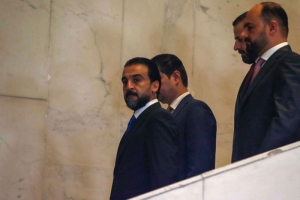 Baghdad – The agreement between Baghdad and Erbil on the rules for resuming oil exports from Kurdistan, Muqtada al-Sadr’s announcement of freezing the activities of his movement for “at least” a year, and the weakness of the positions of the small opposition parties in Parliament are all elements that make the coordinating framework, which governs in Baghdad, an unstoppable force . This encourages it now to seek to crush any trends that may appear to challenge its overall influence.
The leader of the Sunni bloc, Muhammad al-Halbousi, Speaker of Parliament, is now the first target, to confirm that the framework groups, which were just a minority in parliament, have become the ruling party with absolute influence.
Observers say that the framework groups want to remove Al-Halbousi from his position as Speaker of Parliament, to replace him with one of the Sunni figures loyal to them. This is while Prime Minister Muhammad Shia al-Sudani plans to remove some of the ministers affiliated with al-Halbousi from their positions as part of a cabinet reshuffle under the cover of evaluating the work of government ministers.
Al-Halbousi adheres to the agreement that laid the basis for the current government formation, and includes securing a fair share for the Sunni governorates in the federal budget and amending policies related to the return of the displaced and anti-terrorism laws that are implemented randomly.
The coordination framework negotiators use the weapon of reshuffling the cabinet to force al-Halbousi to abandon his demands. And while the parties to the framework compete with each other over the way in which al-Halbousi can be confronted or overthrown, each of them views the Speaker of Parliament as having become the “low wall” that can be overcome.
For example, while Al-Sudani takes the cabinet reshuffle as a way to weaken Al-Halbousi’s positions in order to prove that he is the one running the game, Nuri Al-Maliki, the leader of the State of Law bloc in the framework, is gathering forces to overthrow Al-Halbousi from his position as Speaker of Parliament, in order to prove that he is the primary driving force of the framework. and government.
Al-Halbousi’s attempt to establish a “Sunni coordination framework” that competes with the influence of the Shiite coordination framework constitutes one of the most important reasons that prompt the framework groups, including Al-Sudani, to view it as a threat, which prompted Al-Maliki to pull the rug from under Al-Halbousi’s feet by attracting those he was betting on, while Al-Sudani is looking for alternatives to the ministers loyal to the Speaker of Parliament in the government.
The former MP, Mishaan Al-Jubouri, had said in a tweet on Twitter:
A prominent leader in the “Taqdad” party, which is led by the Speaker of Parliament, said that “Al-Halbousi invited all former and current Sunni political leaders in Iraq, led by Salim al-Jubouri, Osama al-Nujaifi, Salih al-Mutlaq, Khamis al-Khanjar, Rafi al-Issawi, Jamal al-Karbouli, Muthanna al-Samarrai, Mahmoud al-Mashhadani and others, to convene meeting”.
The former Speaker of Parliament, head of the Salvation and Development Front, Osama al-Nujaifi, attacked the idea of forming the Sunni coordination framework, saying in a televised statement that “the call to form the Sunni coordination framework is not sincere, and the idea will not succeed with its current people and the nature of its advocates.”
He added that “the adopters of the Sunni coordination framework were attacking first-line politicians, practicing abuse against them, and trying to completely remove them from the scene,” pointing out that “conceit led some to think that he could do everything with the support of internal and external political parties.”
Observers say that al-Halbousi is paying the price for his marginalization policies against those who need them now. Although they weaken themselves by refraining from supporting him in the face of singling out the coordination framework, the vengeful nature of the Sunni political environment underestimates the matter and thinks that the overthrow of al-Halbousi opens the way for it to return and practice what it used to do in terms of marginalization.
Al-Nujaifi said that “the decision to dismiss al-Halbousi from the presidency of the Iraqi Council of Representatives belongs to the Shiites, specifically from the leaders of the coordination framework, and not to the Sunnis,” and that some parties to the Shiite framework take into account that there is an “international dimension” to the issue of dismissing al-Halbousi.
Observers say that the problem of the Sunni groups is that they do not have a frame of reference like the frame of reference that the Iranian Revolutionary Guard forms for the groups of the coordination framework. For this reason, while groups within the Shiite framework can differ and compete, they come together when faced with a common threat to their influence. While the matter is different for the Sunni groups, they are torn in running after benefits before being threatened, and they are torn even more if they are threatened.
Some parties to the framework are betting that the more pressure on Al-Halbousi increases, he will favor safety and back down from his demands, as has happened more than once before. His ministers in the government are trying to market the idea that an agreement can be reached through dialogue between al-Halbousi and al-Maliki on the one hand, and between him and al-Sudani on the other.
But the inevitable conclusion is that the framework groups, whether they take the decision to remove al-Halbousi or force him to make concessions, the coordination framework continues to act as the “leading party” of the state and society that no one can compete with.
Rawabetcenter.com

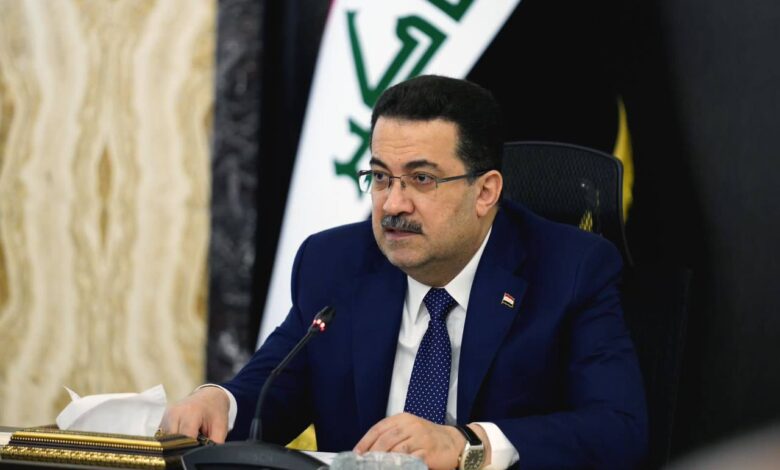 Writer and politician Saad al-Mutalabi said today, Tuesday, that the State Administration Coalition agrees on the success of this government session for Muhammad Shia al-Sudani, noting that the latter possesses more freedom than what Mr. al-Maliki had, for example, in government work.
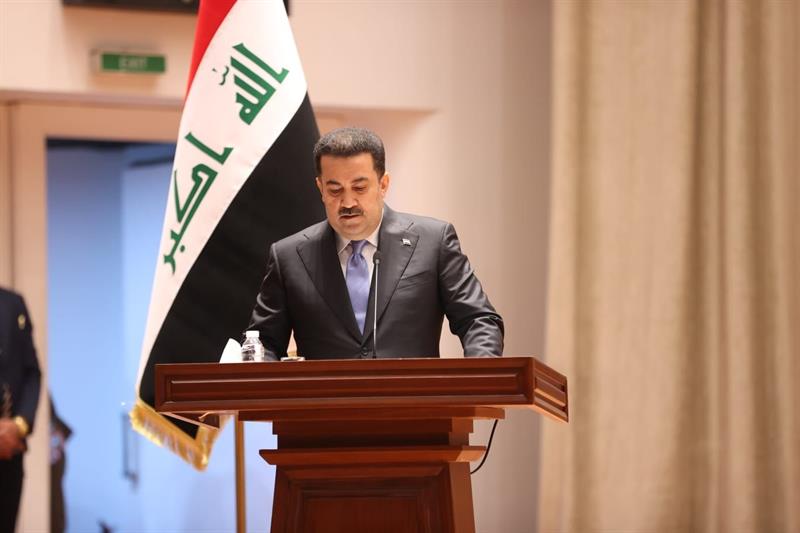 Today, Prime Minister Muhammad Shia al-Sudani indicated that the value of the Iraqi dinar will rise against the US dollar during the next few weeks.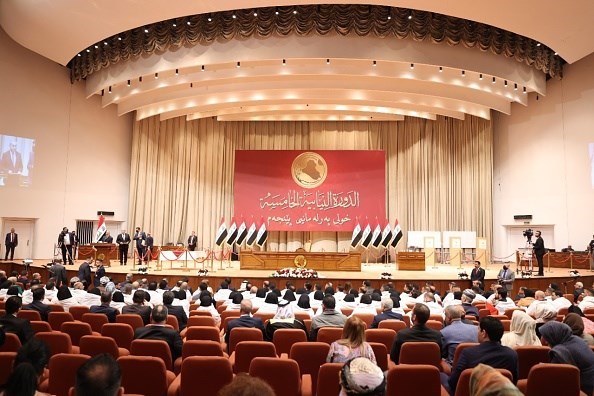
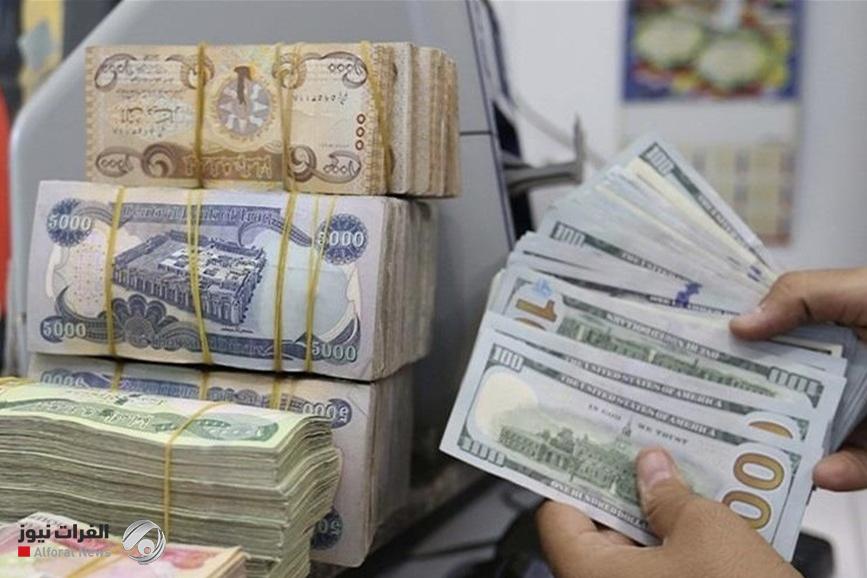 {Economic: Al Furat News} The exchange rates of the US dollar decreased against the Iraqi dinar, today, on the main stock exchange in the capital, Baghdad.
 A London newspaper, in a report published today, Thursday, shed light on the efforts of the Central Bank of Iraq to print a new currency of the category of 20 thousand dinars, while indicating that this step may lead to the erosion of the value of the local currency in the country, while indicating that it increases armed robbery. which has risen recently.
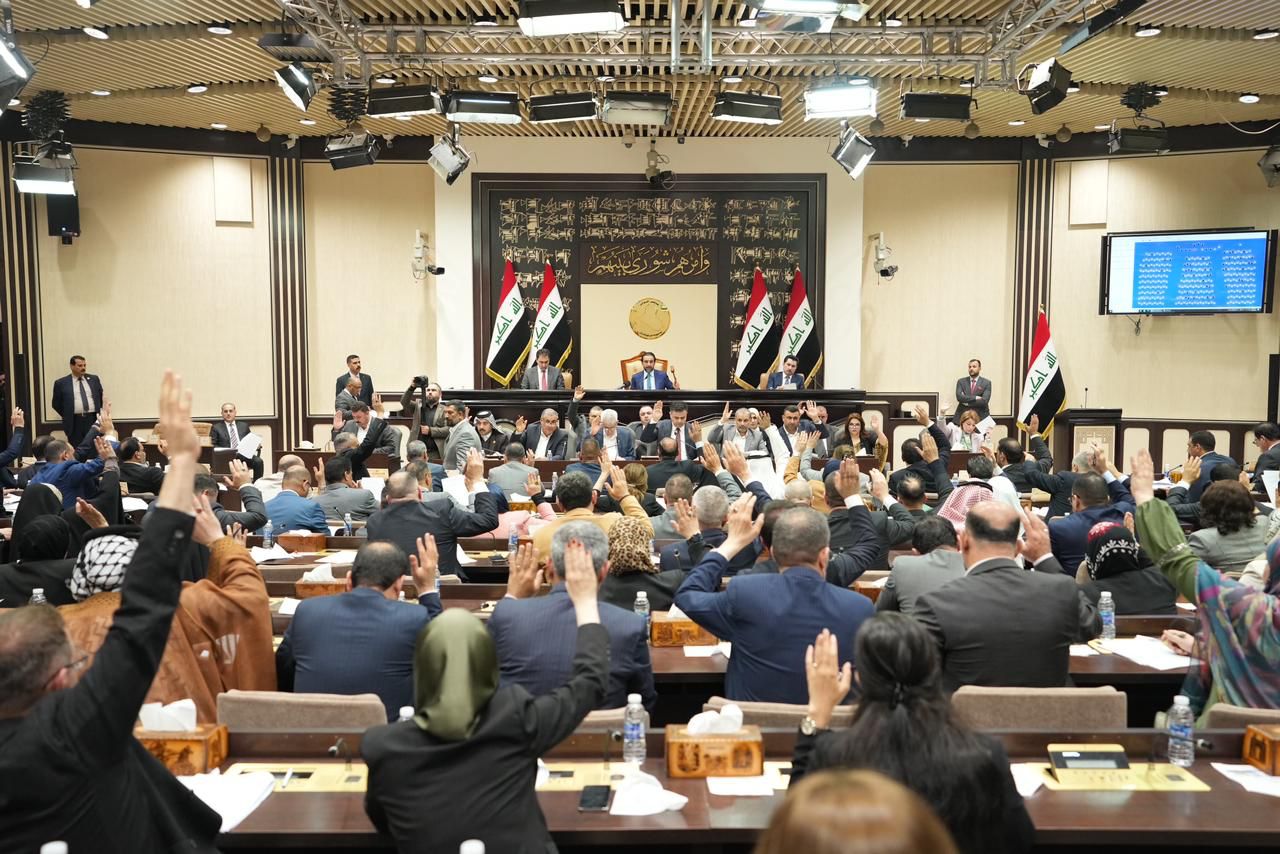 Shafaq News / A member of the coordination framework, Hassan Fadam, confirmed that there is insistence on quickly approving the general budget law, especially in its tripartite body.