
Al-Maliki on the arms monopoly: The language of threats between the state and the factions has ended.
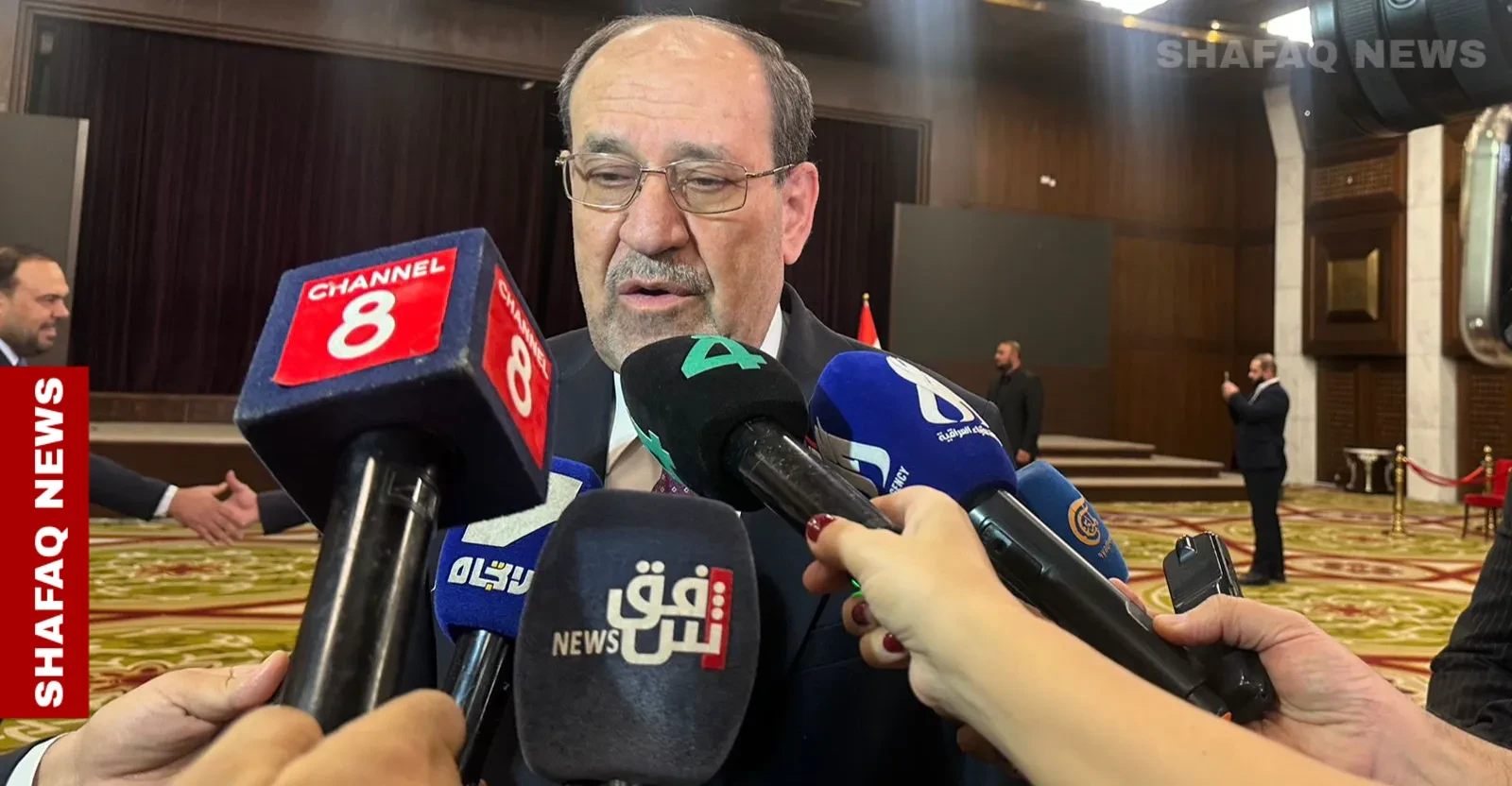 On Wednesday evening, Nouri al-Maliki, head of the State of Law Coalition, explained the mechanism currently being worked on to restrict weapons to the Iraqi state, noting that the process is to “organize and contain” weapons, and that the issue of “disarmament” could affect the other side (armed factions) as a label.
Al-Maliki said in an interview with Al-Sharqiya channel, which was followed by Shafaq News Agency, regarding the issue of restricting weapons and the controversy surrounding it, that “the language that was prevalent of defiance, threats and intimidation has ended, because it has become clear that threats do not lead to results, just as calling for conflict and attacking headquarters or attacking the government does not lead to results.”
He added: “Neither is the government weak enough to be attacked, nor is it in the interest of the factions to be attacked.”
He continued, “These are the first facts that have come to light, which have opened the door and the field for us and others interested in national affairs and the safety of the internal situation to find an opportunity for discussion and dialogue to reach a formula that resolves the crisis without exposing us to a state of confrontation.”
Regarding the mechanism currently being worked on, Al-Maliki explained that “the term (disarmament) is not used because the other party becomes titled (disarmed), and this has a psychological and practical effect. Therefore, it is about organizing and containing weapons in a way that we are still looking for, but it has priorities, and there is a distinction between heavy, medium, and light weapons.”
He pointed out that “distinguishing between weapons is one of the issues raised. Does the operation, whether it is called preservation, containment, withdrawal, or any other name, include all weapons, or only a type of weapon that is considered an internal and external targeting weapon? This will be resolved by the committee formed with the factions.”
On August 26, Maliki stressed the need to address the issue of restricting weapons to the state without escalation or confrontation, warning that turning this issue into a clash between the state and the factions would be extremely dangerous and could threaten the stability of Iraq and open the door to differing political positions.
In a statement issued by his office, Maliki stressed that any internal confrontation would be a “loss for all of Iraq,” not just for a particular party or group, considering that anyone who imagines that any potential conflict would be “Shia-Shia” is mistaken, because its repercussions will affect the state, society and all groups.
He added that the government and the coordinating framework will not allow the country to slide into internal fighting, calling for the development of a clear national and regional vision that prevents Iraq from being exposed to risks and prevents it from becoming an arena for settling conflicts or regional and international disputes of interests, in order to preserve its security, sovereignty and stability.
It is worth noting that the state’s monopoly on weapons does not have the consensus of the Iraqi factions, as the Al-Nujaba Movement, Kataib Hezbollah, Kataib Sayyid al-Shuhada and other factions announced their refusal to give up their military capabilities on September 30, the date set by the Iraqi government, which coincides with the end of the international coalition’s military presence in Iraq, as these factions link the future of their weapons to the withdrawal of foreign forces.
The State Administration Coalition, which includes the most prominent Shiite, Sunni and Kurdish political forces in Iraq, had warned that any armed activity outside the framework of the state after September 30 would be dealt with according to the anti-terrorism law.
Shafaq.com