
The disappearance of small denomination coins is causing “daily disruption” in Iraqi markets.
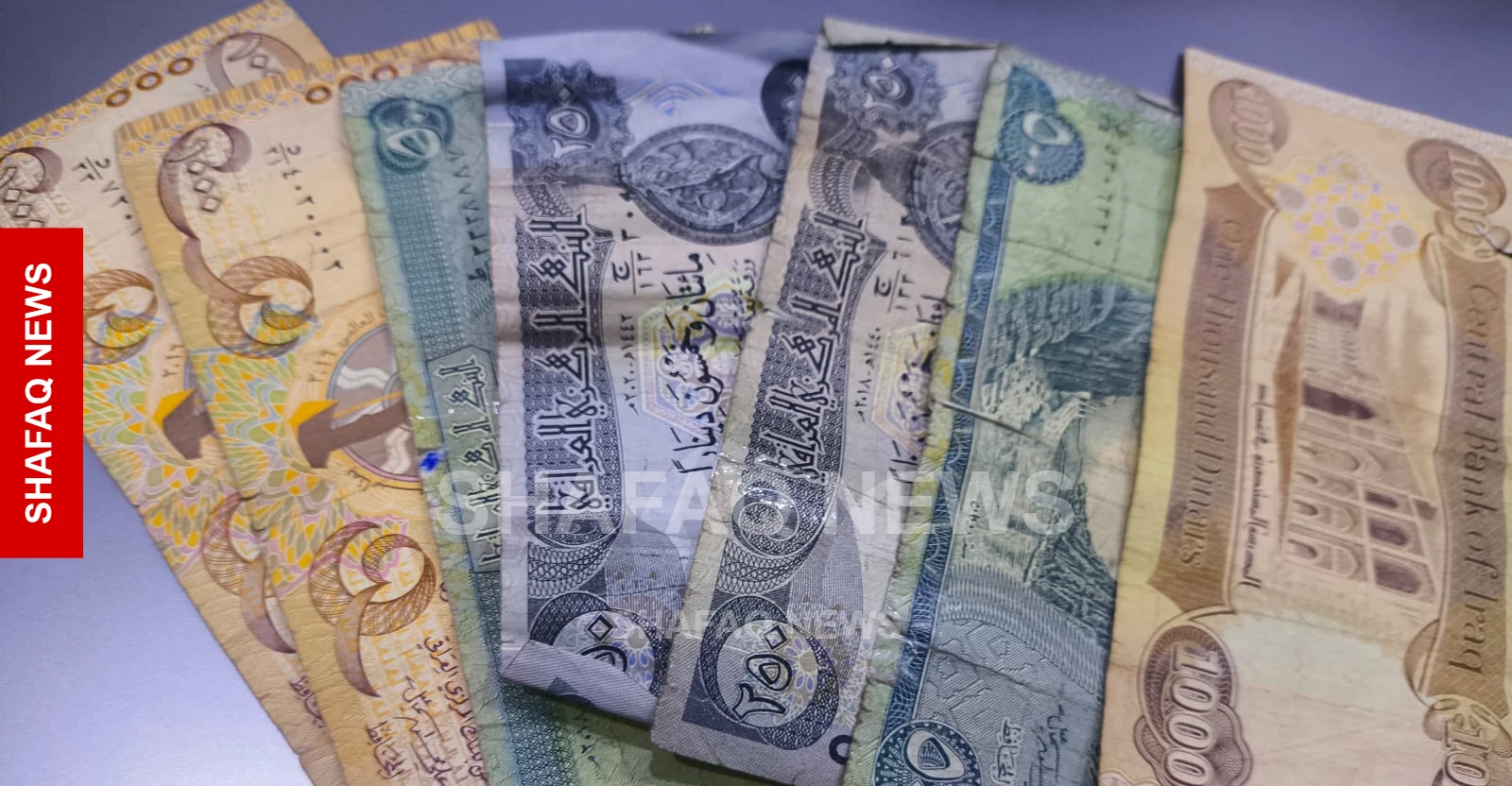 Local markets in Kirkuk Governorate are experiencing increasing difficulty in obtaining small denomination banknotes of 250, 500 and 1000 dinars, amid complaints from traders and citizens about their scarcity in daily transactions. Shop owners say that what is available is often old, worn out or torn, which makes it more difficult to use in buying and selling operations.
At first glance, the problem seems to contradict the available figures on the volume of small banknotes in Iraq, as recent data indicates the existence of hundreds of millions of banknotes of these denominations. However, their presence in the monetary data does not necessarily mean that all of them are actually available for circulation or in good condition, which raises questions about the cash cycle and the mechanisms for withdrawing damaged banknotes, replacing them, and injecting new alternatives into the markets.
Daily confusion
Abbas Ahmed, a shop owner in the Doctors Street market in Kirkuk, told Shafaq News Agency, “Obtaining 250, 500, and 1000 dinar notes has become more difficult than before, and the problem becomes clear when a customer pays their bill in large denominations, forcing us to ask the customer to buy another item with the remaining amount.”
He points out that some of the small bills that arrive at the shops are in poor condition, as they are torn, dirty, or worn out as a result of frequent handling, which makes it difficult for some merchants and citizens to accept them.
He adds: “The continuation of this creates daily confusion in the markets, especially for shops that deal with large numbers of customers,” stressing that the problem is not related to the value of the small banknote as much as it is related to its role in completing commercial transactions.
For his part, Samir Abdullah, the owner of a currency exchange shop on Al-Jumhuriya Street in Kirkuk, told Shafaq News Agency that the demand for small denominations has increased significantly, while it is difficult to provide them in the quantities needed by the market.
It shows that citizens and merchants resort to exchange shops to obtain small denominations, but the available quantities are not stable, and the problem increases when the papers offered for exchange are in a damaged condition.
He adds that small banknotes are passed between large numbers of people in a short period, which makes them more susceptible to damage compared to larger denominations, noting that some of the banknotes that reach the banking system need to be replaced instead of being put back into circulation.
Abdullah believes that the solution is not limited to injecting new banknotes only, but also requires withdrawing damaged banknotes from circulation on a regular basis, because their continued existence reduces the amount of usable cash even if official figures indicate the existence of large numbers of these denominations.
In the Citadel market in Kirkuk, wholesalers face the same problem. Hamza al-Jabari, the owner of a wholesale shop, told Shafaq News Agency that the shortage of small denominations has become part of daily transactions in the market.
He adds: “Wholesale and retail sales sometimes require returning small amounts to customers, but the lack of these amounts leaves the merchant with limited options, including rounding the price or adding another item instead of the remaining cash amount.”
He points out that some traders keep the 250, 500 and 1000 dinar notes they receive and do not use them in other transactions except when necessary, for fear that they will not be able to obtain them again, which in turn leads to a reduction in the movement of these denominations within the market.
He points out that “the problem seems simple from a financial standpoint, but its effects expand when it is repeated thousands of times daily, especially in popular markets, food stores, bakeries, transportation, and other activities that depend on direct cash transactions.”
Hundreds of millions of papers
The latest estimates published in 2026 indicate that the volume of small denomination banknotes does not necessarily reflect what the average citizen sees in the market.
According to Shafaq News Agency’s monitoring of cash issuance data, the number of 1000 dinar notes increased from 718 million notes in 2022 to 775 million notes in 2026, while the number of 250 dinar notes increased from 795 million notes to 818 million notes during the same period, while the 500 dinar note decreased slightly from 147 million notes to 145.4 million notes.
Thus, the total number of banknotes of the three categories amounts to approximately 1.738 billion banknotes according to these estimates for 2026, compared to approximately 1.660 billion banknotes in 2022, an increase of approximately 78.4 million banknotes.
The figures show that the 1,000 dinar denomination recorded an increase of about 57 million notes, while the 250 dinar denomination increased by about 23 million notes, while the 500 dinar denomination decreased by about 1.6 million notes.
However, these figures do not mean that all 1.738 billion banknotes are in citizens’ pockets or store safes and in good condition for circulation. They reflect the number of banknotes within the monetary issuance data and do not represent a field survey of the actual quantity of banknotes in circulation or the percentage of damaged ones. This is a crucial point when explaining the problem of the shortage of small denominations.
The Central Bank of Iraq still includes the 250, 500 and 1000 dinar denominations among the officially circulating banknotes, confirming when issuing the second edition of banknotes that the previous banknotes will continue to circulate alongside the new issues, without any intention of withdrawing them from circulation.
Damaged problem
Economic expert Ali Khalil told Shafaq News Agency that the problem of small denominations should not be measured only by the number of notes issued by the Central Bank, but by the number of notes that are actually valid for circulation.
He says that small batches are subject to high rates of consumption and damage due to their frequent transfer between individuals, and therefore part of the exported quantity may have gone out of circulation or become in need of replacement.
He adds that “the presence of more than one billion banknotes of the three categories within the monetary data does not necessarily mean that there is a surplus of them in the markets, because a banknote that becomes damaged loses its practical ability to perform its function, even if it remains counted within the number of banknotes that were issued.”
He points out that addressing the problem requires strengthening mechanisms for replacing damaged banknotes, ensuring that new banknotes reach the markets continuously, and monitoring the movement of cash between banks, exchange offices, and merchants.
Khalil confirms that “the shortage of small denominations is reflected in daily pricing, and may lead to inaccurate approximation of prices, which can sometimes burden the consumer with small additional amounts, but it becomes significant when it is repeated continuously.”
Central Bank instructions
Official data indicates that the Central Bank of Iraq already has specific mechanisms for dealing with damaged banknotes, as it has published official standards for their replacement, which include different conditions and procedures depending on the nature of the damage to the banknote.
An official electronic service is also available through the Ur portal for submitting requests to replace damaged banknotes at the Central Bank of Iraq, allowing citizens to submit their requests according to the approved procedures.
These procedures indicate that dealing with damaged banknotes is not the responsibility of the citizen alone, but is part of the cash management system that includes banks, the central bank, and mechanisms for withdrawing invalid banknotes and replacing them with banknotes that are negotiable.
In 2020, the Central Bank issued a decision to reinstate the penalty for shortages on small denominations, namely 1000, 500 and 250 dinars, effective from October 1, 2020, in accordance with the instructions on standards for the circulation and exchange of banknotes and counting and sorting mechanisms.
This reflects the monetary policy’s interest in providing small denominations in the monetary system, given their widespread use in daily transactions.
Citizens face a “change” crisis
Suhad Ibrahim, an employee, told Shafaq News Agency that citizens are the most affected by the problem because they cannot control the availability of small denominations when they buy their daily needs.
She adds that the customer may pay more than the value of the item, but sometimes does not receive the full change, or is forced to buy something else so as not to lose the remaining amount, noting that this problem is repeated in shops, markets and means of transportation.
She explains that providing small change in good condition will make everyday transactions easier, especially for employees and low-income earners who deal with small amounts frequently.
Between numbers and reality
The problem of small change reveals a potential gap between the amount of cash recorded in the monetary issuance data and the cash actually available for daily circulation in good condition.
Available figures indicate that there are hundreds of millions of banknotes in denominations of 250, 500 and 1000 dinars, but traders in Kirkuk say they are having difficulty obtaining them, while money changers confirm that part of what they receive is damaged or worn out.
Therefore, the question that arises is not only about the number of notes issued, but also about the volume of notes that are actually valid for circulation, the amount that was withdrawn from the market due to damage, and how quickly it was replaced with new notes.
Economists believe that addressing the problem requires more detailed data on the number of damaged banknotes withdrawn annually, the quantities of new banknotes injected into each denomination, and their geographical distribution among the governorates.
With a large segment of Iraqis continuing to rely on cash transactions, small denominations remain an essential part of daily economic life, despite their low nominal value.
While available data shows an increase in the number of 250 and 1000 dinar notes since 2022, and a slight decrease in the 500 dinar note, market complaints indicate that the real challenge lies in the availability of these notes in good condition and in the right place and time.
Hence, there seems to be a need to strengthen the cycle of replacing damaged currency, and to ensure that small denominations have access to banks, exchange offices and markets, in order to prevent the problem of “change” from turning into a daily crisis for both the citizen and the merchant.
Shafaq.com