
“American flirtation”: Opening up to Syria strengthens Iraq’s regional standing
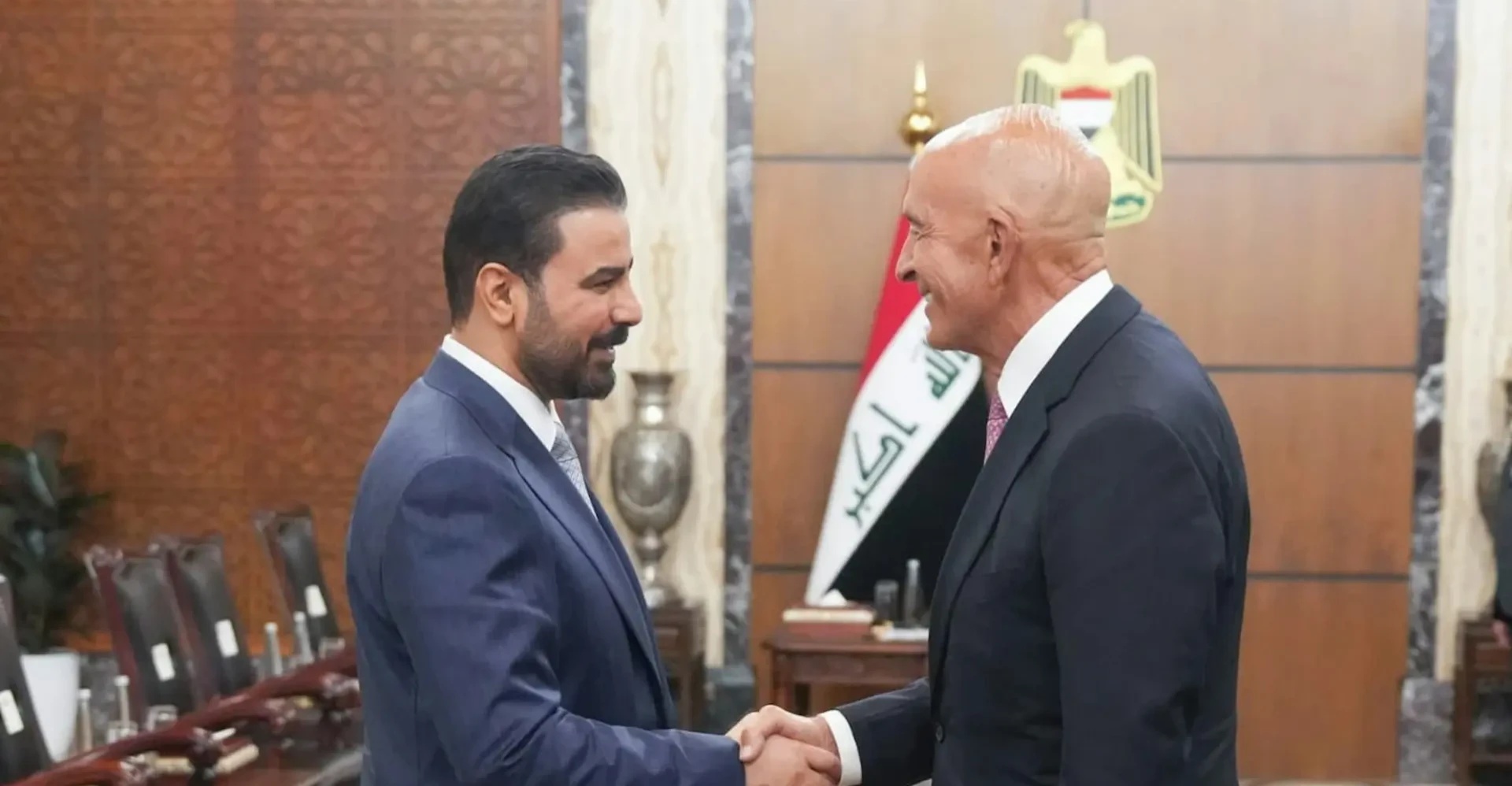 The American openness to the new Syria is not purely in Syria’s interest, but rather, according to the British website “Amwaj”, it represents an opportunity for Iraq and its regional role, on the political and economic levels. Dailynews reports
In what the British website described as the clearest indication yet that Washington intends to transform Damascus from a pariah state into an active regional partner, the report stated that the Donald Trump administration recently informed Congress of its intention to cancel Syria’s designation as a state sponsor of terrorism, following decisions to lift several sanctions against it.
The British website said in a report, translated by Shafaq News Agency, that the appointment of the US ambassador to Turkey, Tom Barrack, as a presidential envoy to Iraq and Syria indicates that Washington views the three countries as a unified stage for US policy in the region.
The report went on to say that for the government of Iraqi Prime Minister Ali al-Zaidi, this rearrangement does not pose a threat, but rather an opportunity, provided that Iraqi officials view it correctly. It noted that the prevailing view among regional analysts is that Baghdad is in a risky position between Washington and Tehran, with Syria being another arena that Iraq must be wary of. However, it considered that the West’s transformation of Syria into an active player requires “a stable eastern flank, a flank that passes through Iraq.”
Therefore, the report concluded that lifting US sanctions on Syria creates pressure not to isolate the al-Zaidi administration, but to court it.
The report pointed out that the reconstruction of Syria requires land access, and Iraqi territory represents the corridor that can connect Damascus with Iran and the Gulf states.
The report noted that a hostile or chaotic Iraqi border would leave the new Syrian state exposed along its longest border at the very moment it is trying to consolidate its sovereignty, pointing to the proliferation of official crossings along the 599 km border between them.
The report quoted a prominent figure in the ruling coordination framework as saying that the security issue between the two sides represents “the axis around which the relationship between Baghdad and Damascus revolves,” explaining that cooperation between the two countries is likely to deepen “if both recognize that ISIS poses a common security threat,” noting that cooperation could expand further if the two neighbors could build “a common framework for participation that transcends sectarian considerations.”
In this context, the report stated that Syrian President Ahmed al-Sharaa had previously been arrested in Iraq on terrorism-related charges when he was a member of al-Qaeda, before later founding the Sunni armed group Hayat Tahrir al-Sham.
Referring to this past, the prominent figure in the coordination framework said that Iraqi-Syrian relations are still being shaped by “the character of its new government,” noting that, while this legacy will not be quickly forgotten in Baghdad, both sides now have a reason to move beyond it.
According to a prominent figure in the Iraqi Foreign Ministry, as reported in the report, rather than being imposed from the outside, Iraqi decision-makers have their own interests in rebuilding relations with Damascus, noting that the Iraqi-Syrian relationship is “gradually shifting from a mostly security framework to a more diplomatic and economic one,” a framework that includes, for example, the memorandum of understanding on the Kirkuk-Banias pipeline recently signed between them.
The report quoted the source in the Foreign Ministry as saying that the pipeline represents “Iraq’s strategic interest in diversifying its oil export routes,” and as a result, “Syrian territory holds great geopolitical importance for Iraq.” Iraqpolitical news
Outside the energy sector, the report quoted the diplomatic source as saying that the relationship between the Iraqi Shiite community and the many holy shrines inside Syria could play a crucial role in building relations, noting that this relationship “should not be understood solely as a religious or doctrinal issue,” but also that ensuring the stability of Syria serves the cause of maintaining internal security within Iraq itself.
The report also noted that al-Zaidi inherited the process of opening up to Syria from his predecessor, Muhammad Shia al-Sudani, and therefore it seems that the new Iraqi administration is moving forward in this direction.
He went on to say that Damascus, for its part, is not only courting Baghdad, recalling that al-Sharaa recently received Kurdistan Region President Nechirvan Barzani in Damascus with full presidential honors, in the first such visit by a senior official in the Kurdistan Region since the fall of Bashar al-Assad’s regime.
The report noted that these divergent paths indicate that Iraq’s openness to Syria is based on more than one Iraqi relationship at a time, even with Baghdad remaining its main channel.
The report said that Iraq could deepen relations with Western-backed Damascus, specifically because Washington wants it now, but it also cannot do so in a way that destroys its relationship with Iran.
The report quoted a source within the coordination framework as saying that cooperation with Syria would be sustainable, as long as the two countries “avoid adopting fundamentally contradictory positions on key regional issues,” including their respective approaches to Palestine, the Lebanese Hezbollah, and Iran.
The report concluded by saying that the Trump administration’s revocation of Syria’s designation as a terrorist state is usually interpreted in terms of its impact on Damascus. It continued, stating that “its most interesting effect may be on Iraq,” explaining that by making Syria’s reconstruction and security a Western priority, Washington has made Iraq’s cooperation crucial, and in diplomacy, value is leverage.
The report concluded by saying that Iraq is being “wooed into a role its leaders already wanted to play, and the only real question now is how open they are to playing that role.”
Shafaq.com