
A US report offers advice to the new Iraqi patriarch on how to ensure the protection of Christians.
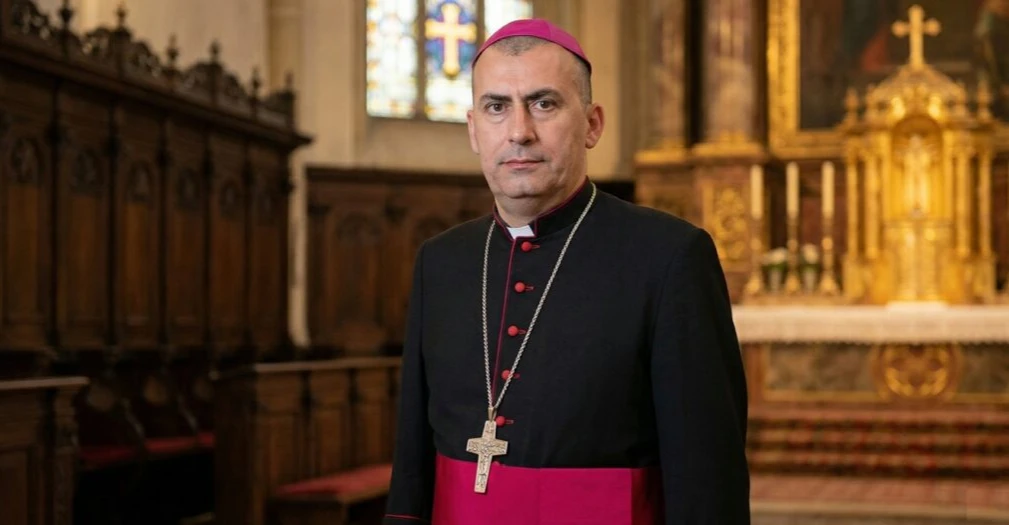 The American Foundation for Defense of Democracies presented a warning picture of the situation of Christians in Iraq, considering that the new Patriarch Mar Peter Paul III Nona now bears the burden of preventing the disappearance of the Chaldean Catholic Church, and that Washington’s efforts to strengthen the sovereignty of the Iraqi government will help protect Christians in Iraq.
The American Institute said in a report, translated by Shafaq News Agency, that the inauguration ceremony of Patriarch Mar Peter Paul III Nona bore all the hallmarks of a flourishing church, as the Patriarch was surrounded by clergymen wearing traditional religious attire, signaling the beginning of a new era for one of the oldest Christian communities in the world.
However, the American report indicated that the community inherited by the new patriarch had almost disappeared since the American invasion of Iraq in 2003, as their number before the invasion was about 1.5 million people, but now there are less than 150,000 of them left.
However, the report noted that the restored churches represent renewed hope, as Masses continue to fill the pews in Erbil and Qaraqosh. Nevertheless, the report acknowledged that Christian life has not yet fully recovered from the war, adding that Patriarch Nona’s appeals for Christian unity stem not only from spiritual concern but also from an acknowledgment that if the Christian community does not stand united, it will not survive.
According to the report, solidarity among Christians remains the last hope for a once vibrant community that has been almost wiped out by decades of violence facilitated by the continued weakness of the state.
In this context, the report recalled the US invasion, the power vacuum, and the rise of al-Qaeda, which repeatedly targeted Christians with deadly attacks, including the 2010 attack on Our Lady of Salvation Church, and the kidnappings and extortion that forced Baghdad’s Christians from the area known as the “Iraqi Vatican” in Dora to flee. The report also addressed the rise of the ISIS terrorist organization, which occupied Mosul, directed threats at Christians, destroyed churches, including the oldest monastery in Iraq, St. Elijah, and expelled approximately 120,000 Christians from the Nineveh Plain.
Despite the defeat of the organization, the report considered that the danger did not end with ISIS, as there is currently a drain under the rule of militias that makes the lives of Christians unsustainable.
The report highlighted the sanctions imposed by the United States on Chaldean leader Ryan al-Kaldani, accusing him of preventing Christians from returning to their homes and seizing land through forgery and intimidation.
According to the report, after the defeat of ISIS, the Nineveh Plain should attract citizens displaced by terrorism and political instability, but instead the continued presence of militias has made recovery impossible, frustrating efforts to resettle and rebuild sustainably.
The report quoted Sarah, a Christian who runs a volunteer organization in the area, as saying, “Many here are losing hope because they realize that starting over will be a tough struggle. There are no services and no jobs. We can help each other, but it’s hard to imagine a future.”
The report stated that in order to ensure a certain level of representation for Christians in the Iraqi House of Representatives, five of these seats are allocated to Christians. However, given that the quota system in Iraq allows anyone to vote on who will occupy those seats, as long as the candidates are Christians, the Shiite blocs helped the Chaldean-led Babylon Movement to win four of the five seats in 2021, recalling that former Patriarch Louis Sako had warned that the Chaldean “does not represent Christians.”
The report continued that given that Iraq has a constitution that gives Islam a privilege, including apostasy laws that prevent Muslims from leaving Islam for any other religion, and chronic unemployment among Christians, the result is not surprising, as 57% of Nineveh’s Christians have considered emigrating, while 36% expect to leave within five years.
After questioning what the United States could do, the report praised the continued treatment of Iraqi Christianity as a heritage issue through funding the restoration of beautiful buildings and acknowledging the atrocities of the past. However, it argued that all of this ignores the current dangers facing Christians in Iraq, explaining that the threats facing Christians stem from the existence of a weak Iraqi state that has given control of its basic functions to factions linked to the Popular Mobilization Forces, which, with the help of Iran, have turned post-ISIS Christian areas into militia-run areas.
Therefore, the report concluded that the most useful thing Washington could do was to push Baghdad to reclaim those responsibilities.
The report also called on Washington to reinstate Iraq on its list of countries of greatest concern regarding international religious freedom, noting that Iraq is currently only on the Special Watch List, which represents a lower level of concern. It went on to say that restoring the harsher designation that was previously in place would send a message to the Iraqi government that ignoring the suffering of Christians carries real diplomatic costs.
In addition, the report also urged Washington to stand firmly behind its insistence that the new Iraqi Prime Minister, Ali al-Zaidi, not appoint any ministers belonging to political parties affiliated with militias designated by the United States as “terrorist” organizations. The report added that al-Zaidi has thus far respected this demand. However, the report went on to say that making Iraq safe in the long term for Christians and other minorities depends on breaking the grip of the militias and their patrons in Tehran on the Iraqi state.
The report went on to say that Washington could also pressure the Iraqi parliament to reform the minority quota system so that parliamentary seats reflect the voters they are supposed to represent, rather than the preferences of larger, external political blocs.
The American report concluded by recalling that Pope Francis, while standing amid the ruins of Qaraqosh in 2021, urged Christians not to “forget who they are or where they came from,” while Patriarch Sako believed that without a change in the Iraqi government, the country’s Christians could soon disappear completely.
The report concluded that Sako’s successor, Patriarch Nona, now bears the burden of ensuring that this does not happen, adding that Washington, as part of its broader strategy to counter Tehran, is already seeking an Iraqi government willing to curb Iran’s efforts to support militias, adding that the same steps are necessary to protect Iraqi Christians.
The report warned that the churches of the Nineveh Plains could turn from vibrant centers of Iraqi Christianity into ruins, adding that this depends on whether Iraq, with American help, can protect its Christians.
Shafaq.com