
“Integration and non-prosecution”: A crucial meeting between Al-Zaydi and security and faction leaders to “control weapons”.
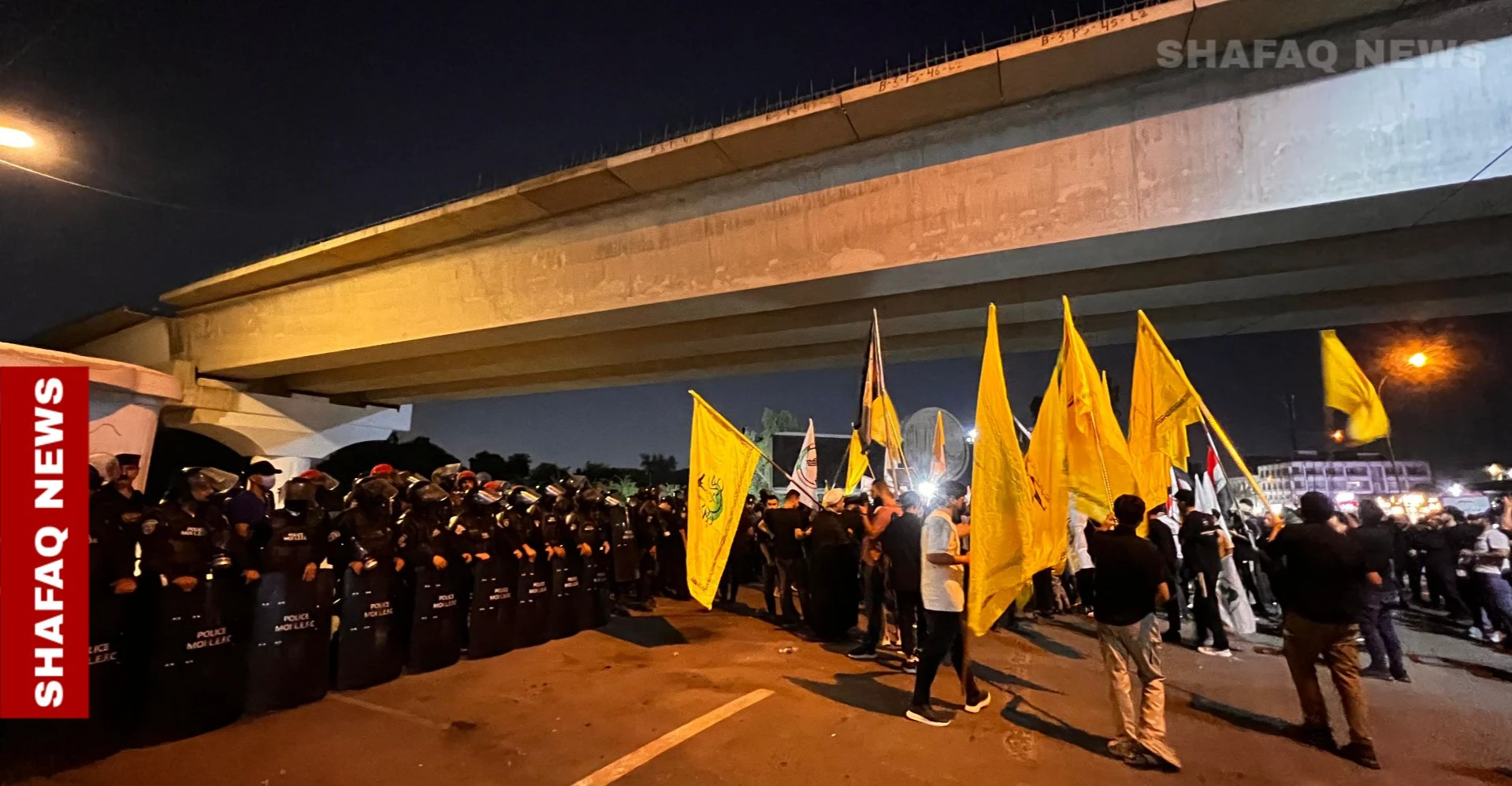 A government source revealed on Saturday that Prime Minister Ali al-Zaidi will hold an extensive meeting with security leaders and armed factions that have announced the handover of their weapons to the state, in order to establish mechanisms and a timeframe for integrating their members and dismantling their positions, in addition to discussing the “guarantees” that will be given to the factions.
The source told Shafaq News Agency that “the meeting that al-Zaydi will hold will include leaders in the Ministries of Interior and Defense, and leaders of the factions that agreed to hand over their weapons.”
He added that “this file will be resolved through three stages, which will be discussed in the meeting. The first stage includes inventorying and listing the sites belonging to each faction or movement, the second stage involves evaluating and handing over weapons according to a time limit, and the third stage relates to integrating individuals, i.e., the members of the factions, and distributing them to the official security institutions or the Popular Mobilization Forces.”
He explained that “the third phase will be overseen by joint committees formed by representatives of those factions and their counterparts from the ministries, security and military agencies, under the supervision of the Commander-in-Chief of the Armed Forces,” adding that “all of this will determine the issue of funding or financial allocation to implement the mechanisms for ending the factions’ file.”
He added that “the meeting will discuss in detail all aspects of the file, including the guarantees requested by some factions, such as the integration of everyone without exception, guaranteeing financial allocation (salaries for everyone), and guaranteeing immunity from prosecution.”
On Wednesday, the leader of the Shiite national movement, Muqtada al-Sadr, announced the disassociation from the Peace Brigades and their integration into the state. The move was welcomed by the newly formed Iraqi government headed by Ali Faleh al-Zaidi.
Most of the current armed factions trace their roots back to after 2003, when armed formations emerged in connection with the security vacuum that followed the American invasion of Iraq, and then expanded significantly after ISIS invaded large Iraqi cities in 2014 .
At that stage, the Peace Brigades were formed as a military force in response to al-Sadr’s call to protect holy sites, in parallel with the integration of other factions into the Popular Mobilization Forces, which later became an official umbrella for a large number of armed formations .
But this merger did not end the multiplicity of power centers, but rather established a complex scene that combines the state, factions, and political and partisan authorities, which made the “weapons control” file one of the most problematic files in Iraq .
Al-Sadr is seen as one of the most prominent players in this matter, as he previously founded the “Mahdi Army” after 2003, before later dissolving it and reconstituting the “Saraya al-Salam” forces in 2014 .
On the international front, the United States is intensifying its pressure on Baghdad, linking support for the Iraqi government to the removal of armed factions from state institutions .
Reports indicate that Washington is stipulating that armed factions cannot participate in the government unless they are disarmed, in addition to halting government funding for some formations, which further exacerbates the internal political situation .
Shafaq.com