
An American perspective: Baghdad is an “Iranian province,” and its separation is a priority before the zero hour.
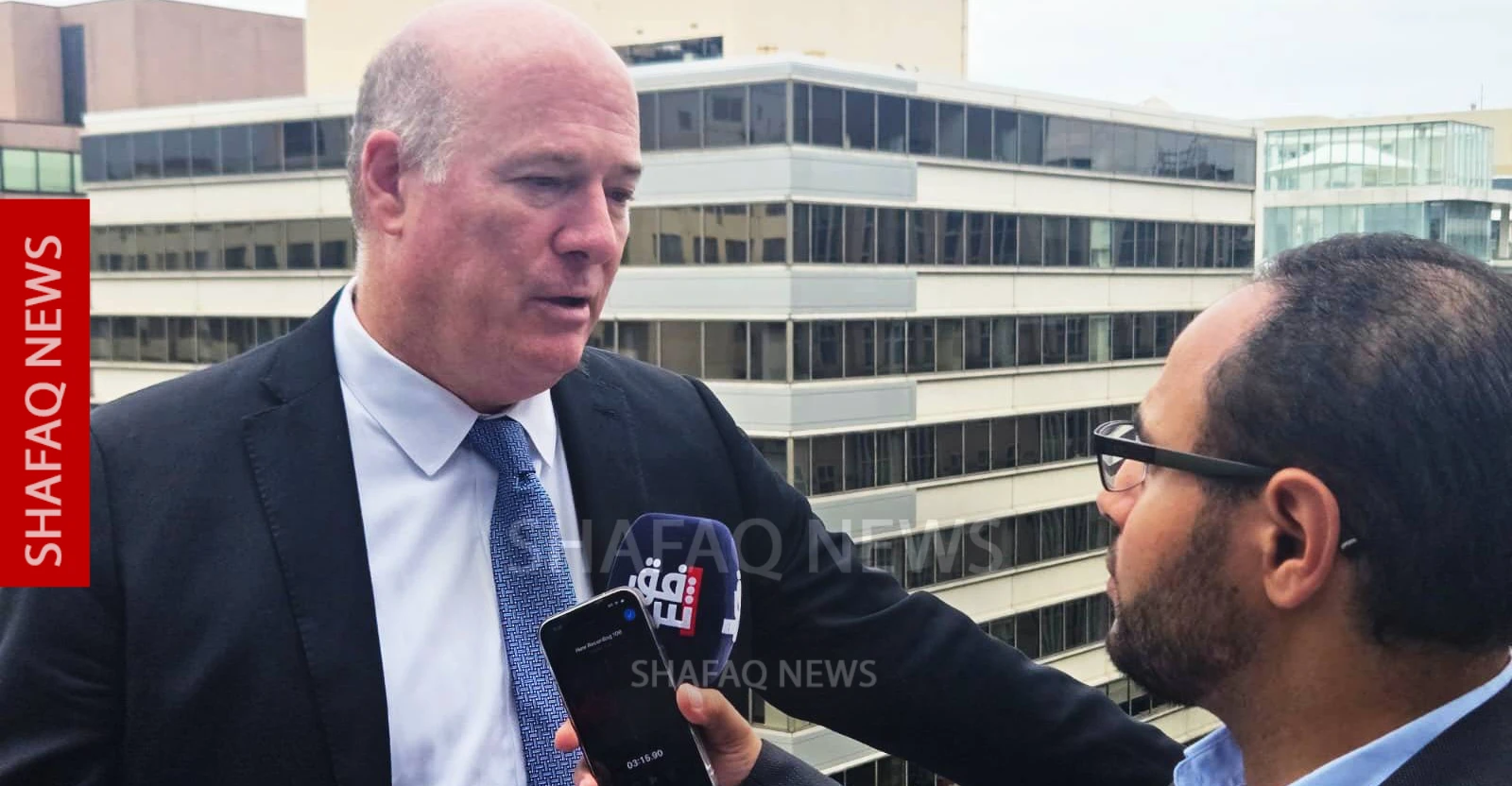 David Des Roches, a former Pentagon official and associate professor at the Near East and South Asia Center for Security Studies, confirmed that the United States views “Iraq’s sovereignty” as the most important objective in the next phase, warning against the country becoming a “state subservient to Iran,” while predicting a resumption of the “American-Israeli” military conflict against Tehran over the Strait of Hormuz.
Iraq First
Des Roches said in an exclusive interview with Shafaq News Agency that “Washington’s biggest concern is the possibility of Iraq becoming subservient to Iran, while Iraq’s independence and true sovereignty serve both American and Iraqi interests.”
He added that President Donald Trump is dealing pragmatically with regional issues, explaining that lifting sanctions on previously listed figures reflects Trump’s conviction that economic development serves American interests, and that Washington wants to see Baghdad succeed.
Regarding the relationship between Baghdad and Tehran, Des Roches described the required balance as a “real challenge,” noting that some armed factions within Iraq “take their orders from Iran,” which hinders the ability of Iraqis to pursue their national interests.
He continued: “Iraq must have its own electricity and should not remain dependent on importing electricity from Iran,” noting that Tehran uses the energy file “as a tool to obtain hard currency and maintain its influence.”
The former Pentagon official asserted that “Iran is treating Iraq as an Arab province under its control with a seat at the United Nations,” adding that “the Iraqi nation is strong, and its destiny is greatness, not subservience.”
Mosaic defense
In assessing the military escalation in the Gulf, the former US official said that Iran has shown, by targeting shipping and infrastructure in the Gulf states and Iraq, that it “does not view its neighbors as sovereign states but as its own sphere of influence.”
He added that Tehran is adopting what is called “distributed mosaic defense,” by giving advance instructions to missile and drone units before the outbreak of war, reflecting a readiness to strike countries in the region even if they do not participate directly in the fighting.
Des Roches argued that the Gulf states refused to allow the United States to use their air bases against Iran because they wanted to stay out of the conflict, but Iran decided to consider them enemies anyway.
Israel and Lebanon
Regarding the relationship between Washington and Tel Aviv, he explained that “Israel does not wait for an American green light when it sees a threat to its national security,” noting that the two sides agree militarily on “weakening Iranian offensive capabilities,” but they differ politically on the future of Iran after the war.
He added: “The United States does not want to impose a new regime in Iran, but wants the Iranian people to decide that, while Israel seeks to ensure that Iran does not become a future threat again.”
Regarding Lebanon, he considered the main problem to be Hezbollah, saying that the party “has turned itself into a state within a state” and weakened Lebanese governing institutions.
He added that the Lebanese government has begun to approach the stage of “extending sovereignty” through steps such as limiting the influence of the Iranian Revolutionary Guard and stopping the flow of weapons to Hezbollah, but he ruled out a “rapid radical change” on the ground.
Strait of Hormuz
Regarding the Strait of Hormuz, Des Roches predicted that the United States would resume military operations against Iran if the latter continued to disrupt international navigation.
According to the former Pentagon official, Trump does not want to return to war because of the economy and the elections, but he may find himself forced to do so “if Iran continues to use the Strait as a bargaining chip.”
According to his reading, the “Freedom Project” launched by Washington in the Gulf also aims to push European and Asian allies, especially China, Japan and South Korea, to become more involved in protecting international shipping lanes.
Des Roches concluded by saying that China is more dependent on the Strait of Hormuz than the United States, and that any precedent allowing Iran to impose tariffs or restrictions on navigation “represents a direct threat to the Chinese economy and global trade.”
Shafaq.com