
Assassination attempt on Khamenei prompts North Korea to link its leader’s life to the “nuclear button”.
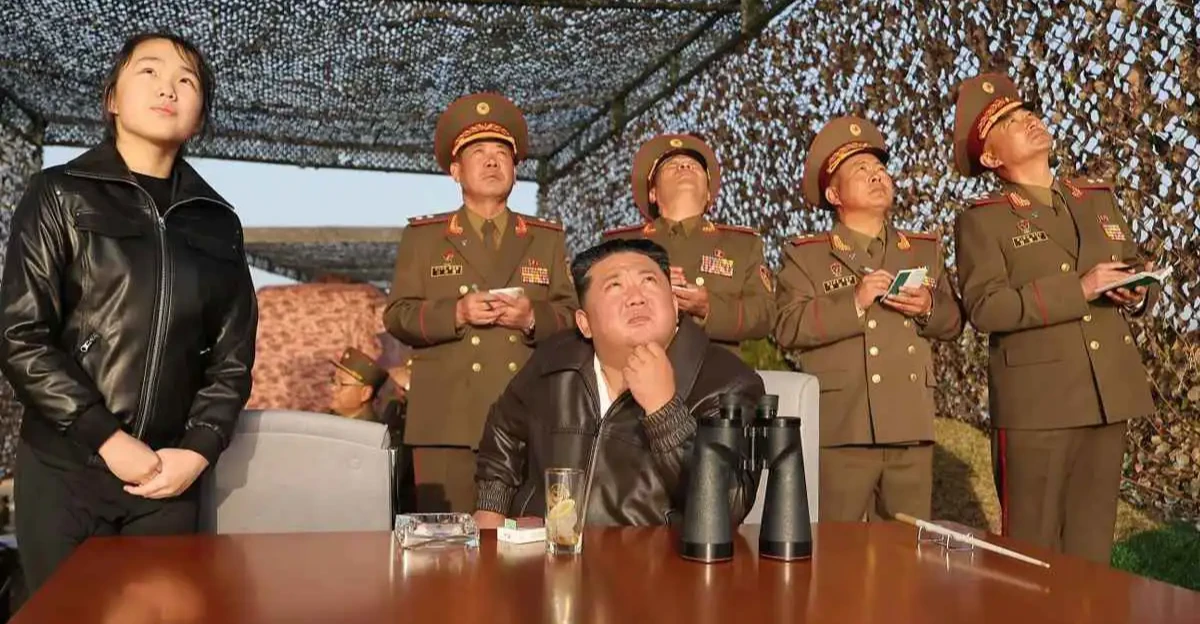 North Korea has introduced a constitutional amendment that gives leader Kim Jong Un direct authority over the nuclear arsenal and obliges the military to carry out an immediate nuclear strike in the event of his assassination or incapacitation.
According to reports based on a South Korean intelligence briefing, Pyongyang approved the amendment during a meeting of the Supreme People’s Assembly at the end of March, before its contents emerged in conjunction with the escalation of international debate on the security of political leaders following the killing of Ali Khamenei in the US-Israeli strikes that took place on February 28.
Asian diplomatic sources say the amendment directly links Kim Jong Un’s security to the mechanism for using nuclear weapons, in a message to Washington and Seoul regarding any potential plans to target the center of power in North Korea.
The sources said the new text makes tampering with the leadership approach to the command and control system of the nuclear arsenal, and places any operation against Kim within a “highly sensitive” military level.
For his part, a former US diplomat who worked on deterrence files in East Asia said that Khamenei’s killing had a “direct impact” on Pyongyang’s calculations, noting that Kim Jong Un treated the incident as a “personal and political warning,” which prompted him to amend the constitution to link his safety to the decision on nuclear retaliation.
He added that the amendment targets US deterrence plans, as Pyongyang considers targeting the leadership as targeting the nuclear system itself, making any attempt to isolate Kim or paralyze the decision-making center a direct cause for a pre-planned nuclear move.
Since the 2022 Nuclear Policy Act, North Korea has broadened the conditions for the use of nuclear weapons, linking an automatic strike to a compromise of its command and control system, before enshrining its status as a nuclear state in its constitution in 2023.
The 2026 amendment gives an additional dimension to this path, as it makes Kim Jong Un’s person part of the definition of the threat to the nuclear system itself, while authorizing the nuclear command apparatus to use nuclear forces in the event of the leader’s absence or loss of contact with the military establishment.
Observers believe the amendment sends direct messages to the United States, South Korea, and Japan, amid escalating military exercises, missile tests, and ongoing tensions on the Korean Peninsula.
Shafaq.com