“A last-minute race”: Political blocs unite to decide the presidency tomorrow
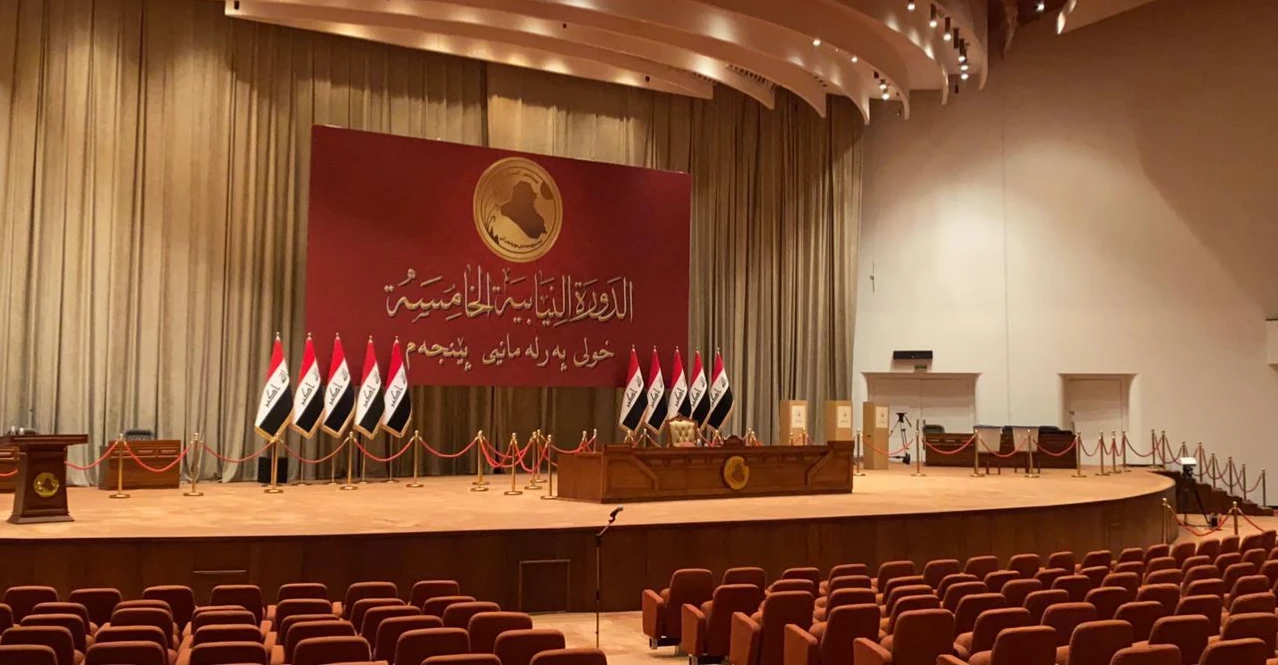 Amid escalating calls to break the political deadlock, attention is turning to the upcoming parliamentary session on Saturday, which is expected to resolve one of the most prominent outstanding issues in the country: the election of the president.
With several parliamentary blocs confirming their participation in the session, pressure is mounting to end the political deadlock and move towards fulfilling constitutional obligations, at a time when Iraq is facing challenges that require decisive and rapid decisions.
The Patriotic Union of Kurdistan bloc in the Iraqi parliament called for a parliamentary session to be held on Saturday to complete the constitutional requirements, foremost among them the election of the president of the republic, stressing that this issue has taken enough time to be resolved.
The bloc stated in a statement received by Shafaq News Agency that “the issue of disagreement should not be a reason to disrupt the completion of constitutional entitlements, which are the basic pillar for activating state institutions and ensuring their political and economic stability.”
She added that “delaying the appointment to this position disrupts the work of state institutions and leads to an accumulation of economic and service-related issues,” noting that “the democratic process in the country was founded on great sacrifices, which necessitates preserving and strengthening it by completing the constitutional requirements.”
In this context, the head of the Turkmen bloc in the Iraqi parliament, Arshad al-Salihi, announced that the United Iraqi Turkmen Front bloc will participate in Saturday’s session dedicated to electing the president of the republic, stressing his rejection of the continued political deadlock in the country.
Al-Salihi said in a statement received by Shafaq News Agency that “the bloc will participate in the session to elect the President of the Republic, and will not allow the political deadlock to continue,” expressing his hope for achieving consensus among the political forces, especially between the Kurdish and Shiite parties.
He pointed out that “Iraq is going through a sensitive and dangerous phase, which requires everyone to bear their national responsibilities,” calling for “the formation of a new Iraqi government that represents all components of the people and establishes a comprehensive political system that serves all Iraqis.”
According to Al-Salihi, the next government should be for all of Iraq and its components, not limited to specific components, indicating the need to move beyond the traditional quota system.
For its part, the Reconstruction and Development parliamentary bloc confirmed its intention to attend the election session, noting the importance of completing the constitutional requirements, foremost among them the election of the President of the Republic.
The bloc stated in a statement received by Shafaq News Agency that “electing the President of the Republic is a fundamental constitutional entitlement that cannot be delayed any further, given the challenges and obligations facing Iraq that require prioritizing the logic of the state and placing higher interests above any factional or political considerations.”
According to the statement, overcoming the political stagnation and the deliberate obstruction of constitutional entitlements is the true guarantee for turning citizens’ aspirations for development and prosperity into a tangible reality, stressing the need for all political forces to bear their national responsibilities.
The bloc also called on partners in the political process and all parliamentary blocs to attend the upcoming session and to act responsibly, “in fulfillment of the promises made to the people, and to protect the democratic process from any constitutional vacuum.”
In addition, the Sadiqun parliamentary bloc announced its commitment to attending the House of Representatives session for the election of the President of the Republic, stressing the steadfastness of its position and its seriousness in proceeding with this constitutional entitlement.
The bloc stated in a statement received by Shafaq News Agency that it “will be at the forefront of those present to embody the commitment to the constitution practically under the dome of parliament,” indicating its keenness to complete this file without delay.
The bloc called on all political forces to “bear their national responsibilities, prioritize the country’s best interests, and proceed with completing the constitutional requirements without obstruction, in a way that contributes to strengthening stability and consolidating citizens’ trust in constitutional institutions.”
It is worth noting that the National State Forces Alliance, headed by Ammar al-Hakim, and the Progress Party, headed by Mohammed al-Halbousi, confirmed on Thursday evening that their bloc’s representatives would attend the House of Representatives session scheduled for next Saturday, April 11, 2026, which is dedicated to electing the President of the Republic of Iraq.
The Iraqi parliament published yesterday, Thursday, the agenda for session number 17 scheduled to be held next Saturday, April 11.
The agenda, which was provided to Shafaq News Agency, included one item related to “electing the President of the Republic,” noting that the session would begin at eleven o’clock in the morning.
The session to elect the Iraqi president comes at a time when the coordinating framework that includes the ruling Shiite political forces in Iraq intends to decide on the position, whether or not an agreement is reached between the Kurdish forces, to whom this position has become allocated.
Iraqi political parties are trying to alleviate the internal pressure they are under, especially after several months have passed since the legislative elections in late 2025, and their failure to form the new Iraqi government.
After the fall of Saddam Hussein’s regime in the spring of 2003 at the hands of US forces and their allies, the major political forces of the Shiites, Kurds, and Sunnis adopted a quota system in distributing positions for the three presidencies: the Prime Minister’s office, the Republic, and Parliament.
The Coordination Framework had officially nominated Maliki on January 24, a move that opened the door to negotiations to form the new government, but the process faltered as disagreements continued over the election of the President of the Republic, the constitutional entitlement that precedes assigning the candidate of the largest bloc to form the government.
Shafaq.com