
After an 11-year closure, Iraq and Syria officially reopen the Al-Walid border crossing.
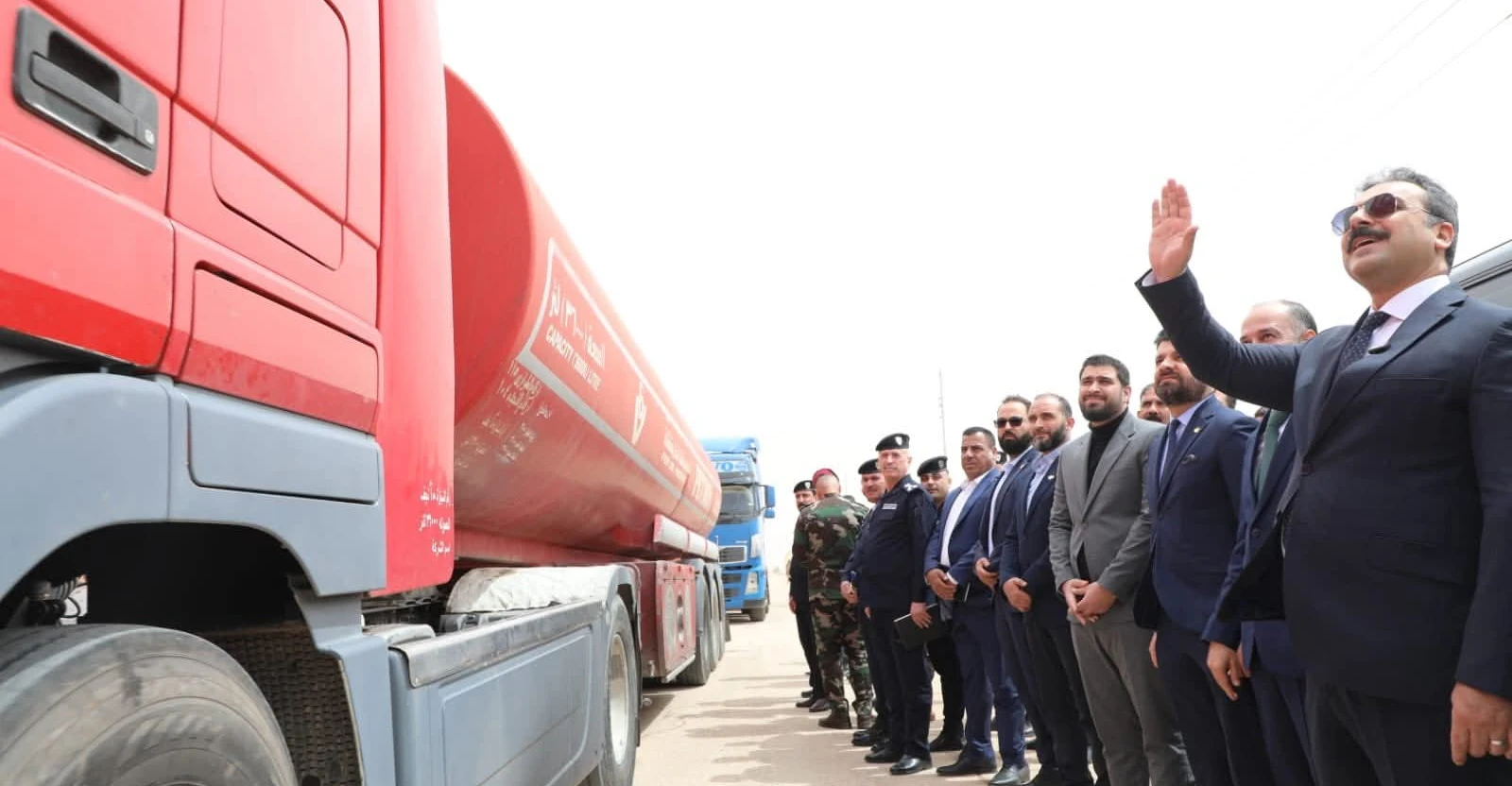 The head of the Border Ports Authority, Lieutenant General Omar Adnan Al-Waeli, inaugurated the Al-Walid border crossing between Iraq and Syria on Thursday, after it had been closed for more than 11 years.
The reopening ceremony of the crossing took place in the presence of the head of the Syrian General Authority for Ports and Customs, Qutaiba Ahmed Badawi, and the Director General of the General Authority of Customs in Iraq, Thamer Qasim Daoud, in addition to a number of security leaders and agencies working at the border crossings.
The crossing witnessed, in its first moments of opening, the entry of oil tankers loaded with (fuel oil) exported from Iraq to Syria, in a scene that reflects the return of life to an “important” economic artery that had stopped since 2014 as a result of the security conditions that the region witnessed.
Al-Waeli confirmed in a press statement on the sidelines of a field tour of the crossing that the government is proceeding with the rehabilitation and development of border crossings according to the highest technical and administrative standards, in order to ensure the smooth flow and continuity of work, and to raise the readiness of the crossing to receive trade and travelers.
For his part, the head of the Syrian General Authority for Ports and Customs explained that they are seeking to expedite the reopening of the (Al-Yarubiyah/Rabia) port in order to enhance economic cooperation between the two countries, stressing their readiness to open it on the first of next May, confirming the start of the first convoys of Iraqi oil tankers to officially enter through the Al-Walid port towards the Banias oil refinery.
Al-Waeli, in turn, pointed out that the border crossings represent Iraq’s economic gateway to neighboring countries, especially Syria, and contribute to strengthening bilateral relations and enhancing joint economic cooperation, as well as being an important financial resource for the governorates within the Border Crossings Law, which positively impacts reconstruction projects and infrastructure development.
Shafaq.com