The Iraqi Presidency, UNAMI, and the US Embassy condemn the events in Sulaymaniyah.

The Iraqi Presidency, UNAMI, and the US Embassy condemn the events in Sulaymaniyah.

The Iraqi Presidency - UNAMI and the US Embassy condemn the events in SulaymaniyahThe Iraqi Presidency, UNAMI, and the US Embassy condemned the bloody events in Sulaymaniyah on Friday, expressing their regret for the deaths and injuries sustained during the clashes.

The Presidency of the Republic said in a statement received by the agency that it is following with concern the events taking place in the city of Sulaymaniyah, which resulted in “the killing of members of the city’s security forces and the injury of others.”

The presidency stressed “the need for self-restraint and adherence to legal and judicial procedures in accordance with the constitution, avoiding violence, and in a manner that consolidates the principles of justice and preserves the security and stability of citizens.”

For its part, the United Nations Assistance Mission for Iraq (UNAMI) stated in a statement received by Shafaq News Agency that it expresses “concern over the ongoing developments in Sulaymaniyah Governorate and regrets the deaths and injuries resulting from the recent clashes.”

According to the statement, the mission called on all parties to exercise restraint, “refrain from any actions that could endanger the lives of civilians, respect human rights, and ensure fair and just judicial procedures that are consistent with the provisions of the constitution.”

In a statement received by Shafaq News Agency, the US Embassy in Iraq expressed its concern over the ongoing developments in Sulaymaniyah Governorate and its regret for the deaths and injuries resulting from the recent clashes.

The embassy called on all parties to “exercise restraint, refrain from any actions that could endanger the lives of civilians, respect human rights, and ensure fair and just judicial proceedings consistent with the provisions of the constitution.”

Late Thursday night, security forces clashed with members of the security forces protecting the leader of the People’s Front, Lahur Sheikh Jangi, in the city of Sulaymaniyah, following a court order for his arrest.

On Friday morning, media outlets close to the Patriotic Union of Kurdistan (PUK) reported that three people were killed and ten others were injured in armed clashes.

The events culminated in the arrest of the leader of the People’s Front Party, Lahur Sheikh Jangi, and his brothers, Polad and Aso, for whom arrest warrants were issued. This followed a raid on the party’s headquarters, the Lalzar Hotel, located in the Sarchinar neighborhood in central Sulaymaniyah.

It’s worth noting that Sheikh Jangi served as co-chair of the Patriotic Union of Kurdistan (PUK) before being dismissed by Bafel Talabani in July 2021 following sharp disagreements within the party. He subsequently founded the People’s Front party, which participated for the first time in the 2024 Kurdistan parliamentary elections, winning two seats.

Shafaq.com

Posted in Uncategorized | Comments Off on The Iraqi Presidency, UNAMI, and the US Embassy condemn the events in Sulaymaniyah.

Exclusive: The last US soldier will leave Ain al-Asad base in mid-September.

Exclusive: The last US soldier will leave Ain al-Asad base in mid-September.

Exclusive - The last US soldier will leave Ain al-Asad base in mid-SeptemberAn Iraqi security source revealed on Tuesday that the last US soldier will leave Ain al-Asad base in Anbar province, western Iraq, in mid-September, after which the international coalition headquarters at the base will be permanently closed.

The source told Shafaq News Agency that the Ain al-Assad base is scheduled to be permanently closed on September 15, explaining that US forces stationed in western Iraq will move to bases inside Syrian territory, while those in the capital, Baghdad, will move to alternative bases in Erbil in the Kurdistan Region.

The source added that a limited number of American personnel and leaders will remain within the joint forces in Baghdad as needed.

On Monday, the first phase of the withdrawal of US forces from the country to Syrian territory began.

An Iraqi security source told Shafaq News Agency that a US convoy, including trucks carrying military vehicles, had begun moving out of Ain al-Assad base.

Ain al-Asad Air Base is the second largest air base in Iraq after Balad Air Base. It is the headquarters of the US Army’s 7th Division and is located 10 kilometers from the Baghdadiyah district in Anbar Governorate.

Earlier, a spokesperson for the US Embassy in Baghdad revealed that a “civilian” partnership between the international coalition and Iraq was close to being signed, coinciding with the planned “military” withdrawal by next September.

The spokesman said in a statement to the agency that the Global Coalition to Defeat ISIS (Operation Inherent Resolve) will transition from its military mission in Iraq to a more traditional bilateral security partnership, stressing the continuation of the coalition’s civilian-led efforts at the global level.

He emphasized that this shift does not mean the end of the international coalition’s work to defeat ISIS, but rather comes as part of a transition plan to enhance stability in Iraq through security partnerships and ongoing civilian cooperation.

A government source told Shafaq News Agency that Iraq has agreed with the international coalition countries, primarily the United States, on a timetable for ending the coalition’s mission. The timetable stipulates ending its presence with the central government in September 2025, leading to a full withdrawal in September 2026, with the number of its forces gradually reduced to less than 500 personnel, whose presence will be limited to Erbil, while the rest will be transferred to Kuwait.

Shafaq.com

Posted in Uncategorized | Comments Off on Exclusive: The last US soldier will leave Ain al-Asad base in mid-September.

Turkish company signs deal to supply electricity to Iraq

Turkish company signs deal to supply electricity to Iraq

Turkish company signs deal to supply electricity to IraqTurkish floating power plant operator Karpowership announced on Wednesday that it has signed a deal to supply Iraq with up to 590 megawatts of electricity to stabilize the country’s national grid.

Two floating power generation units are scheduled to dock at the Khor al-Zubair and Umm Qasr ports in Basra. They are expected to begin operating within a month, according to Reuters.

The company said in a statement that the initial contract, signed with the Iraqi Ministry of Electricity and the General Company for Electricity Production, extends for 71 days.

Shafaq.com

Posted in Uncategorized | Comments Off on Turkish company signs deal to supply electricity to Iraq

Chevron returns to Iraq

Chevron returns to Iraq

Chevron returns to IraqAs part of ongoing efforts to develop the oil industry and attract major international companies, Iraq signed a memorandum of understanding (MoU) with US oil giant Chevron on Tuesday.

Prime Minister Mohammed Shia al-Sudani sponsored the signing ceremony of the agreement between the Ministry of Oil and Chevron, which includes the Nasiriyah project, consisting of four exploration blocks, the development of the Balad oil field, and any other producing oil fields and exploration blocks.

During his meeting with the company’s Vice President, Frank Mount, and his accompanying delegation, Al-Sudani welcomed Chevron’s return to Iraq, noting that the government has adopted a different approach to dealing with major companies, particularly American ones. He also praised the company’s contributions to oil technology transfer, community initiatives, and sound environmental policies in oil projects.

The Prime Minister emphasized that the relationship with the United States is strategic, and that the government is working to develop the oil sector in the areas of production, refining, and investment in associated and natural gas, using the latest technology.

During a meeting, the Coordination Framework commended the government’s policy of opening up to major global energy companies and concluding important agreements as part of diversifying energy export sources.

Earlier on Tuesday, the Ministry of Planning confirmed that the Kurdistan Region had met all the conditions and requirements necessary to commence oil production and export through the State Oil Marketing Organization (SOMO), a step described as significant progress in resolving outstanding issues between the federal government and the regional government.

A statement issued by the ministry stated that Deputy Prime Minister and Minister of Planning, Mohammed Ali Tamim, chaired an expanded joint meeting that included high-level representatives from both sides, including ministers, undersecretaries, and general managers.

The statement explained that the meeting reviewed the overall progress made in the joint files, foremost among which is the oil production and export file, the non-oil revenues file, in addition to the file of localizing the salaries of the region’s employees based on the Federal Court’s decision in this regard.

The matter.

In a later development, the Council of Ministers decided, in its session yesterday, Tuesday, to initially approve the renewal of the decision to finance the salaries of Kurdistan Region employees for the month of June, after taking into account three…conditions.

Alsabaah.iq

Posted in Uncategorized | Comments Off on Chevron returns to Iraq

Central Bank: We cover almost all currencies used by Iraq for trade purposes.

Central Bank: We cover almost all currencies used by Iraq for trade purposes.

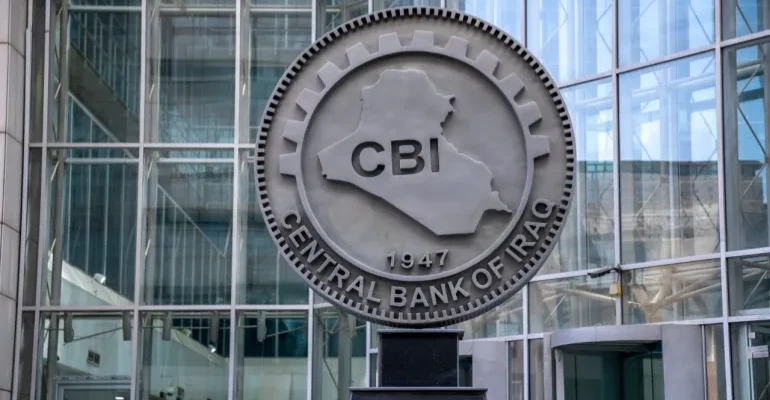
Iraqi DinarIraqi Dinar Central Bank Governor Ali Al-Alaq confirmed on Wednesday that nearly all major currencies are covered, noting that the central bank is conducting foreign exchange transactions in all currencies smoothly and with high fluidity.
Al-Alaq said in a press statement, “The foreign transfer process has witnessed significant development over the past two years, both in terms of method, approach, and organization, as well as through direct communication and direct transfers between Iraqi banks and approved correspondent banks.”

He added, “This expansion is not only in the number of correspondent or transfer banks, but also in the number of currencies,” noting that “the Central Bank covers almost all the currencies used by Iraq for large-scale trade.”

He stressed that “the Central Bank is currently conducting transfers in almost all major currencies, and they are proceeding smoothly and with high fluidity.”

Alforatnews.iq

Posted in Uncategorized | Comments Off on Central Bank: We cover almost all currencies used by Iraq for trade purposes.

Al-Sudani directs the formation of a joint team to improve Iraq’s sovereign credit rating.

Al-Sudani directs the formation of a joint team to improve Iraq’s sovereign credit rating.

Al-Sudani directs the formation of a joint team to improve Iraqs sovereign credit ratingPresident’s face policy Cabinet of Ministers Mohammed Shia al-Sudani Today, Wednesday, a joint national team was formed, headed by the governor. Central Bank of Iraq To improve Iraq’s sovereign credit rating.

He said Media Office To the Prime Minister in a statement received by Alsumaria News It is “in line with the government’s directives aimed at enhancing the status of Iraq Financial and economic at the international level, directed Sudanese By forming a joint national team, headed by the governor Central Bank of Iraq…and membership of representatives from ministries (Finance, Oil, and Planning) and specialized economic and financial institutions, in addition to…Prime Minister’s Office The Securities Commission and representatives of the Iraqi banking sector.

The office added, “This National team The team will work to develop an integrated strategy that includes clear and measurable objectives, submit periodic reports to the relevant authorities, and coordinate directly with major international credit rating agencies, particularly Fitch, S&P, and Moody’s, with the aim of improving Iraq’s sovereign credit rating. The team will also pay special attention to strengthening governance tools, managing financial risks, and developing the business environment in line with the government’s economic reform plans.

The office continued, “This directive comes within the framework of the government’s vision to adopt a comprehensive national strategy aimed at improving Iraq’s sovereign credit rating, which will contribute to enhancing international confidence in the national economy and opening broader horizons for direct and indirect foreign investment. The government affirms that this step represents a clear commitment to its reform approach and its commitment to achieving economic stability, supporting the stability of the financial system, and providing an attractive investment environment that contributes to diversifying sources of income and reducing dependence on oil as the sole primary resource.”

Alsumaria.tv

Posted in Uncategorized | Comments Off on Al-Sudani directs the formation of a joint team to improve Iraq’s sovereign credit rating.

Kurdistan Regional Government: 120 billion dinars in non-oil revenues are ready to be delivered to Baghdad.

Kurdistan Regional Government: 120 billion dinars in non-oil revenues are ready to be delivered to Baghdad.

Kurdistan Regional Government - 120 billion dinars in non-oil revenues are ready to be delivered to BaghdadKurdistan Regional Government (KRG) spokesperson Peshwa Hawrami confirmed on Wednesday that the agreed-upon amount of non-oil revenues is ready for delivery to the federal government in Baghdad.

“A crucial meeting is currently underway between a delegation from the Kurdistan Regional Government and the federal government in Baghdad, and there is a serious discussion about non-oil financial revenues,” Hawrami said at a press conference during his visit to Halabja province following the fire.

He added, “We have 120 billion dinars ready for delivery.”

On Tuesday, the Special Representative of the Secretary-General of the United Nations in Iraq, Mohammed Hassan, expressed optimism about the possibility of the Kurdistan Regional Government and the federal government reaching an understanding that would resolve the outstanding disputes and issues between the two sides.

In a statement to reporters following his participation in a memorial service for the victims of the 2003 bombing of the UN headquarters in Baghdad, he said, “There is good cooperation between the Kurdistan Region and Baghdad,” stressing that he has good relations with the Iraqi presidency and the region.

He added that he “listened to the regional presidency’s constant emphasis on preserving Iraq and implementing and consolidating the constitution in all its provisions.” He added that he was optimistic that Erbil and Baghdad would reach a good understanding formula to resolve their differences, and that there was an opportunity to achieve that understanding between them.

On Wednesday, August 13, the Kurdistan Regional Government’s Ministry of Natural Resources announced that it had reached an agreement with the Iraqi Ministry of Oil regarding a mechanism for resuming oil exports.

The ministry said in a statement received by Shafaq News Agency, “According to the text approved by a joint delegation of 23 figures, including 17 members of the Iraqi Oil Ministry delegation, the meetings began on July 17, and included comprehensive field visits to all oil fields in the region. After evaluating technical problems and conducting extensive dialogues, an agreement was reached on August 11 on the mechanism for exporting oil from the region’s fields, whereby 50,000 barrels of daily production would be allocated to meet the region’s local needs, while the remainder would be handed over to the State Oil Marketing Organization (SOMO) for export purposes.”

She explained that “resuming the export of Kurdistan Region’s oil requires the federal government to hold talks with the Turkish government to ensure the implementation of the agreement.”

The ministry’s statement confirms information obtained by Shafaq News Agency earlier today, Wednesday, which confirmed that the Ministry of Natural Resources in the Kurdistan Regional Government (KRG) had agreed with the Iraqi Ministry of Oil to resume exports of the region’s crude oil under a special mechanism.

According to information, the agreement stipulates that the export process will be conducted in accordance with the daily production of the fields, with 50,000 barrels allocated to meet the region’s internal needs, while the remaining quantities will be delivered to the state-owned oil company SOMO, affiliated with the federal government.

The information also indicated that the draft agreement was signed by a delegation from the federal Ministry of Oil and a delegation from the region’s Ministry of Natural Resources, confirming that the federal delegation has returned to Baghdad.

According to the same information, the start of exports requires negotiations between the federal and Turkish governments before the process can be implemented.

An informed source revealed to Shafaq News Agency last month the details of the agreement between Baghdad and Erbil regarding the resumption of Kurdistan’s oil exports. He confirmed that the agreement stipulated that the Kurdistan Regional Government would receive 240 billion dinars in revenues for May and June, at a rate of 120 billion dinars per month, in addition to delivering 230,000 barrels of oil per day to Baghdad, in exchange for the latter sending the salaries of the region’s employees for those two months.

The roots of this crisis between the federal government in Baghdad and the Kurdistan Regional Government (KRG) lie in ongoing disagreements over oil export mechanisms and the unification of public revenues. This is a long-standing crisis that resurfaces from time to time, but it has worsened significantly since May 2025, when the federal government refused to send salaries to the region’s employees.

Shafaq.com

Posted in Uncategorized | Comments Off on Kurdistan Regional Government: 120 billion dinars in non-oil revenues are ready to be delivered to Baghdad.

Britain tightens noose on Iraqi migrants with new deal with Baghdad

Britain tightens noose on Iraqi migrants with new deal with Baghdad

Britain tightens noose on Iraqi migrants with new deal with BaghdadThe British government announced on Wednesday that it had concluded a new agreement with Iraq to return illegal immigrants as part of broader steps to curb immigration.

According to the British news agency PA Media, the agreement signed by British Home Secretary Dan Jarvis with the Iraqi side will establish a formal process for the return of Iraqis who arrived in the United Kingdom and have no right to reside in the country.

“The new migration agreement strengthens the partnership between the UK and Iraq,” Jarvis wrote in a post on his page, followed by Shafaq News Agency. “By working together on security and migration issues, we are building closer ties and tackling shared challenges such as serious organized crime and irregular migration.”

This follows an £800,000 ($1.77 million) agreement signed with Baghdad last year to help the country crack down on smuggling networks and organized crime.

Earlier this year, British Prime Minister Keir Starmer and Iraqi Prime Minister Mohammed Shia al-Sudani agreed to enhance cooperation on migration.

British Home Office statistics show that since previous agreements, the number of Iraqis arriving in the United Kingdom by small boat has declined. The agreement to return illegal immigrants is the latest in London’s policy to stop small boats crossing the English Channel.

Shafaq.com

Posted in Uncategorized | Comments Off on Britain tightens noose on Iraqi migrants with new deal with Baghdad

The Iraqi Economy: Growth, Challenges, and Future Prospects

The Iraqi Economy: Growth, Challenges, and Future Prospects

The Iraqi Economy - Growth - Challenges and Future ProspectsThe Iraqi economy is undergoing significant transformations toward economic diversification, reducing dependence on oil and strengthening other productive sectors. These transformations are essential in light of global energy price fluctuations and inflationary pressures, as developing non-oil sectors and improving public resource management are key to achieving sustainable growth and ensuring the well-being of citizens.

Current economic situation

Iraq recorded 5% growth in non-oil GDP in 2024, driven by improvements in the agricultural sector and increased public spending. The fiscal deficit reached approximately 5 trillion dinars, equivalent to 1.5% of GDP, a low level that does not pose a threat to public debt, according to International Monetary Fund estimates.

The government seeks to restructure state-owned banks to improve their capacity to absorb government financing instruments and stimulate the local market. It is also appointing new staff to activate the public debt management system and analyze financial performance. The International Monetary Fund (IMF) mission has also expressed its willingness to provide technical and advisory support in the areas of tax reform and public debt management, to ensure the adoption of global best practices and enhance financial efficiency.

Transition to sustainable energy

The Iraqi government’s shift toward renewable energy reflects its interest in achieving economic and environmental sustainability. A plan has been launched to convert 6,000 government buildings to solar energy, reducing dependence on oil and enabling more efficient use of natural resources. This move supports economic diversification goals and enhances Iraq’s ability to cope with fluctuations in global energy markets.

Economic analysis

The growth in non-oil GDP reflects Iraq’s ability to achieve comprehensive and balanced development and reduce the economy’s vulnerability to oil price fluctuations. The low fiscal deficit also gives the state financial leeway to expand development and infrastructure projects without significantly increasing public debt.

Bank restructuring and activating public debt management are strategic tools for enhancing domestic financing and stimulating private investment, while cooperation with the International Monetary Fund supports financial reforms and ensures efficient management of public resources. Investment in solar energy also contributes to reducing dependence on oil and enhancing long-term economic sustainability.

Iraq’s economic future

Growth is expected to continue at 4% in 2025, supported by improved agricultural performance and increased, more measured government spending. However, the Iraqi economy remains vulnerable to a range of variables:

Fluctuations in global oil prices and their impact on public revenues.

Political and security stability is a key factor in attracting investment.

Successful financial and tax reforms to ensure social justice and efficient distribution of resources.

Expanding renewable energy projects to ensure economic and environmental sustainability.

Conclusion

Economic data indicates that Iraq is showing positive signs toward economic diversification and sustainable growth, with a clear ability to withstand oil fluctuations and strengthen non-oil sectors. Financial reforms, bank restructuring, and focus on renewable energy reflect the government’s commitment to achieving effective and sustainable management of public resources.

If these variables are addressed and economic and reform policies are implemented, Iraq can achieve balanced and sustainable economic growth, while enhancing the state’s ability to provide better services to citizens and ensure social justice and long-term financial stability.

Economic Studies Unit / North America Office

Rawabetcenter.com

Posted in Uncategorized | Comments Off on The Iraqi Economy: Growth, Challenges, and Future Prospects

Al-Sudani’s advisor lists the reasons for the dollar’s rise in the Iraqi market.

Al-Sudani’s advisor lists the reasons for the dollar’s rise in the Iraqi market.

Al-Sudanis advisor lists the reasons for the dollars rise in the Iraqi marketOn Tuesday, the Prime Minister’s financial advisor, Mazhar Mohammed Salih, attributed the rise in the dollar in Iraqi markets to cross-border speculative trading.

Saleh told Shafaq News Agency (according to his personal assessment), “The speculative and cross-border trade environment balances its risks between the decline of the dollar, the ease of parallel financing for fast trade, and its low administrative and regulatory costs, especially compliance and anti-money laundering procedures through official institutions, and the comparison between violating the law and the risks and the quick illusion of achieving profit, especially in small border trades.”

He continued: “Small commercial activity, as is well known, dominates more than half of the country’s foreign trade. The lower the dollar exchange rate compared to audit costs and the cost of banking and customs compliance, the more favorable the parallel market financing equation becomes, unless deterrent legal enforcement is tightened.”

He added, “Therefore, there is no reason for this renewed surge in dollars, despite their regular availability through the official banking system,” noting that this is consistent with international standards and requirements for monitoring the financing and flow of foreign trade, particularly import trade.

He pointed out that “the comparison between the cost of introducing advanced regulatory procedures and global applications, such as the clean regulation of foreign trade on goods entering from abroad, such as customs tracking and digital inspection control systems for imported goods, are steps that represent an advanced level of regulatory sophistication and customs inspection.”

Saleh concluded his remarks by saying, “This means that high-level enforcement of standardized controls on informal imports subject to anti-money laundering laws, broad and effective customs controls, and border crossing governance, which largely excludes informal trade, must increase as the parallel exchange rate improves with the decline of the dollar.”

Shafaq.com

Posted in Uncategorized | Comments Off on Al-Sudani’s advisor lists the reasons for the dollar’s rise in the Iraqi market.