With the stroke of a pen … the disappearance of 15 tons of gold in the Central Bank of Iraq

With the stroke of a pen … the disappearance of 15 tons of gold in the Central Bank of Iraq

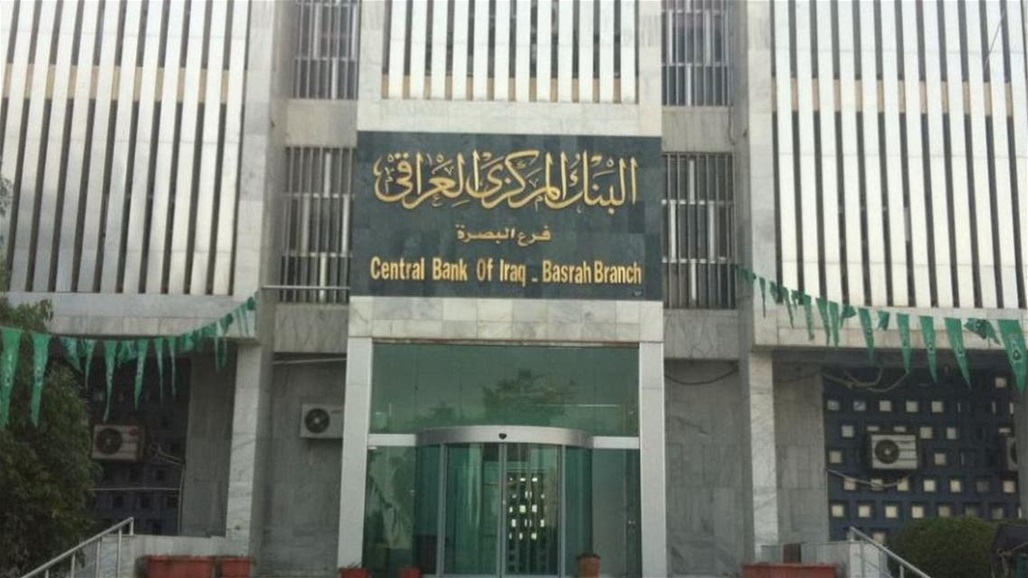
Baghdad / news – The former deputy, Jawad Al-Shuhaili, revealed the disappearance of 15 tons of gold in the Central Bank of Iraq.

Al-Shuhaili said in a press statement followed by “Al-Akhbariya”, that “15 tons of gold have disappeared in the Central Bank of Iraq.”

He explained, “I filed a lawsuit with the public prosecutor, and the Central Bank replied to me not to buy gold, but he acknowledged the existence of gold.”

He added that “the time of buying gold took place during the presidency of Sinan al-Shabibi, and the loss came directly after it,” noting that “the central bank closed the case without adequate investigation.”

Ikhnews.com

Posted in Uncategorized | Comments Off on With the stroke of a pen … the disappearance of 15 tons of gold in the Central Bank of Iraq

Barham Salih pulls off political masterstroke with resignation threat

Iraq's President Barham Salih pictured in Baghdad on October 31, 2019. Handout via Reuters

Barham Salih pulls off political masterstroke with resignation threat

Analysis: Mr Salih puts the ball into the Baghdad parliament’s court

In a political masterstroke, the Iraqi President Barham Salih has made his rejection of the current Prime Ministerial candidate Assad Al Eidani public.

After days of discreetly trying to convince the leadership of the political bloc Binaa, heavily supported by Iran, of the folly of their choice of Al Eidani, Mr Salih has made his rejection abundantly clear.

Mr Salih has gone so far as to announce that he would step down, rather than appoint Al Eidani to the position. In a four-page letter sent to the head of parliament on Thursday afternoon, Mr Salih made clear that Al Eidani is neither a suitable candidate nor one that meets the aspirations of Iraq’s protesters.

Mr Al Eidani was the governor of Basra, and is widely rejected as a candidate by the protest movement in Iraq due to the rampant corruption and mismanagement during his tenure in Basra. One of the primary calls of the protestors has been for a non-political and non-partisan figure to take the position of Prime Minister, and Mr Al Eidani is neither.

Mr Salih believes that parliament had to decide whether they will give him the opportunity to choose a Prime Minister who meets the demands of the protesters that took to the streets since last October, or the presidency becomes vacant. With a fragmented parliament, it is unlikely that the legislature will vote to remove Mr Salih, making it likely that Mr Al Eidani’s candidacy will fail. Should parliament accept Mr Salih’s resignation, Iraq would enter into a greater period of uncertainty.

In his letter, Mr Salih accepts that the constitution mandates that the largest parliamentary bloc can choose the candidate for Prime Minister but he explains that this choice is unacceptable. He goes on to say that “the will of the Iraqi people is the source of legitimacy for all authorities in the country”, and thus he cannot go against it. What remains to be seen is whether the protesters in the streets of Iraq will support Mr Salih in this move. If he can gain their support, then parliament will not be in a position to accept his resignation, nor impose Al Eidani. Thus far, no sitting official has been able to gain the support or trust of the protesters.

The unexpected move by Mr Salih is a smart one, allowing him more freedom to choose a suitable Prime Minister, or to leave his position with dignity.

Thenational.ae

Posted in Uncategorized | Comments Off on Barham Salih pulls off political masterstroke with resignation threat

Demonstrators thank the President of the Republic for his refusal of party candidates

Demonstrators thank the President of the Republic for his refusal of party candidates

Baghdad: The Tahrir Square demonstrators thanked the President of the Republic for his refusal of the party candidates and for his standing with the demands of the demonstrators.

The demonstrators commented a large post of the President of the Republic on the Turkish restaurant, asking him to assign a person to whom the conditions of the demonstrators apply and not to respond to the candidates of the parties and “will not be their enemy.”

Altahreernews.com

Posted in Uncategorized | Comments Off on Demonstrators thank the President of the Republic for his refusal of party candidates

Al-Eidani leaves the presidential palace without a mandate

Al-Eidani leaves the presidential palace without a mandate

Baghdad / Obelisk: Private sources reported, on Wednesday, December 25, 2019, that the building coalition delegation, along with its candidate for the position of Prime Minister Asaad Al-Eidani, left the Peace Palace after meeting with President Barham Saleh, without assignment.

The sources said, “The Building Alliance” decided to nominate Al-Eidani to head the new Iraqi government.

And media reports have previously expected that Al-Aidani, who is the governor of Basra, will face the fate of many names that have been excluded during the past days, especially as it is linked to the minds of many to try to attack demonstrators in the southern governorate during protests witnessed a year ago.

On Wednesday, December 25, 2019, the member of the Construction Alliance, Intisar Al-Gharibawi, denied sending a book to the President of the Republic to assign the governor of Basra, Asaad Al-Eidani, as Prime Minister.

Al-Gharabawi said in an interview with local media, that “the news that talked about sending a book to the Presidency of the Republic, regarding the appointment of al-Idani, as prime minister, is incorrect.”

She noted that “matters have not been clarified so far regarding the alternative candidate for Qusay al-Suhail.”

Earlier in the day, local media and social media circulated news that the Construction Alliance had sent a book to the Presidency of the Republic, regarding Al-Idani’s appointment as prime minister.

The talk comes about the candidacy of Asaad Al-Eidani, after he sent an official book to the President of the Republic, Barham Salih, that includes the candidacy of the Minister of Higher Education, Qusay al-Suhail, for the position of prime minister, which was widely rejected in the demonstration arenas, and from a number of political blocs and alliances, led by an alliance Walkers.

Meanwhile, the leader of the Union of Forces, Representative Abdullah Al-Kharbit, revealed on Wednesday, December 25, 2019, a forthcoming meeting of leaders of the Construction Alliance to agree on the selection of the next prime minister, indicating that the coalition authorized Mohamed Al-Halbousi to attend the meeting and the final agreement.

Al-Kharbait said in a statement to local media that “a crucial meeting will be held today for the leaders of the Construction Alliance to resolve the final candidate for prime minister will be held within the next few hours.”

Almasalah.com

BGG ~ Al-Eidani strikes out… “he left without an assignment…”

Posted in Uncategorized | Comments Off on Al-Eidani leaves the presidential palace without a mandate

Iraq president Barham Salih offers to step down amid protests

Iraq president Barham Salih offers to step down amid protests

He says he would rather leave than back a pro-Iran prime minister rejected by the protest movement

Barham Salih, president of Iraq. Reuters

Iraqi President Barham Salih has handed his resignation to parliament after refusing to endorse a nominee for the prime ministership from an Iran backed political group.

He said that he would rather step down than pick a new prime minister rejected by demonstrators but as the constitution does not allow him to reject a nomination he would resign.

Parliament will now have to meet to discuss and vote on the resignation. If they endorse the move, Mr Salih will step down.

Parliament’s Binaa bloc on Wednesday nominated Assad Al Eidani, the governor of Basra and a former minister of youth and sports. The alliance is led by Iranian-backed politician Hadi Al Amiri.

He said he would prefer to resign than to nominate Al Eidani. In his letter, he pointed out that the constitution “binds the president to nominate the candidate of the largest bloc to form the cabinet, without the right of objection.”

Adding: “since my position about this current candidacy is considered unconstitutional, I, therefore, place my readiness to resign from the presidency in front of the members of parliament, so that they can decide based on their responsibilities as representatives of the people.”

He said that the protest movement makes it imperative that politicians look at the interests of the public over personal or political considerations.

“It is better for me to resign rather than to assign an individual that is objected by the protesters to form a government,” he added.

Protesters in Baghdad blocked roads and bridges and in the south demonstrators torched several buildings overnight on Wednesday in response to the announcement of Mr Al Eidani’s nomination.

“The government is hostage to corrupt parties and sectarian divisions”, said one activist, Sattar Jabbar, 25, in the southern city of Nasiriyah.

Smoke and flames from burning tyres in Nasiriyah, Basra and Diwaniyah blocked major roads and bridges across the Euphrates all night, AFP correspondents reported, before some of these roadblocks were lifted in the morning.

In Nasiriyah, demonstrators set the provincial government building ablaze overnight for a second time since the protests began, and protesters also torched the new headquarters of a pro-Iran militia in Diwaniyah.

In his letter, Mr Salih pointed to the ongoing issue over which political bloc in parliament was the largest and therefore allowed to submit their nomination for prime minister. The issue has not been resolved since the election in May 2018.

“We’ve received various statements about which bloc has the largest number of lawmakers and discussions are ongoing regarding this issue.”

Since the start of October, tens of thousands of Iraqis have been on the streets demanding a change in leadership and a government that can tackle endemic corruption, unemployment and improve public services.

Over 450 demonstrators have been killed since the movement began, with security forces and Iran-backed Iraqi militias blamed for bloody crackdowns. More than 25,000 have been wounded.

On December, parliament voted to accept prime minister Adil Abdul Mahdi’s resignation, collapsing the government. Since then, no consensus has been reached on a replacement who can start assembling a government.

The move by Mr Salih puts the ball back into Parliament’s court to seek a solution to the crisis. The departure of the president at a time when there is no cabinet would throw the country into a political crisis with no leadership and facing mass rallies across the capital and the south.

“Mr Salih will not be ordered or bossed around by corrupt parties,” Ahmed Al Jabouri, the vocally anti-Iran MP for Nineveh province, wrote on Twitter in support of the president. “We reject your resignation Mr Salih because you have stood by the public and by your personal interests by choosing Assad Al Eidani.”

Amjad Al Aqabi, an MP in Sairoon bloc, said he rejects the resignation of Mr Salih and that his bloc will support the president’s decision in rejecting any “intimidating” figures.

Iraqi populist cleric Moqtada Al Sadr thanked Mr Salih for rejection Mr El Aidani

Within moments of the news, the hashtag “Barham Salih is the People’s President” began trending on Twitter in Arabic.

Thenational.ae

Posted in Uncategorized | Comments Off on Iraq president Barham Salih offers to step down amid protests

170 Deputies reject the resignation of the President of the Republic

170 Deputies reject the resignation of the President of the Republic

170 deputies reject the resignation of the President of the RepublicBaghdad / Al-Ghad Press: On Thursday, 170 signatories of the specifications of the next prime minister, Barham Salih, resigned.

The deputies said in a statement received by “Al-Ghad Press”, that “we are the deputies who sign the specifications of the next prime minister, and after we have seen the president’s message addressed to parliament, we announce our clear position by refusing to resign or even hinting at it.”

They stressed that “national and popular options are the final word in the form and features of the next prime minister, away from partisanship and quotas, and in line with the aspirations of the Iraqi people and the steps for reform and change.”

Calling on the national powers to “support the choices of the masses and the wishes of the President of the Republic to allow him to choose the national character that meets the popular aspirations and brings us to safety.”

Alghadpress.com

Posted in Uncategorized | Comments Off on 170 Deputies reject the resignation of the President of the Republic

Iraqi pres threatens to quit in defiance of Iran’s allies in parliament

Iraqi pres threatens to quit in defiance of Iran’s allies in parliament

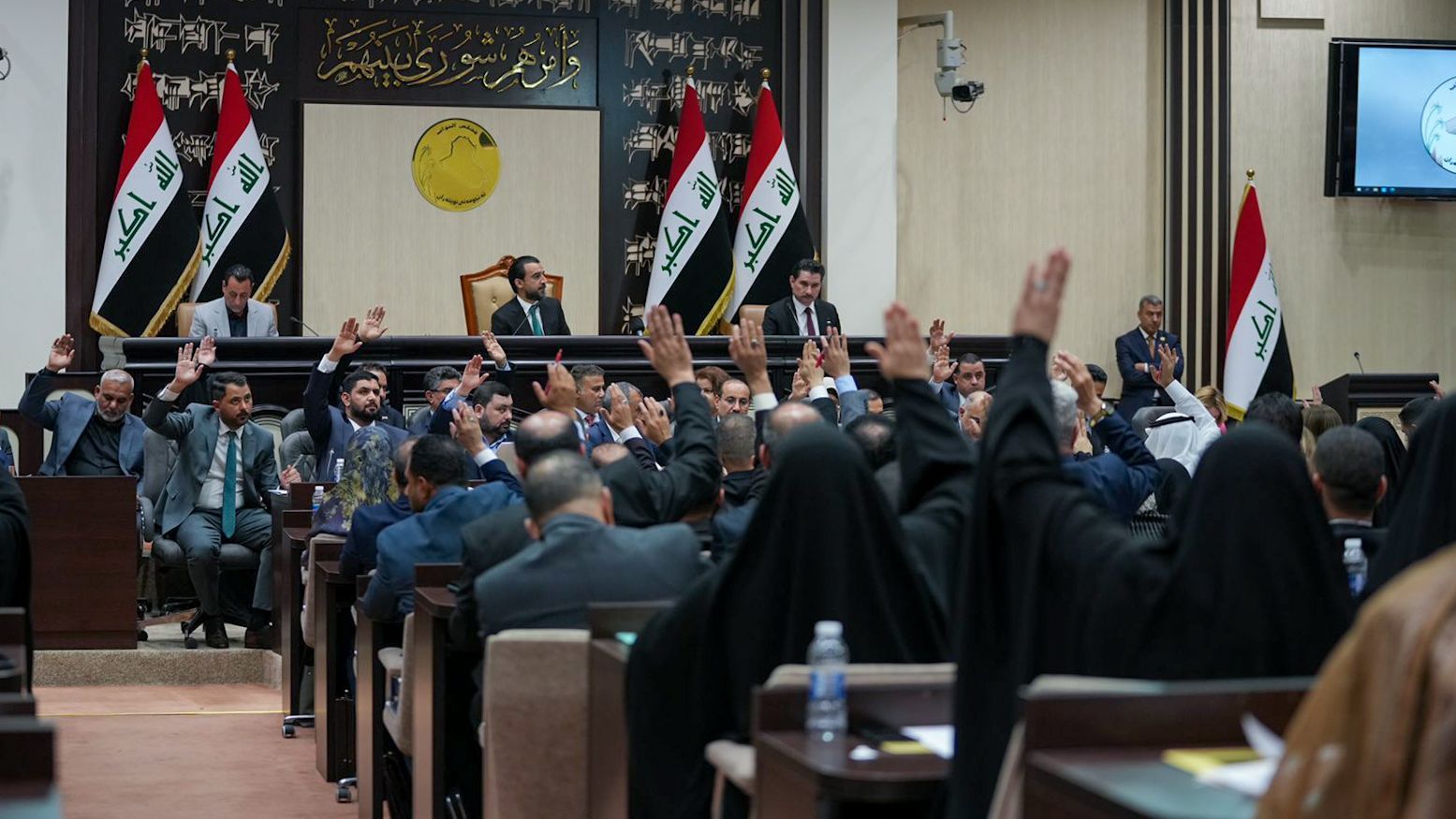
BAGHDAD, Dec 26 (Reuters) – Iraqi President Barham Salih refused on Thursday to designate the nominee of an Iran-backed parliamentary bloc for prime minister, saying he would rather resign than appoint someone to the position who would be rejected by protesters.

The Bina bloc, led by Iran-backed militia leader Hadi al-Amiri, had nominated Basra Governor Asaad al-Edani to be the next prime minister following weeks of political deadlock.

But Salih said in a statement that appointing Edani would not placate protesters demanding an independent prime minister with no party affiliation or help calm the unrest that has rocked the country.

He said that because the constitution does not give him the right to reject nominees for the premiership, he was ready to quit.

“Out of my desire to stop blood and maintain peace, and with due respect to Asaad al-Edani, I refuse to nominate him,” Salih said. “Therefore I put my willingness to resign the post of president to members of parliament so that they decide as representatives of the people what they see fit.”

Salih’s resignation may only complicate the deadlock, as lawmakers must first choose a replacement for him, and that person must then nominate a premier. According to the constitution, the speaker of parliament will first resume the presidency on an interim basis.

Mass protests have gripped Iraq since Oct. 1 and the mostly young protesters are demanding an overhaul of a system they see as profoundly corrupt and as keeping most Iraqis in poverty. More than 450 people have been killed.

Prime Minister Adel Abdul Mahdi resigned last month as the protests continued but has remained in office in a caretaker capacity.

Sources in Salih’s office said the president left Baghdad on Thursday for his hometown of Sulaimaniya in the semi-autonomous Kurdistan Region of Iraq and that he would deliver a televised speech later.

Infighting between political parties clinging to power has fuelled the crisis and threatens to cause more unrest as protesters lose patience over the deadlock.

Two political blocs – Bina, backed by Iran, and Islah, led by populist cleric Moqtada al-Sadr – are closely involved in backroom deals to agree on a candidate.

A ROCK AND A HARD PLACE

Any agreement on thorny political issues looks unlikely. The protests have shaken the country out of two years of relative calm following the defeat of Islamic State insurgents.

“The president has found himself between the rock of the pro-Iran parties and the hard place of the people, but he chose to side with the protesters,” said political analyst Ahmed Younis.

“By saying he is ready to resign he is responding to pressure from Iran and its allies, saying he would rather quit than be a scapegoat. He pulled the rug from under the pro-Iran parties and chose to stand with the protesters.”

Parliament approved a new electoral law on Tuesday, a key demand of protesters aimed at making elections fairer, but the political logjam threatens more unrest.

The protesters are also demanding an independent premier with no party affiliation and the removal of a ruling elite seen as enriching itself off the state and serving foreign powers – above all Iran – while many Iraqis languish in poverty without jobs, healthcare or education.

DERELICTION OF DUTY

Since Saddam Hussein was toppled in 2003, power has been shared along ethno-sectarian lines among parties from Iraq’s three largest communities.

The most powerful post, that of prime minister, is held by a Shi’ite Arab, the speaker of parliament by a Sunni Arab, and the presidency by a Kurd.

Pro-Iran factions saw Salih as shirking his duties and Bina lawmakers said it was grounds for impeachment.

“There are American pressures on President Barham Salih to prevent him from nominating the majority bloc nominee Edani,” said Bina lawmaker Hamid al-Moussawi.

“The president threatening to resign is a dereliction of his constitutional duty and a dangerous step… Barham admitted he was violating the constitution, which gives us the right to hold him accountable in parliament and dismiss him.”

The United States and Iran – themselves longtime adversaries – are Iraq’s two main allies. Protesters say the political elite are all loyal to foreign powers, chiefly Tehran and Washington, above the interests of everyday Iraqis.

Lawmakers from the party of Sadr, who presents himself as a nationalist, hailed Salih’s decision and promised to back him.

“We are against any pressure on the president and stand with him. We will not accept his resignation,” said Sadrist lawmaker Sabah al-Uqaili.

(Reporting by Ahmed Rasheed; Writing by Ahmed Aboulenein; Editing by Hugh Lawson)

Reuters.com

Posted in Uncategorized | Comments Off on Iraqi pres threatens to quit in defiance of Iran’s allies in parliament

Iraq’s crisis: Deadlock or political opportunity?

Iraq’s crisis: Deadlock or political opportunity?

Since 2003, Iraq has not seen the type of upheaval it witnesses today. Could it lead to genuine political change?

Demonstrators carry Iraqi flags during continuing anti-government protests in Basra, Iraq [Essam al-Sudani/Reuters]

In October 2018, when Adel Abdul Mahdi was named prime minister of Iraq, there was widespread optimism both domestically and internationally that the new government he would lead would be able to move the country forward. A little more than a year later, he had to resign after a violent crackdown on protests by security forces and armed militias left hundreds dead and thousands injured.

Since early October, mass demonstrations have been held to demand an end to corruption, better living conditions, independence from regional (mainly Iran) and global (mainly the United States) powers, and the downfall of the entire political system that has been in place in Iraq since the 2003 US invasion.

Although the protests have largely been confined to Baghdad and the Shia-majority areas in central and southern Iraq, the protesters’ demands have not been sectarian. And unlike the previous waves of protest movements in Iraq, the current upheaval has been characterised by strong public will, popular agency and belief in the power to change. Importantly, none of the Iraqi parties has been able to coopt the demonstrations.

In addition, protesters have defined their movement as an ”uprising” or a ”revolution”, which is challenging political legitimacy and current state-society relations. In parallel, they have also labelled the Iraqi authorities as “the regime”, a word with clear ramifications for the people of this region referring to an authority with no popular support or legitimacy.

What is happening in Iraq is truly remarkable and cannot be compared with any other moment in its recent history. So what got the country to this moment and what happens next?

The roots of an uprising

Chronic and growing dysfunction in three sectors – government, economy and security – is at the heart of the current upheaval in Iraq.

On the political level, the post-2003 system in Iraq is centred on a power-sharing arrangement among the country’s three largest ethno-sectarian groups: Shia Arabs, Sunni Arabs and Kurds. According to this informal agreement, the prime minister’s post is reserved for a member of the Shia community, the parliament speaker has to be a Sunni, and the president – a Kurd.

On the ground, this system has constrained attempts for meaningful political and administrative reform. As Nechirvan Barzani, president of the semi-autonomous Kurdistan Region of Iraq (KRI), noted recently, the political blocs representing Iraq’s three main components have been more interested in their respective constituencies and party politics, than working for the good of the country.

The result is a weak government and a weak prime minister who do not have the full support of political parties and are therefore unable to counter corruption and pursue good governance.

Another weak point of this system is that it has not really allowed for genuine power-sharing. Political power has remained in the hands of dominant Shia actors and has left some groups deeply dissatisfied.

The protests of 2012-13 in Sunni-majority areas, which rejected the perceived sectarian rule of former Prime Minister Nouri al-Maliki and the KRI’s 2017 referendum on independence were signs that this system has not been able to create a sense of equal partnership. The continuing protests in Shia-majority areas demonstrate this system does not satisfy the Shia population either.

On the economic level, the country’s continued dependence on its oil resources has prevented sustainable economic development, which, together with the high level of corruption and public mismanagement, has led to the failure of the state to provide for the basic needs of the population.

Successive governments have tried to placate the Iraqi public by expanding the public sector to provide employment for the youth; today two-thirds of the Iraqi budget goes towards paying salaries of government employees. This approach has proven unsustainable and has prevented any real effort being put in diversifying the Iraqi economy and boosting the private sector.

On the security level, Iraq faces major challenges because it does not have unified security and military forces. In addition to the Kurdish Peshmerga and security forces, which operate in a state-within-a-state system and themselves are split along Kurdish party lines, there is a multitude of different forces within the security sector which are not immune to politicisation.

In addition, since 2003, there has been an ever-growing number of militias and armed groups which have wielded significant power within the country and have been instrumentalised by various domestic and foreign powers to pursue their own political interests.

The lack of a unified security force or a “command and control” structure in Iraq’s armed and security forces has weakened the country, giving space for terrorist groups to proliferate and foreign interference to grow.

What is next?

Today, Iraq finds itself in a major crisis with no clear way out. The Iraqi people have demonstrated that the political elite has lost all popular support and legitimacy. Even religious leaders and institutions, such as Iraq’s most senior Shia Muslim leader, Grand Ayatollah Ali al-Sistani, which have been unable to unify the Shia parties, are now facing serious criticism.

The problem is, while there is a clear legitimacy vacuum, political actors and militias continue to insist on maintaining their hard power through systems of political and sectarian patronage. These same political actors are also supposed to select a new prime minister and vote on reforms.

So at this point, there seem to be at least two possible scenarios for what happens next.

First, political blocs could agree on a new prime minister who would remain in his post until new elections are held. His mandate would also include passing a new electoral law to satisfy one of the demands of the protesters.

However, given the current makeup of parliament, which lacks a clear partisan majority, the new prime minister will have to be a consensus figure again – ie he would not be able to wield any more power than Abdul Mahdi did. Hence, his attempts to push forward a new electoral law or any reform could be sabotaged by various political blocs.

And as no major party is ready to concede power or position, it is likely they would seek to influence the next elections. Therefore, It is unlikely that this outcome would satisfy the protesters who will likely continue with their anti-government activity.

Second, the parties may not be able to agree on a new prime minister or may clash over the elections, and this could lead to an internal conflict.

Unlike Syria, Iraqi protesters have not resorted to arming themselves, despite the vicious crackdown on their demonstrations. Thus any escalation would be most likely the result of a conflict between Shia armed groups, such as Muqtada al-Sadr’s Peace Brigades on one side and the Iranian-backed groups of the Popular Mobilisation Units (PMUs). There are already signs of growing hostility between these groups.

Such a scenario would likely open the scene for even more foreign interference, especially from Iran and the US.

A third scenario – where the demands of the people for radical change are fulfilled – unfortunately, seems unlikely. Vested interests of the main domestic and foreign political actors constitute a big enough force to counter the revolutionary spirit of the streets.

Despite the challenges, popular mobilisation, especially among the youth, has become an important factor in Iraqi politics which is forcing a change in the public discourse on legitimacy. Political actors now face a new political reality and they will have to change their approach to their electorate as pressure from the streets continues.

While the “downfall of the regime” will not happen in Iraq, as protesters desire, slow and incremental change in the long term is a significant possibility. The delay of the process and the piecemeal concessions the political elite is likely to give at first will not satisfy the protest movement, which could serve as fuel for continuing popular mobilisation. If Iraq manages to preserve peace, political change could eventually come around.

The views expressed in this article are the author’s own and do not necessarily reflect Al Jazeera’s editorial stance.

Aljazeera.com

Posted in Uncategorized | Comments Off on Iraq’s crisis: Deadlock or political opportunity?

Source: A decisive meeting this evening to nominate the candidate for prime minister is likely to choose an independent personality

Source: A decisive meeting this evening to nominate the candidate for prime minister is likely to choose an independent personality

Baghdad today – A source familiar with the matter, Tuesday (December 24, 2019), said that the leaders of the political blocs are planning to hold a crucial meeting this evening to nominate the candidate for prime minister.

The source said (Baghdad today), “The leaders of the political blocs intend to hold a meeting, this evening, to resolve the selection of the candidate to head the next government.”

He favored “choosing an independent figure to head the government.”

A well-informed source revealed, on Monday (December 23, 2019), that a meeting was currently held in the home of the leader of the Al-Fateh coalition, Hadi Al-Amiri, to discuss nominating the candidate for prime minister .

The source said in an exclusive interview with (Baghdad Today) that “the meeting was held at the request of the Iraqi Forces Alliance and discusses extensively the file of naming the candidate for the presidency of the transitional government .”

On Monday, December 23, 2019, the Construction Alliance held a crucial meeting on the nomination of its final candidate for prime minister .

A member of the House of Representatives, on the building bloc, Naim al-Aboudi, said in an interview with him (Baghdad today) that “the construction alliance held a short time ago an expanded meeting to discuss all political issues, including resolving its candidate for the post of prime minister .”

He added that “the results of the meeting will be announced to the public opinion upon completion of the meeting,” denying “the reports circulated by the media regarding the nomination of Basra Governor Asaad Al-Eidani to take the position in place of the Minister of Higher Education Qusay al-Suhail .”

Baghdadtoday.news

Posted in Uncategorized | Comments Off on Source: A decisive meeting this evening to nominate the candidate for prime minister is likely to choose an independent personality

An invitation to one million on the eve of choosing the Prime Minister of Iraq

An invitation to one million on the eve of choosing the Prime Minister of Iraq … the means of escalation are present

The number of candidates for this position has reached about 48 people, but their chances remain mixed

Political forces continue the dialogues related to forming the next government, while the Shiite forces held an expanded meeting to determine the largest bloc, absent from it by the Saeron bloc, which expressed its refusal to return to that issue.

Activists in Baghdad’s Tahrir Square have announced their intention to escalate if a prime minister who is not subject to their criteria is nominated. While calling for a million on Sunday, which coincides with the end of the constitutional deadline for the appointment of a new prime minister, they stressed that all peaceful means of escalation are available to them, if the authority does not abide by the specifications they presented to the next prime minister.

Constant pressure

Political sources confirmed that a meeting was held today, Saturday, December 21 (December), by Nuri al-Maliki, Hadi al-Amiri and Qais al-Khazali, with the head of the Federal Court, Medhat al-Mahmoud, to pressure him to consider the building alliance the largest bloc.

The number of candidates for the post of prime minister reached 48, which experts considered as confirmation by political forces of their continued struggle for the position.

Since the approval of the House of Representatives on the resignation of the government of Adel Abdul Mahdi, political forces have begun to offer their options, which protesters saw as a challenge to the will of the Iraqi street.

Among the most prominent names that have been proposed are the name of the Minister of Higher Education Qusay al-Suhail, and the former Minister of Labor and Social Affairs Muhammad Shi’a al-Sudani.

Political sources indicated that all of those names are backed by Tehran, which does not want to lose its allies to this position, pointing to the entry of former Minister of Youth and Sports Abd al-Hussein Abtan to the stock exchange of possible names supported by Tehran.

Decisive night

Meanwhile, the protesters are awaiting the agreements that the political blocs will take out regarding the position of the next prime minister, warning that any outputs they do not satisfy will push them to a major escalation and announcing the rupture with the authority.

Activist Alaa al-Rubaie says, “The protesters are waiting for the final night to take their next steps.” He added to “The Independent Arabia” “on the authority to bow to our demands, or else lead us to a further escalation.

Iraq is looking for a head of government … and the Federal Court rearranges the papers

Intensive security measures around the US embassy in Baghdad
The protesters do not exclude taking all peaceful steps of escalation, including storming the government area known as the “Green Zone”, noting that there is coordination with their colleagues in other governorates, such as Najaf and Basra, which have great pressure cards.

For his part, activist Mohamed Al-Naili said, “The protesters are moving within the peaceful region to sort their escalating cards, and they start from the horizontal expansion from the liberation square and cut the bridges and do not end in entering the green, especially in the case of assigning one of the hawks of the political process such as Al-Suhail or Abtan.”

Serious escalation

Experts believe that the support enjoyed by the protesters from the religious authority is a great motivation for them to continue and escalate, warning of the intransigence of the political class, which will lead to a deterioration of security under the escaped weapon.

“If a new prime minister is not chosen according to the specifications of the protesters, the escalation of the protests will be significant,” political analyst Wathiq al-Hashemi said, revealing to “Independent Arabia” that “there is support from the president of the republic to choose an independent personality distant from the parties despite the insistence Building block to submit its candidate. ”

48 candidates

The post of prime minister has great political significance in Iraq, where experts explain that the large number of nominations confirms the parties ’desire to take it again.

Political researcher Hisham Al-Mozani says, “The political forces will try to impose their vision in a reduced manner, but the imposition of their vision is the most important goal for them,” noting that “the imposition of the prime minister by the masses will set a precedent that political forces see will cause them future problems.”

He demonstrates that “the demonstrators have several means of escalation that can cause a major imbalance in the political system.

Independentarabia.com

Posted in Uncategorized | Comments Off on An invitation to one million on the eve of choosing the Prime Minister of Iraq