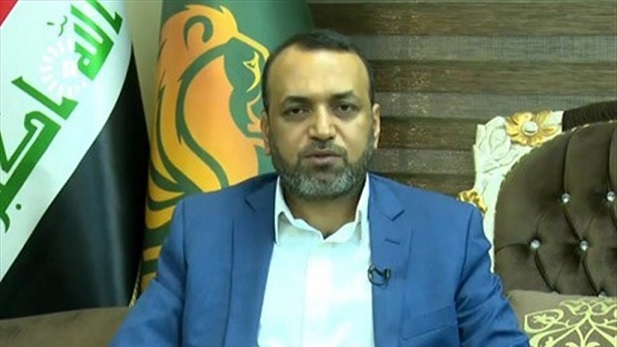
The Judicial Council confirms its support to Al-Kazemi’s curriculum to combat corruption

The Judicial Council confirms its support to Al-Kazemi’s curriculum to combat corruption

Baghdad today – On Wednesday, the head of the Supreme Judicial Council, Faiq Zaidan, affirmed his support for the Prime Minister, Mustafa Al-Kazemi’s approach to fighting corruption.

And the judiciary media stated, in a statement, that “the head of the Supreme Judicial Council, Judge Faeq Zaidan, Mustafa al-Kazemi, to extend congratulations on the occasion of his assumption of the presidency of the Council of Ministers.”

The President of the Supreme Judicial Council, according to the statement, expressed his support for the “Prime Minister’s approach to combating crime in all its forms, both in the field of combating administrative corruption, terrorism and organized crime.”

The statement pointed out that “the two sides are important for cooperation between the executive and judicial authorities to enforce the rule of law.”

He pointed out that “the head of the Supreme Judicial Council was accompanied, on the visit, by the chief prosecutor, Muwaffaq al-Ubaidi, the head of the Judicial Supervision Authority, Jassem Muhammad Abboud, and the director general of the Judicial Guard Department, Rahim Abdul Hassan.”

Last Thursday, the House of Representatives voted to give confidence to Prime Minister Mustafa Al-Kazemi and 15 ministerial portfolios from his cabinet.

Baghdadtoday.news

Posted in Uncategorized | Comments Off on The Judicial Council confirms its support to Al-Kazemi’s curriculum to combat corruption

Newspaper: Al-Kazemi intends to replace most of the heads of the 25 independent bodies

Newspaper: Al-Kazemi intends to replace most of the heads of the 25 independent bodies

The information / Baghdad .. Al-Arabi Al-Jadeed newspaper revealed, Wednesday, Prime Minister Mustafa Al-Kazemi’s intention to open the file of independent bodies and replace most of its presidency.

With the advent of the new Prime Minister, Mustafa Al-Kazemi, today the file of independent bodies in Iraq , whose number exceeds 25 different bodies, exceeds some of the tasks and financial allocations allocated to them by government ministries.

She added that “extending the independent bodies in Iraq to more than 25 bodies, the most prominent of which are the Hajj and Umrah Commission, the Central Bank, the Martyrs’ Foundation, the Political Prisoners ’Organization, the Investment Authority, the Financial Control Bureau, the House of Wisdom (Cultural Foundation), the Provincial Authority, the Baghdad Municipality, The Reconstruction Council, the Integrity Commission, the Accountability and Justice Commission, the Media Commission, the Federal Revenue Authority, the Securities Commission, the Independent High Electoral Commission, the Communications Commission, and the High Commissioner for Human Rights, the most recent of which is the Popular Mobilization Authority that was introduced recently.

She added, “The majority of those bodies that have been run by the agency for years, and registered in the last two years serious corruption files associated with them, have become an indefinable file, especially since most of them are monopolized by political parties, while others have become redundant and can be merged or attached to other ministries in The area of ​​specialization or interest itself, which contributes to reducing spending and eliminating corruption. The sources emphasized that some of these bodies turned into party fronts for a number of political entities rather than official institutions.

The newspaper quoted the deputy from the “Al-Fath” coalition, the Charter of Al-Hamedi, in saying that “every file that has not been opened in the jurisdiction of the government of Adel Abdul-Mahdi , will be opened by the new Prime Minister Mustafa Al-Kazemi, and on top of that is the file of independent bodies,” explaining that “opening this file It will generate new political differences regarding the distribution of independent bodies among the political forces, but in the end there will be agreement, as happened with the formation of the Al-Kazemi government, which was closest to failure. ”End / 25

Almaalomah.com

Posted in Uncategorized | Comments Off on Newspaper: Al-Kazemi intends to replace most of the heads of the 25 independent bodies

The Central Bank of Iraq signs a “technical support” document with the World Bank

The Central Bank of Iraq signs a “technical support” document with the World Bank

Twilight News / announced the bank ‘s central Iraq, on Wednesday, for the signing of the document arrangements banking with Bank International, referring to the goal of the document to obtain the support of technical and exchange of experience .

He said the bank, in a statement reported to the agency Twilight News, he signed a document arrangements for banking with a program consultant to manage the reserves of the Bank International (RAMP) Reserves Advisory & On Management the Program , explaining that it comes in the framework of its strategy for the development of management of its reserves of foreign in line with developments in the current And futuristic .

He explained that this document aims to enable the Bank central Iraq to obtain the support of technical than through the exchange of knowledge and experience in the field of management of portfolio investment based on the index performance which helps to maximize resources , financial, and building the head of capital human of through the sharing of knowledge and the development of expertise in the field The financial according to the best practices in the field of reserves management .

He said the central Iraqi, to that this program was developed from by the Bank International in the year 2000 , with a view to building capacity and providing services consulting and management of assets , and is the forum for a network of specialists , and serves more than 70 members around the world , mostly from banks , central, managing the nearly From (2) One trillion dollars of sovereign assets .

Shafaaq.com

Posted in Uncategorized | Comments Off on The Central Bank of Iraq signs a “technical support” document with the World Bank

Parliamentary finance comments on the ability of Iraq to print a monetary process

Parliamentary finance comments on the ability of Iraq to print a monetary process

Baghdad / .. The Finance Committee in the Iraqi parliament, today, Thursday, commented on the possibility of Iraq printing a monetary process in order to confront the economic crisis and secure the salaries of Iraqi state employees.

Committee member Hanin Qaddo said to “Eye of Iraq News” that “Iraq cannot print a monetary process, in order to face the economic crisis, because Iraq is committed within the international monetary policy, and its taking such a step means the destruction of the Iraqi dinar.”

And Qaddo that “there are a lot of solutions and proposals, with the Parliamentary Finance Committee, as well as the Ministry of Finance, to cross Iraq its economic crisis, without going to the issue of currency printing, this will cause economic and financial disasters.”

Aynaliraqnews.com

Posted in Uncategorized | Comments Off on Parliamentary finance comments on the ability of Iraq to print a monetary process

Parliamentary committee determines options to address financial distress

Parliamentary committee determines options to address financial distress

Parliamentary committee determines options to address financial distress[Baghdad-Ain] The Parliamentary Finance Committee, today, Tuesday, outlined several options to face the financial hardship due to the drop in oil prices due to the Corona crisis.
Member of the Committee, Deputy Muhammad Sahib Al-Darraji said in a press statement that “there are measures that must be taken to face financial distress other than internal borrowing or prejudice the reserves of the Central Bank,” noting that “among these options is changing the exchange rate and stopping imports in addition to stopping the currency auction and economic measures Other. ”

Al-Daraji pointed out that “if oil prices continue to decline, there must be special budgets, including a crisis budget that is based on a price lower than the price of oil to walk salaries and health matters as well as other important matters,” noting that “this challenge must be exploited and transformed into an opportunity of Through opening the door for investment and allowing the private sector to operate. ”

He called on the government to speed up the transmission of the budget in a way that reduces the deficit by reducing costs or by changing the exchange rate.

The Parliamentary Finance Committee had confirmed earlier the importance of harnessing all efforts to maximize non-oil resources, while it made a number of proposals to the Tax and Customs Authorities that contribute to increasing revenues for the purpose of reducing the budget deficit and advancing the Iraqi economic reality.

Alliraqnews.com

Posted in Uncategorized | Comments Off on Parliamentary committee determines options to address financial distress

Lifting immunity of 20 members of the Iraqi parliament for investigation

Lifting immunity of 20 members of the Iraqi parliament for investigation

Al-Kazemi’s war on corruption reaches the Iraqi parliament
The judiciary announces the launch of all the demonstrators … and an international warning against the fragility of the economy

The war announced by Iraqi Prime Minister Mustafa Al-Kazemi last week, after he took office, knocked on the doors of parliament yesterday, while the judiciary announced the release of all detained protesters.

Al-Kazemi described his government as “the government of difficult challenges,” vowing “to face crises, save what can be saved, and diversify the economy.”

Days after the campaign launched by Al-Kazemi against corruption, the Supreme Judicial Council announced in a statement yesterday that it had issued notes to lift the immunity of 20 members of the Iraqi parliament for investigation, in cases related to financial and administrative corruption.

In another step, within the promises made by Al-Kazemi, the Supreme Judicial Council announced yesterday that «the latest data submitted by all Iraqi courts to the administration of the Council indicates that there is no arrested or convicted of peaceful demonstrators, given that demonstrating is a constitutionally guaranteed right», according to a statement quoted German News Agency.

Last Saturday, Al-Kazemi directed the security services to release all detainees who participated in the demonstrations, and asked the Supreme Judicial Council to cooperate in the release of demonstrators who committed minor cases, with the exception of those involved in blood.

The Prime Minister, who faces difficult political and economic challenges, including the lack of completion of his government, which is still lacking 7 ministerial portfolios, announced in the second meeting of the new cabinet that “this government is the government of difficult challenges, the most important of which is the economic challenge, fighting poverty and unemployment among young people, and the equitable distribution of wealth ». He added, “We will not be courted at the expense of the citizen’s dignity and the interests of the country. We are working to save what can be saved, confront crises and diversify state resources. ”

The financial advisor to the Prime Minister, Mazhar Muhammad Salih, announced that Baghdad is moving towards internal and external borrowing in order to overcome the financial deficit that the treasury suffers from. Saleh said in a press statement that “the government submitted a draft law to parliament in order to authorize it to borrow from internal and external financing sources, in order to bridge the deficit and enhance public financial liquidity when necessary.” He added that «borrowing came because of the financial hardship that the country is going through and in order to bridge the gap in the revenue shortfall against fixed expenditures, especially in the operational budget».

He explained that «the legal cover did not provide the government with internal and external borrowing due to the absence of the Federal Budget Law for the year 2020». He pointed out that “external loans will go toward supporting investment projects and completing the stalled ones and the urgent need to launch them, while internal loans will be allocated towards the operational budget and the government’s needs for insurance of salaries and others.”

Meanwhile, the United Nations representative in Iraq, Jenin Blashardt, considered the formation of the new government and the appointment of Al-Kazemi a “long-awaited development.” And it said in a report submitted to the Security Council via video from Baghdad, that it has become important “for the Iraqi government to demonstrate that it is able to accomplish the necessary tasks such as maintaining law and order and providing public services”, pointing out that “there is an urgent need for justice and investigation about those responsible for the killing and wound The demonstrators who went out in the past months in Baghdad and a number of provinces. And she saw that «the current economic situation revealed again the gaps in the Iraqi economy as a result of its dependence on oil mainly». She pointed to a number of key points that Iraq must take into account, in order to expand the state’s revenue base and economic situation, including “reducing dependence on oil, repairing and developing infrastructure, fighting favoritism, favoritism and corruption, and building state institutions that serve citizens and are sustainable.”

And I expected “the Iraqi economy to shrink by 9.7 percent this year, with increasing poverty rates to nearly 40 percent.” She stressed that “corruption is perhaps the biggest source of disruption in Iraq, works against the interests of the people and leads to the distancing of donors and investors.”

The UN official affirmed that “local and regional security developments negatively affect Iraq,” warning against “the continued use of Iraq and its territories as a proxy war zone between countries.” She stressed “the necessity to work to combat the emergence of violent extremism and to prevent the return of organizations like (ISIS) to increase their activities.”

The professor of national security, Dr. Hussein Allawi, considered that the major challenge facing the Al-Kazemi government is that “there is a conflict between two tracks of life in Iraq; Between civil life and a life based on the values ​​of political Islam. ” He explained to “Al-Sharq Al-Awsat” that “the forces of political Islam want to keep the traditional political game rules for running the country, while the civil forces want to change the rules of the political game in order to break down the barriers of the political process and transfer it from the style of closed power to open power and open the way for civil society to nominate its leadership Social participation in the management of government and state joints ».

Allawi added: «It seems that we are now moving towards building preliminary understandings that may move Iraq towards a balanced horizon between the two tracks, and therefore Al-Kazemi represents a turning point and the formation of a new national path with all goals, goals and strategies to produce a transformed Iraq towards new elections that produce a political class and change the map of political interaction and give the green light To move from quotas and power-sharing to political technocrats, putting Iraq first. ”

He believed that «whoever wants to thwart the prime minister and his ministerial approach is wrong because the Al-Kazemi path is a national path and works to reshape a third path between the traditional and contemporary tracks… there is an axis that is formed but its tracks are related to Al-Kazemi’s policy beyond the first 100 days of the government’s life, which receives support Large internally by the forces of moderation in all the components that began to view the Iraqi state as a necessity and not a choice.

Aawsat.com

Posted in Uncategorized | Comments Off on Lifting immunity of 20 members of the Iraqi parliament for investigation

The Cabinet decides to reduce and rationalize the administrative structures of the country

The Cabinet decides to reduce and rationalize the administrative structures of the country

مجلس الوزراء يقرّر تقليص وترشيد الهياكل الإدارية للدولة Baghdad / Al-Sabah – During its second regular session headed by Prime Minister Mustafa Al-Kazemi yesterday, the Council of Ministers decided to reduce and rationalize the administrative structures of the state, and while it formed the Emergency Cell for Financial Reform and Managing the Financial Situation in the Light of the Current Crisis, directed the Ministry of Labor and Social Affairs in coordination with the Ministry of Planning and Finance to study the expansion of the base covered by law Social protection.

A statement of the Prime Minister’s Office received by Al-Sabah stated that “Al-Kazemi opened the session with a speech in which he emphasized that this government is the government of difficult challenges, the most important of which is the economic challenge, the fight against poverty and unemployment among young people, and the fair distribution of wealth.” And work to develop state institutions, not political action. ”

The Prime Minister reiterated his “protection of the right to demonstrate and intolerance of any aggression against the demonstrators, and that the government aims to achieve their legitimate aspirations,” noting by saying: “We will not be courted at the expense of the dignity of the citizen and the interests of the nation, and we will work to save what can be saved, confront crises and diversify state resources.”

On the work of the armed forces, Al-Kazemi stressed, according to the statement, that “the heroic army and security forces have endured a lot, and the prestige of the military and security institutions must be restored.”

The Cabinet issued a number of decisions, including:

1. Reducing and rationalizing the administrative structures of the state by providing each government agency with its vision in this area.

2. Take appropriate measures to legislate the laws required for the success of the e-government, and for ministries and government agencies to expedite their procedures to automate their work, especially in the area of ​​customs and tax, and to provide monthly reports on rates submitted to the General Secretariat of the Council of Ministers.

3.Re-examine the draft laws related to fighting corruption, and to activate the measures to combat it and strengthen their efficacy, and to emphasize strengthening the role of the institutions concerned with that from the Integrity Commission and the Federal Financial Supervision Bureau in coordination with the General Secretariat of the Council of Ministers.

4. Emphasizing the freedom to exchange information and the right to obtain it by expediting the legislation on the right to obtain information.

5. Assigning the Ministry of Planning in coordination with the concerned authorities to review instructions for implementing government contracts to ensure updating of the approved standards in the awarding of tenders, and also to update the approved standards in selecting investment projects.

6. Providing the Federal Service Council with the appropriate staffing for taking its role and exercising its duties.

7. Agreeing that the Reconstruction Fund for areas affected by terrorist operations implement mobile hospitals to quarantine and treat patients with HIV in the regions that are agreed with the Ministry of Health and the provinces through the grant provided by the Federal Ministry for Economic Cooperation and Development through the German Development Bank of (15,000,000) Fifteen million euros.

8. Accelerate the legislation of the general budget law in line with the requirements of the financial situation, the low level of the oil price, and diversify the budget sources.

9. Urging the Ministry of Oil to expedite the completion of the draft oil and gas law.

10. The Ministry of Labor and Social Affairs, in coordination with the Ministry of Planning and the Ministry of Finance, study to broaden the base of those covered by the Social Protection Law by improving the inclusion mechanism through demographic targeting by adopting poverty and social research data, and the study is presented within a period of one month.

11. Forming an emergency cell for financial reform, forming a cell to manage the financial situation in light of the current financial crisis and putting the necessary solutions to achieve financial reform and improving the performance of financial institutions. The cell will be headed by the Prime Minister and he may authorize the Minister of Finance to manage the sessions in his absence and the membership of each of the Minister of Finance The Minister of Foreign Affairs, the Minister of Planning, the Governor of the Central Bank, the Prime Minister’s advisers whom His Excellency calls the Secretary General of the Council of Ministers, and a representative of the General Secretariat of the Council of Ministers. The cell carries out the following tasks:

1 – Ensure the provision of financial liquidity.

2- Take decisions regarding financial reform by rationalizing expenditures, maximizing resources, and reforming financial institutions, including restructuring them.

3- Establishing financing plans for the reconstruction, development and investment projects, including financing resources and mechanisms outside of government spending.

4- Improving procedures and automating systems in financial institutions.

Alsabaah.iq

Posted in Uncategorized | Comments Off on The Cabinet decides to reduce and rationalize the administrative structures of the country

The Central Bank signs a banking arrangement document with the World Bank

The Central Bank signs a banking arrangement document with the World Bank

The central bank signs a banking arrangement document with the World BankAs part of its strategy to develop its foreign reserves management in line with current and future developments, the Central Bank of Iraq signed a banking arrangement document with the World Bank’s Reserves Management & Consulting Program ( RAMP ) Reserves Advisory & Management Program

This document aims to enable the Central Bank of Iraq to obtain technical support by exchanging knowledge and experience in the field of investment portfolio management based on a performance indicator that helps to maximize financial resources, building human capital through exchanging knowledge and developing expertise in the financial field in accordance with best practices In the field of reserve management

It is noteworthy that this program was developed by the World Bank in 2000, with the aim of building capacities and providing consulting and asset management services, and is considered a meeting place for a network of specialists, and it serves more than (70) members around the world, most of them are from central banks, managing nearly (2) One trillion dollars of sovereign assets

Cbi.iq

Posted in Uncategorized | Comments Off on The Central Bank signs a banking arrangement document with the World Bank

A Powerful Iran-Backed Militia Is Losing Influence in Iraq

A Powerful Iran-Backed Militia Is Losing Influence in Iraq

The Iraqi government is finally starting to make progress in its attempt to curb the influence of Kataib Hezbollah.

U.S. soldiers intervene against Iraqi protesters carrying flags of Kataib Hezbollah as they storm the U.S. Embassy.

BAGHDAD—Five months after its charismatic leader Abu Mahdi al-Muhandis was killed by a U.S. drone strike at the Baghdad airport, the Iran-backed group Kataib Hezbollah’s influence on Iraq may be quietly eroding.

Despite an institutional void since widespread protests across Shiite-majority central and southern Iraq forced the previous government to resign late in 2019 and the international coalition’s recent withdrawal from several Iraqi bases, moves are afoot to more fully integrate some Popular Mobilization Units (PMU) factions into government chains of command and structures that existed prior to 2014.

If Iraq’s new government manages to do so, it could reduce the influence of powerful armed groups with questionable loyalty to the Iraqi state.

The PMU were officially formed in 2014 through a fatwa by Grand Ayatollah Ali al-Sistani for volunteers to fight against the Islamic State in order to defend Shiite holy sites and Iraq in general. They played a key role in the country’s territorial defeat of the transnational terrorist group.

Several of the brigades within the PMU belong to armed groups that had existed for many years prior to the PMU’s formation in 2014. These factions have long been supported by Iran’s Islamic Revolutionary Guards Corps.

Others set up in 2014 and loyal to Sistani are known as “shrine units.”

Kataib Hezbollah’s influence on Iraq may be quietly eroding.

On April 23, the official announcement that four of these shrine-linked PMU would be placed directly under the prime minister’s office seemed to signal an attempt to draw some of the factions from the more than 100,000-strong motley fighting force further away from Iranian and Kataib Hezbollah influence.

Some of those in the PMU have previous experience in Iraq’s armed forces. Liwa Ali al-Akbar commander Ali Hamdani, for example, told me he had previously served as an air force officer when I interviewed him in Hawija during the operation to retake the city from the Islamic State.

Also answering directly to the prime minister’s office is Iraq’s Counter Terrorism Service (CTS), which played a key role in the fight against the Islamic State and were supported and trained by the international anti-ISIS coalition.

The CTS has long been accused by pro-Iran factions of being too close to the United States. The international coalition quietly continued to support the CTS after it temporarily halted its training and advisory missions for other Iraqi forces earlier this year amid the surge in U.S.-Iranian tension and a vote by the Iraqi parliament to call for the removal of all foreign forces. Both Iraqi army and CTS officers have told Foreign Policy that the coalition’s withdrawal would deprive the CTS of intelligence that is key to the fight against the Islamic State.

Kataib Hezbollah is only one of several Iran-linked armed groups active in Iraq but it has long been considered the greatest danger to the Iraqi government’s aspiration to be a proper state in the classical sense—by exerting a monopoly over the use of force within its territory. It also holds territory in Iraq which even government officials are allegedly prevented from entering.

Some of Kataib Hezbollah’s brigades have been incorporated into Iraqi government-salaried PMU, most likely as part of an attempt to rein in the group. Many of its fighters nevertheless continue to cross in and out of Iran and Syria, according to local security officials in border areas.

Two of Kataib Hezbollah’s government-incorporated brigades were targeted in a U.S. airstrike in late December near Qaim, in Iraq’s western Anbar province, killing at least 25 fighters. This in turn led to an attack on the U.S. embassy by supporters of Kataib Hezbollah and other armed factions—which was followed by the drone strike on Muhandis and Iran’s most powerful general, Qassem Suleimani, on Jan. 3.

Few Iraqis seem willing to speak openly about Kataib Hezbollah, and none will provide details about its hierarchy. The shadowy armed group “is happy to keep it that way,” I was told in 2019 by one so-called PMU media volunteer who had helped to arrange meetings with commanders.

Muhandis, who was also officially deputy chief of the Shiite-dominated, government-salaried PMU, was a charismatic strategist and able to coopt some local Sunni fighting groups and their commanders as well as part of the fight against the Islamic State. He was key to providing them with weapons and support to retake their home territory.

Kataib Hezbollah has long been considered the greatest danger to the Iraqi government’s aspiration to be a proper state.

The most well known was Yazan al-Jabouri, a native of Salahuddin province whom I interviewed in Baghdad in March. Despite Jabouri’s long-standing close relationship with Muhandis, he noted that even to him Kataib Hezbollah was “like a ghost.”

The onetime Sunni protégé of Muhandis said there had long been tension between the Iran-linked armed group and the Iraqi intelligence services, because of both the secrecy employed by the Iran-linked group and various threats.

Kataib Hezbollah, he said, had at various times threatened the parliament speaker, Mohamed al-Halbousi, and the head of intelligence, Mustafa al-Kadhimi, who became Iraq’s prime minister on May 7.

Kataib Hezbollah strongly opposed Kadhimi, and have accused him of being linked to the killing of Muhandis and Suleimani through providing intelligence to the United States.

Even as Kadhimi takes the country’s reins, Kataib Hezbollah continues to occupy the entire town previously known as Jurf al-Sakr in Babil province, allegedly to protect the nearby Iraqi Shiite holy city of Karbala against possible Islamic State attacks coming from Sunni-majority Anbar province.

The town was renamed Jurf al-Nasr (nasr means “victory”)—though its original residents, many of whom are now IDPs in Anbar, continue to refer to it as Jurf al-Sakr. Kataib Hezbollah continues to prevent its Sunni residents from returning—and allegedly anyone else, including government officials, from entering. When I asked public officials how to get permission to report from the area, they responded: “even we are not allowed to enter.”

One CTS officer claimed that there are British-Iranian engineers working in the town as well as weapons factories. Halbousi told me in a 2018 interview that he believed many of the men who disappeared from the Razaza checkpoint during anti-Islamic State operations might be held in the town, since no one except Kataib Hezbollah is allowed in. The Iran-backed armed group also seems to have recently occupied an area in the capital’s Green Zone near the prime minister’s office.

After reports that the Green Zone land had been given to them by the prime minister’s office were denied, Iraq analyst Michael Knights noted in a tweet that “KH don’t have to wait for the PMO to give them something. They just take it, and then try to keep it.”

Whatever the Iraqi government and other stakeholders are doing to separate other armed groups from Kataib Hezbollah is being done quietly because of the risks such moves could entail.

Jabouri noted that Muhandis had been able to exert significant control over the vast array of Iran-linked Iraqi armed groups. He is now concerned that, with Muhandis gone, there is no one able to do the same.

For example, he said, the PMU group known as Saraya al-Khorasani was forced to leave Salahuddin province after “we asked Muhandis to tell them to do so” because their fighters had been “treating the [local Sunni] population as if they [Saraya al-Khorasani] were an occupying force.”

The risk is that Kataib Hezbollah may now become even more uncontrollable in its attempt to prevent a loss of power and influence.

The risk is that Kataib Hezbollah, without Muhandis at its helm, may now become even more uncontrollable in its attempt to prevent a loss of power and influence.

In reporting on Iraq’s protest-hit central and southern areas over the past few months, vague reference was often made to “parties”—afraid as many people were to even mention the names of several Iran-linked armed groups initially—as being responsible for killing protesters involved in the mass demonstrations that started in October 2019, as well as assassinations of activists. This demonstrates the fact that some locals now find it hard to imagine political parties are not linked to armed groups.

A number of activists cited Asaib Ahl al-Haq and the Badr Organization—both of which are Iran-linked armed groups with parts incorporated into government-salaried PMU but which existed long before 2014 and which are now involved in politics—as being the most dangerous in Nasiriyah. Baghdad locals can name specific streets in the Iraqi capital where Kataib Hezbollah allegedly acts as a sort of mafia.

Support for Kataib Hezbollah seems thin on the ground in both Baghdad and the south. However, as is the case in any area with high unemployment and poverty, there is fertile terrain for recruitment among young men for anyone with the money to pay them.

Some Iraqi politicians have told me in interviews over the past six months of reporting on anti-government protests that the dizzying array of armed groups in the country must get more fully involved in politics in order for them to put down their guns and compete at a different level.

Kataib Hezbollah, however, has shown little serious interest in trading its weapons for parliamentary representation, according to several MPs Foreign Policy spoke to—and it continues to ignore demands that it leave areas where locals see it as unnecessary or a threat to stability.

Al-Halbousi, the speaker of Iraq’s parliament, told me in an interview before being appointed to his present position, when he was serving as governor of Anbar province, that he wanted to thank Muhandis for the Shiite-led PMU’s help against the Islamic State.

However, he argued, they should now leave the Sunni-majority province. Their presence was no longer necessary, he said, and was causing problems with the local population. Years later, Kataib Hezbollah fighters and their weapons are still crossing the Iraqi-Syrian border in western Anbar.

Indeed, over years of reporting from western Anbar since the operations to retake the area from Islamic State in late 2017, I have witnessed Sunni locals complaining in private about the Shiite-led forces’ alleged land grabs, cross-border smuggling negatively affecting the local market, and, especially, missing male relatives they say have simply “disappeared.” Some have specifically named Kataib Hezbollah as the likely perpetrator of many of these disappearances.

Kataib Hezbollah fighters and their weapons are still crossing the Iraqi-Syrian border in western Anbar.

There has recently been an uptick in Islamic State attacks in Diyala province, along Iraq’s border with Iran, as well as continuing security incidents in the nearby provinces of Kirkuk and Salahuddin.

“Kataib Hezbollah is very, very active in Diyala near the Iranian border now and they are constantly moving back and forth across it,” a local security official, who declined to be named as he had not been authorized to speak to the media, told Foreign Policy via a WhatsApp call in late April.

This likely means that Kataib Hezbollah is moving weapons and fighters across the border from Iran, which could pose a risk to anyone seen as opposing them.

The fact that Kataib Hezbollah strongly opposed Kadhimi for the position of prime minister, but that he still received enough support to form a government, may point to an erosion of the group’s influence.

Kadhimi’s cabinet passed a vote of confidence early on May 7.

This, alongside the government-led move to distance some of the PMU from Kataib Hezbollah and others, seems to signal some halting progress toward reducing influence by Iran-backed armed groups. Many in Iraq feel this is necessary.

A prime minister openly opposed by Kataib Hezbollah, with parts of the PMU now answering to him—and a government program that calls for bringing all arms under state control—may very well mark an important first step.

Foreignpolicy.com

Posted in Uncategorized | Comments Off on A Powerful Iran-Backed Militia Is Losing Influence in Iraq

Parliamentary committee determines options to address financial distress

Parliamentary committee determines options to address financial distress

imageBaghdad – Mawazine News: The Parliamentary Finance Committee identified, on Tuesday, several options to face financial distress due to the drop in oil prices due to the Corona crisis.

According to the government media, member of the committee, Deputy Muhammad Sahib Al-Darraji, said, “There are measures that must be taken to face financial constraints other than internal borrowing or prejudice the central bank’s reserves,” noting that “among these options is changing the exchange rate and stopping imports in addition to stopping the currency auction and procedures Another economic. ”

Al-Daraji pointed out that “if oil prices continue to decline, there must be special budgets, including a crisis budget that is based on a price lower than the price of oil to walk salaries and health matters as well as other important matters,” noting that “this challenge must be exploited and transformed into an opportunity of Through opening the door for investment and allowing the private sector to operate. ”

He called on the government to accelerate the transmission of the budget in a way that reduces the deficit by reducing costs or by changing the exchange rate. ”Ended 29 / A 43

Mawazin.net

Posted in Uncategorized | Comments Off on Parliamentary committee determines options to address financial distress