Al-Sadikoun Reveals Pressures For Al-Kazemi To Remain In Office For Another Year

Al-Sadikoun Reveals Pressures For Al-Kazemi To Remain In Office For Another Year

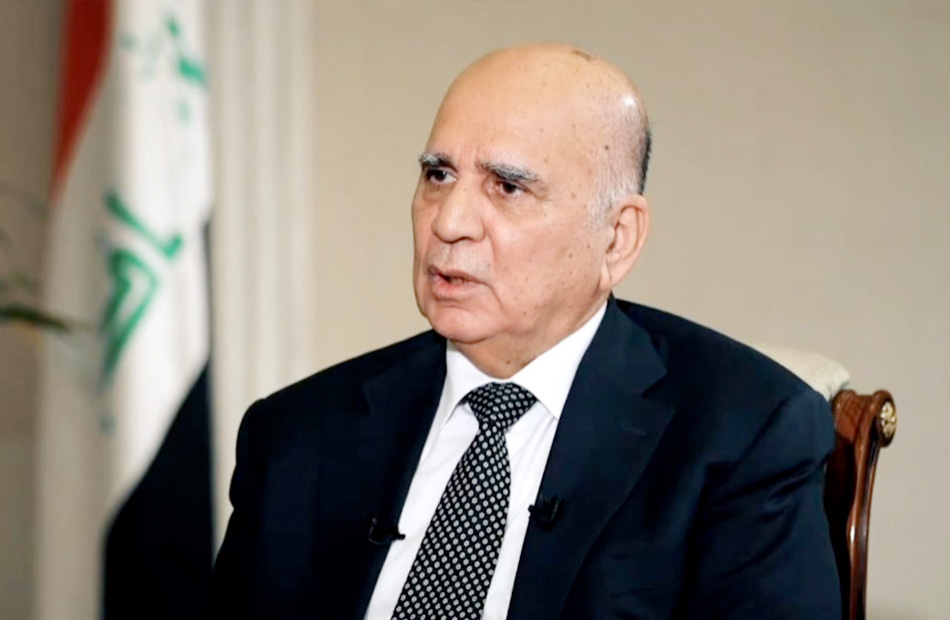
Al-Sadikoun Reveals Pressures For Al-Kazemi To Remain In Office For Another YearInformation / Baghdad… Representative of the Al-Sadiqoon Parliamentary bloc, Suhaila Al-Sultani, revealed, on Thursday, that there are pressures moving towards Al-Kazemi’s remaining in his position for another year, while she called on Al-Kazemi to abandon his ambitions to remain in his position.

Al-Sultani said in a statement to “Al-Maalouma”, that “there are pressures exerted from here and there towards Al-Kazemi staying for a longer period in the government.”

She added, “The coordinating framework categorically refuses to keep Al-Kazemi in his position,” noting that “the framework initiated on many occasions and is still for the sake of the unity of the Shiite house.”

Al-Sultani pointed out that “Al-Kazemi seeks in any way to remain in his position, even for one year.”

And the former deputy, Rasoul Radi, confirmed in a previous statement, that Al-Kazemi had obtained the green light in order to continue and remain in the position, pointing out that what Al-Kazemi had done by opening the green and allowing all the events that occurred recently is nothing but an attempt to remain in power. finished / 25 h

Almaalomah.me

Posted in Uncategorized | Comments Off on Al-Sadikoun Reveals Pressures For Al-Kazemi To Remain In Office For Another Year

The crisis in Iraq enters the stage of breaking a bone between Al-Sadr and Al-Maliki

The crisis in Iraq enters the stage of breaking a bone between Al-Sadr and Al-Maliki

The crisis in Iraq enters the stage of breaking a bone between Al-Sadr and Al-MalikiBaghdad – Frightening scenarios are emerging on Iraq, in light of the mobilization and mobilization opposite the street between the Shiite parties, and the refusal of both to make any acceptable concessions, to end the explosive crisis since last October.

Observers believe that the spelling method adopted by the leader of the Sadrist movement, Muqtada al-Sadr, and the latest of which was the Iraqi judiciary’s decision at the end of next week to dissolve parliament, although this matter is marred by legal and constitutional flaws, made the “moderate” voices within the coordination framework decline, in return for granting the leader of a state coalition Law Nouri al-Maliki a new paper to pour oil on the fire of the crisis.

Observers point out that al-Sadr’s condescending style played an opposite role in terms of the hesitant line-up in the coordination framework behind al-Maliki, who in turn wants to turn the current crisis into a bone-breaking operation, in light of his conviction, which he previously expressed in audio leaks that the arena cannot accommodate him and al-Sadr. And that the latter must be removed, even if that requires entering into a civil war.

Al-Sadr’s condescending style played an opposite role in terms of aligning the undecided in the coordinating framework behind Nuri al-Maliki.

Thursday, the coordination framework called on its supporters to demonstrate on Friday in front of one of the gates of the Green Zone in the capital, Baghdad, while the Sadrist movement called on its followers to demonstrate in the provinces.

The organizing committee for the demonstrations “Defending Legitimacy and Preserving State Institutions” of the Coordination Framework said in a statement that it “calls on those who love their country and state to actively participate in a demonstration that will start on Friday at five o’clock local time at the walls of the Green Zone.”

The committee added that the demonstration, which comes under the slogan “The People Protects the State”, “aims to demand respect for state institutions… and to prevent lawlessness, chaos, and disruption of security and community peace.”

The statement urged the demonstrators from its supporters to “peacefully demand the formation of a national service government that alleviates the suffering of the people… that approves the state budget to provide job opportunities… and fights corruption by activating the role of integrity and financial control, and other matters that concern Iraq and the Iraqis.”

He called for “commitment to the committee’s instructions, not to encroach on public and private property, and to cooperate fully with our brothers in the Iraqi security forces.”

On the other hand, Saleh Muhammad al-Iraqi, nicknamed the Minister of al-Sadr, called on supporters of the movement in a post on his pages on social networking sites, to “gather Friday in all governorates at the same time as the coordination framework demonstrations at five in the afternoon.”

Saleh called on supporters of the movement “to stay in their places and not leave until receiving instructions.” “During the demonstrations, legal forms will be filled out to be submitted to the judiciary in order to dissolve Parliament,” he said.

Observers believe that the Sadrist movement’s decision to descend its followers at the same time as the demonstrations announced by the framework falls within the context of a show of strength with the opposite team, in light of its conviction that the latter does not have many supporters, and that those who will mobilize them are militia members.

Observers point out that Al-Sadr, through the new review, seeks to embarrass the position of the framework, and puts it in a difficult situation between using force through militia elements that can participate in the movement, or submitting to Al-Sadr’s orders regarding settling the crisis.

And the Minister of Al-Sadr directed, Wednesday, to fill out a form and deliver it to lawyers and notaries, according to the legal contexts. The aforementioned form includes a list of lawsuits filed by the protestors from among the followers of the current and the representatives to the Iraqi judicial authorities to dissolve Parliament. The leader of the Sadrist movement had earlier directed the Supreme Judicial Council to dissolve parliament within a period not exceeding the end of next week.

Al-Sadr had previously announced an initiative that is a set of conditions based on dissolving the current parliament and forming a new government, and the framework responded to these conditions with conditional approval.

The coordination framework called on its supporters to demonstrate Friday in front of one of the gates of the Green Zone in the capital, Baghdad, while the Sadrist movement called on its followers to demonstrate in the provinces.

Al-Maliki stressed that any new elections must be preceded by a commitment to the provisions of the constitution, including the formation of a new government.

Friday’s demonstrations are the second demonstrations by the Sadrist movement and its rival Shiite coordination framework since the storming of the Green Zone by followers of the Sadrist movement on the thirtieth of last July in protest against the nomination of Muhammad Shi’a Al-Sudani for prime minister by the coordination framework.

Al-Sudani is close to Iran, and the leaders of the Sadrist movement describe him as a “shadow” of former Iraqi Prime Minister Nuri al-Maliki, and he previously held government positions, while the Sadrist movement and other Iraqi forces call for choosing a personality who did not hold any positions, and to keep the current government headed by Mustafa al-Kazemi to oversee the elections. new.

Observers believe that Al-Sudani’s refusal was only an excuse from the Sadrist movement to take to the street. It is clear that Al-Sadr will reject any figure proposed by the framework, and that his main goal is to push for new elections that enhance his political status and give him an advantage in forming a government under his full administration.

Observers point out that Al-Sadr’s conviction seems unrealistic, in light of the current election law, which imposes alliances between sectarian components in Iraq.

For about ten months, the process of forming the Iraqi government has been in a state of political impasse, due to the Sadrist movement’s adherence to the program of the national majority, while the coordinating framework is trying to remain in the state of the Shiite majority and guarantee the rights of the “largest component.”

Rawabetcenter.com

Posted in Uncategorized | Comments Off on The crisis in Iraq enters the stage of breaking a bone between Al-Sadr and Al-Maliki

Al-Sadr asks the judiciary to dissolve the Iraqi parliament and the President of the Republic to set a date for the elections

Al-Sadr asks the judiciary to dissolve the Iraqi parliament and the President of the Republic to set a date for the elections

Al-Sadr asks the judiciary to dissolve the Iraqi parliament and the President of the Republic to set a date for the electionsShafaq News / The leader of the Sadrist movement, Muqtada al-Sadr, asked the judicial authorities to work on dissolving the Iraqi parliament within a maximum period of next week, urging at the same time the President of the Republic of Iraq, Barham Salih, to set a date for early legislative elections in the country.

Al-Sadr said in a tweet seen by Shafak News Agency, “Someone may say: The dissolution of Parliament needs to hold a parliament session to dissolve itself. No, there are blocs that adhere to quotas and continue to corruption and will not succumb to the people’s demand to dissolve Parliament, but I say: The dissolution of Parliament is not limited with that.”

He added, “From here, I address my words to the competent judicial authorities, especially the President of the Supreme Judicial Council, hoping that they correct the course, especially after the end of the brief constitutional deadlines and others for Parliament by choosing the President of the Republic and assigning a Prime Minister to form a government of stakes, as well as the national or independent majority and away from the old, grim faces that despair Including the people, and if they are not corrupt, they are either deficient or deficient. Yes, I direct my words to the Iraqi judiciary, from which we still hope for good despite the political and security pressures it is subjected to and leaks from here and there, provided that it dissolve Parliament after those constitutional violations above.. …within a period not exceeding the end of next week, and graciously assigning the President of the Republic to set a date for early elections, subject to several conditions that we will announce later.

And he continued, “During this, the revolutionaries will continue their sit-ins and their revolution, may God reward them with the best reward… and they will have another position if the people fail again, and we ask all the revolutionaries, the resigned Sadrist bloc, other deputies, and all lovers of the homeland to submit official lawsuits to the Federal Court and through legal means and through the centralization of the committee.” It is clear that the elimination of the stake is at stake, and we hope that it will take into account the interest of the people and not be afraid of pressures, as I am sure that many judges are with the people and with reform.”

Shafaq.com

Posted in Uncategorized | Comments Off on Al-Sadr asks the judiciary to dissolve the Iraqi parliament and the President of the Republic to set a date for the elections

Government official: Iraq is not thinking of floating the currency at the moment

Government official: Iraq is not thinking of floating the currency at the moment

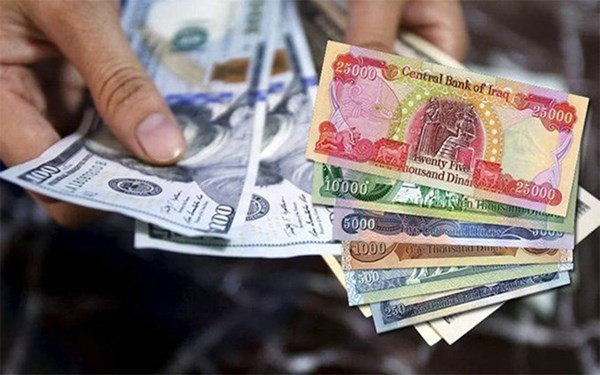
Government official - Iraq is not thinking of floating the currency at the momentShafaq News/ A government official confirmed, on Wednesday, that Iraq is not considering floating the currency currently, indicating that the flotation at the present time will threaten the collapse of the country’s economy.

The official said in an interview with Shafaq News Agency, “The rentier nature of the Iraqi economy makes it difficult to float the Iraqi currency, and therefore Iraq is not currently thinking of floating it.”

The official, who asked not to be named, added, “Access to hard currency in Iraq comes mostly from our oil exports, which is in the hands of the government, and that the local market is circulating for it and does not bring this currency, and therefore its flotation will threaten the Iraqi economy with collapse because it will increase demand for it in exchange for limited supply.”

He also indicated that “floating the currency without diversifying the economy will have negative repercussions on the purchasing power of the Iraqi consumer, especially the middle and poor groups,” adding that, “the float is on the table with the government in the long run because of its importance in stimulating the production process in the country.”

It is noteworthy that some officials talk from time to time on the necessity of floating the currency and liberalizing it to preserve the hard currency reserves with the Central Bank.

Shafaq.com

Posted in Uncategorized | Comments Off on Government official: Iraq is not thinking of floating the currency at the moment

Khashan: Al-Sadr Called For Demonstrations To Achieve One Of Two Results

Khashan: Al-Sadr Called For Demonstrations To Achieve One Of Two Results

Khashan - Al-Sadr Called For Demonstrations To Achieve One Of Two ResultsEarth News/ The independent deputy, Basem Khashan, said today, Wednesday, that the demonstrations called for by the leader of the Sadrist movement, Muqtada al-Sadr, aim to achieve one of two results.

Khashan wrote in a Facebook post, which was followed by Earth News, saying, “On 7/27/2022, Mr. Al-Sadr objected to the nomination of Representative Muhammad Shia Al-Sudani, and he was not thinking about requesting the dissolution of the House of Representatives, because such a request was from the leader of a bloc that withdrew from the parliament.” Of her own free will and was able to dissolve the council in accordance with the Constitution is frowned upon and unacceptable. He had no other goal, so Al-Sadr expelled his followers and occupied the council and brought with them goods and beasts for a long stay in it only to disrupt this candidacy.

He added, “Four days after the council’s occupation, Mr. Al-Sadr realized that the way forward was blocked, and that the withdrawal and retreat would bring back memories of 2016, and it would be a disaster for his current, so what is the way out of this impasse?” To find a justification for his withdrawal, and therefore he called on all Iraqis to support his revolution, which he claimed aims to radically change the system, the constitution and the elections, although in fact he does not want that and does not seek it, because he knows that changing the system and the constitution can only take place through a coup that breaks the country apart, and he knows that elections It took place in accordance with the law written by Sairoon, and it will not be accepted to change it at all.”

Khashan added that “the purpose of this lawsuit was to achieve one of two results. The first is that the street does not respond to it, so this would be a justification for his withdrawal, according to what he concluded his tweet with: (If you miss the opportunity [as they missed it in 2016], do not blame me)”, indicating “The second result is that the street responds, and al-Sadr gets himself out of his predicament, and puts the protesters in it after carrying them with the impossible demands to change the regime and the constitution, which he abandoned one day after their demonstration in Nisour Square.”

And he indicated that, “In this way, Mr. Al-Sadr can demand the dissolution of the council and claim that it is the demand of the people, because he will be the leader of his followers and the leader of the protesters at the same time, and not the head of the leader of a bloc that withdrew of its own volition and it is not accepted from it to demand the dissolution of the council after it gave up this option that was available to it.” And it was very possible before the resignation,” stressing that “Al-Sadr’s tweet is nothing more than a search for a safe exit, and our comrades have prepared for him, thankfully, this exit and more!”

Earthiq.news

Posted in Uncategorized | Comments Off on Khashan: Al-Sadr Called For Demonstrations To Achieve One Of Two Results

Deputy: Al-Halbousi Is Trying To Keep The Al-Kazemi Government And Cover Up Its Corruption

Deputy: Al-Halbousi Is Trying To Keep The Al-Kazemi Government And Cover Up Its Corruption

Deputy - Al-Halbousi Is Trying To Keep The Al-Kazemi Government And Cover Up Its CorruptionInformation / Baghdad… The independent deputy, Basem Khashan, accused the current Speaker of Parliament, Muhammad Al-Halbousi, of trying to disrupt the work of Parliament, maintain Mustafa Al-Kazemi’s government, and cover up its corruption.

Khashan said in a statement to “Information”, that “the current parliament is unproductive because of Al-Halbousi’s decision to suspend its sessions, and this is one of the grave mistakes that deepened the political crisis the country is going through,” blaming the parliament speaker “the responsibility for disrupting the legislative authority.”

He added, “There is an interest for Al-Halbousi related to keeping Al-Kazemi’s government for a longer period,” noting that “the disruption is also in order to cover up and cover up the corruption of Al-Kazemi’s government and its involvement in the Al-Rafidain Bank deal, as well as Al-Rashid and the Master Card deal that sold part of the country’s money to a foreign company.”

And the independent politician Sabah Shaheen had confirmed in a previous statement to “Al-Maalouma”, that the alliance of progress headed by Muhammad al-Halbousi would be the biggest loser in any upcoming elections. finished / 25 AD

Almaalomah.me

Posted in Uncategorized | Comments Off on Deputy: Al-Halbousi Is Trying To Keep The Al-Kazemi Government And Cover Up Its Corruption

Legal Resolves The Controversy .. Can The Federal Court Reverse Its Previous Decisions?

Legal Resolves The Controversy .. Can The Federal Court Reverse Its Previous Decisions?

Legal Resolves The Controversy .. Can The Federal Court Reverse Its Previous DecisionsInformation / Baghdad.. Legal expert Ali Al-Tamimi confirmed, on Wednesday, the ability of the Federal Court to reverse its previous decisions regarding the interpretations of constitutional texts according to the last amendment to the internal system of the Federal Court, which was stipulated in Article (45) thereof, noting that most of the federal courts in the world are private The advanced ones authorized the amendment of previous decisions.

Al-Tamimi said in a statement to / the information /, that “the Federal Court can reverse its previous decisions related to the interpretation of the constitutional text, although Article (94) of the Constitution, which considered the decisions of the Federal Court to be final and cannot be distinguished, but that there is a difference between the term final and final, as the final It is not considered definitive and therefore has the right to re-interpret any constitutional provision provided that it does not harm the rights of the parties.”

He added that “constitutional jurisprudence allows the federal courts to reconsider their previous decisions if there are political, economic or social changes, and this is what most federal courts have followed for most countries of the world, including developed countries.”

Al-Tamimi pointed out that “the current Federal Court has re-interpreted the constitutional interpretation of Article (76) related to the largest bloc, as well as the interpretation of Article (13) related to immunity, and this is a positive trend,” explaining that “Article (45) of the Federal Court’s internal system authorized the Federal Court to reverse decisions precedent, as well as the existence of the legal rule in the Iraqi civil law that is in force for that which says (the rulings are not denied in changing times).

Almaalomah.me

Posted in Uncategorized | Comments Off on Legal Resolves The Controversy .. Can The Federal Court Reverse Its Previous Decisions?

“Economically And Parliamentarian” .. The Law: The Exchange Rate Of The Dollar Will See The Light In The Next Stage

“Economically And Parliamentarian” .. The Law: The Exchange Rate Of The Dollar Will See The Light In The Next Stage

Economically And Parliamentarian .. The Law - The Exchange Rate Of The Dollar Will See The Light In The Next StageInformation/special… State of Law Representative Jassem al-Moussawi confirmed today, Wednesday, that the chances of the coordination framework within the parliament have become very strong, and this qualifies him to change the exchange rate of the Iraqi dinar against the US dollar, while stressing that the improvement in the economic situation will prompt the return of the dollar to its old price.

Al-Moussawi said in an interview with the “Information” agency, “One of the main demands adopted by the State of Law coalition is to restore the dollar exchange rate, especially after the improvement of the economic situation,” noting that “the Iraqi government’s interaction with the development of investment, the development of agriculture, and the opening of wide economic outlets, They all require a change in the exchange rate.”

He added, “The coordinating framework has become the largest parliamentary bloc, and its fortunes have increased significantly within the parliament and its impact is very strong, and this is what enables it to change the exchange rate, especially as it is the main requirement for the framework during the next stage.”

The representative of the state of law explained that “the cash reserve of the currency rose to more than 70 billion dollars and may rise to 90 or more, and this could change the exchange rate of the dinar against the dollar with the existing economic improvement.”

The representative of the National Approach Alliance, Hassan al-Asadi, had confirmed, earlier, the possibility of reducing the dollar exchange rate in the new general budget, stressing that there is a parliamentary movement to return the dollar exchange rate to what it was previously.

Almaalomah.me

Posted in Uncategorized | Comments Off on “Economically And Parliamentarian” .. The Law: The Exchange Rate Of The Dollar Will See The Light In The Next Stage

The struggle for power between al-Sadr and al-Maliki: which currents will win in Iraq?

The struggle for power between al-Sadr and al-Maliki: which currents will win in Iraq?

The struggle for power between al-Sadr and al-Maliki - which currents will win in IraqThe last tweet of the leader of the Sadrist movement, Muqtada al-Sadr, confirmed the authenticity of the audio leaks that were transmitted about a secret meeting of al-Maliki with some Islamist activists (Shiites) in Iraq. News of these leaks made headlines in newspapers and communication sites across Iraq, and contained alleged threats against al-Sadr and his followers and hints of a political coup. The leaked audio recording, which is now before the Iraqi judiciary to verify its authenticity, also included accusations of Al-Sadr and his group of murder and kidnapping. It also included personal accusations of Mr. Al-Sadr that he was carrying out a British scheme led by Massoud Barzani to overthrow the Shiites in Iraq and hand over power to the Sunnis.

In the leak, al-Maliki was heard saying: “Iraq is on the verge of a brutal war, from which no one will emerge unless the project of Muqtada al-Sadr, Massoud Barzani, and Muhammad al-Halbousi … and if necessary, I will attack Najaf.” He was also heard indicating that he had fighters ready to fight, while the activists whose voice was heard in the leaked recording promised him to place thousands of fighters under his command to carry out the alleged coup against everyone, including some of his allies in the framework whom Al-Maliki accused of cowardice and that they were purchased by the Speaker of Parliament Al-Halbousi (Sunni). Al-Maliki also promised those young men he was talking to to arrange a meeting for them with the Iranians to support them financially and morally and make them ready for battle.

Thus, al-Sadr’s response to these leaks constitutes a new chapter in the series of ongoing political excitement in Iraq between two powerful political figures, and indicates that the escalating struggle for power in the country between these two forces is now entering a new stage.

Al-Sadr’s tweet, in which Maliki’s political allies as well as his tribe demanded to abandon him, and Maliki himself demanded to completely resign from politics, is a precedent in the history of the political conflict in Iraq since the establishment of the political system there after the US invasion in 2003. It is not only a political precedent. Indeed, the general confirmation of the authenticity of what was stated in the leaked recording will have important repercussions on the political arena beyond the removal of al-Maliki, who was one of the most important political players in Iraq during the past two decades.

It is expected that this crisis will lead to a major shake-up within the largest and oldest Shiite political party (the Dawa Party), as well as it will open the door wide for the leaders of the second Shiite Islamic line to replace the traditional leaders that took the lead in the past nineteen years, just as I expected in an article Ex-Washington Institute two years ago.
Al-Sadr’s tweet also came just three days after the two-million-strong show of force by his supporters during Friday prayers on July 15, whose sermon read on behalf of Al-Sadr contained ten important messages to the Iraqi political class. However, the eleventh message – and the most important in my opinion – which was not read but understood by everyone was: I have willingly relinquished my parliamentary majority which my republic granted me through the last ballot boxes, so do not force me to use my popular power that you see before you to turn the tables on you. The framework coalition, or at least some of its forces, seem to have ignored this message.

Perhaps most importantly, the recent leaks, which al-Maliki denied their authenticity, posed threats not only to the Sadrist movement, but also to all partners in the political process, Sunnis and Kurds, as they questioned the credibility of al-Maliki and his allies within the coordinating framework and their ability to take fateful decisions without the approval of Iran and its Revolutionary Guards, and thus represented These leaks are an opportunity for Mr. Al-Sadr to consolidate his current’s victory and grip on the political process.

The most dangerous thing about the leaked recording, which Mr. Sadr seems to have cut off his authenticity, even if others question his credibility, is that al-Maliki was trying to seek the help of new forces from the armed factions that want to turn the tables on the Sadrist movement and all the Shiite, Sunni and Kurdish political allies. If these leaks are proven true, this will mean that al-Maliki was planning a political coup with the help of new armed factions declaring him the only leader in Iraq! It is certain that this coup, if it occurs, will target the Sadrists first and the entire political process in Iraq secondly.

Now that those leaks have surfaced and Sadr has decided to tackle the issue head-on, the two forces are facing each other. And if al-Sadr succeeded in killing this coup, this turn of events will have several repercussions on the ongoing conflict between the various currents of Shiite political Islam that have emerged in Iraq over the past several decades since 2003, given that the Islamic “Dawa Party” led by al-Maliki and the current Al-Sadr, the two most prominent Shiite Islamic political forces in Iraq at the present time.

It is worth noting that the parties of Shiite political Islam do not differ much from the parties of Sunni political Islam in their general orientation, despite their differences in details. On both sides, there are two general lines of political Islam that struggle in more than one country, namely, transnational political Islam, and national or local political Islam, both of which fall under various other subgroups.

In this context, the (Iranian) trend of Wilayat al-Faqih and the Iraqi Dawa Party represent the transnational Shiite political Islam line (parallel to the Sunni Muslim Brotherhood), which believes that one should not wait for the appearance of the absent Imam to establish an Islamic state, and that it is legally permissible to establish that state. during the absence of the Imam. Thus, the interim salvation of Muslims lies in the establishment of a religious (Shiite) state.

However, these two trends (Iraqi and Iranian) differ in their leadership orientations due to their different conditions of origin. The Iranians make the Wali al-Faqih the leader, while the Dawa Party was founded on the elected collective political leadership. As for the second main line of Shiite political Islam, it focuses on spreading the principles of Islam in the state in which they are located and their involvement in the local political process, without a text on the establishment of the great Islamic state as a final goal. In this, they follow the Najaf line of Shiite jurisprudence, which rejects the guardianship of the jurist and heavy interference in politics. The Sadrist line, the stream of wisdom and virtue, and some religious groups in other countries represent this line of local Shiite political Islam.

Based on this understanding of the orientations of Shiite Islam, it is a mistake to understand the dispute that surfaced between Mr. Al-Sadr and Al-Maliki as just a personal dispute without further repercussions on the Iraqi political scene. Although the conflict certainly has a significant personal dimension, stemming from the Battle of Basra, when Maliki’s US-backed forces attacked Muqtada al-Sadr’s forces in 2008, the current struggle between these two parties for political power is ultimately linked to its nature. with broader political issues, both in Iraq and abroad. The conflict between the representatives of these two main currents also raises the question of whether it will be the international line of Shiite Islam (both dawah and velayat-e faqih), or the line of national or local Shiite political Islam that will become the dominant political trend in Iraq.

As an expert in Iraqi public opinion, it seems to me that there is clearer and greater support in the Iraqi street for the national Iraqi Shiite tendencies, as opposed to those that cross Iraq’s borders and its interests and concerns. And if we take the last elections that took place in 2021 as an indicator of the extent of the Iraqi (Shiite) street’s support for both trends, the transnational trend represented by the framework forces in most of them except for small currents in it, and the Iraqi trend, then it can be seen clearly greater support for the national trend.

In this context, figures based on the data of the Iraqi Electoral Commission may contribute to revealing these dynamics, as these data showed that the majority of Shiites eligible to vote (up to 70-75% of them) did not participate in the elections, and that a proportion of those who voted for the forces of the coordination framework that includes The coalitions (State of Law, Al-Fateh, Rights and Ataa and the National Contract), which represent the transnational Shiite Islamist trend, did not exceed only 30% of the total proportion of Shiites who participated (only 25-30% of the total Iraqi Shiites) in the elections. As for the local Iraqi Shiite Islamist trend, it won 30% of the vote, and independent civilians got about 40% of the Shiite vote.

It is clear that the majority of Shiite voters chose either civil current or national political Islam candidates, noting that the World Values ​​Survey confirms that only about 35% of Iraqi Shiites want Islamic rule in the first place (whether it is from the transnational or the transnational faction). Iraqi).

Based on the foregoing, we can conclude that the outcome of the confrontation between Al-Sadr and Al-Maliki will further weaken the trend of transnational political Islam, which does not have a large Iraqi popular base. As for the political leadership, what will result from the current struggle for power will clearly indicate the direction that most affects the Iraqi political decision. If Mr. Al-Sadr is able to impose what he wanted, it is because the transnational Shiite political Islam project will face a major setback, and the Wilayat al-Faqih project will lose one of its most important foundations in Iraq. Even as the Dawa Party remains as one of the main players, its influence and influence will suffer a setback that will likely lead to a comprehensive review, and possibly a new split within the party, which has already suffered from an internal schism since al-Abadi withdrew from it a few years ago.

Rawabetcenter.com

Posted in Uncategorized | Comments Off on The struggle for power between al-Sadr and al-Maliki: which currents will win in Iraq?

About a year after its adoption, the Iraqi Finance Counts the “Achievements” of the White Paper: We will proceed with its implementation

About a year after its adoption, the Iraqi Finance Counts the “Achievements” of the White Paper: We will proceed with its implementation

About a year after its adoption the Iraqi Finance Counts the Achievements of the White Paper - We will proceed with its implementationShafaq News / The Iraqi Ministry of Finance revealed, on Wednesday, its “achievements” in the white paper it adopted in the economic aspect by reviewing the most prominent projects it has worked on in the past period, while indicating that the government will proceed with implementing its provisions.

The ministry said in a statement received by Shafaq News Agency, “The Iraqi government adopted, at the beginning of August of the year 2021, the implementation of the economic reform paper to be a comprehensive roadmap, with the main objective of addressing the serious challenges facing the Iraqi economy, reducing dependence on oil as the only resource for the state and stimulating production in various sectors.” governmental, private, and other dozens of reform programs and projects.

The ministry added that “the Iraqi government is continuing to implement the terms of the white paper, and the Ministry of Finance has made advanced and successful steps under the guidance and follow-up of Minister Ali Abdul Amir Allawi, and to proceed with the reform paper procedures to consolidate capabilities and facilitate their application to all sectors.”

And she indicated that “work continues to implement the targeted projects, because the nature of their implementation is of a purely professional and economic aspect, and it has positive repercussions on the state’s economy and continuously regardless of changing governments. in the white paper.

The ministry’s statement mentioned a number of these projects, including “the development of the rules for organizing the state’s general budget so that the budget is flexible in its preparation and implementation, as it was formulated to include a basic oil price to estimate revenues and flexible schedules of expenditures implemented according to changes in oil prices and actual revenues, but the absence of a government with full powers This led to the bill not being sent to the House of Representatives, and the internal bonds were issued in the local markets, and they were fully subscribed.”

And the finance statement continued, “Many preparations and seminars have been initiated in cooperation with various international organizations and many countries to try to implement the program and performance budget, and prepare the government debt strategy and have been approved by the Council of Ministers, and preparations have been completed to automate the tax system in preparation for the issuance of a tax number for each citizen and for each A company operating in Iraq and awaiting financial allocations in the budget to complete the work.

And the Finance mentioned the projects in its statement by saying that “work is continuing in the Central Bank of Iraq to develop mechanisms for following up on private banks and activating the work of the Deposit Insurance Company to give full confidence in dealing with private banks, and urging all banks operating in Iraq to activate and increase the use of electronic services for them and their customers, and to complete the re-amendment of the system.” Al-Rafidain Bank’s internal procedure and submitting it to the State Council for approval in preparation for the restructuring of all government banks, and the completion of the draft law on the Securities Commission in cooperation with various economic sectors and the State Council.

The Ministry of Finance also stated that “international consultants have been appointed in the insurance sector, and work is underway to study the insurance market in Iraq in preparation for amending the sector’s legislation in cooperation with the British Adam Smith Organization, in addition to involving workers in the insurance sector in various specialized courses in order to raise their professional competence.”

He pointed out, “Preparing a draft amendment to the Companies Law, including governance standards in accordance with international best practices, which would develop the investment environment in Iraq, and allow the import of damaged cars within the permissible model years and their repair inside Iraq, which would create many investment opportunities.”

The statement also added that “the Higher Committee for Lending and activating the initiatives of the Central Bank by lending, whether within the housing fund or purchase loans for housing units from investment complexes, has been reconstituted, which would solve the housing problem on the one hand and provide job opportunities in these projects on the other hand, in a manner that works to provide development.” The economy in general, and collecting government companies’ data and classifying them into successful, faltering and failed in preparation for presenting it to the next government in order to take the necessary measures to treat it, and to begin normalizing customs automation procedures in Iraq according to the ASYCUDA system and work is underway.”

The ministry’s statement also pointed to “activating initiatives from the Central Bank for lending in a way that encourages the use of alternative energy for electricity in Iraq, and work is underway to complete the electrical connection with neighboring countries, as well as controlling access gates to end cases of smuggling Internet capacities, and introducing fourth-generation technology services in Iraq.” Completing the legislation of the health insurance law and working to implement it.

The statement also referred to “increasing support for groups covered by social protection, fixing the defect in the ration card and increasing its vocabulary, initiating the program to build the 1,000 schools in cooperation with Chinese companies, implementing the electronic system for employment in the Federal Service Council, activating the petrodollar for the governorates and customs imports with the governorates.”

The ministry indicated that “the white paper came to develop a roadmap that contributes to the advancement of all economic, social, cultural, financial and investment sectors to correct the path of sustainable development in the country and move towards achieving non-rentier revenues that contribute to achieving long-term strategic goals, and strengthening the pillars of a diverse, balanced and strong national economy, especially in the current global economic challenges.

Shafaq.com

Posted in Uncategorized | Comments Off on About a year after its adoption, the Iraqi Finance Counts the “Achievements” of the White Paper: We will proceed with its implementation