Al-Abadi proposes an initiative conditional on a “political agreement”

Al-Abadi proposes an initiative conditional on a “political agreement”

Al-Abadi proposes an initiative conditional on a political agreementShafaq News / The head of the victory coalition Haider al-Abadi put forward, on Wednesday, a new initiative to solve the political crisis that has afflicted the country for nearly 10 months.

Al-Abadi said, in a tweet seen by Shafak News Agency, “I call for presenting an initiative based on Article 64 of the Constitution, and within a scheduled political agreement that includes early elections, their laws and institutions, under the supervision of a government with full powers, and the dissolution of the House of Representatives.”

He added that “order, stability, peace and development are top national priorities, and they are in the interest of all.”

And earlier today, Wednesday, the Federal Supreme Court (the highest judicial authority in Iraq), rejected the case for dissolving the House of Representatives.

The court announced that no authority in the country may “exceed the constitutional terms indefinitely,” stressing at the same time that it is not within its jurisdiction to dissolve the Iraqi parliament.

Shafaq.com

Posted in Uncategorized | Comments Off on Al-Abadi proposes an initiative conditional on a “political agreement”

Al-Fatlawi: The Federal Decision Gives Impetus To The Coordination Framework For Forming The New Government

Al-Fatlawi: The Federal Decision Gives Impetus To The Coordination Framework For Forming The New Government

Al-Fatlawi - The Federal Decision Gives Impetus To The Coordination Framework For Forming The New GovernmentEarth News / The leader of the coordination framework, Ali Al-Fatlawi, confirmed today, Thursday, that the Federal Court’s decision regarding the dissolution of Parliament will give impetus to the formation of the new government.

Al-Fatlawi told ” Earth News ” , ” The decision of the Federal Supreme Court regarding the dissolution of the House of Representatives will give a great and strong impetus to the coordination framework for the formation of the new Iraqi government, as soon as possible, after the end of the fortieth visit . ”

Al -Fatlawi indicated that “ everyone is required and obligated to implement the decisions of the Federal Supreme Court, as they are binding, irrevocable and not subject to appeal, and we respect any decision issued by the judiciary, and we are proceeding with the process of forming the government in accordance with the constitutional frameworks and to prevent the continued violation of constitutional timings . ”

Earthiq.news

Posted in Uncategorized | Comments Off on Al-Fatlawi: The Federal Decision Gives Impetus To The Coordination Framework For Forming The New Government

Al-Sadr rejects attempts to return his bloc to the Iraqi parliament and counts on his allies to dissolve it

Al-Sadr rejects attempts to return his bloc to the Iraqi parliament and counts on his allies to dissolve it

Al-Sadr rejects attempts to return his bloc to the Iraqi parliament and counts on his allies to dissolve itShafaq News / The so-called “Minister of Leader” Saleh Muhammad al-Iraqi, who is close to the leader of the Sadrist movement, Muqtada al-Sadr, announced on Thursday that the latter absolutely rejects the return of the Sadrist movement’s bloc to the Iraqi Parliament after the resignation of its members from it, while confirming that this withdrawal aims to block the All ways of political accommodation with the coordinating framework that includes Shiite political forces, he hoped his Sunni and Kurdish allies to dissolve parliament and proceed to early elections in the country.

Al-Sadr’s minister said in a post on social media, quoting the latter, that “some of the lovers are seeking, by legal means, to return (the Sadrist bloc) to Parliament before I give my opinion on this issue.”

He added, “The first result that was envisaged by their withdrawal was to block all paths of consensus with the so-called (coordinating framework), as I do not agree with them at all. Moreover, the return of the bloc to the House of Representatives has the possibility, even if weak, of finding this consensus… and it is forbidden to us, and in the event that If he prevents it, their return will be a political blockage once again.”

The one close to al-Sadr went on to say, and if it is said: Their return is only for the dissolution of Parliament, not for the sake of agreement with them. I say: If we return, the solution must be satisfactory to our Sunni and Kurdish allies. It will be resolved immediately.”

He also said, “We are aware of the many pressures on our allies, but sacrificing in order to end the suffering of an entire people is also commendable and required. The people, not the current, are the ones who refuse to rotate faces and re-manufacture a corrupt government again,” noting that “the ball is in the allies’ court, not in the court of the allies.” thoracic mass.

Al-Sadr’s minister went on to say, “As for the final opinion on the issue of the Sadrist bloc’s return to the House of Representatives: it is absolutely and absolutely forbidden, under any pretext, as the corrupt reject a government, neither Eastern nor Western, with a national majority, and we categorically reject a consensual government.”

And he continued in his post, “The dissolution of Parliament is possible without the return of the Sadrist bloc, especially with the presence of its allies in the House of Representatives and some independents who are now on the hill. and independent so that the President and the Prime Minister remain at the head of a caretaker government and to supervise the early elections or with the help of others, Iraqis or internationals.

The one close to al-Sadr concluded his publication, “Therefore, there is no need to resort to the current or framework in solving the problem, for the keys are with the first to resolve and the contract, not with the (politicized judiciary), nor with (the feared courts) nor with the (withdrawing chest bloc).

And the Federal Court recently announced that it had received a case to challenge the acceptance of the resignations of the Sadrist bloc’s deputies by the Presidency of the House of Representatives (in No. 181 / Federal / 2022), and set the date for the first session to consider the case on September 28, 2022.

A number of deputies and leaders of the Sadrist bloc denied any connection with the lawsuit submitted to the Federal Court, to challenge the acceptance of the resignation of the Sadrist bloc’s deputies from Parliament.

The author of the appeal against the resignation of the Sadrist bloc’s deputies, Lawyer Diaa Al-Budairi, confirmed on Wednesday that he will continue to file the appeal before the Federal Court (the highest judicial authority in Iraq).

Al-Budairi told Shafaq News Agency, “The news that talks about the withdrawal of the lawsuit that it submitted to the Federal Court regarding the resignation of the Sadrist bloc’s deputies is incorrect,” adding, “I am going with this lawsuit, and the goal of it is not the Sadrist bloc, but the uniqueness of the parliament speaker and his taking decisions that violate the constitution and the law.” “.

Parliament Speaker Muhammad al-Halbousi signed the resignations of the Sadrist bloc’s deputies, in the presence of Parliamentary Bloc Speaker Hassan al-Adhari, and then commented, saying: “Their resignations took place reluctantly,” referring to efforts made to dissuade al-Sadr from this step.

The lawyer added, “Two unknown personalities contacted him and said that they were from the Sadrist movement, and asked to withdraw the case, but he refused,” pointing out that “withdrawing the case is possible after the official request of the Sadrist movement and through well-known figures of the movement such as (Hassan Al-Adhari, Hakim Al-Zamili, Hazem al-Araji), or the leader of the Sadrist movement, Muqtada al-Sadr himself. Otherwise, the case will not be withdrawn.

Shafaq.com

Posted in Uncategorized | Comments Off on Al-Sadr rejects attempts to return his bloc to the Iraqi parliament and counts on his allies to dissolve it

An economist explains the nature of the defect in central bank sales and financial transfer

An economist explains the nature of the defect in central bank sales and financial transfer

Information / Baghdad…  The economic expert, Mustafa Akram Hantoush, explained the nature of the defect in the Central Bank’s sales system and the financial transfer of foreign currency.

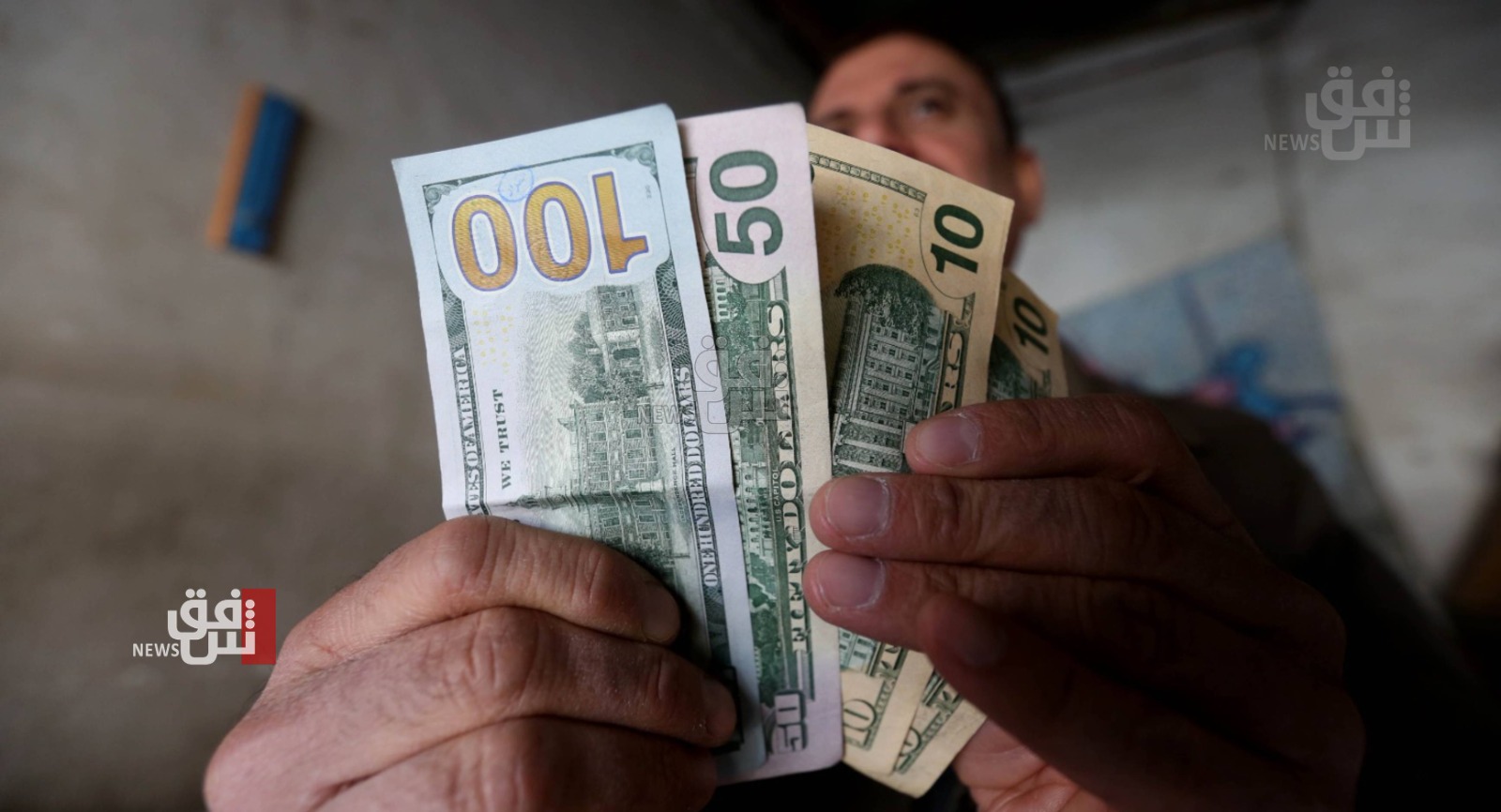
Hantoush told Al-Maalouma that “the central bank sells daily more than 200 million dollars as a level within 4 months, of which 25-30 million goes to the local market, while the remaining 170 million goes to foreign remittances for the purpose of import.”

He added, “The problem lies in the open credits through which funds are transferred, so that the goods enter Iraq or not, the Central Bank is not aware of it, and this is one of the biggest mistakes, as there is coordination and linkage between the Central Bank and the Remittance Department and the Customs Authority in most countries of the world.” The credit is opened and the money is placed in the credit trust account until the goods enter the country and a signal is given to the customs that it has entered the required specifications so that the amount is transferred from the documentary credits trust account to the executed documentary credits account.

Hantoush pointed out that “Iraq adopts direct accreditation so that the goods enter or do not reach the country, the competent authorities do not know whether the money has arrived or not, and this falls within the door of money laundering and corruption, and therefore Iraq urgently needs to link the customs authority with the central bank in order to legalize matters and prevent Transfer of funds in documentary credits except after the goods enter Iraq.

Almaalomah.me

BGG ~ The first step to recovery is admitting that you have a problem / and identifying the problem… Glad they are finally talking about it openly?!?

Posted in Uncategorized | Comments Off on An economist explains the nature of the defect in central bank sales and financial transfer

Officially.. Iran is offering the Iraqi dinar in its local banks

Officially.. Iran is offering the Iraqi dinar in its local banks

Officially.. Iran is offering the Iraqi dinar in its local banksShafaq News / The Governor of the Central Bank of Iran, Ali Saleh Abadi, announced on Wednesday the launch of the Iraqi dinar currency in Iranian local banks.

The governor said in a statement on the sidelines of the Iranian cabinet meeting that took place today, that a quantity of the Iraqi dinar entered the country yesterday and will be distributed starting tomorrow (Thursday).

He added that those wishing to perform the fortieth visit of Imam Hussein should go to local banks to provide the dinar currency, besides reviewing the exchange offices.

Saleh Abadi continued by saying that 25 local banks have been identified to offer the dinar currency, in order to avoid congestion in the exchange offices in the market.

Shafaq.com

Posted in Uncategorized | Comments Off on Officially.. Iran is offering the Iraqi dinar in its local banks

New details about the judicial investigation of the “leaks of al-Maliki”

New details about the judicial investigation of the “leaks of al-Maliki”

New details about the judicial investigation of the leaks of al-MalikiShafaq News / An informed judicial source revealed, on Tuesday, new details regarding the investigation opened by the Supreme Judicial Council, regarding the audio leaks of the leader of the State of Law coalition, Nuri al-Maliki.

The source told Shafak News Agency, “The investigations are still ongoing in accordance with legal and fundamental procedures, and this file has not been closed.”

And he indicated that “there are many specialized bodies participating in this investigation to reach the facts, and there is no pressure on the judicial authorities to close this file. Rather, there is a legal process that the investigation authorities are going through to announce the results in the near future.”

On the nineteenth of last June, the Supreme Judicial Council announced that the Karkh Investigation Court (in Baghdad) had received a request submitted to the Public Prosecution to take legal measures regarding the audio leaks.

In his speech, according to the recordings published by journalist blogger Ali Fadel, Al-Maliki touched on topics related to Sunni Arabs that were considered sectarian, in addition to describing the “popular mobilization” as “a nation of cowards”, while talking about arming clans and groups estimated at 20,000 fighters on the ground, asking him for support. Financially, logistically and legally, and he promised to provide this, in order to protect him from the leader of the Sadrist movement Muqtada al-Sadr, who wants to “slaughter everyone,” according to Al-Maliki.

The former prime minister also spoke about “financial and administrative corruption” in the PMF, and about the fact that the “Badr” organization, led by Hadi al-Amiri, receives financial salaries for about 40,000 people, while it does not have that number on the ground.

After these recordings, the leader of the Sadrist movement, Muqtada al-Sadr, asked al-Maliki to surrender himself and those who sought refuge from the corrupt to the judicial authorities.

The “Technology for Peace” team, the most famous Iraqi technical team, had confirmed the authenticity of the recordings attributed to al-Maliki, and said that they were “not fabricated”, noting in a report published earlier, that “despite the repeated denials of the owners of those recordings, and his claim I fabricated it by quoting and fitting excerpts from his voice to appear in this way, but the observations we made about the audio clip prove otherwise.

Shafaq.com

Posted in Uncategorized | Comments Off on New details about the judicial investigation of the “leaks of al-Maliki”

Soon… Al-Kazemi to America

Soon… Al-Kazemi to America

Soon.. Al-Kazemi to AmericaShafaq News / An informed government source revealed today, Tuesday, an upcoming visit by Prime Minister Mustafa Al-Kazemi to the United States of America.

The source, who requested anonymity, told Shafak News Agency, “Al-Kazemi will go to America, in order to participate in the meetings of the United Nations General Assembly, to replace the President of the Republic, Barham Salih.”

And he indicated that “the reason for Al-Kazemi’s departure instead of Saleh is to discuss political developments and repercussions on the security and economic levels, and the opinion of the international community on this crisis, especially since Al-Kazemi will meet with senior officials in the world.”

Shafaq.com

Posted in Uncategorized | Comments Off on Soon… Al-Kazemi to America

Al-Halbousi seeks to implement the scheme of three international figures in Iraq

Al-Ugaili: Al-Halbousi seeks to implement the scheme of three international figures in Iraq

Information / Baghdad… The political analyst Sabah Al-Ugaili considered, on Tuesday, the information revealed by former MP Mishaan Al-Jubouri about Parliament Speaker Muhammad Al-Halbousi regarding the formation of a militia force to implement the conspiracy plan to divide Iraq and turn it into a group of regions sponsored by US President Joe Biden and UAE President Mohammed bin Zayed Turkish President Recep Tayyip Erdogan.

Al-Ugaili said in a statement to “Information”, that “the Speaker of Parliament is a controversial and critical figure by not being late to respond to Biden, Bin Zayed and Erdogan, through his suspicious visit to Washington, Ankara and the UAE.”

He added, “What was revealed by former MP Mishaan al-Jubouri on one of the local channels confirms what we went to about diagnosing al-Halbousi in his involvement in the crisis by disrupting the work of Parliament and allowing the demonstrators to storm the legislative institution.”

Al-Ugaili explained, “Al-Halbousi is exposed to Sunnis and Shiites as a tool for implementing the scheme of Biden, Bin Zayed and Erdogan to turn Iraq into a group of regions and then divide it,” noting that “Al-Halbousi uses his powers as Speaker of Parliament to acquire advanced weapons to form a militia that is prepared for him and with the blood of Washington, Ankara and the UAE.”

The head of the Al-Watan Party, former MP Mishaan al-Jubouri, revealed a heavy-caliber piece of information on Monday evening, when he revealed that al-Halbousi was seeking to form an armed militia, indicating that he sought to bring arms from an international party.

Almaalomah.me

Posted in Uncategorized | Comments Off on Al-Halbousi seeks to implement the scheme of three international figures in Iraq

The Sadrist Movement Does Not Want To Solve The Crisis

Coordination Framework: The Sadrist Movement Does Not Want To Solve The Crisis For This Reason

Coordination Framework - The Sadrist Movement Does Not Want To Solve The Crisis For This ReasonEarth News / The leader in the coordination framework, Fadel Mawat, revealed today, Tuesday, the reason that prompts the Sadrist movement to not accept any solutions to the political crisis that Iraq has been witnessing for more than ten months.

Mwat said, in an interview with “Earth News”, that “the Sadrist movement does not want to solve the political crisis, and rejects all initiatives and solutions, as it rejects any dialogue, and this confirms and indicates that the Sadrist movement wants the Al-Kazemi government to stay for a longer period by not dissolving it.” the crisis”.

Mowat stressed that “the forces of the coordination framework are determined to form a new government, during the next stage, and the resolution of this file will be after the end of the fortieth visit.”

He indicated that “there is no intention to renew Al-Kazemi’s mandate, and the framework adheres to his candidate for prime minister, Muhammad Shia Al-Sudani.”

Earthiq.news

Posted in Uncategorized | Comments Off on The Sadrist Movement Does Not Want To Solve The Crisis

The defeat of the Iranian regime in Iraq

The defeat of the Iranian regime in Iraq

The defeat of the Iranian regime in IraqThe Islamic regime in Iran did not realize the extent of the Iraqi problem in which it is drowning. Tehran believed that any Shiite population around the world would be a fertile ground for the recruitment of loyalists to the Iranian regime, so that they would become Shiites who would engage in its intelligence, terrorist and militia wars, and that Iraq, with a Shiite majority, would turn into the largest country affiliated with the Iranian regime.

But Tehran’s calculations failed for several reasons that the Iranians did not take into consideration, the first of which is the huge Iraqi Shiite bloc. In Lebanon, for example, there are a million and a half Shiites, and in Bahrain hundreds of thousands, which means that the Iranian regime can allocate salaries to the majority of the Shiites of Lebanon and Bahrain, and finance a network of social services for them and educational, health and recreational institutions.

In return for Iranian offerings, Tehran expects the loyalty of these Shiites to the Iranian Supreme Leader, Ali Khamenei, so they do not skimp on Iran, and turn into “soldiers in the Wali al-Faqih Army,” according to the leader of the Lebanese “Hezbollah,” Hassan Nasrallah, and fight even their own compatriots to serve for Tehran.

The “Guardian of the Faithful Army” does everything that Iran asks of it, from the attempt to assassinate the writer Salman Rushdie in the United States, to throwing missiles from Lebanon at Israel to discourage it from disrupting the Iranian nuclear program, or to blackmail Iran’s neighboring countries, especially the Gulf states. This is in Lebanon and Bahrain.

But the situation in Iraq is completely different, where the Shiites number more than twenty million, which makes it impossible for Iran to allocate salaries to them or provide social services in exchange for their loyalty.

Moreover, the Iraqi state’s oil revenues are greater than Iran’s, which is what drives Iraqi leaders to race for power and use its revenues to establish rentier networks loyal to them and separate from Iran. To the conciliatory alliance with it only after his exit from power.

Iraq is superior to Iran in its Shiiteness. Iraq is the cradle of the Shiite sect, in which are the graves of six of the twelve imams: Ali bin Abi Talib, Hussein his son, Musa Al-Kadhim, Muhammad Al-Jawad, Ali Al-Hadi, and Al-Hassan Al-Askari. In the world of Shiites, Mecca leads the world’s cities in terms of its holiness, followed by Medina, then Najaf, where the shrine of Imam Ali, Karbala, the site of the killing of Hussein and his shrine and his brother Abbas. Najaf occupies a spiritual rank for Shiites, similar to the importance of the Vatican to Catholic Christians.

As for Iran, it is new to the Shiite sect, which was adopted by the Safavid Sufi groups to compete with the Ottoman sultans for the leadership of the Islamic world. In Mashhad in Iran, the shrine of Imam Ali al-Rida. In Qom, there is a shrine for an obscure Shiite figure whose history is disputed, Fatima, the sister of Ali al-Rida, who is called “Ma’sumah.” Granting Our Lady of infallibility contradicts the teachings of the Shiite sect, but the entry of the Iranians into the sect introduced with it many heresies, most of which the Arab Shiites still refuse to recognize.

Thus, in contrast to the weakness of Lebanon and Bahrain in front of Iran, numerically, financially and spiritually, Iraq surpasses Iran financially and spiritually, in addition to the fact that between Iraq and Iran a long historical feud that preceded Islam by centuries, which began since the Mesopotamian civilizations invaded Elam in southern Iran, then the Parthians invaded Babylon and its king, Nabunaid in The year 536 BC, followed by the invasion of the Sassanids in the year 274 AD. But the Arabs defeated the Sassanids in 651 and ruled Iran for nearly a thousand years, until the Safavids began forming the state of Persia, which expanded and became the Iran we know.

For this reason, it was easy for Saddam Hussein to incite the Iraqi Arab Shiites against the Iranian Shiites. Despite the sectarian similarities, the hostility and competition between the two civilizations has existed for more than two millennia.

Since the collapse of the Hussein regime in 2003, Iran has repeatedly tried to gather Iraqi Shiite leaders in various formats under the name “Shiite House,” and then tried to repeat the experience of the Lebanese “Hezbollah” by pushing generalized clerics to play leadership roles and establish parties and militias that still exist today and are called “militias.” Wilayat, meaning loyal to Khamenei.

Nevertheless, Iran’s militias in Iraq remained limited in popularity, at a time when organizations without capabilities, such as the successive militias established by the cleric Muqtada al-Sadr, outperformed them, for the sole reason that al-Sadr rode the wave of Iraqi patriotism.

Al-Sadr is distinguished from all the current Iraqi leaders that he and his father did not oppose Saddam Hussein from exile, but rather lived in Iraq before and after Saddam, which reinforced the impression of their patriotism much more than the exiled opponents such as Nuri al-Maliki, Haider al-Abadi, Hadi al-Amiri, the family of al-Hakim and the late Jamal al-Jarrah (Abu Mahdi). The engineer).

Today, Iran is carrying out all possible political maneuvers, simultaneous with the terrorism it exercises against its opponents, including the assassination of large numbers of them, with the aim of building a rule of iron and fire held by one of its Iraqi mercenaries. Tehran prefers that Maliki not be its man, because he suffers from megalomania and seeks only his personal interest.

Iranian violence and assassinations have not succeeded in silencing Tehran’s Iraqi opponents, who do not miss an opportunity without burning the Iranian consulate, Khamenei’s pictures in Iraq, or the statues of Qassem Soleimani. And last Monday, when confrontations erupted between Iran’s opponents on the one hand, especially from the Sadrist movement, and Tehran’s supporters, on the other, Iran’s opponents taught its allies a harsh lesson and outperformed them in fighting, burning the offices of the state militias, and winning popular sympathy and support, while Iran’s militias retreated and went It kills the Iraqis by stealth and through liquidations and executions, if we believe some of the reports carried by the Iraqi media.

Iraq exposed Iran and revealed that it is not a superpower as it imagines itself, but rather a ruling terrorist gang trying to intimidate the neighboring peoples and rule them with iron and fire. And Iraq showed Iran that doctrine is not superior to patriotism, and that the Iraqis will not retreat silently and turn into mercenaries, as some Shiites in Lebanon and Bahrain did.

Rawabetcenter.com

Posted in Uncategorized | Comments Off on The defeat of the Iranian regime in Iraq