The monetary impact of the dollar sale window

The monetary impact of the dollar sale window

Dollar sales through the central bank window are economically classified according to the Open Market Operations method. In Iraq, a year later, the political change was followed for the purpose of controlling the exchange rate, and it is an important part of monetary policy, as the exchange rate was considered a nominal fixer for the policy after losing the exchange rate. Interest is the ability to influence due to the structural imbalance in economic activity resulting from dependence on oil and the atrophy of investments and the loss of their flexibility to a large extent towards the interest rate. It controls the general rate of prices to a relatively large extent.

The monetary impact of the window plays an important economic role in the field of the duties of the central bank within its central goal in controlling inflation by influencing the monetary mass within the economy, and here the process indicates to us another structural defect, as the government’s monopoly on the main resource in the economy, which is oil and the proportions it constitutes It is high in GDP, with an average rate of more than 48%, its concentration in exports is 99%, and its contribution to budget revenues has reached an average rate of 92%, and therefore it is the largest contributor to the percentages of GDP improvements, and the issue here is that these government revenues achieve a growing ability to spend, Since the process is based on a barter between the Ministry of Finance and the Central Bank, the first party grants the dollar to the second party and it becomes a debt on it, so that the second party compensates it in dinars to return it to the Ministry of Finance.

And since the volume of output is dependent, according to the mentioned ratios, on oil and it is in a productive development, as the production capacity has reached five million barrels and it is hoped that it will reach eight in 2027 according to the ministry’s plans, and these expansions lead to improvements in output, and here is the most important reason for the growth of the monetary mass issued by the bank according to the equation mentioned, as these increases are added to the activity mainly through government spending.

The control of inflation rates lies in the procedures of the window, as it withdraws part of the cash mass by exchanging the window dollars for the street dinars, and this is a process (sterilization) of the effects of government spending, which is a very expensive process, and one of the factors that undermine capital accumulation.

We point out another structural imbalance, which is that the dollar’s ​​only source is oil, and the concentration ratio proves this, and then meeting the demand for the dollar internally to cover imports has no way except by withdrawing the government dollar, and this is what the window does, which means that it is important on the financial level, as it is The guarantor of the flow of goods is also important in monetary terms, as the bank was able to control inflation rates by withdrawing the inflationary impact of the continuous growth of the monetary mass as a result of government spending.

Here is the response to the calls to abolish the window on the pretext of the great corruption that accompanies its work, and the calls for (dollarization) without understanding its impact. The solution in the short term lies in the legal treatment of corruption in the window, but in the medium and long term, it is the treatment of the structural imbalance that imposes the existence of the window.

Alsabaah-iq.com

Posted in Uncategorized | Comments Off on The monetary impact of the dollar sale window

The exchange rate increases the flames of the market; Calls for treatment to lift the burden on the citizen!

The exchange rate increases the flames of the market; Calls for treatment to lift the burden on the citizen!

سعر الصرف يزيد لهيب السوق ودعوة لمعالجات ثابتة ترفع الأعباء عن المواطنThe rise in prices in the markets and the price of the dollar against the dinar is still the most important concern for the citizen and public opinion alike, and despite the package of reforms launched by the government to find immediate solutions to the price rise crisis, but the issue of the value of the dollar against the dinar remains the biggest obstacle in the way of market stability, which increased The size of the challenge is the court’s entry into the line of the case, after postponing its session, which it held last Tuesday, to the fourth of the same next April, to consider the exchange rate of the dollar.

At a time when a parliamentarian stressed the importance of the reform steps taken by the government, but indicated that they will not be sufficient unless they are followed by long-term fixed measures to reduce the burden on citizens, while an economic expert ruled out the possibility of reducing the price of the dollar against the dinar in the near coming period for several reasons.

Representative of the State of Law coalition, Muhammad Hassan Radi, confirmed that the government’s steps and the package it launched to address the price hike was a good behavior and an immediate solution that we commend, but it needs solutions and firm measures to control prices and ease the burdens of citizens.

Radi said in an interview with Alsumaria News, “The devaluation of the dinar against the dollar made the citizen lose a lot of the purchasing value of his monthly income, and what increased the burden on the people is the high prices as a result of the international economic crisis that occurred due to the Russian-Ukrainian war,” noting that “the steps of the government and the package Which I launched to address the rise in prices, especially in providing a financial grant to some groups of society, was a good behavior and a quick solution that we commend it.”

Alsumaria.tv

Posted in Uncategorized | Comments Off on The exchange rate increases the flames of the market; Calls for treatment to lift the burden on the citizen!

Calls To Cancel The Dollar Sale Window On The Pretext Of The Great Corruption That Accompanies Its Work

Calls To Cancel The Dollar Sale Window On The Pretext Of The Great Corruption That Accompanies Its Work

Independent Press AgencyThe Independent / Dollar sales operations through the window of the Central Bank are economically classified according to the Open Market Operations method, and they followed in Iraq a year later the political change for the purpose of controlling the exchange rate, which is an important part of monetary policy, as the exchange rate was considered a nominal fixer for the policy.

After the interest rate lost the ability to influence due to the structural imbalance in economic activity caused by dependence on oil and the atrophy of investments and the loss of their flexibility to a large extent towards the interest rate, on the other hand, the internal market became highly dependent on the outside and the goods and services supplied to it. The fixing of the exchange rate controls the general rate of prices to a relatively large extent.

The monetary impact of the window plays an important economic role in the field of the duties of the central bank within its central goal in controlling inflation by influencing the monetary mass within the economy, and here the process indicates to us another structural defect, as the government’s monopoly on the main resource in the economy, which is oil and the proportions it constitutes It is high in GDP, with an average rate of more than 48%, its concentration in exports is 99%, and its contribution to budget revenues is at an average rate of 92%, and therefore it is the largest contributor to the improvements in GDP.

The issue here is that these government revenues achieve a growing ability to spend, Since the process is based on a barter between the Ministry of Finance and the Central Bank, the first party grants the dollar to the second party and it becomes a debt on it, so that the second party compensates it in dinars to return it to the Ministry of Finance.

And since the volume of output is dependent, according to the mentioned ratios, on oil and it is in a productive development, as the production capacity has reached five million barrels and it is hoped that it will reach eight in 2027 according to the ministry’s plans, and these expansions lead to improvements in output, and here is the most important reason for the growth of the monetary mass issued by the bank according to the equation mentioned, as these increases are added to the activity mainly through government spending.

The control of inflation rates lies in the procedures of the window, as it withdraws part of the cash mass by exchanging the window dollars for the street dinars, and this is a process (sterilization) of the effects of government spending, which is a very expensive process, and one of the factors that undermine capital accumulation.

We point out another structural imbalance, which is that the dollar’s ​​only source is oil, and the concentration ratio proves this, and then meeting the demand for the dollar internally to cover imports has no way except by withdrawing the government dollar, and this is what the window does, which means that it is important on the financial level, as it is The guarantor of the flow of goods is also important in monetary terms, as the bank was able to control inflation rates by withdrawing the inflationary impact of the continuous growth of the monetary mass as a result of government spending.

Here is the response to the calls to abolish the window on the pretext of the great corruption that accompanies its work, and the calls for (dollarization) without understanding its impact. The solution in the short term lies in the legal treatment of corruption in the window, but in the medium and long term, it is the treatment of the structural imbalance that imposes the existence of the window.

Mustaqila.com

Posted in Uncategorized | Comments Off on Calls To Cancel The Dollar Sale Window On The Pretext Of The Great Corruption That Accompanies Its Work

It is time to raise the price of the Iraqi dinar against the dollar

It is time to raise the price of the Iraqi dinar against the dollar

Pratha News AgencySince the Iraqi government issued its decision in December 2020 to devalue the Iraqi dinar, controversy has been raging in Iraq about the feasibility of this step, its obligations, and the effects it may have. It is common in Iraq to describe the reduction of the price of the dinar against foreign currencies, and the US dollar in particular, as “raising the price of the dollar.” This is a mistake because the value of the dollar did not rise, but the value of the Iraqi dinar was reduced by a government decision. And if this procedure was justified when it was taken, then it has become a matter of reversing it, necessitated by several economic considerations, which we will discuss in this study.

Usually a country has its own currency that is commonly used in internal financial and commercial transactions, while foreign currencies are used in foreign exchanges. The country pegs its currency at a specific exchange rate against foreign currencies, which makes the value of the currency guaranteed. Of course, there is the exception of floating the currency, i.e. liberating it from any controls or interventions by the government or the central bank, a procedure that countries sometimes resort to to allow the prices of their floating currencies to fluctuate in line with the fluctuations of supply and demand for currencies in the market.

The devaluation of the currency is one of the monetary policy tools that countries resort to in some cases. In practice, this means that the authority concerned with managing monetary policy in the country takes an official decision to reduce the value of the local currency against foreign currencies, which automatically leads to an increase in foreign exchange rates, which explains the common confusion of many as they describe the devaluation of the currency as Increase in foreign exchange rates.

For example, if we assume that the Central Bank of Iraq took a decision today to devalue the Iraqi dinar, the result of this is to modify the dollar exchange rate from 1460.50 Iraqi dinars, which is its price at the time of writing these lines, to an amount equal to a higher amount in Iraqi dinars, let’s say 2000 Iraqi dinars, for example.

The authorities supervising monetary policy usually seek to maintain a fixed exchange rate for a currency in the exchange market. This requires the monetary authorities to intervene in the movement of exchanges in the exchange market by influencing the volume of supply or demand for foreign currency through the use of its foreign currency reserves, the US dollar, the euro, or others, to buy the local currency from the market at a specific price.

This leads to maintaining a constant demand for the local currency in order to prevent a decrease in the value of this local currency and, accordingly, to maintain the stability of its exchange rate. In this case, it is required that the government have sufficient reserves of currency or foreign currencies to enable it to make purchases. Hence, the ability of governments to support the demand for the local currency is linked to their possession of sufficient quantities of foreign currencies and the continued flow of these foreign currencies to their financial stock.

In December 2020, the Iraqi government resorted to devaluing the Iraqi dinar against the US dollar by 20%. To clarify the direct effects of that decision, it is sufficient to point out that the official exchange rate of the US dollar in the Iraqi market before this decision was 1189 Iraqi dinars, and after the new decision the value of the dinar declined and the exchange rate rose to 1458 against the dollar. This decision came after the Iraqi stockpile of foreign exchange decreased as a result of the significant drop in oil prices at the time.

Usually, the rationale for such monetary measures is that the downward slide of the local currency value curve raises the value of foreign cash reserves against the domestic currency. Thus, instead of the government printing more of its domestic currency notes, it can get more returns in local currency from its foreign exchange reserves.

At first glance, the result of this is a large growth overnight in the government’s stock of money, but this growth does not occur naturally, but is artificially created through monetary policies. For example, if we assume that the Iraqi government had $1,000 in its reserves prior to the devaluation of the dinar, that was equal to only 1,189,000 Iraqi dinars, while the value of this thousand dollars would rise after the devaluation of the Iraqi currency to 1,458,000 Iraqi dinars.

Accordingly, the Iraqi government’s coffers of domestic cash on paper will grow by 20%, while the volume of cash reserves in foreign currency remains constant without any change. This will create the false impression that the Iraqi government has become richer or has greater financial capacity than it was before the devaluation.

Undoubtedly, there are major positive macroeconomic effects of currency devaluation. A devaluation of the currency makes the country’s exports of that currency cheaper in international markets. Thus, this contributes, at least in theory, to an increase in the volume of exports of that country and thus to the strengthening of economic activity. In addition, the depreciation of the local currency against foreign currencies can make the devaluation country a more attractive and competitive tourist destination, which creates opportunities for foreign capital inflow. This could also attract foreign investors to invest their money in investment opportunities in this country that require them to bear lower costs to start projects compared to what they may incur to seize similar opportunities and projects in other countries.

However, although the devaluation of the currency may give the government the appearance of financial health and a prosperous economy, there are severe effects that will be reflected on the economy in general, unleashing a cascade of negative effects that will negatively affect all individuals and families that live in that state.

It is unlikely that the relative positive effects of currency devaluation will be realized in the case of Iraq, because its non-oil exports are very small, as it imports most of its food and commodities from abroad. As for oil, Iraq’s exports are constrained by adherence to the quota system set by OPEC, not to mention the existence of technical and structural constraints on its ability to produce and export. The destabilization of the security and political situation, or at least the perception abroad that Iraq suffers from insecurity and lacks political stability, continues to reduce the competitiveness of Iraqi tourism, especially non-religious tourism.

Perhaps the most significant and most severe effect of currency devaluation is that the decrease in the purchasing power of this currency reduces the demand for it. A holder of a banknote of 25,000 dinars, for example, will get a smaller amount in dollars, sterling, euros, or other, if he decides to spend it abroad, for example, if he decides to travel abroad for any purpose, whether tourism, recreation, or study. , or hospitalization, or something else. What is worse is that its owner will buy with it less goods or foodstuffs than he could have bought before the devaluation.

Thus, the local currency will no longer be desirable, which will lead investors or owners of capital to abandon it by exchanging what they have in the local currency and converting it into foreign currencies in order to reduce their losses and protect their capital. It will lead to a ‘herd mentality’ (herd mentality), which is based on the behavior of imitating others in what they do just because they do so, to the rush of capital owners to convert their money into foreign currencies, which may lead to additional declines in the value of the local currency, meaning that the effect of this will be similar to the fall of stones Dominoes arranged one after the other so that the fall of the first stone leads to the succession of falling of the following stones, and this is known in social and political sciences as the “domino effect”. In the end, the population will face economic inflation, which, if the state does not confront it by raising wage rates at rates equal to it, will eventually lead to negative life and economic manifestations such as low standards of life, weak ability to spend and purchase, and a contraction of economic activity.

Here we are asked a question: Should the Iraqi government re-value the Iraqi dinar? The position of the Iraqi Finance Minister on this issue is clear. He considers that there is no room for revaluation of the currency and that this is not possible and defies logic because of the repercussions and dire consequences that it will entail. But while revaluation may have negative effects, revaluation is actually possible and will lead to greater economic benefits. Below we will try to explore the advantages and disadvantages of revaluing the dinar at the present time.

Raising the value of the currency is in contradiction with the policy of devaluing it, because it will raise the value of the Iraqi dinar against foreign currencies, especially the US dollar. If the government takes a decision to raise the value of the dinar, we may return to an exchange rate equal to or close to the previous exchange rate, which is 1189 dinars to the dollar, based on the rate that the government will consider appropriate.

Taking such a decision will raise the purchasing power of individuals and families who have balances in Iraqi dinars, and the prices of imported materials in the local market will decrease, which will contribute to providing better quality and more diverse foreign products to the Iraqi consumer in the local market. With the decline in import prices and the rise in the value of the dinar, prices in the market will adjust in proportion to the new exchange rate, which will lead to a decline in inflation levels, without necessarily implying the return of the inflation level to what it was before the devaluation of the currency.

The increase in the purchasing power of the Iraqi consumer and the improvement in the quality and quality of goods available in the market will lead to greater demand for spending and make the economy in general in a more healthy position, which will make Iraq more attractive to foreign investors. Also, re-raising the value of the dinar will provide the Iraqi government with greater liquidity from foreign currencies, which will help it to pay off any sovereign debts owed by it to foreign countries, because the Iraqi dinar will buy a larger amount of foreign currencies, which will reduce the burden of debt repayment.

On the other hand, it is also important to take into consideration the downside of revaluation. The higher the value of the currency, the more expensive it becomes for foreigners, which will weaken the ability of foreign tourists or suppliers of goods and commodities to Iraq to buy Iraqi goods and services compared to what it was before the re-value of the dinar was revalued. This could lead to less foreign money flowing into the tourism and hospitality sectors, including hotels and restaurants, as well as prompting foreign countries to look for cheaper alternatives to Iraqi exports.

But if we take the reality of the Iraqi economy and the fact that the main commodity that Iraq exports is oil, then an analysis of the costs and benefits of re-raising the value of the dinar will lead us to an estimate of how this measure affects Iraq’s competitiveness in the global oil market. It is also important to take into consideration the developments of the war currently raging in Ukraine, and the resulting rise in oil prices. It is certain that the rise in oil prices alone will raise the level of the flow of US dollars into the Iraqi state treasury. But at the moment we do not have any information that would help us to arrive at an accurate estimate of the length of time that oil prices will remain high in the future. Perhaps the current rise in the price of oil in the world market will be short-lived and will recede as soon as a solution is reached between the two warring countries, or if OPEC decides to raise production quotas in order to reduce world oil prices.

The Iraqi government can consider keeping the situation as it is and not raising the value of the dinar. However, it seems that the economic benefits of revaluing the dinar far outweigh the policy of stalling at the current situation. Therefore, it deserves a closer objective look away from the tumultuous political wrangling. The timing of the dinar revaluation step is critical. The current time is very appropriate for that, especially in light of the significant rise in oil prices, the reluctance of OPEC to raise production quotas, and the continuation of the raging international conflict in and around Ukraine, which is putting pressure in the direction of high oil prices and high international demand for it.

Burathanews.com

Posted in Uncategorized | Comments Off on It is time to raise the price of the Iraqi dinar against the dollar

The Federal Court decides to postpone the lawsuit to raise the exchange rate of the dollar

May be an image of 1 person, money and text

Baghdadtoday.news

Posted in Uncategorized | Comments Off on The Federal Court decides to postpone the lawsuit to raise the exchange rate of the dollar

Foreign Minister: The government is moving towards creating an attractive environment for foreign investment

Foreign Minister: The government is moving towards creating an attractive environment for foreign investment

Baghdad – Mawazine News, Minister of Foreign Affairs, Fouad Hussein, confirmed, on Friday, that the government is moving towards creating an environment that attracts foreign investment.

And the ministry stated in a statement that Mawazine News received a copy of it, that “Foreign Minister Fuad Hussein met with Cuban Deputy Foreign Minister Ananyancy Rodrigues Camillo on the sidelines of the Antalya Diplomatic Forum,” noting that “during the meeting, they discussed strengthening bilateral relations, and consulting on how to deal with them.” With various issues and regional challenges, which Iraq calls for finding sustainable solutions to enhance stability in the region.

The Minister stressed the “importance of strengthening aspects of bilateral relations by diversifying the frameworks of consultation and joint cooperation, in a way that contributes to achieving security and stability in the region,” expressing ”
He pointed out that “the government is moving towards creating an environment that attracts foreign investment, providing means of developing promising investment opportunities for foreign companies to invest in Iraq, and joint coordination between the two countries.”

For her part, Anayansi Rodrigues affirmed “her government’s keenness to establish the best relations with Iraq because of its strategic importance in the Middle East, and that her country’s administration is keen to push forward bilateral cooperation with Baghdad in various fields in the next stage.” Ended 29 / h

Mawazin.net

Posted in Uncategorized | Comments Off on Foreign Minister: The government is moving towards creating an attractive environment for foreign investment

Deputy: Changing the exchange rate does not come with political speeches

Deputy: Changing the exchange rate does not come with political speeches

نائب: تغيير سعر الصرف لايأتي بالخطابات السياسيةSpecial – Mawazine News, the State of Law coalition confirmed, on Wednesday, that changing the dollar exchange rate does not come with political speeches.

The representative of the state of law, Thaer fearful, said in an exclusive interview with the agency (Mawazine News), that the issue of changing the dollar exchange rate is purely scientific, because any country exposed to an economic crisis resorts to solutions, including changing the exchange rate, internal or external borrowing, or increasing invisible taxes and others.

He added, “The exchange rate cannot be changed with a political discourse, and the Federal Court has the right to intervene in this file unless economic matters arise in the country, where there are economic variables.” Ended 29/R77

Mawazin.net

Posted in Uncategorized | Comments Off on Deputy: Changing the exchange rate does not come with political speeches

The Federal Court summons the Minister of Finance and the Governor of the Central Bank to appear in a special session on the exchange rate

The Federal Court summons the Minister of Finance and the Governor of the Central Bank to appear in a special session on the exchange rate

Shafaq News / The Federal Court decided, on Tuesday, to summon the Minister of Finance and the Governor of the Central Bank, to appear before him in a special session regarding the exchange rate of the dollar against the Iraqi dinar.
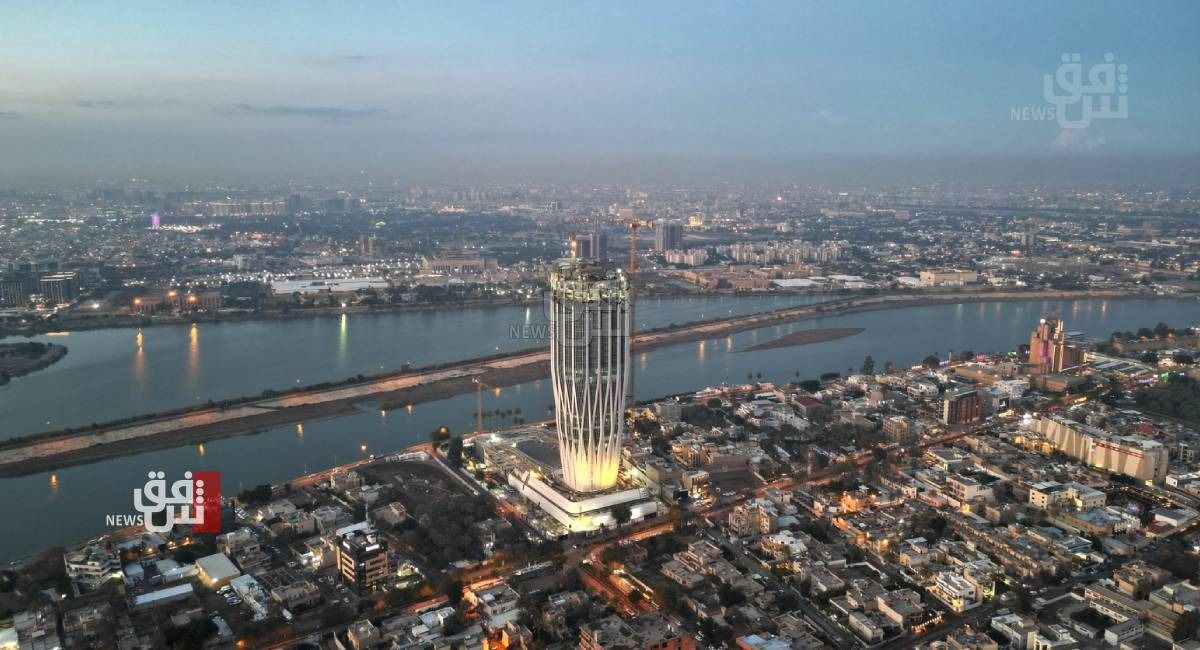
The Federal Court held its session regarding the lawsuit (32 federal) regarding raising the exchange rate and establishing the Sovereign Wealth Fund.

The court decided to seek the assistance of economic experts, Bassem Jamil and Abdel Rahman Najm, regarding the plea to raise the exchange rate of the dollar.

It also decided to postpone the pleading for 14/3 in a special session in which the Minister of Finance and the Governor of the Central Bank will attend.

It is noteworthy that the Central Bank of Iraq, on December 19, 2020, officially announced the amendment of the foreign exchange rate (the US dollar) to be 145,000 dinars for every $100, according to the state’s general budget for the year 2021 approved by the House of Representatives.

As a result, according to specialists, the annual inflation in Iraq has risen significantly, so that the prices of all materials and commodities in the Iraqi market have risen significantly, which has sparked a wave of strong resentment among the popular circles, as well as the objections of some interested in economic affairs.

Shafaq.com

Posted in Uncategorized | Comments Off on The Federal Court summons the Minister of Finance and the Governor of the Central Bank to appear in a special session on the exchange rate

Speaker Halbousi on Revaluing The Dinar

Speaker Halbousi on Revaluing The Dinar

Posted in Uncategorized | Comments Off on Speaker Halbousi on Revaluing The Dinar

Parliament continues its pressure to reduce the exchange rate

Parliament continues its pressure to reduce the exchange rate

دولة القانون : البرلمان يواصل ضغطه من اجل تخفيض سعر الصرفThe Independent – The representative of the State of Law Coalition, Aref Al-Hamami, confirmed that the government’s plan to raise the dollar exchange rate has failed and did not achieve the desired goals, pointing out that Parliament continues its pressure to reduce the exchange rate.

Al-Hamami said in a press statement, which was monitored by The Independent, that “the House of Representatives is making efforts to reduce the dollar exchange rate and return it to what it was in the past, provided that this decline is gradual so as not to harm the country.”

He added, “The coordination framework has not yet discussed the conditions that it will set for the next prime minister in terms of voting on it in exchange for ensuring that it reduces the dollar exchange rate in the local markets.”

And he indicated that “the dollar’s exchange rate has become the subject of public opinion, especially since the government failed in its plan, which was one of its goals to raise the exchange rate to achieve financial abundance and revive the economy, as it was unable to increase production, but rather caused severe damage to the citizen.”

Mustaqila.com

Posted in Uncategorized | Comments Off on Parliament continues its pressure to reduce the exchange rate