
Iraq announces self-sufficiency in wheat and dates, but loses 95% of its rice production in 6 years.
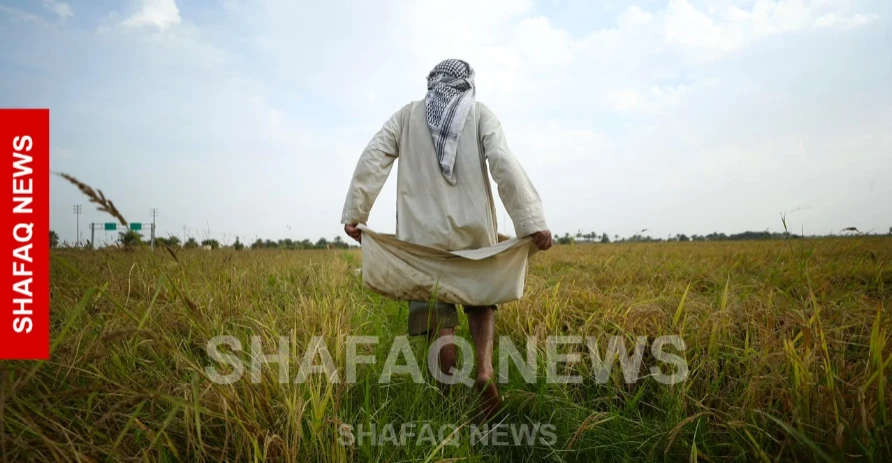 Statistical data from the Iraqi Ministry of Planning, released on Monday, showed that the country has achieved high levels of self-sufficiency in the production of wheat, dates and potatoes, compared to an almost complete reliance on imports to meet its needs for rice, which recorded the largest gap between local production and consumer needs, according to a report covering the period between 2017 and 2023.
The Ministry’s Statistics and Geographic Information Systems Authority stated in a statement received by Shafaq News Agency that the self-sufficiency rate for wheat reached 99.5%, while dates recorded a surplus of 178.5%, and potatoes 97% in 2023, noting that the surplus of date production exceeded 329.8 thousand tons.
In other crops, tomato production increased by 75.4% to reach 534.8 thousand tons during 2023, while the self-sufficiency rate for chicken meat reached 82.2%, compared to 58% for table eggs.
In contrast, paddy production witnessed a sharp decline during the period covered by the report, as it decreased from 265.9 thousand tons in 2017 to 12.6 thousand tons in 2023, a decline of more than 95%, while the self-sufficiency rate of it dropped to 0.6%, with an import gap of more than 2.06 million tons.
The report attributed this decline to water scarcity and the reduction of agricultural plans, which limited the areas planted with the crop, which depends to a large extent on the availability of water during its growth stages.
Paddy rice, known locally as rice, is an important food crop in Iraq, especially the Anbar and rice varieties that are common in local consumption.
However, the improved water situation prompted the Ministry of Agriculture to expand the areas designated for its cultivation in 2024, before announcing the lifting of restrictions on its cultivation within strategic crops in June 2026.
In contrast, dates represent one of the most prominent Iraqi agricultural crops with an export presence, as Iraq has a wide base of palm groves, and its products reach foreign markets.
Data from the Food and Agriculture Organization of the United Nations (FAO), in March 2024, showed that Iraq ranked fourth globally in date production for the year 2023.
Previous statements from the Ministry of Agriculture indicate that Iraq’s date exports ranged between 300,000 and 350,000 tons, with producers and exporters targeting markets in the region and other countries, taking advantage of the demand for Iraqi varieties.
Regarding the remaining crops, the report indicated that Iraq continues to rely on imports to cover part of its needs, with self-sufficiency rates reaching 15.2% for sesame, 16.7% for dried broad beans, and 41.8% for citrus fruits.
Shafaq.com