
The budget crisis between Baghdad and Erbil: Where does the obstacle to a settlement lie?
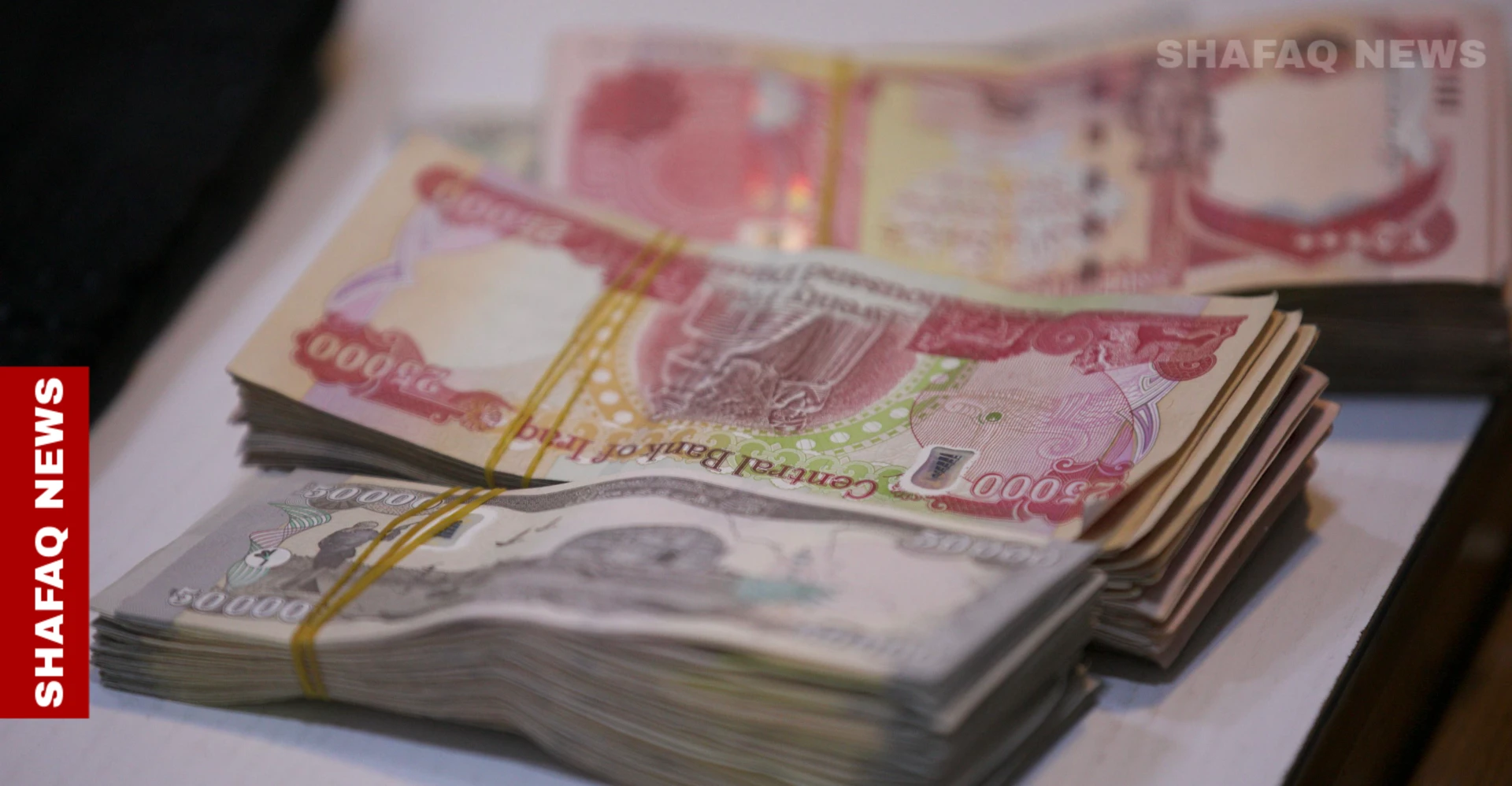 The roots of the financial and oil dispute between the federal government and the Kurdistan Region go back to 2005, while the beginning of 2014 marked a turning point when Baghdad cut off the region’s share of the budget, and the crisis continued due to disagreements over oil and non-oil revenues, salaries, and the mechanism for calculating financial entitlements.
Despite the frequent visits of technical delegations between Baghdad and Erbil, settlements continue to be hampered by differing positions on mutual obligations, amid calls for a legal and institutional mechanism to end the recurrence of the crisis with each annual budget.
Roots of the dispute
The roots of the crisis began with differing interpretations of the articles of the 2005 Iraqi Constitution relating to the management of oil and gas, and then deepened in 2007 after the Kurdistan Region passed a special law for oil and gas and signed contracts with foreign companies, which Baghdad objected to. Iraqeconomic update
The dispute reached a more acute stage in January 2014, when the federal government cut the region’s share of the budget, which amounted to 17%, due to the region’s independent export of oil through Turkey, without coordinating with the Iraqi oil marketing company “SOMO”.
Since then, the crisis has not been limited to the region’s share of public spending, but has extended to the management of oil resources, the delivery of revenues, payments to foreign companies, the financing of employee salaries, and the determination of non-oil revenues that must be transferred to the federal treasury.
In March 2023, an international arbitration ruling concerning oil exports through Türkiye halted exports from the region, further complicating negotiations on resuming exports and settling financial obligations between the two parties.
Accumulation of crises
In this context, Jamal Kojar, a member of the Finance Committee in the Iraqi Parliament, believes that the continuation of the crisis is due to the lack of seriousness in reaching solutions, as well as the failure to adequately adhere to the constitution and laws.
Kujer tells Shafaq News Agency that the roots of the problem go back to the period after 2003, when clear foundations were not laid to regulate the financial and administrative relationship between the federal government and the region, which led to the postponement and accumulation of disputes as resources expanded and laws changed.
He adds that the current disputes have political and administrative dimensions, and that leaving the files to the technicians and administrators away from political and personal interference could have contributed to resolving them.
Kujer points out that agreements reached by the two governments do not necessarily guarantee an end to the dispute, citing the 2023 agreement that was signed in the presence of the prime ministers, the oil ministers and relevant officials, before it was blocked within the House of Representatives, he says.
It is worth noting that Baghdad and Erbil signed a temporary agreement on April 4, 2023 to resume exporting the region’s oil via Turkey, with SOMO (State Oil Marketing Organization) handling its marketing, and the revenues being deposited into an account subject to federal audit.
However, the agreement did not end the disputes regarding the management of oil, revenues, and the region’s entitlements, despite the inclusion of arrangements related to these issues in the tripartite budget law, which was approved on June 12, 2023.
Share equation
Determining the region’s share of the budget stands out as one of the most contentious issues, given the differences regarding the adopted percentage, the method of calculating it, and the deductions that precede the distribution of funds.
In this regard, Erbil-based political analyst Yassin Aziz says that the disputes over the region’s share clearly date back to 2016, when the federal government, headed by Haider al-Abadi, moved to link the share to financial terms and conditions, without establishing a clear and transparent mechanism to ensure its stability.
Aziz explains to Shafaq News Agency that the debate is renewed with every draft budget, especially regarding the extent to which the region’s share is consistent with its population percentage, noting that Iraq’s census for 2024 determined the region’s population percentage to be about 14.14%, while the percentage proposed in the draft budget is 12.70%. BuyMaps
The region rejects this percentage, considering that it does not reflect its actual entitlements, while Aziz believes that the amount it receives may decrease to about 6.1% if the share is calculated after excluding sovereign and governing expenses.
One of the main points of contention revolves around whether the region’s share is calculated from total public spending or after deducting sovereign expenses, as well as the dispute over whether to adopt legal allocations or actual spending as a standard for disbursement.
The expansion of expenses deducted before distribution leads to a reduction in the final amount received by the region, even if the announced percentage remains constant, which makes the dispute related to the basis of calculation as much as it is related to the percentage of the share itself.
Oil and revenues
The oil file is no less complex than the budget, as positions vary regarding the quantities of oil that the region should deliver to SOMO, the actual production volume, local consumption, production and transportation costs, and the dues owed to foreign companies.
According to Aziz, Baghdad is demanding the delivery of 445,000 barrels per day, while the region’s current production does not exceed 265,000 barrels per day, including about 50,000 barrels consumed locally.
Shafaq.com