
Iraqi Foreign Minister from Washington: We do not want a new war in the region
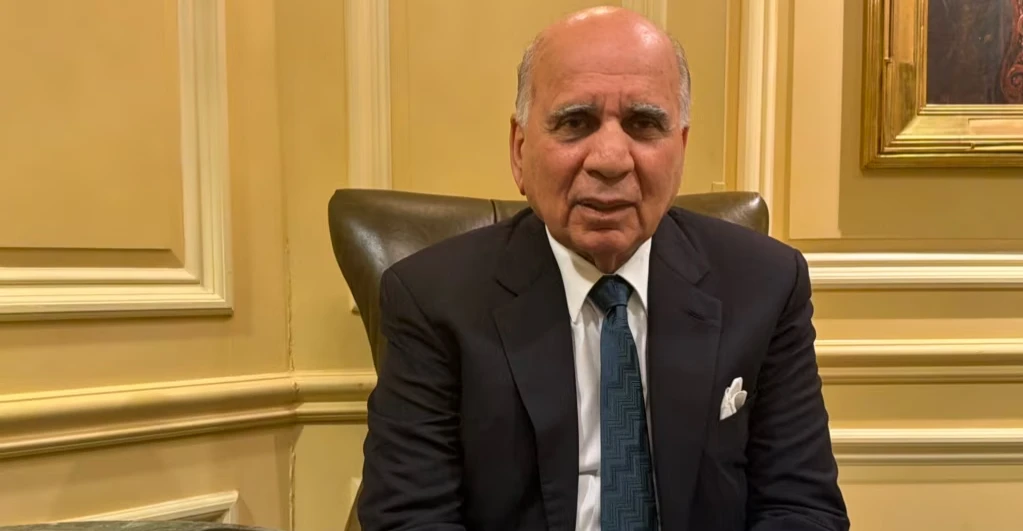 Iraqi Foreign Minister Fuad Hussein fears a renewed US-Iranian war and its impact on Iraq’s economy and security. In an interview with Radio Free Europe , he offered Baghdad’s readiness to mediate between Washington and Tehran, describing the end of the US military presence in Iraq as a “new chapter” that paves the way for strengthening relations further. Financialnews aggregation
In an interview conducted in Washington, D.C., and translated by Shafaq News Agency, Hussein said: “I believe that every war must end, and when we talk about the end of the war, this means returning to diplomacy. In fact, diplomacy should be the right channel to solve the problem.”
He stressed: “The current conflict in the Gulf, the war between the United States and Iran, must end. We have no alternative but diplomatic channels.”
In response to a radio question about whether he was worried about the US-Iran conflict and its spread in the region, Hussein said, “It has already become a wider conflict. It is not just a conflict between the United States and Iran. Iraq has suffered a lot, and we have, in fact, become a victim of this conflict.”
He continued: “Economically speaking, we are victims because of the closure of the Strait of Hormuz for a period of time, so we were unable to export our oil. Now, we are doing so, but we are still concerned about what is happening around the Strait of Hormuz.”
The radio station quoted Hussein as saying: “We too have been attacked. By the countries involved in the conflict several times. So we hope that this conflict will end, and that there will be peace in that region.”
After Hussein pointed out that he is in continuous discussion with the Iranian and American sides and with other countries, he said that Iraq “encourages all these countries to return to the negotiating table and resolve the problem through negotiation. When we were in New York, during the meetings of the United Nations General Assembly, there was a round of talks between the Iranian side and the Americans, and we were very pleased with those talks. But unfortunately, once again, they did not reach an agreement.”
When the radio station asked him whether Baghdad was ready to mediate directly between Washington and Tehran, the Iraqi minister said, “In order to mediate between the two parties, they have to ask for it, they have to bring up the idea with you, and in any case, if we are contacted, we are ready.”
He added: “I think Iraq is in an excellent position to arrange meetings between the two sides. But we need, first and foremost, for both sides to come closer to us.”
Commenting on US President Donald Trump’s announcement that the latest Iranian proposals were “not enough” and what Iraq’s vision is of what the two sides should do, Hussein said: “I do not want to interfere in the international politics of the United States and Iraq, but what we want is for these two countries to meet and resolve their problems through negotiation.”
Regarding Trump’s announcement that military operations could resume, and what that means for Iraq, Hussein explained, “I believe that these kinds of problems will not be solved through military action, and we do not support the idea of war, nor do we want to be part of a war.”
He added: “We, the Iraqis, have suffered greatly from wars, as the Iraqi government during the Saddam Hussein era was at war with many countries, and as a result of the wars, the Iraqi infrastructure was destroyed. There are thousands of Iraqis who were lost and killed during the war.”
He continued, explaining that “we can say that two or three generations were born during wars and were educated through a culture of war, and that is why we are fundamentally against war, and we do not like to wage war, and of course, we want to protect our country from war. That is why we do not want to be part of any war, and we reiterate that conflicts can be resolved through negotiation and not through the use of military means.”
Regarding the situation in the Strait of Hormuz and the fate of Iraq’s exports, Hussein said, “About two or three weeks ago, we were able to export our oil, so we are happy about that. But in reality, we are worried if the war starts again, and the Strait of Hormuz will be full of military operations that will prevent our oil exports, and this will create a big problem.” Iraqeconomic news
He pointed out that “the Iraqi economy depends heavily on income from oil sales, and if we are unable to export our oil, this means less income for our country, and this will create a big problem for us.”
Regarding the “historic moment” of the end of the American military mission in Iraq, Hussein said it was “a new page in our political situation, because the Americans were there from 2003 until 2011. Then they left, and because of the attacks of terrorists and groups, the Americans returned again.”
He added: “But it’s not just the Americans. Many allies returned to Iraq to fight and destroy the terrorist organization. We worked together. We disagreed together. We are, first and foremost, grateful to the American people, the American government, and the other allies who were with us when we needed them, fought together, and destroyed ISIS.”
He continued, “This is important in our history. And now they have left. This does not mean that we will have a different policy, a different relationship. We will strengthen our relationship with the United States, but in other different areas, of course: the economy, energy, and politics. But we also plan to start discussions with the American side, so that we can reach a security agreement at the bilateral level.”
He added that it is “a new chapter in Iraqi sovereignty, and also represents a new chapter in our relationship with the United States.”
Regarding Iraq’s ability to prevent armed groups from dragging it into another regional war, Hussein said, “There are negotiations currently underway between Prime Minister Ali al-Zaidi and those groups, and we have reached a good understanding with the various armed groups. They have announced that they will support the government’s plan. There are two other groups that have not announced this, so we hope that we can resolve this issue through talks with the leaders of these groups.”
Shafaq.com