
Between the “official and parallel” exchange rates, Iraq is losing billions due to the gap in the dollar exchange rate.
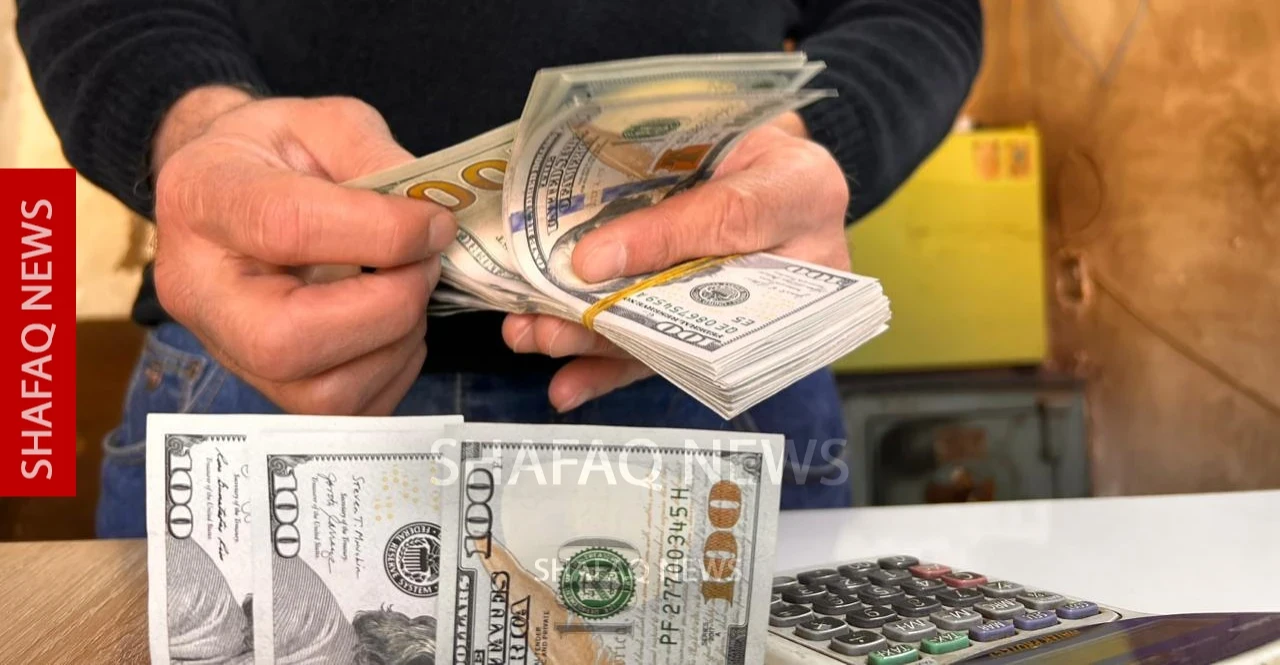 Economic experts believe that the gap between the official exchange rate of the US dollar in Iraqi dinars and the parallel market rate in exchange bureaus is causing significant financial losses in the Iraqi market. Businessnews alerts
Many questions arise in this context, including why the price of the dollar consistently outperforms the Iraqi dinar in a country that possesses good oil reserves and considerable quantities of gold in the Central Bank of Iraq.
In this regard, economist Ali Daadoush confirms that “the continued gap between the official and parallel dollar exchange rates does not necessarily mean a shortage of foreign reserves, but rather reflects a gap between the demand for dollars and the official channels available to obtain them, in addition to restrictions related to foreign transfers, informal trade, speculation, and traders’ expectations.”
Daadoush adds to Shafaq News Agency, “From an economic standpoint, the impact of this gap is greater than just a price difference; it raises the cost of imports that cannot pass through official channels, puts pressure on prices, and increases uncertainty for the producer, importer, and consumer,” explaining that “the gap creates an incentive to move from formal activity to informal channels.”
Daadoush believes that “narrowing the gap requires expanding the use of the dinar in local transactions, improving customs control and reducing informal trade, developing the correspondent banking network, as well as addressing delays in bank transfers and redrawing the customs tariff for some essential goods.”
He notes that “the parties benefiting from the continuation of the gap are the intermediaries, speculators, some informal exchange and trade activities, and entities able to obtain dollars at the official rate and then reprice or recycle them outside official channels.”
He pointed out that “not all exchange companies or traders can be considered beneficiaries of this, because a large part of the commercial sector bears the gap as an additional cost. Therefore, the main issue is not only addressing the parallel market rate, but also reducing the gap between the official transaction rate and the dollar rate that the economy actually faces, through reforming financing and trade channels, banking compliance and customs.”
Meanwhile, money changer Osama Al-Mushrifawi, owner of one of the outlets in Baghdad, explains that “among the reasons for the gap between the official and parallel exchange rate of the dollar is the government’s tendency to support only large companies, and there is no support for small companies or small traders,” indicating that “large traders invest money by buying goods at the official exchange rate and sell them at the parallel rate.”
He adds in his interview with Shafaq News that “owners of clothing and mobile phone shops and some importers do not obtain dollars at the official price, which pushes them to buy from the black market. The more the demand for dollars increases, the higher its value rises and the gap between the official price and the parallel price widens,” noting “the state’s lack of control over the black market and the creation of a transactional environment within Iraq that is only in Iraqi dinars.”
He points out that “the government’s procedures to find some possible solutions to reduce the value of the dollar are proceeding very slowly and are subject to certain considerations, so we find that the percentage of the dollar’s decrease is small, compared to the increase, as the parallel exchange rate reached 1600 during the past few days.”
Al-Mushrifawi suggested “creating a special platform for shop owners to import goods at the official price to reduce the process of withdrawing dollars.”
The difference between the official and parallel exchange rates poses a major challenge to successive governments in Iraq, none of which have been able to bridge this gap and reach convincing solutions to build confidence in the Iraqi dinar. This gap constitutes an economic challenge that confuses citizens and disrupts commercial activity in the country. Iraqtravel guides
Mustafa Akram Hantoush, an expert in financial and banking affairs, believes that “the unification of the exchange rate represents economic stability, but the parallel market represents the demand outside the platform, because the platform does not cover small traders.”
Hantoush adds to Shafaq News Agency that “there are thousands who do not own companies and do not have a way to import, and they need companies that sell at retail and are suitable, or the feature is given to exchange shops that import the orders of every merchant who has a proven location.”
He pointed out that “framing small traders within the framework of the Central Bank helps in reducing the parallel market, as there is a large trade with neighboring Iran that includes food, dairy products and others, but the Central Bank does not cover it.”
Hantoush confirms that “if bank credits break down, it is possible that the parallel market rate will decrease and become the official exchange rate.”
MP Amer Abdul-Jabbar had previously explained in a statement that “the Iraqi people are losing 27 billion dinars due to the price gap between the official exchange rate and the parallel exchange rate during the 1295 days that is the total period of the previous government’s work,” noting that the average losses amounted to 21 million dollars every 24 hours.
Abdul-Jabbar noted that the price difference between the official and parallel dollar rates, which reached 2,900 dinars per dollar in September, is the highest price difference since 2003, and that the average losses for the current government’s 50 actual working days amounted to $43.1 million per 24 hours.
Shafaq.com