
From a dinar that could buy the world… to a dollar that buys Iraq
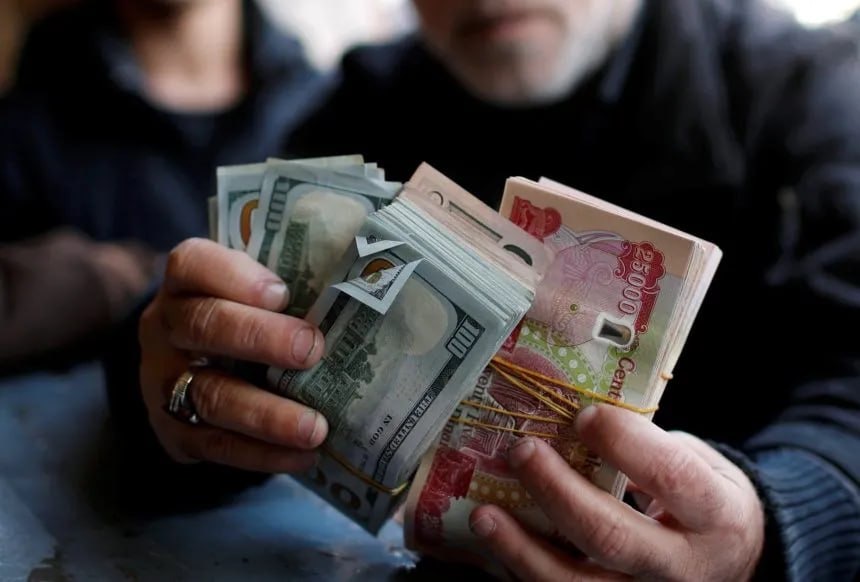 Today, the Iraqi stands before the history of his dinar as one stands before an old photograph of a house he once lived in; he contemplates its features, searches for something familiar, then returns to the present and finds that the place is the same place, but things have lost much of their meaning. IraqEconomic Reports
In 1975, one US dollar was worth approximately 0.295 Iraqi dinars, meaning one dinar was worth more than three dollars at the nominal exchange rate at the time. Today, one dollar requires approximately 1310 dinars at the official rate.
But the gap between the two figures is not just a collapse in the value of a banknote. It is a gap that encapsulates decades of wars, blockades, sanctions, unrest, and oil shocks, and at the same time reveals an economy whose structure has changed, but which has not succeeded in freeing itself from its chronic dependence on a single resource.
But behind this monetary collapse lies a bigger question: How did the Iraqi economy change so much that its currency lost so much of its value? Or rather: What happened to the economy that was behind it?
Currency is more than just a piece of paper with a number on it; it is a reflection of the economy’s ability to produce, of people’s trust in its institutions, and of its ability to transform its resources into sustainable value.
The dinar does not weaken in a vacuum.
When domestic production declines, the need for imports increases, and public spending becomes hostage to oil revenues, the currency becomes more vulnerable to pressure, no matter how full the state coffers may seem of dollars.
Herein lies the great Iraqi paradox: a country rich in resources, but which has not fully transformed its wealth into a capabilities-rich economy.
Oil remains the backbone of the country’s revenues and exports. World Bank data indicates that in 2025 it accounted for approximately 88% of government revenues and 91% of merchandise exports.
This means that a rise in the price of a barrel of oil not only increases state revenues but also expands its spending capacity, stimulates demand, and increases the need for imports in an economy whose non-oil production base remains limited. When oil prices fall, this cycle contracts, and its effects are felt in the budget, investment, employment, and income.
Here, oil moves from the screens of global markets into the lives of citizens. It impacts salaries, food prices, transportation costs, rent, education, and medicine.
Therefore, the citizen does not ask about the gross domestic product or the size of the reserves as much as he asks a harsher question: Where does my country’s wealth go if I do not feel it in my life?
The answer begins with the difference between rent and capital.
Oil can finance spending, but that spending ends when its effects wear off. However, if a portion of oil revenue is channeled into investments that boost productivity in industry, agriculture, transportation, energy, and finance, it creates productive capacity that endures long after the initial dollar is spent.
Here the function of oil must change: oil should not be the economy, but rather a means to build an economy that is less dependent on it. EconomicStability Analysis
The true strength of the dinar does not begin with the central bank’s screen, but with the factory, the field, the port, the small company, the bank that finances a productive project, and the university that produces skills needed by the market.
A state can defend an exchange rate, but it cannot defend it forever in the face of an economy that does not produce enough.
It can provide dollars, but it cannot make importing a permanent substitute for production.
It can spend billions, but billions only become development when they are converted into productivity, jobs, real income, and exports.
Therefore, comparing the 1975 dinar with today’s dinar is not a naive call to restore an old exchange rate. It reflects a larger question:
Why hasn’t the enormous oil wealth been transformed into a productive base that makes the economy less fragile, and the citizen less afraid of the movement of the dollar?
That is the real test.
It’s not about how much the dinar is worth against the dollar, but rather how much value the Iraqi economy can generate behind each dinar.
A rich country is not just one that owns oil, but one that knows how to use it to build an economy that can, one day, live without it.
A strong currency is not one that has an impressive number, but one that is based on a strong economy, stable institutions, real production, and confidence that does not need to look at the dollar screen every morning to feel reassured.
In the end, the value of the paper may break, but the story will only break when Iraq fails to transform its oil from a wealth that is spent into an economy that produces, and from an economy that produces into a future in which the Iraqi does not need to look at the dollar every morning to know the value of what he owns.
Rawabetcenter.com