
Syria opens the doors to natural uranium: 73 tons under the supervision of the International Atomic Energy Agency.
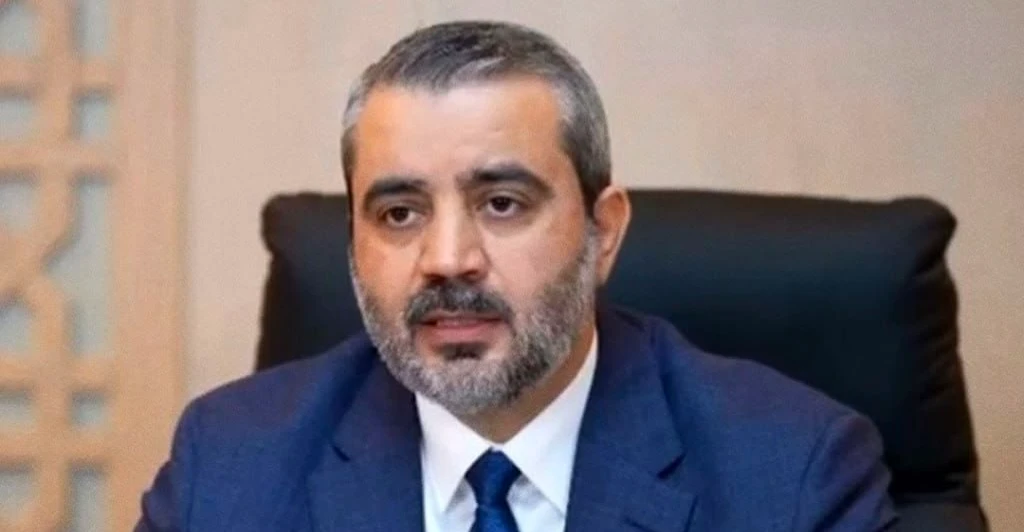 Syrian Foreign and Expatriates Minister Asaad al-Shaibani confirmed on Monday that Syria has opened the Deir ez-Zor site to the International Atomic Energy Agency, noting that 73 tons of natural uranium are now under the supervision and guarantees of the agency. Financialnews alerts
Al-Shaibani said, during a speech before the 70th session of the General Conference of the International Atomic Energy Agency, which was followed by Shafaq News Agency, that Damascus “opened the doors of the Deir ez-Zor site so that the Director General would be the first to set foot on its land on August 16, after nearly two decades of tight closure.”
He added: “We started, together with the agency’s experts, to lift the reactor remains from under the layers of reinforced concrete,” noting that Syria had taken the initiative to provide “all the design information and nuclear inventory reports that the Council had been demanding since 2011.”
He explained that “73 tons of natural uranium are now under the supervision and guarantees of the agency and will remain safe in Syria.”
Al-Shaibani said that “the new Syria that is addressing this heavy legacy is radically different from those who caused it,” stressing that “transparency for us is a firmly established sovereign approach and a permanent strategic decision.”
Al-Shaibani had announced that the Board of Governors, on September 9 and by consensus, had dropped the item of non-compliance and removed it from its agenda, considering that this step “closes an era that lasted 15 years to begin a new chapter that closes the page of doubt and opens the door to certainty and cooperation.”
He pointed out that Damascus had taken, on July 17, “an independent sovereign decision,” and had sent an official letter to the agency disclosing the presence of nuclear materials at an undeclared site, before signing a memorandum of understanding with the agency on the 29th of the same month, coupled with a roadmap for peaceful uses.
In a related context, Al-Shaibani said that the roadmap signed with the agency “has entered into actual implementation,” explaining that Damascus is looking forward to using nuclear medicine to treat cancer patients, and isotope technologies in agriculture, water resources and scientific research.
Al-Shaibani called for the Middle East to be free of nuclear weapons and other weapons of mass destruction, saying that Syria “provides a model to be emulated” and puts its expertise at the service of any country facing a similar challenge.
On the Israeli issue, Al-Shaibani accused Israel of continuing to “violate Syrian sovereignty and target our lands,” considering this a breach of the 1974 Disengagement Agreement and international laws, and called on the international community to exert “effective and firm diplomatic and international pressure” to stop what he described as systematic attacks.
He stressed that regional stability depends on Israel’s commitment to returning to the 1974 agreement and withdrawing completely to the lines prior to December 8, 2024.
Shafaq.com