
Iraqi factions have made their decision: sovereignty in exchange for weapons.
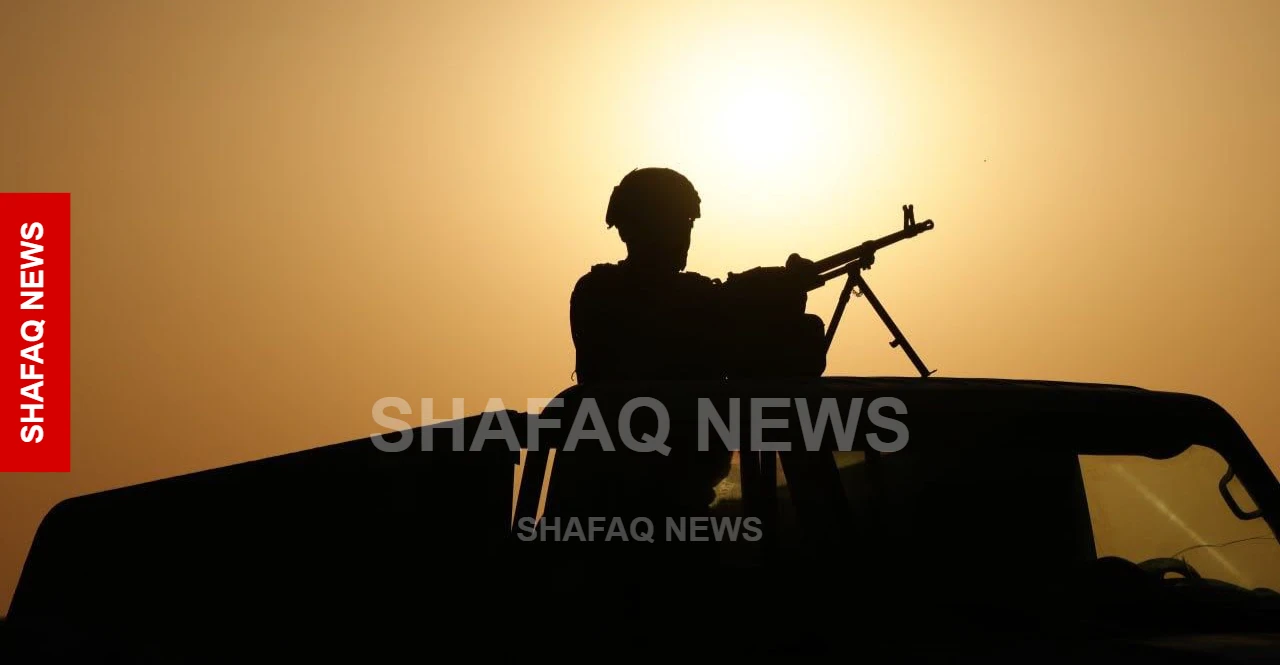 On Tuesday, armed factions in Iraq affirmed that the issue of restricting weapons cannot be separated from achieving full sovereignty for Iraq, while considering that the September 30th deadline represents a test of the seriousness of the United States and the international coalition in implementing their commitments to the Iraqi government. Dailynews subscription
The spokesman for the Sayyid al-Shuhada Brigades, Kazem al-Fartousi, told Shafaq News Agency that the issue of restricting weapons was discussed through a committee formed from the coordination framework and another from the resistance factions, indicating that the discussions witnessed the determination of priorities regarding this issue.
Al-Fartousi explained that “the principle put forward by the factions, which cannot be divided or negotiated, is that this weapon is in exchange for sovereignty,” stressing that they will not give up the weapon unless there is full sovereignty in the country.
He added that this requires protecting the Iraqi people, land, and skies, as well as national gains, in addition to protecting political decision-making and economic independence, noting that the ten demands put forward by the factions are “national and concern all of Iraq from north to south.”
He explained that these demands are not related to the interests of the resistance factions, but rather represent, in his words: “a definition of sovereignty, an expression of it, and how to achieve full sovereignty for this nation.”
Regarding the government’s ability to respond to these demands, Al-Fartousi pointed out that “part of these demands are included in the government program,” stressing that the issue is not only about whether the government responds or not, but is related to “where Iraq’s interest lies.”
He pointed out that the Iraqi government represents the executive administration of the Iraqi people and the country’s interest, while the coordinating framework, as the owner of the principle and political action, bears the responsibility of considering, establishing and engineering the work of the government.
Regarding the date of September 30, and whether it represents a date for resolving the issue of restricting weapons, Al-Fartousi explained that there is “confusion about dates,” and that this is the date of the withdrawal of coalition forces from Iraq.
According to him, this date represents “the first test of the seriousness of the Trump administration and the coalition in implementing their commitments to the Iraqi government,” noting that “after September 30, the discussion will begin about the issue of weapons, their presence and use.”
Al-Fartousi concluded his remarks by saying that some of the issues raised “need time,” while other issues “only need a political decision and do not need much time.”
Sources revealed two days ago that a preliminary agreement had been reached to hold a meeting that would include official government military and security parties, along with leaders from the coordination framework, representatives of the Popular Mobilization Forces, and representatives of armed factions, to discuss the mechanism for restricting weapons to the state, before the deadline of September 30, before it was postponed due to the absence of the Al-Nujaba Movement.
According to the sources, the meeting “does not mean reaching a final agreement on the mechanism for restricting weapons,” but rather comes within the framework of efforts to calm tensions and prevent any possible escalation, and to try to reach solutions and understandings regarding the process of restricting weapons.
A source told Shafaq News Agency last Sunday that the armed factions will not hand over their weapons on September 30, while also mentioning the second option being discussed in the negotiations, which is to regulate or freeze the weapons.
Two weeks ago, the coordination framework formed a tripartite committee comprising Mohammed Shia al-Sudani, Nouri al-Maliki, and Hadi al-Amiri, in order to contain the repercussions of restricting weapons to the state, especially after the media escalation and scaremongering witnessed in the Iraqi arena regarding this issue.
Over the past few days, the tripartite committee has held many dialogues and discussions with the factions concerned with the issue of restricting weapons.
It is worth noting that the state’s monopoly on weapons does not have the consensus of the Iraqi factions, as the Al-Nujaba Movement, Kataib Hezbollah, Kataib Sayyid al-Shuhada and other factions announced their refusal to give up their military capabilities on September 30, the date set by the Iraqi government, which coincides with the end of the international coalition’s military presence in Iraq, as these factions link the future of their weapons to the withdrawal of foreign forces.
The State Administration Coalition, which includes the most prominent Shiite, Sunni and Kurdish political forces in Iraq, had warned that any armed activity outside the framework of the state after September 30 would be dealt with according to the anti-terrorism law.
Shafaq.com