
Why have small denominations disappeared from the markets? Al-Zaydi’s advisor reveals the reasons.
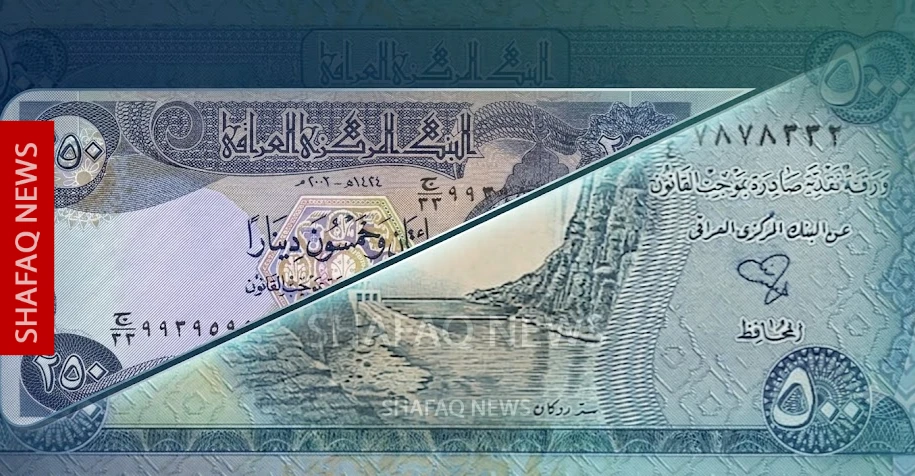 The Prime Minister’s financial advisor, Mazhar Muhammad Salih, revealed on Wednesday the reasons for the scarcity of small denominations of currency in Iraqi markets, stressing that this is mainly related to their paper nature and the high speed of their circulation, which leads to their deterioration within a short period of time.
Saleh told Shafaq News Agency that issuing currency in its various denominations is one of the core tasks of the Central Bank of Iraq, which is responsible for managing the currency and providing the necessary liquidity to meet the needs of economic activity and ensure the smooth flow of payments and the stability of cash transactions.
He explained that small denominations of currency represent the primary tool for conducting low-value daily transactions, which makes them the most commonly traded among citizens and markets, and therefore the most susceptible to wear and tear.
Saleh added that Iraq, unlike many countries that rely on coins for small denominations, still uses paper denominations, noting that the lifespan of these denominations does not exceed about one year according to international standards, due to the intensity of their use and their continuous transfer between hands, at a time when reliance on paper money remains high while electronic payment methods continue to grow.
He pointed out that the Central Bank has accurate indicators and statistics to measure the demand for different denominations of currency, and it is the first entity to sense the market’s need to issue or reprint any denomination, especially the small denominations, which are characterized by their rapid circulation compared to the large denominations, which tend to be more towards saving or hoarding.
The government advisor concluded his remarks by saying that “providing small denominations is not just about issuing currency, but also represents one of the indicators of efficient cash management, and contributes to ensuring the smooth flow of economic activity and the stability of the payments system,” stressing that “these denominations are continuously monitored by the Central Bank of Iraq.”
Iraqi markets are experiencing ongoing suffering due to the scarcity of small denominations of currency, such as 250 and 500 dinars, which puts citizens and shop owners in front of frequent difficulties in completing daily buying and selling transactions.
Sellers often resort to compensating for the shortage by giving alternative goods such as gum, tissues, or sweets instead of returning the change as in the markets, while others are forced to round up or down prices, which provokes consumer dissatisfaction.
Shafaq.com