
“Welcome to Baghdad”: Trump gives Al-Zaidi the key to regional de-escalation with Tehran
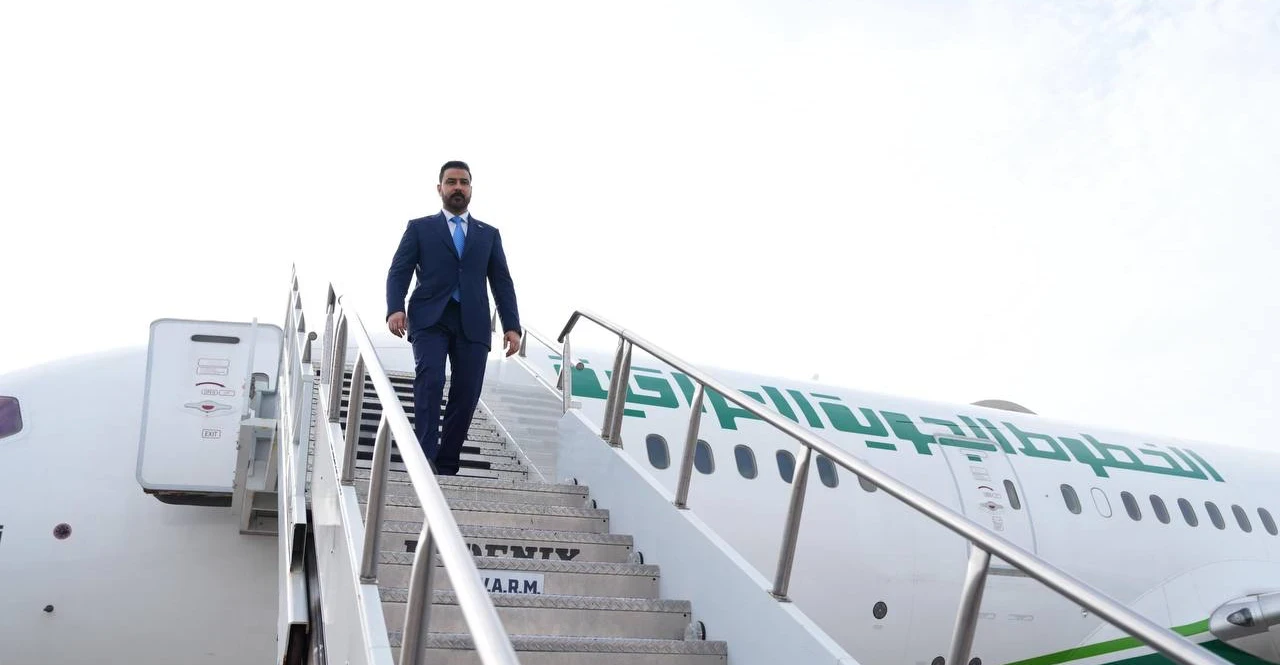 Iraqi Prime Minister Ali Faleh al-Zaidi will travel to the Iranian capital, Tehran, next Thursday, in his first regional stop after his recent visit to the United States. WashingtonNews Updates
The visit carries an Iraqi initiative that seeks to contribute to containing the escalation between Washington and Tehran and opening a path for dialogue between the two sides, amid questions about Baghdad’s ability to play the role of mediator in a crisis in which security, energy, nuclear program and regional influence files are intertwined.
Al-Zaidi’s visit comes after a meeting he had with US President Donald Trump in Washington, where the two sides discussed strengthening economic relations and attracting American investments to Iraq, in addition to security and political issues.
At a time when informed sources indicate that Baghdad is seeking to leverage its balanced relations with both sides to present itself as a platform for dialogue and not as an arena for conflict.
Iraqi Foreign Minister Fuad Hussein had confirmed that Baghdad was ready to play a mediating role between Iran and the United States, noting that any discussion of political or economic initiatives required first stopping the escalation, and that the priority at the present stage was to create the conditions for dialogue.
Hussein said that Iraq had previously played a role in bringing Tehran and Washington closer together, and that Baghdad does not carry an American message to Iran, but it can convey what it heard of opinions in Washington, in addition to presenting its Iraqi position.
Baghdad Dialogue Initiative
According to political sources, during his visit to Tehran, al-Zaidi will raise the possibility of Baghdad hosting a meeting that includes American and Iranian officials, directly or indirectly, with the aim of bringing viewpoints closer and opening political communication channels.
In this context, Iranian affairs expert Mehdi Azizi believes that the Iraqi Foreign Minister’s statements regarding mediation indicate that understandings were reached during Al-Zaidi’s visit to Washington about the possibility of Baghdad playing this role.
Azizi told Shafaq News Agency that “Trump gave this card to al-Zaidi in order to play a role in this battle,” considering that Iraq possesses qualities that are not available in other countries due to the nature of its relations with Iran and its location within the Arab world.
He adds that Iraq “understands the Iranian interior and the Iranian mood, and at the same time is present in the Arab environment,” pointing to the historical, social and religious ties between the Iraqi and Iranian peoples, and that this particularity may give Baghdad an opportunity to play a different role than any other mediator.
Azizi believes that Iraq, as an Arab country with a democratic political system and deep ties with Tehran, can be a party capable of communicating with various regional parties.
Limits of Iraqi mediation
However, Baghdad’s ability to play this role is not agreed upon by observers, as some researchers believe that the problem is not only related to Iraq’s possession of communication channels, but also to its ability to influence the positions of the conflicting parties. IraqEconomic News
In this regard, political researcher Nawal Al-Moussawi says that the issue is not related to Iraq’s ability to communicate, but rather to the challenges related to its internal situation, most notably the issue of Iranian influence within the country, which is one of the sensitive issues for the United States.
Al-Moussawi adds to Shafaq News Agency that the Prime Minister’s influence lies in his ability to conduct private dialogues with both sides and try to reach more flexible positions, noting that there are indications of the possibility of reaching unannounced understandings that would help in the success of any future negotiation process.
The dilemma of American commitment
In contrast, Saleh Al-Qazwini, a writer and researcher on Iranian affairs, focuses on the fact that the main problem in the crisis between Tehran and Washington does not lie in the identity of the mediator, but rather in the issue of implementing and adhering to agreements.
Al-Qazwini told Shafaq News Agency, “The problem is not the mediator, whether he is Iraqi, Pakistani, or Qatari, but the problem lies with the other party, which is the Americans, and their failure to abide by what is agreed upon.”
He refers to the experience of the 2015 nuclear agreement, considering that the Trump administration’s withdrawal from it constituted an example of a crisis of confidence between the two sides.
He adds that any future mediation needs to establish clear mechanisms and guarantees for implementation, and not just reach a political agreement, explaining that merely signing understandings without tools to compel the parties to implement them will not be enough.
Intermediary or carrier?
In a different interpretation, Haitham al-Hiti, a professor of political science at the University of Exeter in Britain, believes that talk of al-Zaidi being a mediator between Trump and Iran may be exaggerated.
Al-Hiti stated, in his interview with Shafaq News Agency, that Iran and the United States have direct and indirect channels of negotiation, as happened in Pakistan and the Sultanate of Oman, and therefore Al-Zaidi cannot be considered a mediator in the traditional sense.
He adds that al-Zaydi’s most realistic role may be to convey American demands related to the Iraqi file, explaining that Washington has become focused on reducing Iranian influence inside Iraq and opening the way for American investments.
He believes that al-Zaidi “may be a representative of American demands in Iraq,” and that his mission is to present new conditions that differ from the previous stage in which Iraq was an area of balance between American and Iranian influence.
Al-Hiti warns that Iran may not deal easily with these transformations, noting that Tehran may use its tools inside Iraq to confront any steps it sees as a threat to its influence, predicting that the next stage will become more sensitive.
Challenges within Iraq IraqEconomic News
In contrast, political researcher Ziad Al-Arar believes that focusing on a regional role for Al-Zaidi may be premature, stressing that the priority for the Iraqi government is to address internal issues.
Al-Arar told Shafaq News Agency that Trump’s admiration for al-Zaidi does not necessarily mean assigning him roles outside of Iraq, noting that the new government faces major challenges related to combating corruption, controlling weapons, strengthening the prestige of the state, and improving living conditions.
He adds that regional mediation requires a stable and influential state, while Iraq itself still needs internal efforts to reorganize its political and security situation.
He explains that Baghdad’s external role may be possible in some files related to Iran, especially after the talks that Al-Zaidi held in Washington, but he does not see that Iraq is in a position to carry out a comprehensive international mediation file.
Al-Zaidi’s visit to Tehran comes as part of a regional tour that also includes Türkiye, Saudi Arabia and Syria, and focuses on energy issues and bilateral relations, in light of the repercussions of the US-Iranian tension and its effects on the region’s security and oil supplies.
Shafaq.com