
Beyond diplomacy… Will Baghdad succeed in implementing the Washington agreements?
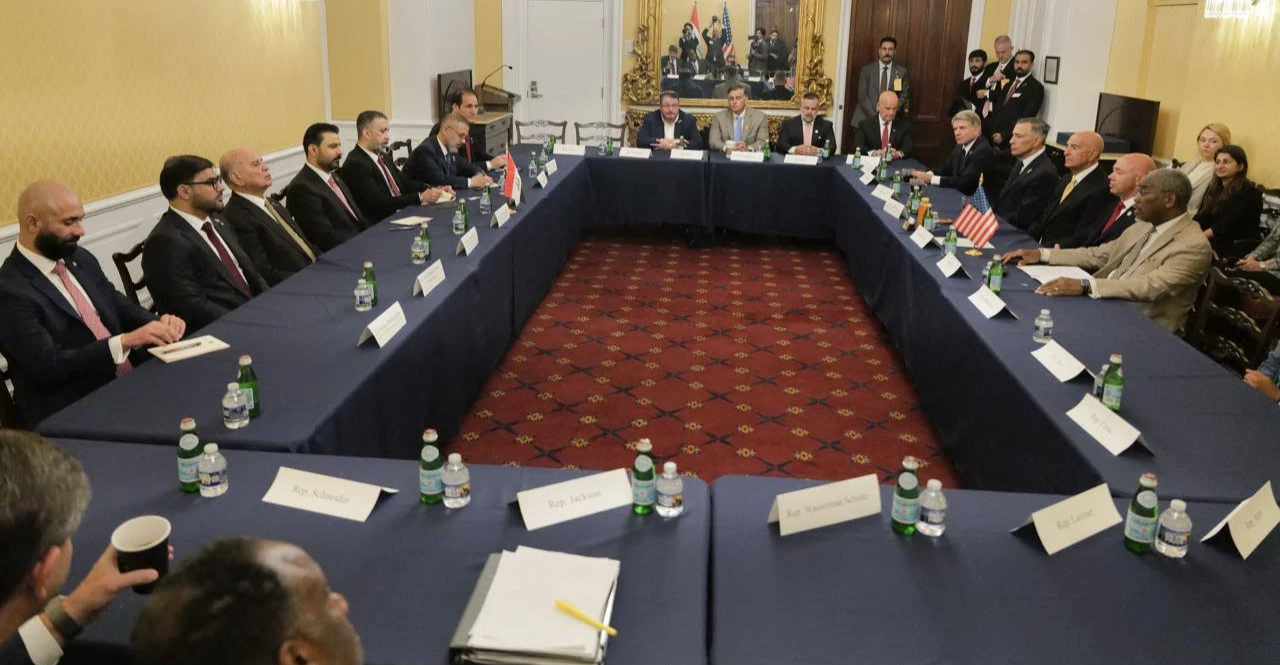 Iraqi Prime Minister Ali al-Zubaidi’s visit to the United States was not just a passing diplomatic meeting, but came at a pivotal time regionally and economically, in light of the challenges facing Iraq at the level of public finances, the need to attract investments, and the attempt to move from an economy that depends heavily on oil to a more diversified model based on production and investment partnerships.
The visit, which included a meeting between al-Zaidi and US President Donald Trump at the White House, had a main theme: shifting the Iraqi-American relationship from focusing on security issues to expanding economic and investment cooperation, with energy, oil, electricity, infrastructure, and technology issues at the forefront of the talks.
Both sides announced a shared desire to enhance economic cooperation, while Iraqi officials spoke of agreements and memoranda of understanding covering various sectors, amid questions within Iraq about the extent to which these agreements can overcome the experience of previous projects that, according to critics, remained within the framework of pledges and did not turn into tangible results.
Implementation Bet
In this context, Imad Al-Musafir, a political researcher close to the Coordination Framework (which brings together the ruling Shiite political forces in Iraq), believes that Al-Zaidi’s visit to the United States was of great interest within Iraqi political circles, especially in light of the circumstances the region is going through and their repercussions on the economic and social situation in Iraq.
The traveler told Shafaq News Agency, “Al-Zaidi’s visit was awaited by many across the Iraqi political spectrum, especially since Iraq and the region are witnessing major events that are reflected negatively or positively on services and social and living conditions.”
He adds that “what became clear from the visit is that it has an economic and investment character, and this is what Iraq needs at the present time,” noting that the importance of the agreements does not lie only in their signing, but in the government’s ability to turn them into real projects.
He explains that “signing memoranda of understanding and contracts is not the goal in itself, but rather the goal is to find something tangible on the ground, because some previous agreements had no practical effect and remained just ink on paper.”
The traveler affirms that “the Iraqi people hope that the Iraqi delegation in the United States will achieve what it aspires to,” noting that al-Zaidi’s economic background may help advance this path. MiddleEast news
He explains that “Al-Zaidi comes from an economic background, and we hope that this experience will be reflected positively on the Iraqi reality,” adding that any reform program that enjoys internal and external support can be an opportunity to improve the economic Situation.
Investment Environment
In the same vein, economic researcher Ahmed Eid believes that Al-Zaidi’s visit to the United States represents an important opportunity to rebuild the economic partnership between Baghdad and Washington, especially in the energy, investment and technology sectors.
But Eid confirms to Shafaq News Agency that its success will not be linked to merely signing agreements or memoranda of understanding, but rather to the government’s ability to transform them into real projects and investments implemented on the ground.
He says that the impact of the visit’s results on the living conditions and services of citizens requires a package of reforms, foremost among them restructuring the private sector to be a partner capable of attracting foreign investments, in addition to providing a stable and attractive investment environment, consolidating the rule of law, and restricting weapons to the state, which would enhance the confidence of international companies and encourage them to inject their capital into the Iraqi market.
He adds that combating corruption, holding those involved accountable, and recovering wasted funds are essential pillars for enhancing investor confidence, noting that investment needs, above all, an environment characterized by transparency, stability, and the protection of the law.
He points out that the government’s success in implementing these reforms, in parallel with the economic partnerships that may result from the visit, could gradually lead to improved services, job creation, and economic growth. He warns that the absence of these reforms could make the results of the agreements limited and unable to bring about tangible change in the Iraqi economy.
Energy is the Focus of Cooperation
For his part, Fahd al-Jubouri, a leader in the Wisdom Movement headed by Ammar al-Hakim, says that evaluating the results of the visit is linked to the content of the economic agreements that are being discussed, indicating that al-Zaidi obtained a political mandate from the coordinating framework regarding this path.
Al-Jubouri explained to Shafaq News Agency that “the economic agreements that will be signed, according to their contents, will reflect positively on the Iraqi reality and Iraqi society,” but he pointed out that judging their results requires waiting for the implementation phase.
He believes that “whether or not these agreements will be implemented is not something we can talk about now, and we cannot say for certain whether they will bring about a tangible change or not, but the clauses that were agreed upon regarding the energy fund, oil companies and others are things that we see as positive for the Iraqi people.”
He points out that Iraq is seeking to increase its oil production with the support of American companies, explaining that there is an anticipated economic strategy between Baghdad and Washington related to the entry of American companies into Iraq, especially in the oil and electricity sectors.
He affirms that “these two sectors represent some of the most important files in the agreements, and therefore they will have positive returns for the Iraqi people, pending the completion of the necessary political procedures.”
Partnership Transformation
Independent politician Iyad al-Janabi says that the nature of the Iraqi delegation accompanying al-Zaidi reflected the visit’s focus on the economy and investment, noting that the presence of businessmen and investors within the delegation represents a message that Iraq seeks to build economic partnerships with the United States.
Al-Janabi explained to Shafaq News Agency that “the visit was built on an economic partnership, and the delegation accompanying Al-Zidi is mostly businessmen and investors, and this is a message that Iraq is open to the United States in the fields of investment, energy and oil in particular.”
He adds that “the meeting was based on long-term economic partnerships, and this message was successfully conveyed by Al-Zaidi, which is that Iraq wants to be a strategic and economic partner of the United States.”
Al-Janabi believes that the importance of the visit also stems from the nature of regional transformations, noting that the United States views Iraq as an important country from a geopolitical and economic perspective.
He says that “Iraq has an important geographical location, and this is what is driving the United States to develop economic and strategic relations with it.”
What distinguishes the visit, according to Al-Janabi, is the Iraqi government’s attempt to define the nature of the relationship with Washington more clearly compared to previous governments, with which the relationship was, as he described it, “ambiguous.” MiddleEast news
He explains that Al-Zaidi’s statements during the visit focused on the future and avoiding reopening past files, considering that the Prime Minister tried to present a speech based on economic interests and partnerships.
economic positioning
Al-Janabi believes that Al-Zaidi’s economic background played a role in determining the priorities of the visit, saying that Iraq needs a strong economic partner to help it attract funding and investment.
Al-Janabi continues his remarks by saying that Iraq may need funding in the future from international institutions such as the International Monetary Fund or support from European and Gulf countries, considering that a strong partnership with the United States may facilitate this path.
He adds that “investment means the entry of hard money and dollars into Iraq, and this will revive the economy,” noting Iraq’s need to develop infrastructure, production sectors, and increase oil capacity.
He points to the importance of diversifying oil export outlets and not relying on a single route, indicating the need to develop oil infrastructure and transport lines.
Energy and oil files are at the top of Baghdad’s priorities during the next phase, as Iraq seeks to attract major American companies to participate in production, energy and electricity projects.
Previous reports had mentioned talks with American companies operating in the energy sector, in addition to plans to enhance the participation of foreign companies in the development of oil fields and electricity and gas projects.
The Iraqi government is also banking on attracting foreign investment to reduce pressure on public finances, at a time when heavy reliance on oil poses a major challenge to any attempt to diversify the economy.
Shafaq.com