
Why was Iraq absent from the Washington-Tehran negotiations? An American perspective explains the reasons.
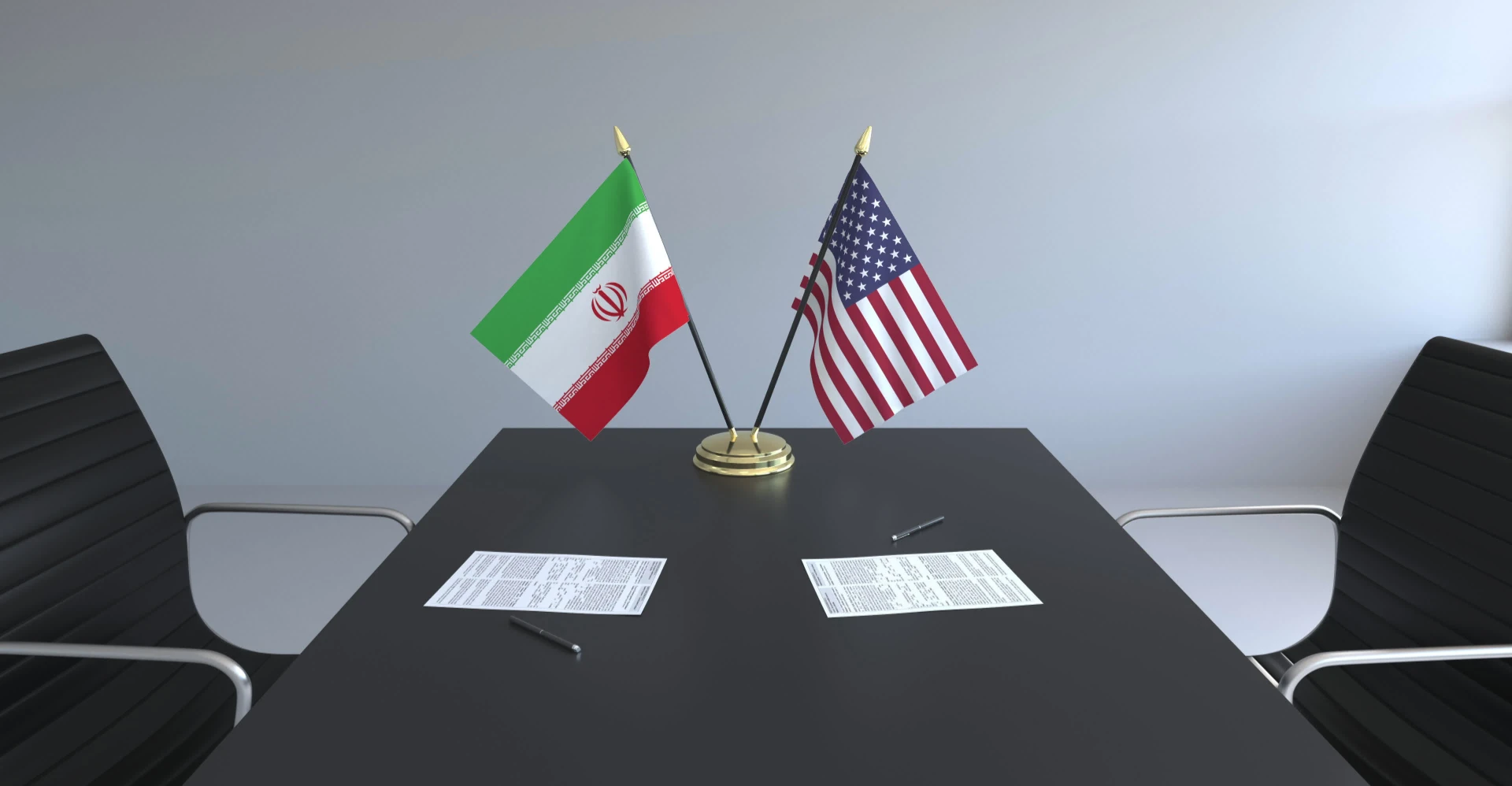 The Iraqi file was absent from the “American-Iranian” negotiations mediated by Qatar and Pakistan, which the American “Gulf International Forum” Institute saw as a reflection of the reality that Tehran’s influence in Baghdad now depends on political, geographical and social ties that negotiations cannot change.
According to the Gulf International Forum , when the United States and Iran returned to the negotiating table through Qatari and Pakistani mediation, Iraq was notably absent, as it was not a party to the negotiations, nor was it one of the issues that Tehran negotiated.
The institute explained, in a report translated by Shafaq News Agency, that Iran has been pushing for ceasefire arrangements on multiple fronts, including in Lebanon, but has explicitly refused to raise the issue of Iraqi armed factions, which are arguably one of the most important tools of its regional network.
He argued that overlooking Iraq leads to tempting conclusions, namely that Tehran has quietly come to accept a smaller role in Baghdad, or that the relationship no longer carries the same strategic weight.
However, the report argued that the reality indicates that Baghdad’s absence from the negotiations confirms that Tehran’s influence in Iraq depends on political, geographical and social ties that negotiations cannot change.
He pointed out that Iran’s silence reveals the evolving nature of its relationship with Iraq, adding that Tehran did not raise the issue of armed factions because its position in Iraq is based on relationships that extend far beyond any single militia or political issue.
He went on to say that, unlike the situation in Lebanon, where Hezbollah can be treated as an independent military actor, Iran’s influence in Iraq is rooted in a mix of geographic, political, cultural and religious ties, including shared borders, deep religious relations, extensive tribal and trade networks, and a political class that has been formed through decades of rapprochement.
According to the report, this distinction is necessary to understand the future of Iranian influence in Iraq, explaining that Tehran’s feeling that it did not need to defend its Iraqi factions during the negotiations does not mean that it has abandoned them, but rather proves that its position in Iraq transcends any particular armed group.
He also said that the absence of the Iraq file from the negotiations also reveals how Tehran is likely to respond to increasing American pressure, recalling that Washington made the issue of disarming and disbanding the factions a central demand of the new Iraqi government, pointing to American influence that was evident during the stalemate related to the formation of the government, as happened with the withdrawal of former Prime Minister Nouri al-Maliki from candidacy, and then the support of the Coordination Framework for the nomination of Ali al-Zaidi.
The report indicated that Iraq remains of great importance to Iran, which prevents it from risking a direct confrontation that it cannot afford. It added that instead, Tehran has incentives to avoid actions that would provoke further American pressure, and relies more on political and economic channels that are less susceptible to direct American confrontation.
He explained that the armed factions represent another indicator of how the Iraqi-Iranian relationship is changing, indicating that Tehran and the factions are aware of the limits of direct confrontation with Washington, especially in light of the increasing American pressure on Baghdad.
In this context, the report noted the difficulty of engaging in a direct confrontation with the United States, which prompted several factions, at least rhetorically, to move towards disarming and dissolving themselves, although the mechanism for implementing this remained deliberately undefined.
He stressed that this should not be confused with weakening Tehran’s position, explaining that reducing the military aspect of the relationship allows it to evolve from a relationship focused on armed activity to a more sustainable relationship based on political organizations and institutional influence. He pointed out that the decline in the role of the factions, rather than reducing Iran’s influence, may make this influence more difficult for Washington to contain.
The report stated that the broader picture of the negotiations indicates that Iraq’s relationship with Iran is developing within an environment not controlled by Baghdad, emphasizing that Washington still retains significant influence over the Iraqi political leadership, while Iran has built networks of influence that go beyond relying on armed factions alone.
He pointed out that even if these groups change their behavior or are officially dissolved, their political wings will remain part of the Iraqi electoral landscape, thus maintaining a major channel for Iranian influence within state institutions. He added that Tehran’s influence has become an integral part of Iraqi political institutions, which makes dismantling this influence by Washington more difficult.
The report concluded that while the Iraq file may have been absent from the negotiations, it remained central to their repercussions, indicating that while this does not point to a fundamental change in the Iraqi-Iranian relationship, it reveals an accelerating shift in how Iranian influence operates within Iraq.
Shafaq.com