
“It’s no longer a separate issue”: Washington is reshaping its priorities in Iraq.
 Diler Khalaf Osman, a researcher in international relations and Middle Eastern affairs at the University of Tennessee, confirmed on Monday that Washington’s decision to merge the Iraq and Syria files under the supervision of a single envoy reflects a fundamental shift in the American strategy towards the region.
Osman told Shafaq News Agency that this move confirms that the United States no longer deals with Iraq as a separate or isolated case with its internal particularities, but rather as part of a broader regional security and geopolitical architecture.
He added that this trend represents a shift from the American approach that has prevailed since 2003, which focused on democracy and development, to a regional approach that views Iraq from the perspective of regional balances, with the aim of reducing Iranian influence and redirecting the geopolitical course of the two countries in a way that serves American interests.
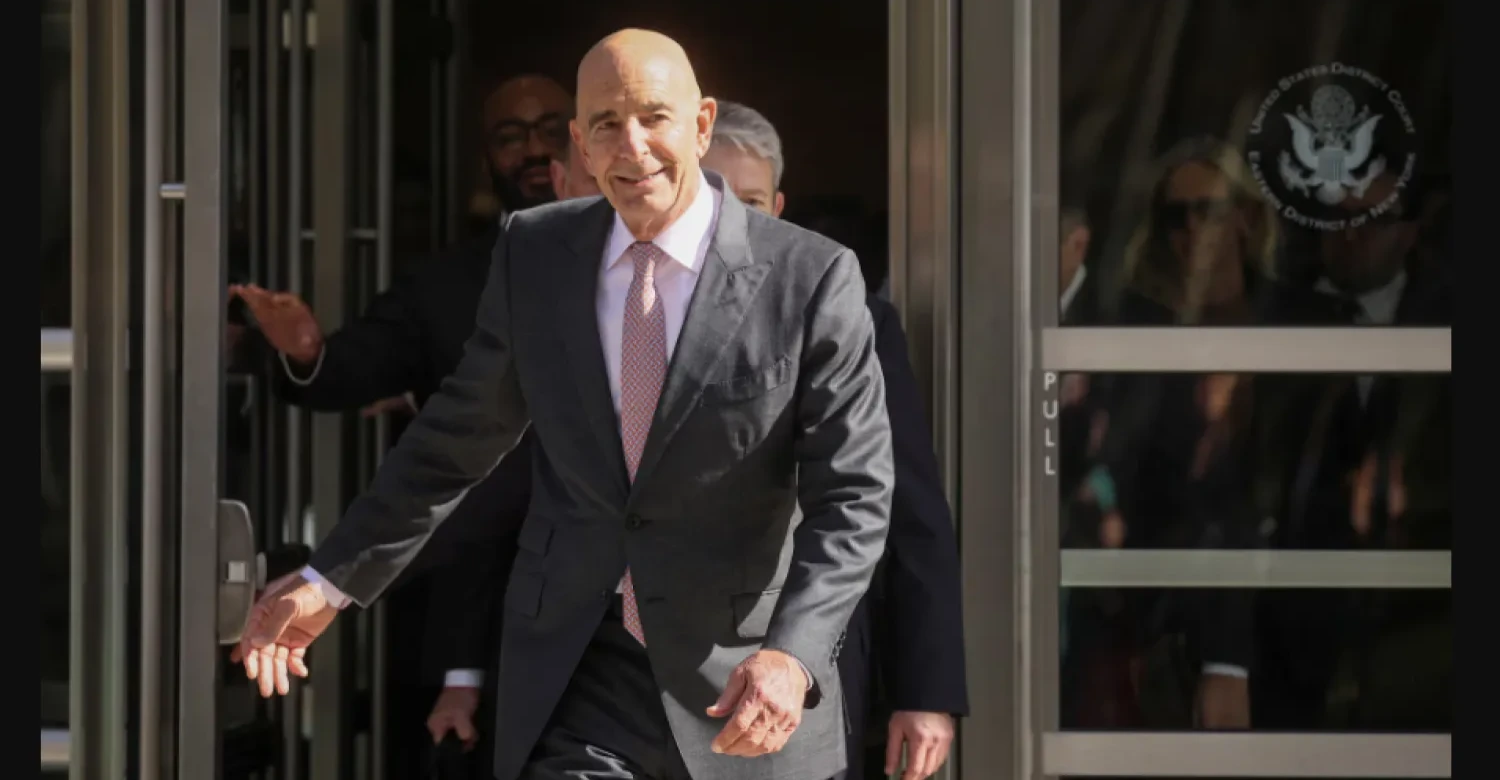
The researcher pointed out that the background of the new envoy, Tom Barrack, and his ideology related to the idea of “America First” reveal the features of his mission, as he does not seem concerned with the files of democracy, federalism and political pluralism as much as he is concerned with strengthening the central state and its security capabilities, to ensure that it does not pose any threat to American interests, and to enable it to manage its security itself in the long term, which reduces the need for a direct American military presence.
Osman predicted that Barak’s sharp style and his quick and influential decisions, which characterized his management of the Syrian file, would be reflected in his handling of the Iraqi file, indicating that the challenges Barak will face in Baghdad will be more complex and intertwined compared to the Syrian file, given the multiplicity of power centers and their distribution among different political components and entities in Iraq, without a single entity or organization controlling the state completely.
He considered the regional challenge in Iraq to be the biggest obstacle. While Turkey, Washington’s ally, was the most influential power in post-Assad Syria, Barak faced deep and multifaceted Iranian influence in Iraq that would undermine his objectives, making his new mission a real test of Washington’s ability to reshape the balance of power in a highly fragmented arena.
On Sunday, US President Donald Trump announced the appointment of Washington’s ambassador to Ankara, Tom Barrack, as a special presidential envoy to Iraq and Syria. Trump said in a post on the Truth Social platform that “Tom Barrack will continue his duties as ambassador to Turkey and will perform his new duties with the full support of the State Department.”
US Secretary of State Marco Rubio confirmed last Saturday that Barak will continue to play a leading role in the Syria and Iraq files within President Donald Trump’s administration, despite the end of his term as special envoy to Syria.
Barak, the US ambassador to Turkey, took over the role of special envoy to Syria in May 2025, in parallel with the Trump administration’s moves to reformulate its approach to the Syrian issue and lift sanctions on Damascus, in light of Turkey’s growing role in the Syrian issue.
Rubio’s statements give an official dimension to the broader role that Barak has begun to play practically in Iraq as well, after he emerged during the past period at the forefront of American communications with Baghdad, following the failure of Mark Savaya to officially assume the position of Special Envoy to Iraq.
Shafaq.com