
Iraq’s oil discounts: A forced maneuver or a strategic loss?
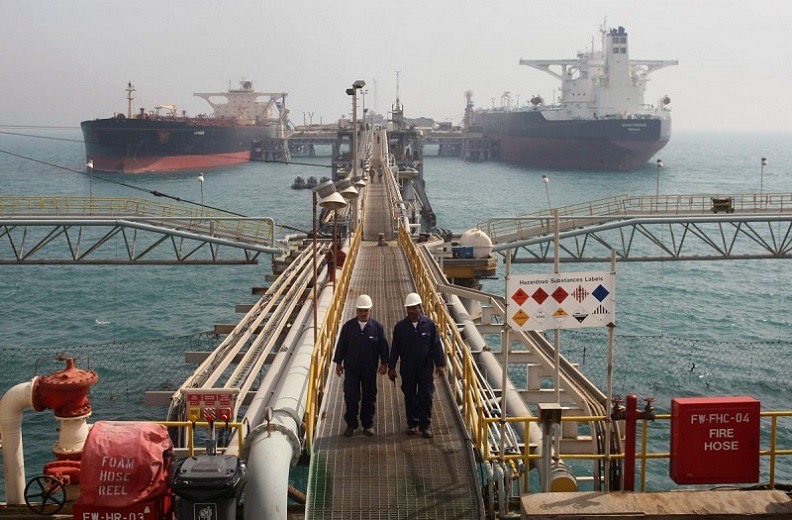 In a market supposedly governed by cold, hard numbers, Iraq has delivered a bombshell that has turned the pricing rules upside down. Discounts exceeding $30 per barrel on Basra crude are not mere temporary reductions, but a clear indication that the oil market is no longer driven solely by supply and demand, but by risk, conflict, and influence. What is happening today is not traditional competition between producers, but a race for survival in an environment where safety margins are eroding and the definition of “fair price” is being redefined under geopolitical pressure. While prices are rising globally, Iraq has chosen to swim against the tide, a bold move that raises a crucial question: Are we witnessing a clever maneuver to seize markets, or the beginning of an economic hemorrhage that will be difficult to stem?
Under intense geopolitical pressure, Iraq, which relies on oil to finance more than 90% of its budget revenues, finds itself facing a stark dilemma: either maintain the flow of exports, even at low prices, or risk losing markets due to the soaring shipping and insurance costs associated with sensitive waterways like the Arabian Gulf. In this context, the discount of approximately $33 per barrel, equivalent to roughly 30% to 35% of an oil price hovering around $100, can be interpreted as a tool to compensate for risks that buyers are no longer willing to bear without compensation.
However, this policy, despite its tactical rationale, carries a direct economic cost. If we assume that Iraq exports approximately 3.3 million barrels per day, a discount averaging $30 translates to a loss of nearly $99 million daily, or more than $36 billion annually if this equation persists for an extended period. These figures are not theoretical; they practically represent a reduction in the state’s financial capacity to fund salaries, support services, and implement investment projects.
International experiences provide clear examples of this type of “forced pricing.” During the Western sanctions imposed on Russia after 2022, Moscow was forced to sell its oil at discounts that at times reached $25–$35 per barrel compared to Brent crude, leading to a decline in its oil revenues of nearly 20%, despite continued export volumes. Although Russia was later able to gradually rebalance its economy, this required time and a restructuring of its export networks and trade alliances.
Iraq’s situation differs in terms of infrastructure and logistical flexibility. While some countries have multiple export outlets or alternative pipelines that reduce their reliance on geographical bottlenecks, Iraq remains more vulnerable to fluctuations, limiting its room for maneuver. This makes price cuts less a strategic choice and more a reflection of pragmatic constraints. The most profound impact is seen in the general
budget.
If the budget is based on an estimated price of around $70 or $80 per barrel, actual sales at much lower levels will create a financing gap that could exceed 15% to 25% of total expected revenues, forcing the government to choose between increasing the deficit or reducing spending. In an economy where domestic activity is heavily dependent on government spending, any fiscal contraction will directly impact growth rates and employment opportunities.
Who profits from discounts? A look at market behavior reveals that
large discounts don’t go unnoticed. Refineries, particularly in Asia, and especially independent refineries in China and India, are among the biggest winners, as they obtain crude oil at prices lower than their competitors, thus boosting their profit margins. However, this doesn’t necessarily translate into a significant increase in demand. In many cases, the effect is limited to redirecting purchases towards cheaper crude rather than creating new demand.
This means that Iraq may succeed in retaining its customers, but it doesn’t necessarily guarantee expanding its market share, a crucial distinction in assessing the viability of this policy. Are discounts beneficial or detrimental?Despite all the above, this policy cannot be described as an outright loss. Losing markets or disrupting exports would have cost Iraq far more, not only in terms of revenue but also in terms of long-term loss of commercial confidence. Maintaining the flow of oil, even at a lower price, means preserving contractual relationships and supply chains, a critical element in a competitive market.
In conclusion , Iraq’s oil discounts reflect a clear economic paradox: they are simultaneously a short-term rescue tool and a long-term drain. Their success is measured not only by the volume of exports they maintain, but also by Iraq’s ability to exit them in a timely manner. The market may understand the discount as an exception, but it quickly comes to treat it as the norm if it persists, at which point restoring the true value of the oil becomes more difficult and costly.
Rawabetcenter.com