
The Pentagon to the Europeans: You deal with Russia and leave Iran to us.
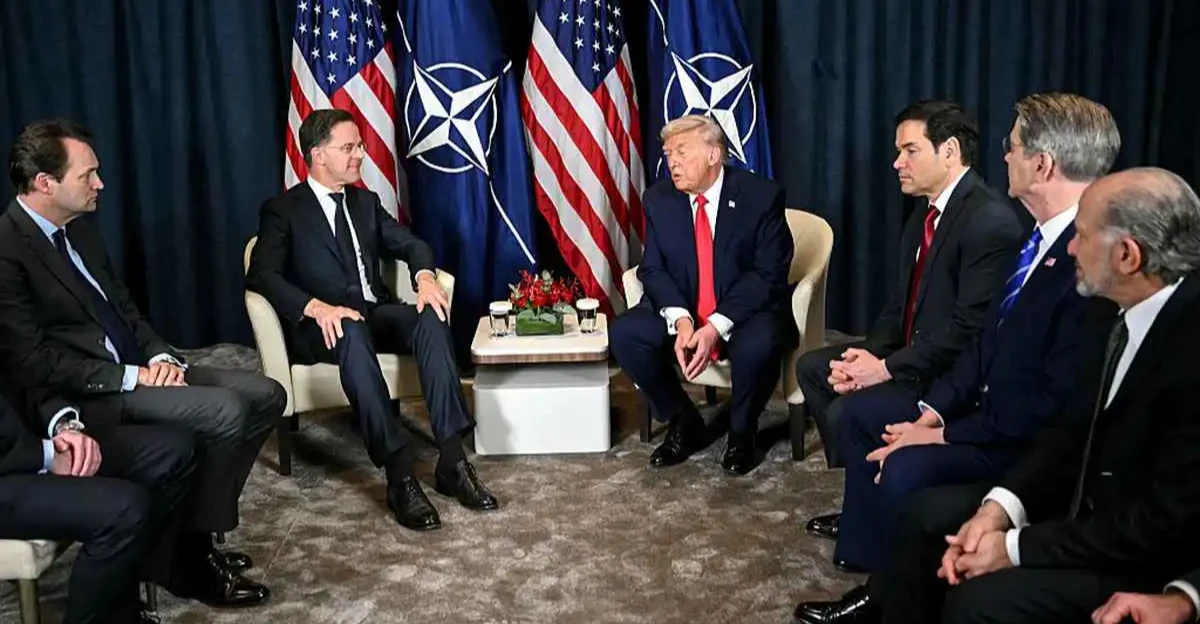 German officials revealed that the Pentagon recommended to its partners in Berlin to focus on NATO’s eastern flank, which is close to Russia, in exchange for the United States taking over the management of the Iran and Middle East file, amid escalating tensions between Washington and its European allies.
According to The Atlantic, American officials advised their European counterparts in a decisive tone to “mind your own business,” at a time when war planners in Washington expressed great confidence in the course of operations against Iran before later backing down as decisive results faltered.
The magazine noted that the administration of US President Donald Trump began the war on Iran in coordination with Israel without informing its NATO allies in advance or consulting with them about the objectives of the operation, in a policy described as being based on internal disagreements.
As expectations declined, Washington began criticizing European allies for what it considered a failure to provide support, coinciding with changes within the Department of Defense that included the reappointment of NATO policy director in the Office of the Secretary of Defense, Mark Jones.
These developments coincided with the escalating repercussions of the war in the Middle East, as tensions in the Strait of Hormuz led to higher energy prices and depleted US arms stockpiles, which directly impacted Europe, already suffering from the consequences of the war in Ukraine.
European countries also faced delays in US arms shipments, along with economic pressures including inflation, rising energy prices and the impact on industrial sectors, while countries like Slovenia resorted to fuel rationing, followed by other countries.
Given the limited European ability to influence the course of the crisis, European countries, within alliances, are exploring options to ensure freedom of navigation in the Strait of Hormuz, although these efforts are linked to a stable ceasefire and the continued threats between the conflicting parties.
Politically, tensions have escalated between Washington and some European capitals following statements by German Chancellor Friedrich Merz, who said that the Iranian leadership had “humiliated” the United States, prompting Trump to strongly criticize him and consider some of NATO’s positions as a sign of weakness.
This was accompanied by Washington’s announcement that it was considering reducing its military presence in Germany by withdrawing about 5,000 soldiers out of approximately 40,000 during the next year, as part of a broader plan to reduce the American military presence in Europe since the end of the Cold War, despite increasing it again after the Ukraine war in 2022 to about 80,000 soldiers.
In contrast, European countries, led by Germany, have intensified their defense spending. German military spending in 2025 reached approximately $114 billion, an increase of 24% over the previous year, with plans to modernize military capabilities and strengthen air defense systems.
Experts believe that Berlin and its partners are seeking to gradually develop their defense capabilities in coordination with Washington, while continuing to rely on the American nuclear umbrella, at a time when European leaders are stressing the need to strengthen the “European pillar” within NATO and reduce dependence on the United States.
The data indicates that relations between the United States and its European allies are going through a period of tension and instability, in light of sudden decisions and differing views on the alliance’s roles, especially in the Middle East crises.
Shafaq.com