
An American institute on al-Zaidi: Did the United States hand Iraq over to al-Khazali?
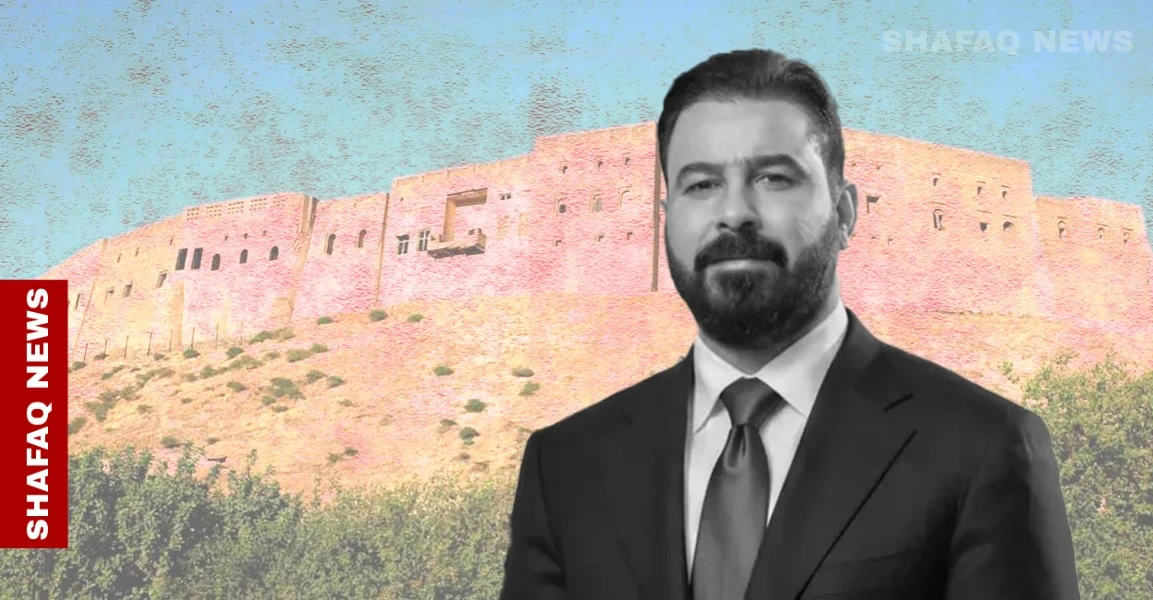 The Middle East Forum, an American think tank, linked the nomination of Ali al-Zaidi to form the new Iraqi government with the question of whether the United States had handed Iraq over to Qais al-Khazali, the Secretary-General of the Asaib Ahl al-Haq movement.
The American Institute explained in a report translated by Shafaq News Agency that since 2018, the United States has designated many Iraqi businessmen and banks as part of a network that helps Iran and armed factions access dollars, evade sanctions, and finance their influence within the country.
While the report indicated that this network was part of the political economy that allowed militias to move from armed groups to centers of influence through money, banks, contracts and state institutions, it noted that among the names associated with this were Ali Ghulam, Salim Ahmed, and Aqeel Muften, in addition to Ali al-Zaydi, who was nominated by the Iranian-backed coordination framework to form the government.
The report noted that Al-Zaidi is linked to the South Islamic Bank, which the report described as one of the banks prohibited from dealing in dollars under measures taken by the Central Bank of Iraq following American pressure on suspicion of “money laundering, dollar smuggling and illegal use of the American currency.”
The report continued, saying that al-Zaydi’s nomination comes amid the rise of Qais al-Khazali within the state, noting that al-Zaydi is the candidate of the leader of Asa’ib Ahl al-Haq, with the support of the head of the Supreme Judicial Council, Faiq Zaidan, who is once again showing that he will not separate himself from the equation of the coordination framework.
He pointed out that Zidane could have been part of a process that would reduce Iranian influence and militias within the country, but instead he chose to protect the existing balance.
According to the report, Khazali no longer relies solely on the authority of his militias or his parliamentary bloc, as he has expanded his influence over the past years within security, economic and political institutions. He has also presented himself as the active player who protects the political system from collapse, which has strengthened his role within the state.
The report continued that, in addition to his “agents” within parliament and economic interests, Khazali strengthened his influence within sensitive security institutions, including the Counter-Terrorism Service, after the dismissal of Abdul Wahab al-Saadi and the rise of leaders closer to the coordinating framework and the parties that make it up.
The report added that if Khazali’s candidate were to become prime minister, his influence would move from influence within the government to almost complete control over it.
The report stated that Khazali’s supporters in Baghdad are promoting the idea that the US government accepts him and that Washington will deal with him in the same way it dealt with the “terrorist president” who became interim president, Ahmed al-Sharaa, in Syria. It added that this comparison presents Khazali not as the leader of an Iranian-backed faction, but as representing a new reality that Washington can work with, if he guarantees stability and brings the factions under one umbrella.
However, the report noted that the differences were clear, as al-Shar’a emerged in a different context, with broader Arab and regional support, while al-Khazali comes from within an Iranian-backed armed, economic and political network that has undermined Iraqi sovereignty.
The report said the irony is that Washington, after years of pressuring Iraqi banks and dollar networks to prevent Iran and factions from evading sanctions, now seems ready to treat al-Zaidi as an acceptable candidate.
The report went on to say that Washington’s acceptance of al-Zaidi is more problematic, as Washington is not only dealing with a candidate linked to controversial banking and business files, but also with a man who is seen in Baghdad as being close to al-Khazali, the leader of a faction classified as “terrorist” by the United States, and linked to Iran.
While the report indicated that al-Zaydi’s nomination may not be final, as he still has 30 days to form the government, it noted that if he fails, the coordinating framework will choose another candidate.
He added that al-Zaidi’s nomination may be an attempt to buy time to allow the coordinating framework to see where the confrontation between Washington and Tehran is headed, but in both cases, the prime ministership remains within the same network.
The report concluded by saying that if the Khazali network and the factions manage to form the government, Iran will have gained another four years to evade sanctions, strengthen its influence, and consolidate the control of its allies within the Iraqi state.
Shafaq.com