
“A heavy legacy”… What challenges does the Iraqi prime minister-designate face?
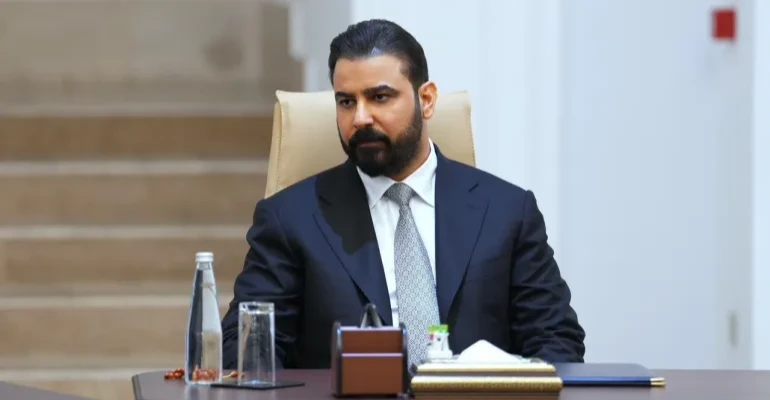 Since 2003, Iraq has witnessed profound political transformations that have directly affected the nature of the transfer of executive power, with a number of figures succeeding each other as Prime Minister within different internal and external contexts.
This path began with Iyad Allawi, who led the interim government after the fall of the previous regime, then Ibrahim al-Jaafari in a transitional phase characterized by institution-building, followed by Nouri al-Maliki, who ruled for two terms and whose term witnessed the consolidation of a system of governance based on political balances.
Then came Haider al-Abadi in a complex security situation during the war on ISIS, then Adel Abdul Mahdi, who ended his term under pressure from the October protests, then Mustafa al-Kadhimi, who took over managing a sensitive transitional phase, and finally Mohammed Shia al-Sudani, who came as a result of the 2021 elections.
This sequence reflects a political pattern based on compromises and settlements, where governments were often formed as interim solutions for managing crises rather than as long-term reform projects.
Within this context, the nomination of Ali al-Zaidi comes as an extension of this path, burdened with a heavy political legacy that requires him to deal with an intricate system of interests and balances.
Al-Zaydi’s nomination
The nomination of Ali al-Zaidi is presented in political discourse as a step that bears different features from the pattern that has governed the political process since 2003, as the focus is on him being outside the traditional framework of some of the forces that have run the government during the past years.
In this context, Fahd al-Jubouri, a leader in the Wisdom Movement led by Ammar al-Hakim, told Shafaq News Agency that the issue of choosing the new prime minister-designate is outside the general context, as it is far removed from the political system that has ruled since 2003, and it is considered the beginning of a new political phase away from the traditional forces, and thus it will be the beginning of a new kind of political work in Iraq with a new prime minister.
This proposal reflects an attempt to give a new character to the selection process, but the general context in which the nomination took place, and the forces that supported it, indicate the continuation of the same mechanisms of political consensus.
Thus, the discourse of change becomes linked to the ability to implement it actually, not merely to a political description, especially in light of the continued use of the same tools that governed the formation of previous governments.
political support
Al-Zaydi’s nomination also enjoys the support of influential political forces, but this support is accompanied by clear expectations regarding the nature of the upcoming government performance.
In this regard, Ali Al-Ahmad, a member of the Progress Party headed by Mohammed Rikan Al-Halbousi, affirms that the party, as the largest Sunni component on both the political and social levels, supports the option that emerged from the coordination framework in choosing the Prime Minister.