
Why does Iraq fail to achieve self-sufficiency despite its resources?
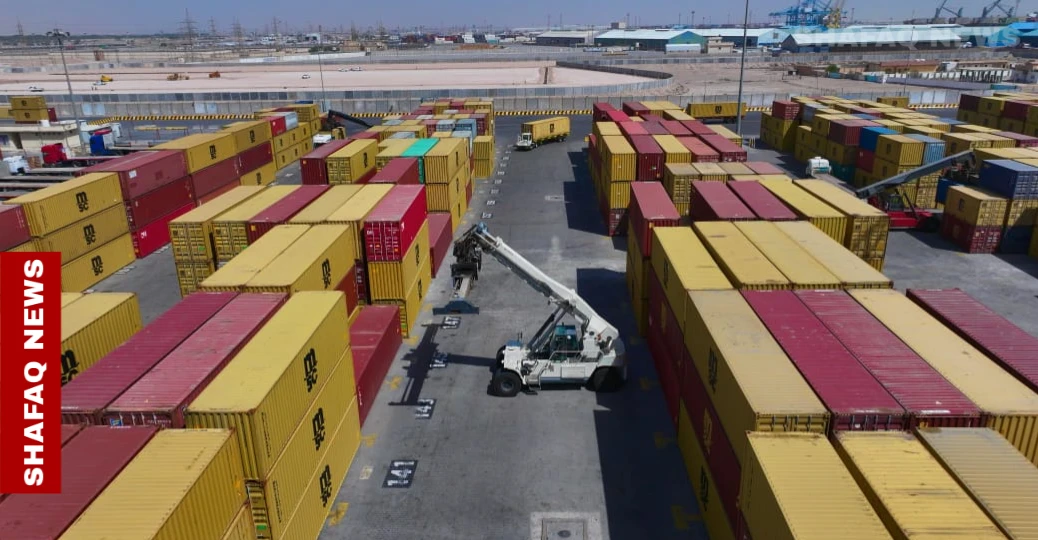 Why does Iraq fail to achieve self-sufficiency despite its resourcesShafaq News – Baghdad
Iraq continues to rely heavily on imports to secure its needs for basic and consumer goods, at a time when local production faces accumulating challenges that limit its ability to compete, despite the availability of natural and human resources.
This comes in conjunction with what was revealed in a recent study published by the Nature Food Council, which showed that Iraq is among the countries unable to achieve food self-sufficiency, reflecting the depth of the gap between available potential and production reality.
The Iraqi market relies on importing a wide range of goods, primarily food and agricultural products, along with electrical appliances and construction materials, which makes the economy vulnerable to external fluctuations, whether in commodity prices or global supply chains.
Local products also face additional challenges related to weak customs protection and the existence of informal outlets through which goods enter without sufficient control, which increases pressure on the local product and reduces its growth opportunities within the market.
Over-reliance threatens the economy
Economic expert Mohammed Al-Hassani told Shafaq News Agency that “Iraq’s dependence on imports remains very high, as estimates indicate that total imports of goods and services exceed $100 billion annually, of which about $80 to $90 billion are for goods alone.”
He added that “this great dependence on the outside world has made the Iraqi economy one of the most affected by geopolitical crises, especially in light of the closure of the Strait of Hormuz, which is a major passage for trade and energy.”
Al-Hassani explained that “Iraq has begun to face direct repercussions as a result of this closure, represented by the increase in shipping and insurance costs, the delay in the arrival of some goods, as well as the increase in the prices of a number of goods in the local market.”
He pointed out that “excessive reliance on imports puts the country in a vulnerable position to any external shock, as global crises are quickly reflected internally, whether through price increases or shortages of some materials,” adding that “what is happening now highlights the urgent need to reduce reliance on imports by supporting local production, especially since the crises have revealed the limited ability of the market to withstand without imports.”
Reports indicate that Iraq’s import volume is very high, estimated at more than $100 billion annually, of which $80–90 billion is for goods.
Imports cover more than 50% of Iraq’s food needs, with almost complete dependence (70–100%) on foreign sources for basic commodities such as vegetable oils, sugar and rice, making the local market directly linked to global markets and their fluctuations.
The laws are ineffective.
Meanwhile, economist Hilal Al-Taan, speaking to Shafaq News Agency, said that Iraq does indeed have a legislative system aimed at protecting local products, but its implementation is still weak and insufficient, which limits its ability to have a real impact on the market.
The expert continued, saying that “the laws of product protection, consumer protection, competition and prevention of monopoly grant the concerned authorities the powers to impose duties on imported goods, prevent dumping, and provide support to the industrial and agricultural sectors,” indicating that “these laws, despite their importance, have not been activated as required, which has kept the Iraqi market largely open to imports since 2003.”
According to Al-Ta’an, “weak customs control at times, along with high local production costs and a lack of government support for the agricultural and industrial sectors, have all contributed to weakening the competitiveness of the national product.” He explained that the entry of cheap goods into Iraq is due to the weak application of customs tariffs, as well as the existence of cases of evasion through reducing the real values of imported goods, which allows the entry of low-priced products from neighboring countries.