
Atroushi announces his refusal to attend the presidential election session “out of concern for the stability of the political process.”
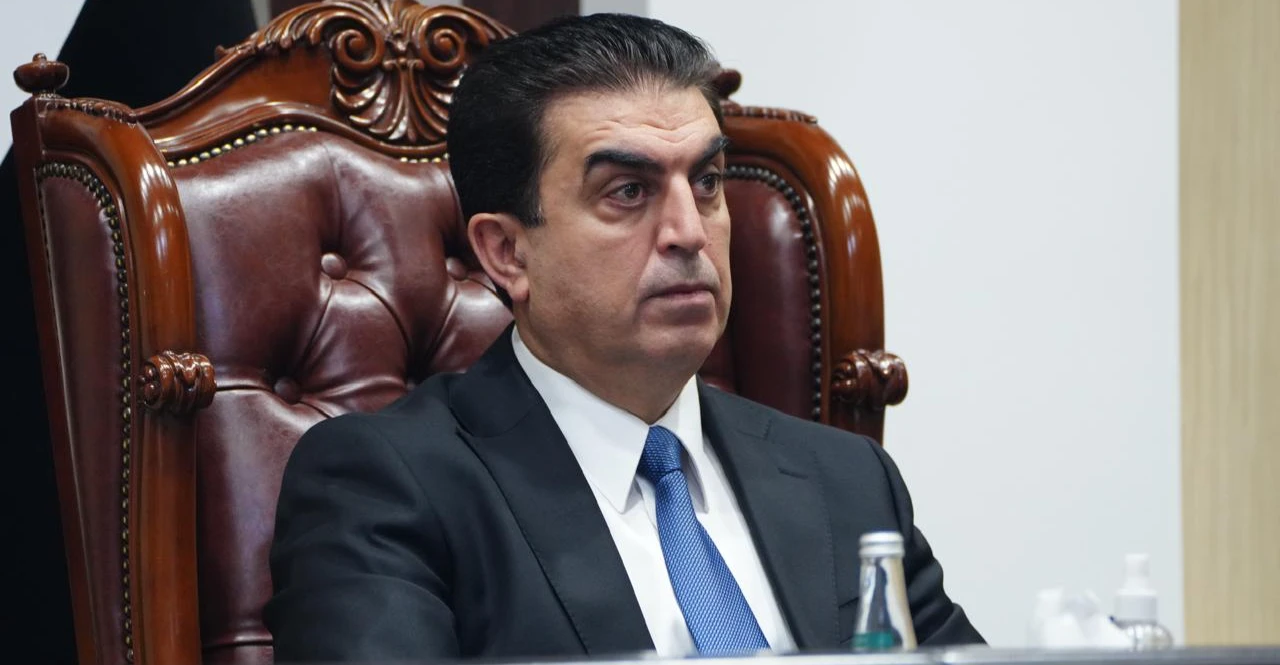 On Friday, Farhad Atroushi, the deputy speaker of the Iraqi parliament, objected to the agenda of the session scheduled for Saturday to elect the president, saying that proceeding with it in the absence of national and political consensus might deepen the disputes instead of ending the deadlock that has been hindering the formation of the government for months.
In a statement, Atroushi said that political forces still need more dialogue and understandings to reach a candidate who enjoys broad acceptance, adding that the dispute is not limited to the position of President of the Republic, but also extends to the position of Prime Minister, about whom he said that political forces have the right to see the name of their candidate and express their opinion on him.
He pointed out that his position comes “out of concern for the stability of the political process and to ensure the democratic path in the country.”
Atrushi’s stance comes despite major blocs announcing their intention to attend Saturday’s session. The National State Forces Alliance, led by Ammar al-Hakim, and the Progress Party, led by Mohammed al-Halbousi, confirmed the participation of their representatives in the session. The Reconstruction and Development Bloc, supported by Prime Minister Mohammed Shia al-Sudani, also announced its full attendance.
However, the position of the Kurdistan Democratic Party, to which Atroushi belongs, is still not definitively decided, as the party has linked its participation in the session to reaching a broader political consensus.
The parliament’s leadership had set April 11 as the date for the special session to elect the president of the republic, in an attempt to end a political deadlock that has persisted since the legislative elections in October/November 2025.
Iraq has exceeded the constitutional deadline by about 70 days, while 148 days have passed without the formation of a new government.
This comes amid the intersection of two political crises, the first being Kurdish, related to nominations for the presidency, as the Democratic Party first put forward Fuad Hussein and then Nawzad Hadi before the latter withdrew, in contrast to the Patriotic Union’s insistence on Nizar Amidi before he later spoke of an understanding on his name, and the second being Shiite, related to the premiership, after the Coordination Framework nominated Nouri al-Maliki, but his nomination was met with declared American rejection and internal disputes that divided the Framework between supporters, opponents and those with reservations, which kept the files of the two presidencies suspended until now.
Shafaq.com