
He moved to approve an emergency budget of $40 billion.
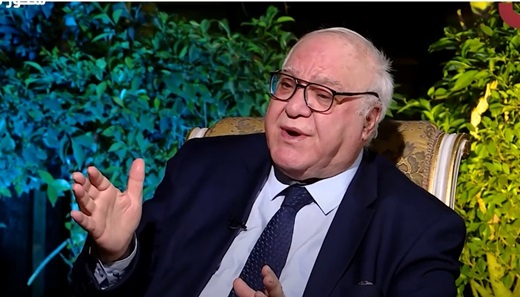 He moved to approve an emergency budget of 40 billionIn light of the economic and financial challenges and the significant decline in oil revenues as a result of the war and regional conflicts, the Prime Minister’s financial advisor, Dr. Mazhar Muhammad Salih, announced that the government is adopting a series of measures to ensure the continuity of the work of state institutions and the provision of basic services in the event of a delay in approving the general budget.
In an interview with Al-Sabah, Saleh confirmed that one of the most prominent of these measures is the application of the temporary spending rule (1/12) of the previous year’s budget, based on the amended Federal Financial Management Law No. (6 of 2019). He explained that this procedure allows for the coverage of essential expenditures such as salaries, wages, pensions, and social welfare allocations, which amount to approximately (8) trillion dinars monthly, while funding continues for basic operational costs. New investment projects are suspended or postponed, and only urgent projects are implemented.
Saleh indicated that the government is working on rearranging spending priorities, focusing on vital sectors, and making limited financial transfers between spending categories within the available legal frameworks. In some cases, it may resort to short-term domestic borrowing to cover the temporary deficit and ensure liquidity stability.
In Parliament, MP Ali Salman al-Moussawi revealed a plan to allocate approximately $40 billion as an emergency budget to expedite and complete projects. He explained to Al-Sabah newspaper that some parties within the coordination framework had requested a budget ranging between $30 and $40 billion to achieve this objective.
For his part, Professor of Financial Economics Dr. Ahmed Al-Hathal affirmed Iraq’s ability to secure operational expenses, but pointed out the need to take exceptional measures to cover investment expenses and strategic projects, in light of the sharp decline in oil revenues, disruption of global supplies and increased geopolitical risks.
Al-Hathal explained to Al-Sabah that the move towards an emergency budget aims to stimulate the economic cycle and prevent the cessation of vital projects related to energy, water, food and infrastructure, explaining that any delay in making the decision will lead to an expansion of the recession, an increase in unemployment and a rise in the bill for stalled projects, which will negatively affect citizens and the local market.
Alsabaah.iq