
Iranian currency rises in Kurdistan markets after easing tensions with the US
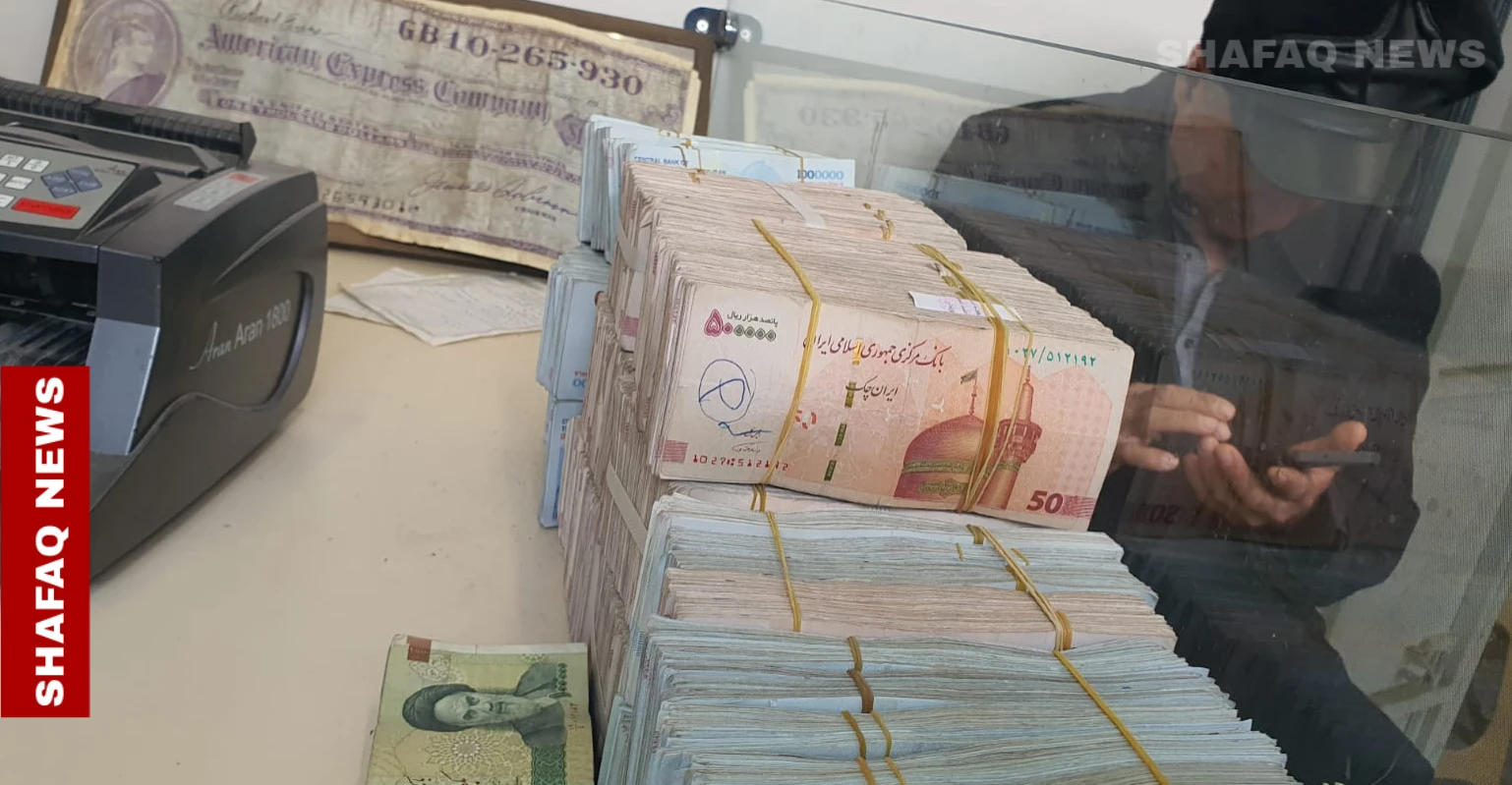 The Iranian rial rose against the dollar as the Erbil Stock Exchange opened in the Kurdistan Region, amid economic expectations of further improvement in the Iranian currency following the easing of tensions between Iran and the United States.
The US dollar fell against the Iraqi dinar, while the Iranian rial rose in the first moments of trading, with the exchange rate reaching 152,900 dinars per 100 dollars, and also recording 155,100 dinars per 100 dollars.
The Iranian rial rose against the dollar in Erbil, reaching 13,500,000 Iranian rials in cash and 16,000,000 rials via remittances, compared to 12,800,000 rials in cash and 15,200,000 rials via remittances, while the exchange rate of the Turkish lira remained stable at 4,430 against the dollar.
In this context, economist and spokesman for the currency market in Sulaymaniyah, Jabbar Goran, revealed expectations of a decrease in the price of the dollar against the Iraqi dinar, in contrast to an anticipated rise in the price of the Iranian toman in the next few days.
Goran told Shafaq News Agency that “the exchange rate of the Iranian Toman this morning in Sulaymaniyah was around 120,300 Tomans per 100 US dollars, while the price of the dollar decreased to 153,000 Iraqi dinars per 100 dollars at the time of preparing this news.”
He added that “these changes are linked to political and economic developments, most notably the easing of tensions between Iran and the United States, as well as potential arrangements for navigation in the Strait of Hormuz.”
He explained that “there are indications of the possibility of reaching understandings or future agreements regarding the management of the strait, which may have a positive impact on the stability of financial markets in the region.”
He added that “these data may lead to a further decrease in the price of the dollar and an improvement in the value of the Iranian currency in the coming period.”
He pointed out that “the nature of the economic policies of the American administration, especially in light of Donald Trump’s orientations, may contribute to pushing towards common economic solutions that achieve a balance of interests, including the issue of managing vital straits.”
This comes after the announcement of a temporary two-week ceasefire between the United States and Iran, brokered by Pakistan, which included a suspension of the mutual attacks that lasted for about 40 days, and the opening of navigation in the Strait of Hormuz, amid reports that Israel had agreed to the truce.
Shafaq.com