
Yawar: False intelligence leads to targeting the Peshmerga
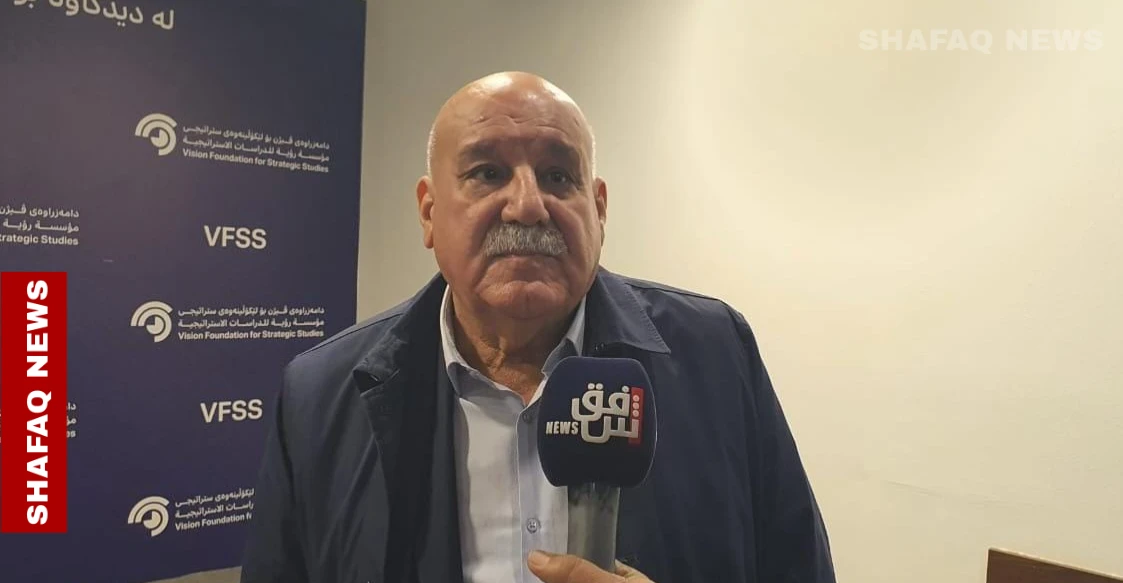 Military expert Jabbar Yawar confirmed on Tuesday that the targeting of Peshmerga forces in Soran district comes within the context of previous Iranian threats that preceded the outbreak of war with the United States and Israel, while stressing at the same time that it is based on false intelligence information.
Yawar told Shafaq News Agency that “Iran had announced before the outbreak of the war that it would target all areas where there is an American presence or interests, and it has already begun to implement this during the war, up to the present days.”
Yawar explained that “the presence of US forces in the Kurdistan Region dates back to August 2014, within the framework of an international agreement with the Iraqi government to fight ISIS,” indicating that “this presence was not by agreement with the regional government, but rather within the arrangements of the international coalition with Baghdad, which included the deployment of US forces and forces of other nationalities in several Iraqi regions.”
Yawar added that “the presence was not limited to field forces, but also included bases for American aircraft, and all of this was done in accordance with an agreement with the Iraqi government exclusively.”
According to him, after the strategic agreement between Iraq and the United States ended in 2025, a new agreement was signed stipulating that these forces would remain in the Kurdistan Region until the end of 2026, stressing that “this presence is not at the request of the region nor at its direction, but rather as a result of commitments and agreements with Baghdad.”
Regarding the attack that targeted Peshmerga forces this morning in the Soran administration, Yawar explained that “this targeting is part of the steps that Iran announced previously, which include targeting sites where it is believed that there are American interests, whether in Iraq, the Gulf states, Jordan and other areas.”
He added that “some of these attacks are carried out by groups known as (the resistance), which operate under Iranian direction, and have already carried out attacks in the Kurdistan Region within this context.”
Yawar explained that “the targeting of Peshmerga sites is often done under the pretext of the presence of American or coalition forces inside those headquarters,” noting that “this information reaches the implementing parties through spy elements, even though those sites only contain Peshmerga forces, and in some cases former advisors.”
He pointed out that “the attack that occurred today is not the first, as a site that included French advisors was targeted two weeks ago, who have no connection to the ongoing war between Iran, the United States and Israel,” stressing that “the targeted headquarters do not contain American forces or parties working against Iran at the present stage.”
In a related context, Yawar stressed that “the ongoing war in the region has had significant effects on the entire Middle East, especially after the events of February 28,” explaining that “its repercussions have extended to include wide areas, and its effects may reach Cyprus and Turkey.”
He pointed out that “the Kurdistan Region was also affected by these developments, although this was not the result of internal will, but rather came about by force as a result of the size and impact of the conflict in the region,” stressing that “the regional repercussions of the war have become a reality that imposes itself on various countries and regions.”
Earlier today, the Ministry of Peshmerga Affairs in the Kurdistan Region announced that 36 of its members were killed as a result of a ballistic missile attack that targeted military headquarters north of Erbil Governorate.
Shafaq.com